
The director behind Cure and Pulse opens up about his acclaimed new mystery drama, The Samurai and the Prisoner, a philosophical entry into the samurai film canon just premiered at Cannes
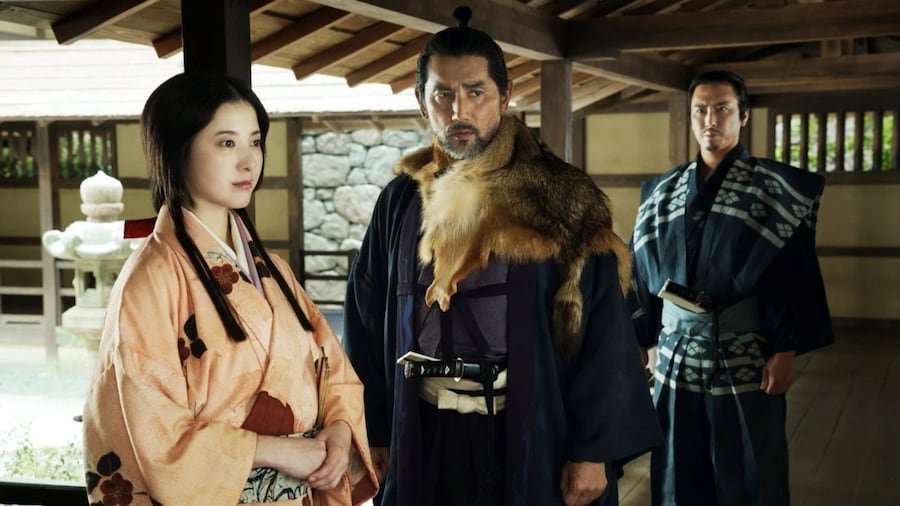
Forty years and dozens of films since Kiyoshi Kurosawa began his career, the exceptional Japanese director of chilling, comfort-shattering horror films has made a samurai film. Just don’t expect Seven Samurai or Lone Wolf and Cub – based on the prize-winning novel by Honobu Yonezawa, The Samurai and the Prisoner is an absorbing, detailed mystery drama, a fictionalised account of Lord Murashige Araki (Masahiro Motoki) and the enemy strategist Kanbei Kuroda (Masaki Suda) locked up in the castle dungeon – both real historical figures from the Sengoku period, an era marked by warring states and civil unrest that predated the growth and hegemony of the Edo period. Murashige castle is on the verge of besiegement by the warlord Nobunaga Oda; if that wasn’t enough of a crisis, mysterious murders and deceptions crop up around the castle, and only the sly, shrewd Kanbei knows how to solve them.
It would be more accurate to call The Samurai and the Prisoner – which is light on action, heavy on process and philosophy – Kurosawa’s first jidaigeki film, the Japanese genre of period dramas set before the 1868 Meiji Restoration. “I’ve always liked jidaigeki or period samurai films, and I’ve always had the desire that one day I would shoot one,” says Kurosawa, speaking to AnOther via a translator the day after the film’s Cannes premiere (which was attended by Ryusuke Hamaguchi and Koji Fukada, Kurosawa’s former Tokyo University of the Arts students, whose films All of a Sudden and Nagi Notes were both in competition). “But the type of jidaigeki films that I was thinking about was the chambara style, which is the sword-fighting, action kind. When I was given this original book, I realised it’s not at all an action story, it’s mostly interior conversation scenes. In my mind, I had no real image of what this was going to look like.”

Kurosawa’s horror films, like Cure, Pulse and Retribution, expertly reflect the alienation and malaise of contemporary Japan, with detective and criminal archetypes distorted by supernatural and psychological torment. Bringing the codified order and fickle inner-circle politics of the novel to life in a thorny and entertaining way was an adjustment. “If I was going to make a jidaigeki film, I knew that I wanted to make something that felt classical in a way,” says Kurosawa. “I needed to think about, ‘What is a classical jidaigeki that is a conversational film?’ I went back into Japanese history to the films of the 1950s, most famously the masterpieces of Akira Kurosawa or Kenji Mizoguchi. I confirmed to myself that conversational jidaigeki did exist, so I decided to go forward with a style that felt classical.”
The Samurai and the Prisoner is by no means the first time Kurosawa has moved out of his comfort zone. As a novice jobbing director in the 80s and 90s, he directed several Japanese “pink films” and low-budget “V-cinema” productions; by 2008, his family melodrama Tokyo Sonata won a handful of prestigious prizes for its strictly dramatic examination of economic depression. He’s also made two films in France, 2016’s Daguerrotype and a 2024 remake of his low-budget revenge flick Serpent’s Path, released the same year as his short Chime and the darkly comic thriller Cloud. But however disparate his projects seem, there’s always a degree of connective tissue in their styles and themes. In the case of The Samurai and the Prisoner, the mystery structure subverts his horror films’ ominous, overwhelming fear of the unknown into a perplexing but more solvable puzzle. “Especially because it’s a mystery, what is unknown has already happened,” says Kurosawa. “That’s quite different from the horror films that I tend to make, where the protagonist encounters something that is unknown. The unknown happens in the future, [we are] headed towards somewhere. But with this, the unknown has already happened, so you need to think about the past, and this structure presents challenges.”

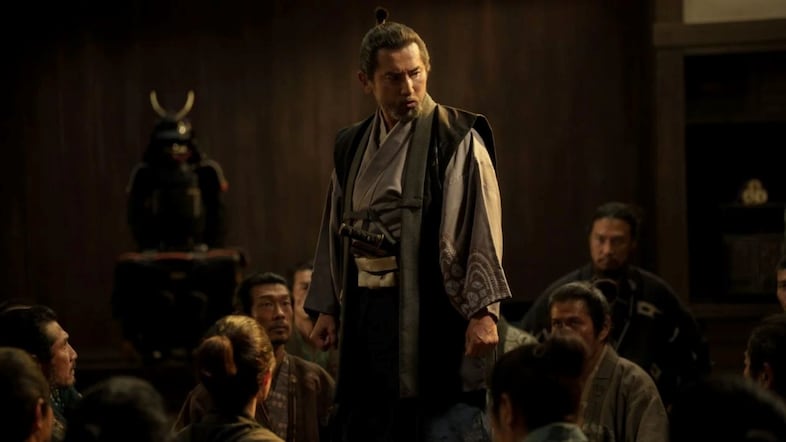
Each of the film’s four mysteries – including a murdered heir and a distorted head taken from the battlefield – has no clear logical solution, prompting a wave of rumours and panic from the superstitious townspeople. Murashige is rational enough to know no divine intervention is at play, but each time he still must turn to the imprisoned Kanbei for insight before making a grand reveal, Poirot-style, to his flock of retainers. “I could have made the choice to go back in the past and show what in fact happened, but to me that’s not an appealing mystery,” explains Kurosawa. “[Instead] I decided to have Araki Murashige’s character explain how it happened, and then show the listeners questioning whether that’s believable. [I wanted] to feel the nervous tension that’s going on as Murashige explains what’s happening, to keep people in that ‘solving’ moment, and then make them wonder what happens next, mainly [with regards to] the human relationships happening within the castle.”
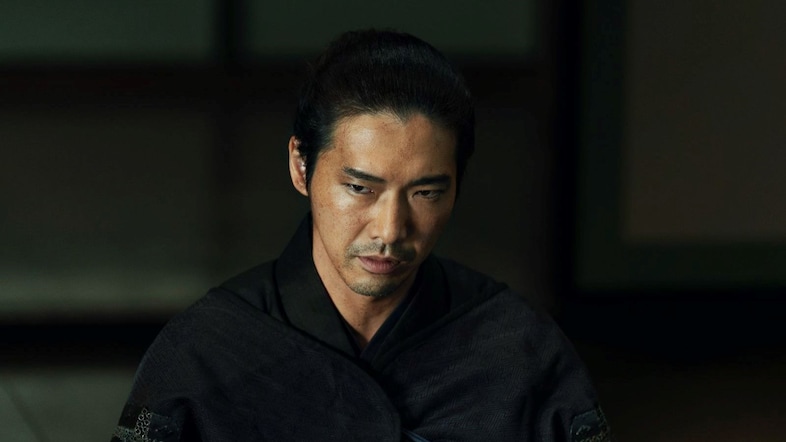
Kanbei’s dungeon – the film’s most impressive and layered set, an indication of the higher budget the material has afforded Kurosawa – becomes a sort of brain trust. Shackled to a main pillar on an uneven, earthy floor, Kanbei possesses an indispensable ability to decipher human behaviour, drawing Murashige back to the dungeon every time he’s hungry for clarity. “I was imagining that space being at the root of the main pillar that keeps the castle together,” says Kurosawa. “There’s also an empathy and relationship built between the samurai and the prisoner, and you wonder if the prisoner is puppeteering the situation. Of course, Kanbei can’t move or escape the physical space, and yet his influence starts to feel like it's spreading outwards to the point that it gets out into the town as well. So that was something I was really aiming for – that feeling of spreading from the centre outwards.” In this regard, Kanbei is the film’s most traditionally Kurosawa element in the film: an enigmatic agent of influence on an unwitting world.
