
Paul Mescal recalls some of his most precious on-set memories alongside Josh O’Connor, and explains why this “doesn’t feel like a repressed film about queer identity”
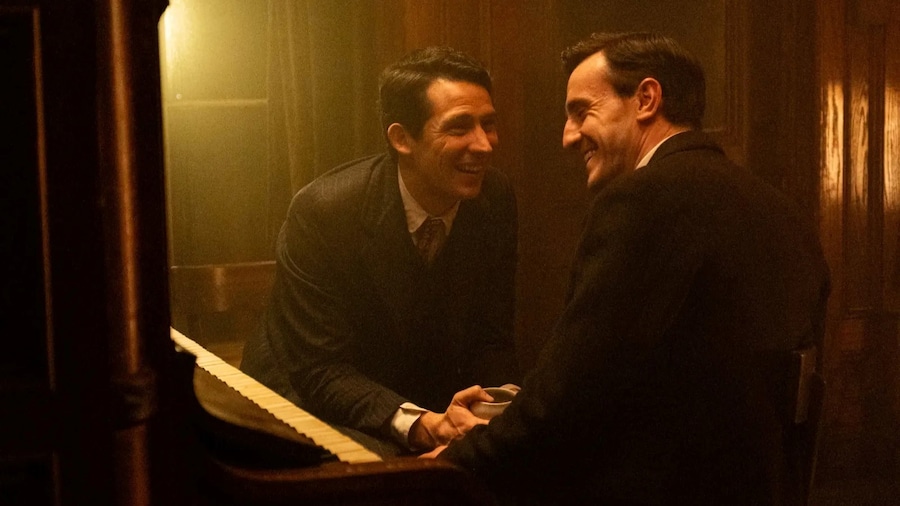
The romance at the heart of The History of Sound starts the way many treasured connections do: two strangers recognise the same song. It’s Boston, 1917, and at a pub frequented by New England Conservatory students, the sensitive, searching Lionel Worthing (Paul Mescal) meets David White (Josh O’Connor) when he hears the boisterous young man play the folk song Across the Rocky Mountain on piano. Having established an immediate and personal intimacy, the pair sleep together, but soon David is drafted in the First World War and Lionel returns to his family’s Kentucky farm. After the war, David gets back in touch, inviting his friend and lover on a “song collecting” trip – travelling across rural Maine to record and archive folk songs on wax cylinders.
To Paul Mescal, this expedition is the height of the two men’s expression of love for each other. “It doesn’t feel like a repressed film about queer identity,” he says at a roundtable interview with the film’s director, Oliver Hermanus. “They’re very comfortable with each other. I don’t think they’re going to Maine to escape perception. They’re going to Maine to do folk songs. One person records the [music] and David writes it down. It’s almost a romantic exchange.”
Mescal’s passion for the material shines through our conversation; he says he read the script, written by Ben Shattuck, while filming Carmen in late 2020, and fought for it to be produced ever since. “I remember reading it, specifically the moment where there was like a [short] scene where it’s the older version of Lionel, eating tinned peaches out of a can. I was reading in bed, bawling,” he recalls. “I think it’s a perfect screenplay. It was just immediate. I want this film to be made tomorrow. This is what I probably learned, that films don’t get made overnight. I was like, ‘OK, I’m in, next week we’re shooting. It’s all gonna happen.’”
It’s a feeling Mescal says he’s had once before, when reading the screenplay for Aftersun: “They’re two films, script-wise, [where] I could see it all in my head. I was moved by it. What Oliver has done so brilliantly is, [when I saw the film] I was moved in the same places as when I read it. I think that’s a very difficult thing.”
If music is what brings Lionel and David together, then time’s forward momentum keeps them apart. O’Connor missed the film’s premiere due to a hectic schedule shooting on Disclosure Day, Steven Spielberg’s new film, but his absence in the interview felt strangely fitting, as David’s exit from Lionel’s life leaves a haunting afterglow that lasts until old age.

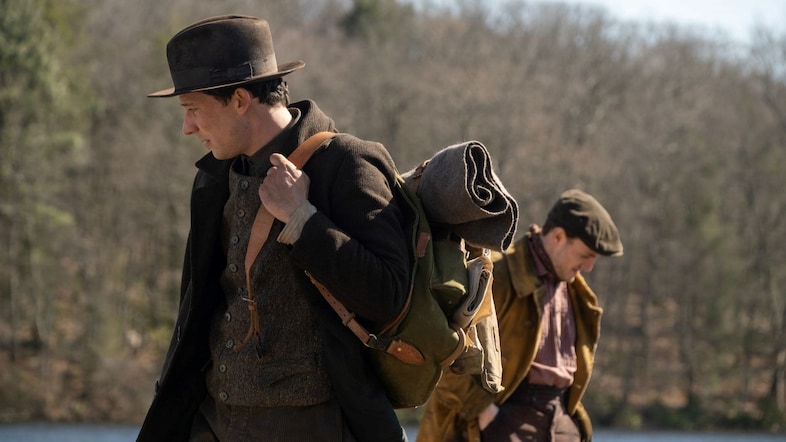
“I definitely felt [Josh’s] absence when he left, because I’ve known him for five years and that part of the shoot would oscillate between incredibly fun and playful, [with these] deep moments of connection,” Mescal explains. “Just the wildness of having him spit water into my mouth, and then be running around Boston the next day. I felt very much in my body with him, which was a great thing. When he left, I kind of went into my head, and I think the character does too, a little bit.”
Lionel makes new friends and takes different lovers throughout the film, but music is his true north star, and not being able to share it with David is a keen loss. It wasn’t just the clarity of vision that excited Mescal about the project, but the way it dealt with music. “It’s music that I love listening to in my own life,” he says. “So when you get the opportunity to sing Silver Dagger, or even the songs that didn’t make the cut, I really enjoyed that process, because [the film] was elegantly written. I never felt like, ‘Oh, this is a singing scene.’ But it’s a wonderful thing to feel both as an actor and a character, to feel a room quiet when you start singing and feel connected to the words that you’re singing about.”
But in The History of Sound, folk music intersects with technology that sought to archive and transmit the ineffability of song. It’s clear why Hermanus would be drawn to the contradiction at the heart of Lionel and David’s project – cinema is a similar project of capturing human essence with equipment. “We can now record things and hear our voices in perpetuity,” the director says. “The film is set at this moment where that is a new concept, and it has this huge emotional impact on how people live their lives. I feel like it’s the big metaphor inside of this film – do we record our feelings? How do we recall them? What triggers that recall?”

Later in the interview, Mescal shares some of his most precious memories of making the film, underlining Hermanus’s interest in how memory, emotion and recording can fuse. Just like in the film, the smallest moments of recall and reflection can catch us completely unaware.
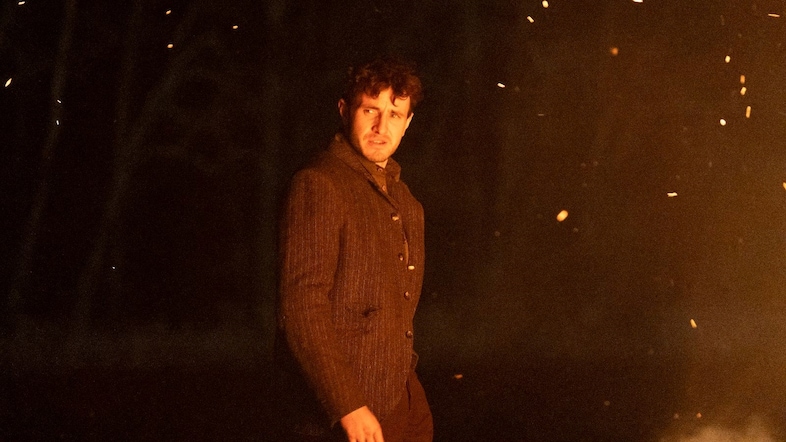
“I remember we had a day when Lionel was walking away from his two friends in Kentucky, which was one of my favourite days ever on a set,” he says, describing a scene that takes place after the song-collecting trip, when the men have lost all contact. Lionel is back home, reminiscing over folk songs and thinking about loss, and David comes easily to mind. “It wasn’t particularly exposing but when you’re working so close to a director, you suddenly realise at the same time, ‘Oh, this is a bigger moment than we anticipated.’ I remember seeing [Hermanus] cut that in the edit suite. It was one of my favourite moments of the whole process, actually, watching him do the sound. We were doing Lionel walking away, and he put – it gives me shivers – David’s footsteps over Lionel stopping, and then Lionel turns and you see David. I remember being very moved by that.”
The History of Sound is out in UK cinemas now.
