
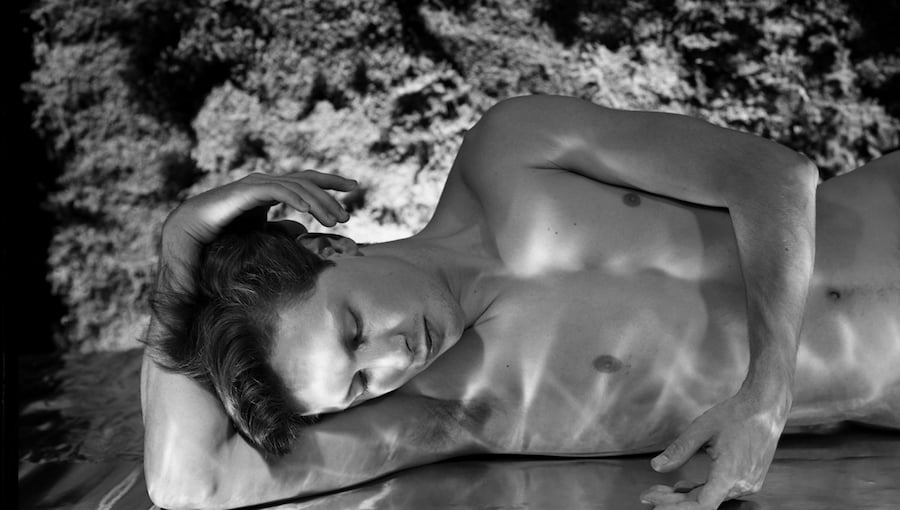
The artist’s resplendent nudes inspired Bruce Weber, Robert Mapplethorpe, and Peter Hujar. Sam Shahid sheds new light on the unsung New York artist in his moving documentary
There’s an immense tragedy to the story of George Platt Lynes, which Sam Shahid’s documentary, Hidden Master: The Legacy of George Platt Lynes, lays bare. As a prolific photographer of the male nude between the 1930s and 50s in America, when showcasing this work publicly would result in persecution, Lynes never lived to see his work celebrated. He died of cancer in 1955 at the height of the Lavender Scare. And while it feels cliché to talk about artists not being appreciated until after they’re dead, Shahid’s documentary is a big step in correcting the narrative.
“In all the festivals [we’ve done] during the Q&A, the first question was: ‘Why didn’t we know this man?’ That’s why I did the film,” says Shahid, who first discovered Lynes’ story while working on a book of male nudes in 2011. Better known as an art director for brands such as Calvin Klein, Banana Republic and Abercrombie & Fitch, Shahid’s turn to filmmaker was important in carrying out what he felt was a duty to convey Lynes’ story to the world.


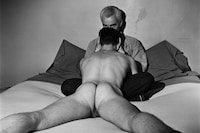
“I was really surprised by his life and how free and open he was and how he wasn’t afraid,” Shahid continues of Lynes, a gay man in a pre-Stonewall era who enjoyed a frivolous and seemingly shameless existence. At the height of his fame, Lynes was a part of the cultural elite of New York, counting Paul Cadmus, Monroe Wheeler, and Glenway Wescott (the latter two with whom Lynes enjoyed a 30-year-long ménage à trois) as contemporaries. The film brings this era to life with all its glamour and decadence on display in charming archival footage and still images.
Before building a successful career as a photographer of the male nude, Lynes first became known as a fashion photographer, taking commissions from Vogue, Harper’s Bazaar and other illustrious publications. His fashion work, which he allegedly hated, delved into surrealist territory at times, but was exquisite and made him highly sought after. But, without doubt, his best work is his male nudes, which the film also showcases beautifully. His art, and it is that – the film discusses the line between art and pornography – is simple yet elegant, poised yet authentic, erotic yet sophisticated, and gentle while also being impactful.

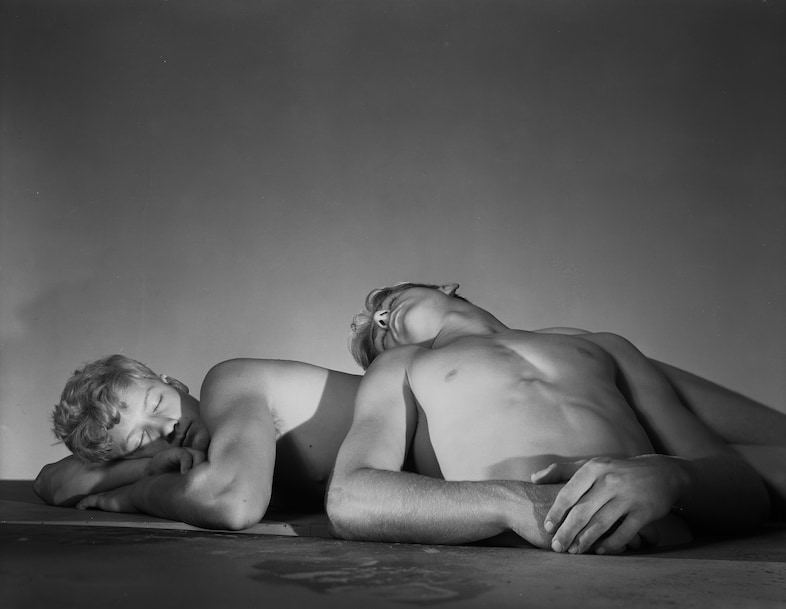
Shahid shares, “You could tell he was an artist, and he really loved the men he photographed. The gift he gave us was the beauty of man. Before that, you could see photographs of female nudes. But no one ever depicted the male as beautiful as [Lynes]. It was brave and he believed in himself. He wanted the world to see it.”
For the filmmaker, the sensitivity and sensuality of Lynes’ work makes it stand out. “You can see the influence he had on Bruce Weber, Robert Mapplethorpe, Peter Hujar, all these people,” explains Shahid. “There’s nothing like it. It’s so beautifully formed and created. You can see the passion and love.” Lynes’ influence is obvious in the style and simplicity of Mapplethorpe and Hujar’s dramatic works, as well as the models. Even in the Calvin Klein ads of the 90s, Lynes legacy shines through. This was an inspiration missed at the time by Shahid while working on the campaigns with Weber. “I don’t deny that,” the director laughs. “I said, ‘Gosh, this looks so familiar’. Bruce and I’ve talked about it and Bruce has a huge collection of George’s work.”
With the film premiering theatrically 65 years after Lynes’ death it arrives at a time when his work can find a more appreciative audience with both his art and story maintaining relevancy to the lives of LGBTQ+ people today. “It’d be my dream,” Shahid effuses of the possibility of the first ever large-scale exhibition of Lynes’ work. The trouble will be in getting the original pieces, many of which are owned by late US philanthropist Frederick R Koch’s estate as well as Lynes’ family. The Kinsey Institute and the Guggenheim also both have large Lynes archives, so there’s hope there too.
Hidden Master is a fascinating look at a man and his legacy, both of which have been forgotten about for too long. “I would have loved to have known him,” remarks Shahid, who believes the content of Lynes’ work is responsible for him being forgotten. “And I would have loved to be his art director. I think he had a great style about him. He loved glamour, he loved parties, he loved New York. He loves everything I love. And he loved his men. And they were beautiful.”
Hidden Master: The Legacy of George Platt Lynes is out in UK cinemas now.
