Peter Hujar’s Contact Sheets Reveal an Artist in the Process of Becoming
A new book and exhibition showcase the late photographer’s contact sheets of downtown figures like Susan Sontag and David Wojnarowicz. In their artistic and personal intimacy, they offer something the now-canonical images cannot
5,783 contact sheets spanning Peter Hujar’s photographic life are stored in eight banker boxes. Each sheet is encased in a plastic wallet, separated, and sorted vertically like documents in a filing cabinet. There is nothing especially remarkable about these prosaic boxes: colourless, functional, quietly banal. They could easily be passed over without a second glance. Yet inside, they hold an entire world. On the occasion of Hujar: Contact, a new book published by Mack alongside an exhibition of the same name at The Morgan Library and Museum, curator Joel Smith and archivist Olivia McCall speak to both the artistic and personal intimacy of Hujar’s contact sheets.
“Today’s audience for photography, and tomorrow’s, doesn’t necessarily understand the relevance of the contact sheet,” contends Smith. “There is no comparable object in the regime of digital photographic practice.” McCall agrees there is simply “nothing that supersedes the intimacy of the contact sheets themselves”.
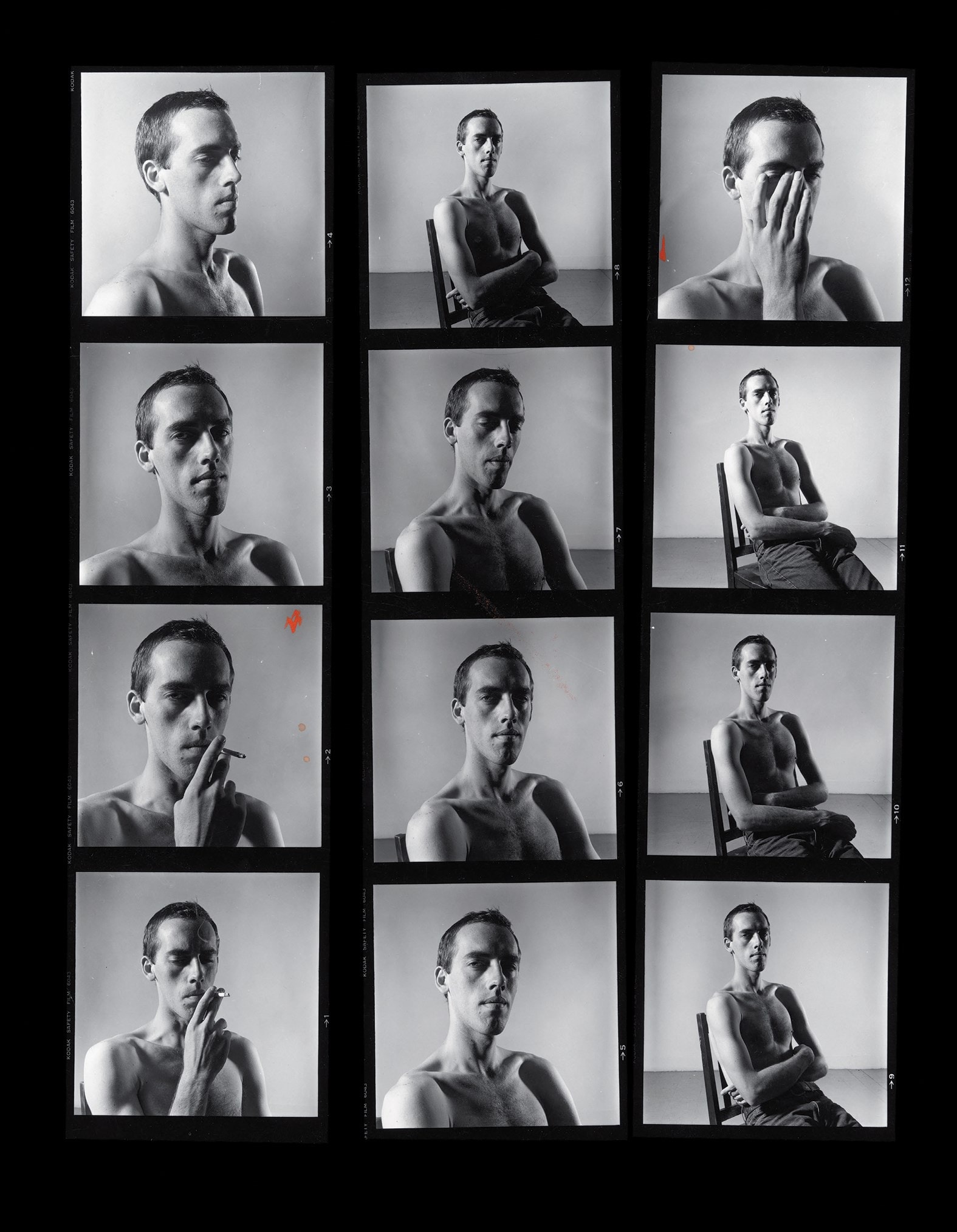
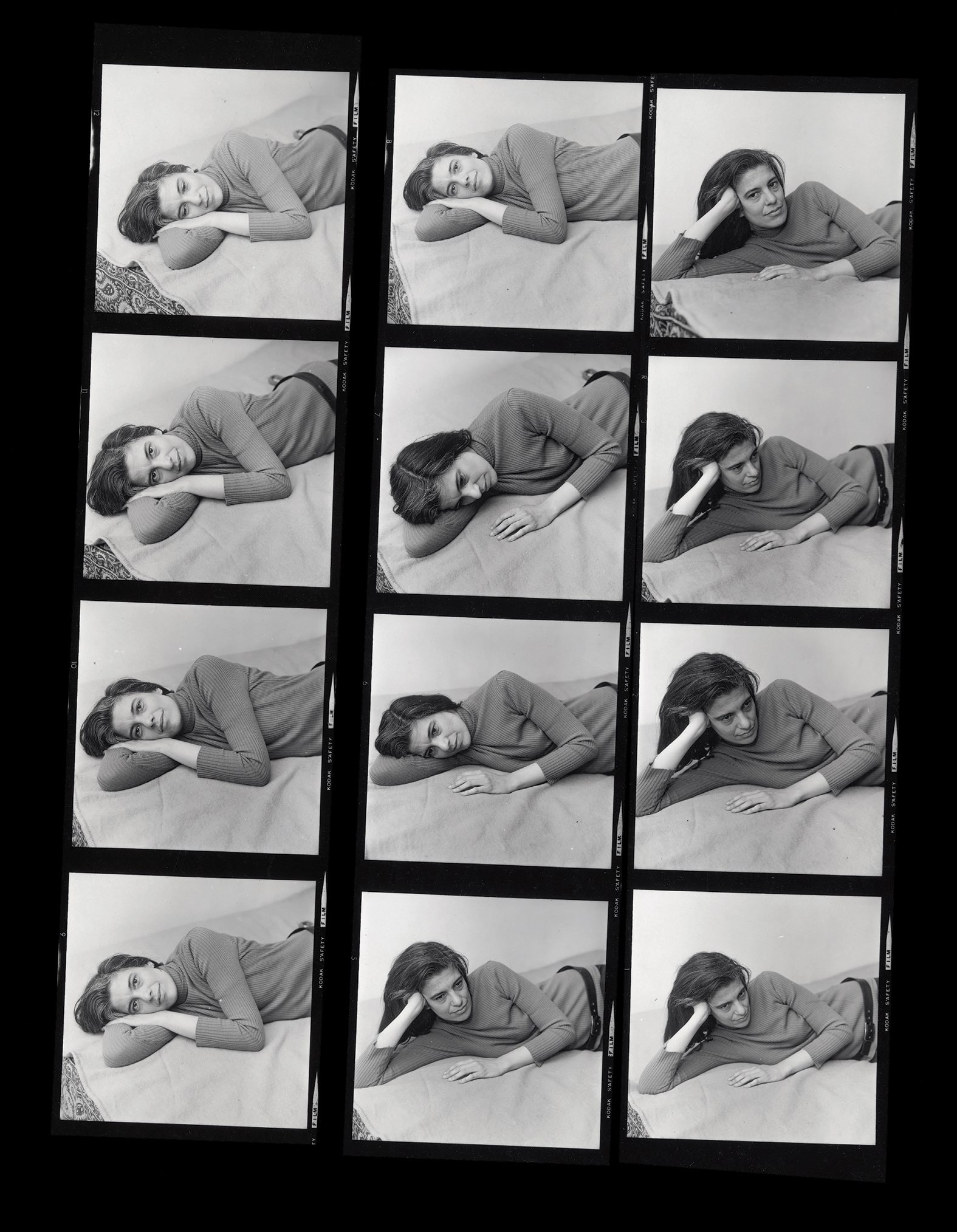
A contact sheet is created by placing strips of negative film directly onto photosensitive paper. The negatives are exposed to light to produce a print that allows multiple exposures from a roll of film to be viewed at once. As photography shifted in the early 20th century from individual plates to film rolls, contact sheets became an intermediate tool for selecting which negatives to enlarge. Smith describes them as a kind of net that “traps the creative process of the artist between the exposure phase and the editing, thinking and printing”. The celluloid thumbnails offer both an indexical summary of what has passed before the camera’s lens and a preview of the printed photographs. They are principally objects of documentation, yet without “the hesitancy of a script writer’s first drafts or the irresolution of a painter’s first sketch,” Smith reflects in the catalogue text. Each frame captures the moment of first exposure, complete with all its photographic information. For Hujar, they also reveal his use of two cameras: a twin-lens 120mm producing 12 square frames per roll (his preferred), and a slightly more portable 35mm camera producing 24 or 36 rectangular frames.
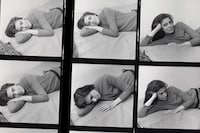
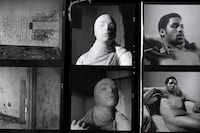
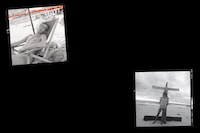
The book opens, and the exhibition begins, with a sequence of portrait thumbnails. Read individually, they are provisional encounters, glimpses of Hujar as the subject of the lens rather than its agent. Together, they accumulate into a life assembled in fragments. There is something quietly affecting about the shifting temporality. A young man naked on a deckchair squints into the lens; the same man, now bearded, is caught in a public bathroom mirror. A third image, shirtless on a bed, would later underpin his now iconic Portraits in Life and Death. Some are self-portraits taken using a timer or shot in mirrors, others were taken by sitters who briefly held the camera. McCall describes her first encounter with the archive as a process of “getting to know Peter”, living four decades of his life in the space of two months. These opening thumbnails compress that span into just a handful of pages.
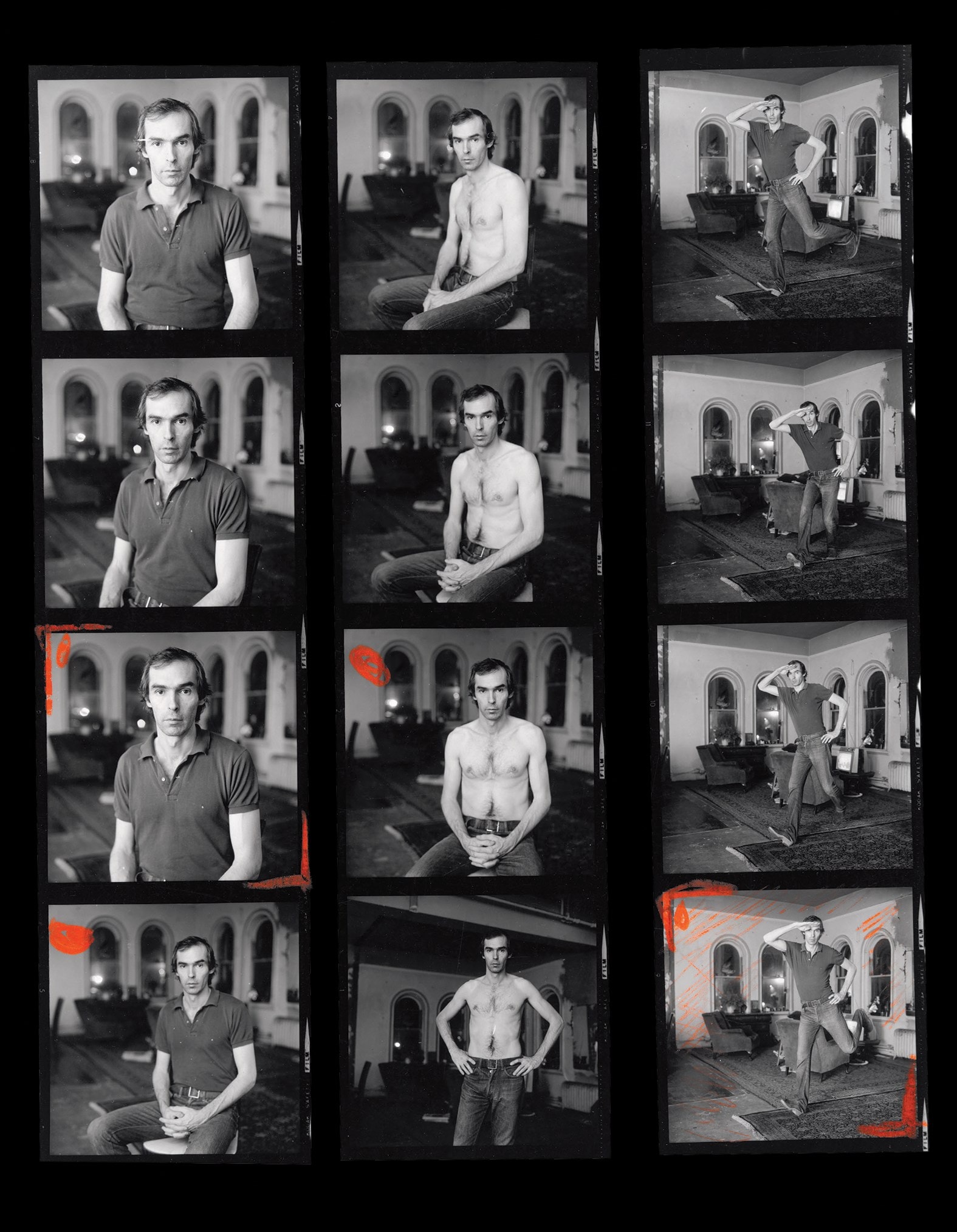
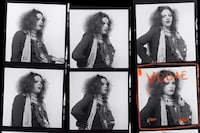
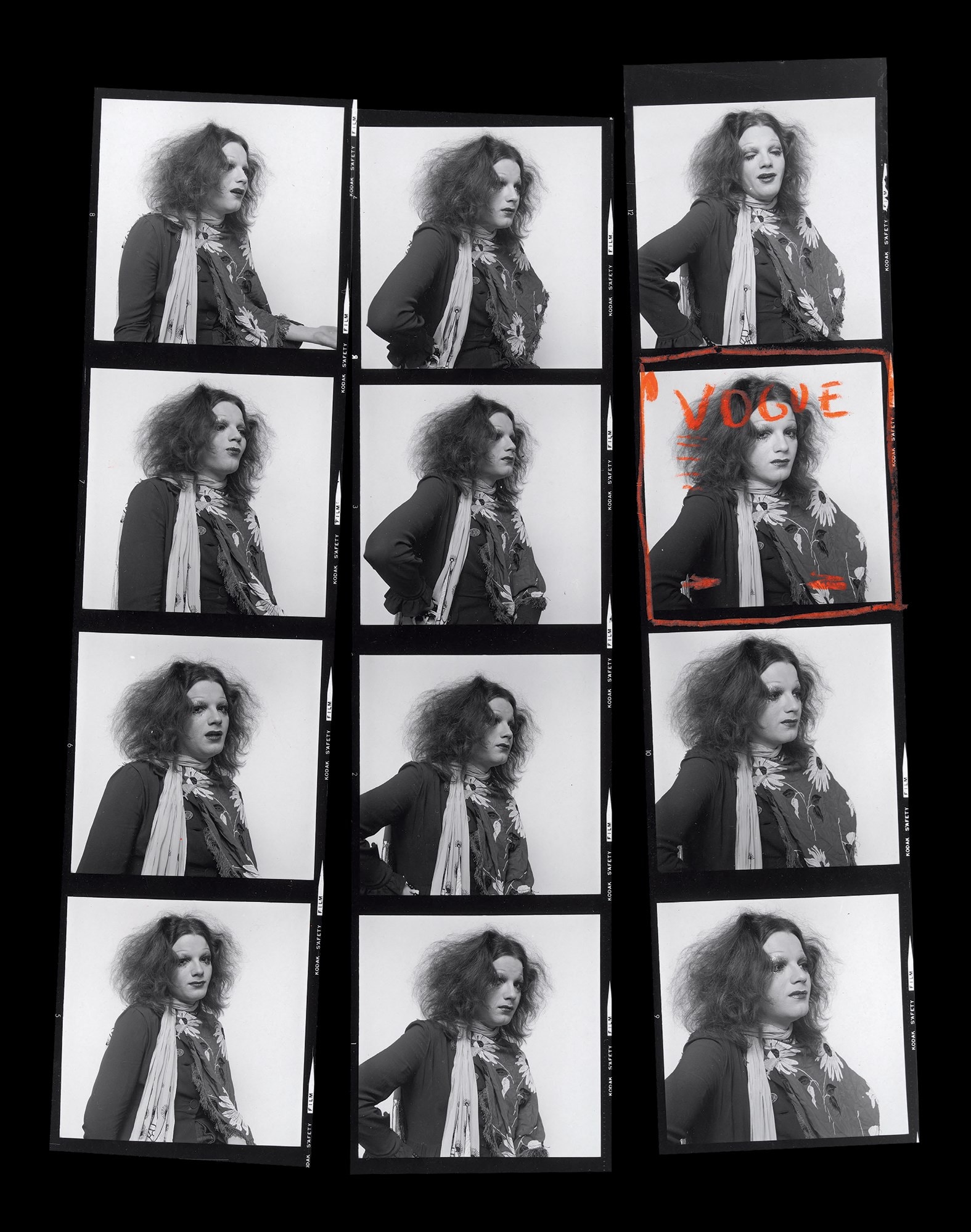
What makes the contact sheets so compelling is their tactility and physical intimacy. Marked directly by Hujar’s hand, they reveal his process through dots, crosses, crop marks and annotations. In the earlier work especially, the mark-making is emphatic, with tight crop boxes around faces suggestive of the prints to come. Occasionally something more playful surfaces. On a sheet of Jackie Curtis, Hujar wrote ‘Vogue’ above her head, as if auditioning the image as a magazine cover. Throughout the book, the marks become sparser as his artistic command is refined. “He knows what he wants,” McCall says. “It becomes more about marking a favourite frame.” Though many of those chosen frames, intriguingly, were never printed at all.
The characters who populate the sheets point to the downtown social world he moved through. Friends, lovers, ex-lovers, and artists repeat across the years. Among the recurring faces are Linda Rosenkrantz, Fran Lebowitz, John Erdman and Lynn Davis, alongside lovers including Joseph Raffael and Paul Thek. The contact sheets testify to the social intimacy of an artistic subculture present in New York. This closeness is evident in a shoot of Greer Lankton; a 35mm strip that moves from staged studio poses to the final frame of her at his kitchen table, smoking and talking. “Those are things that he never would have printed,” McCall says. “Hujar wasn’t just using the camera as an artist, he was using it to document his relationships with people.”
The images of David Wojnarowicz are obvious standouts. Wojnarowicz was first a lover, later a close and influential presence in the last six years of his life. Across the archive, his image returns countless times over and yet there are only two dedicated studio sessions. One can trace a shift in technique and a tightening of intent. In the first, Hujar is still working through a new approach to light, testing it, Smith explains, in an almost “mathematical way”, bouncing light to build shadow across Wojnarowicz’s face. The second session is more resolved, and it is there that the better-known images emerge. The change is less conceptual than it is practical, a refinement that allows something previously out of reach to settle.
In January 1987, Hujar was diagnosed with AIDS. He died the following November, aged 53, with Wojnarowicz and close friend Ethyl Eichelberger by his side. In his diary, Wojnarowicz wrote that Hujar’s death was “printed on celluloid on the backs of my eyes”; grief described through the very medium of inquiry. For years, Hujar’s work has sat on the edges of contemporary culture and art history. It wasn’t until Smith’s The Speed of Life exhibition in 2018 that his profile gained momentum, and within the last few years, we’ve tipped into a kind of Hujar-mania: biographies, reprints, magazine covers, exhibitions, a bottle movie (Peter Hujar’s Day) starring Ben Whishaw. Once a fringe figure moving through the downtown margins, Hujar has now entered the mainstream.
Yet the contact sheets offer something the now-canonical images cannot. They show the work not as fixed or resolved, but in the process of becoming, inseparable from the life being lived alongside it. There is an intimacy to the contact sheet that is at once material and social, held in its marks, repetitions, and proximities. Perhaps the contact sheets begin to resemble Hujar’s final major body of work, hidden in plain sight for decades after his death. The last 40 years could be viewed as a kind of developing process, the exposures left dormant in their chemical bath, waiting for the conditions of visibility to arrive. Only now, lifted from their plastic sleeves, does the world contained within them begin to fully emerge.
Hujar: Contact is published by Mack and is out now. An exhibition of the same name is on show at The Morgan Library and Museum in New York until 25 October 2026.
)
)
)
)