
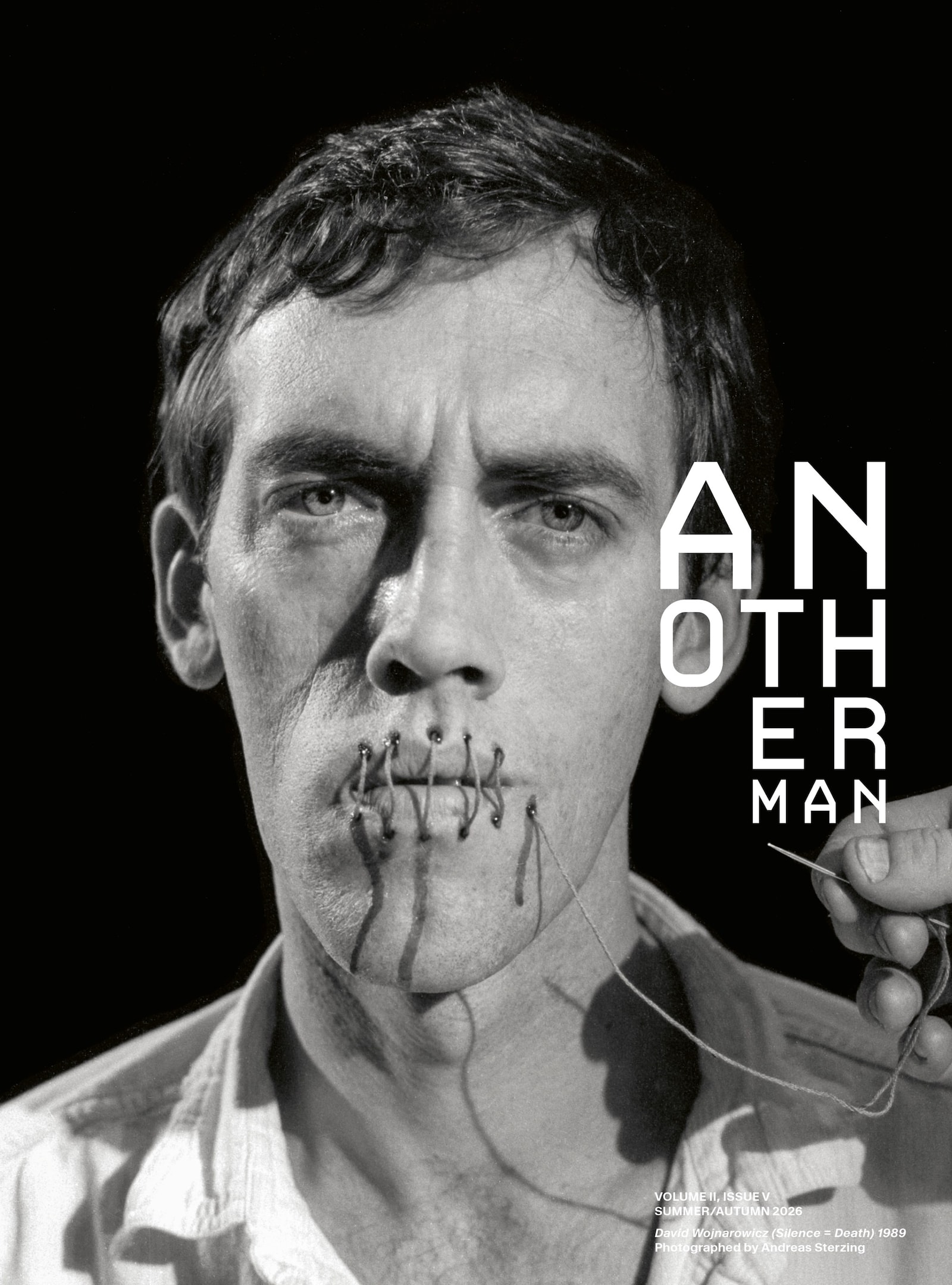
This story is taken from the Summer/Autumn 2026 issue of Another Man, Volume II, Issue V:
David Wojnarowicz survived a gothic childhood. He was born in Red Bank, New Jersey on 14 September 1954, and raised under the rule of a violent father. He escaped to New York City as a teenager, only to find himself homeless and half-starving, selling his skinny body to the pederasts and creeps that gathered around Times Square.
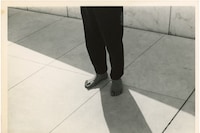
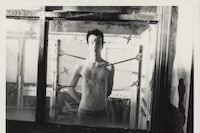
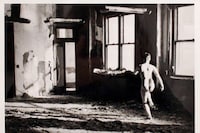
The realisation that he was queer terrified him at first. It was only gradually that he recognised it as a source of power, “a wedge that slowly separated me from a sick society.” The experience of deprivation and cruelty – no love, no security, no structure – likewise served as an initiation. He knew from his own experience that the American dream was an illusion dependent upon violence and exclusion. He saw through its deceptions from the very start.
He began making art when he was still on the streets, taking photographs shot from the hip with a stolen camera. He was driven by a desire to create a tangible record of the world in which he lived, an invisible realm, disregarded and even hated by society at large. Art wasn’t a career choice. It was a way to survive emotionally, a source of psychic nourishment and a mode of resistance.
, 1978–79)
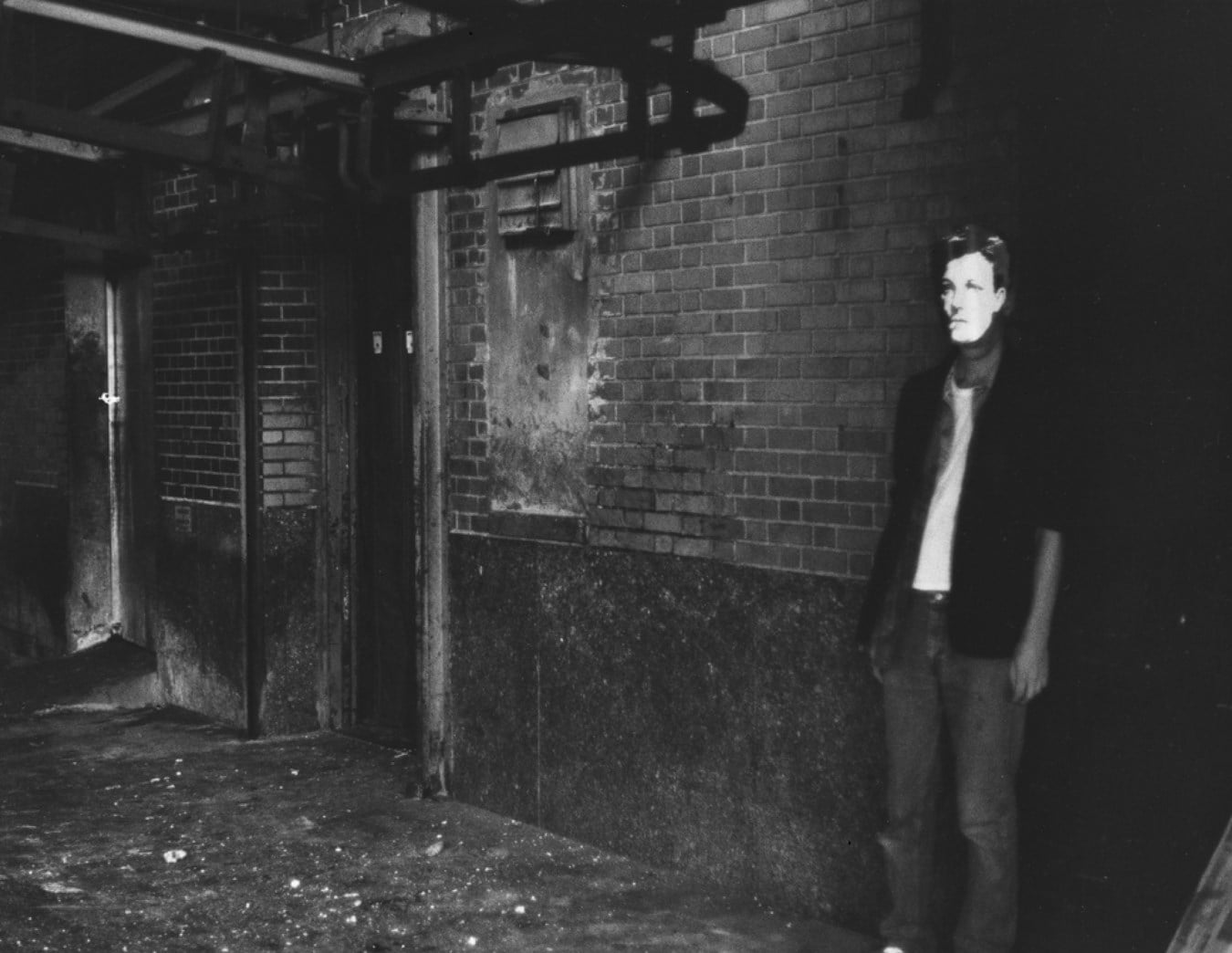
In 1979, he made a mask of that archetypal wild boy, Arthur Rimbaud, Xeroxing the cover of Illuminations and cutting out the face. He’d get a friend to wear it and then photograph him in the hidden places of the city, the same nocturnal danger zones he’d haunted as a kid. The abandoned West Side piers, where he went to cruise. Times Square, where he used to hustle. He placed the masked figure in diners and on the subway, shooting up and having sex. No matter the situation, Rimbaud remains unmoved, sexy and implacable, completely isolated from the world around him.
Despite his talent as a photographer, Wojnarowicz never wanted to be trapped in a single medium. He drew, painted, made films, experimented with graffiti and street art and wrote constantly, as well as playing in the punk band 3 Teens Kill 4. Though his diaries attest to a powerful and lifelong sense of isolation he was widely beloved in the East Village art scene where he made his home. His close friends included Kiki Smith, Nan Goldin, Zoe Leonard and above all Peter Hujar, the lover-brother-father figure who did so much to relieve him from the pain of his childhood and to give him confidence as an artist.
“Every painting or photograph or film I make, I make with the sense that it might be the last thing I do” – David Wojnarowicz
The arrival of AIDS ruptured this close-knit world. As friends sickened and died, David joined ACT UP and became a formidable activist. He appeared in Rosa von Praunheim’s 1990 documentary Silence=Death, raging and articulate, speaking out in his deep voice against the corrupt politicians whose inertia and homophobia were literally killing his friends.
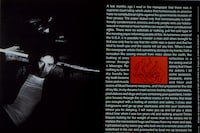
In Close to the Knives, he wrote about the experience of losing Hujar to AIDS. In the wake of this unassimilable tragedy, he was diagnosed positive, and his own work was drawn into an ugly culture war battle. He was sick and afraid, but the proximity of death kept driving him on. “Every painting or photograph or film I make, I make with the sense that it might be the last thing I do and so I try to pull everything in to the surface of that action. I work quickly now and feel there is no time for bullshit.”
, 1970)
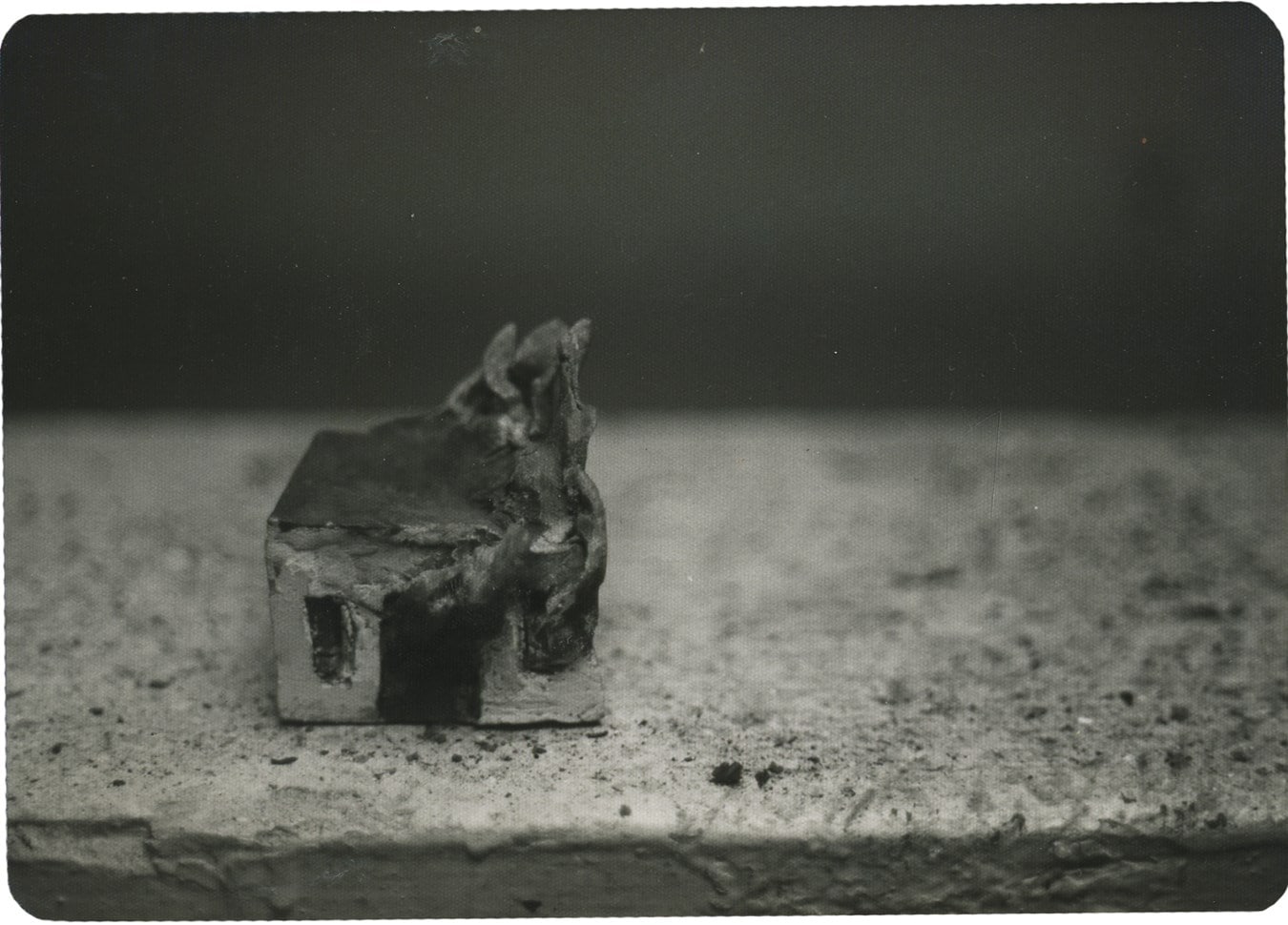
He was only 37 when he died, on 22 July 1992, up in the loft on Second Avenue that he’d inherited from Hujar. At the moment his dead body was carried into the street, the performer Diamanda Galás happened to be passing. On being told who it was, she screamed and screamed and screamed: an exorcism of total horror at what was being lost, erased, destroyed.
I’ve been reading David again lately. He had the rarest capacity to turn what was acutely painful into a source of illumination, a way of understanding the society he was in. He was so angry, he was so hopeful. There is no irony in his voice. It’s straight from the heart, hyperhonest, immediate, wounded, goofy, always on high-alert. A deep thinker, a serious person, despite his playfulness. He loved animals. His dreams were full of scorpions and tarantulas, frogs and turtles.
, 1985)
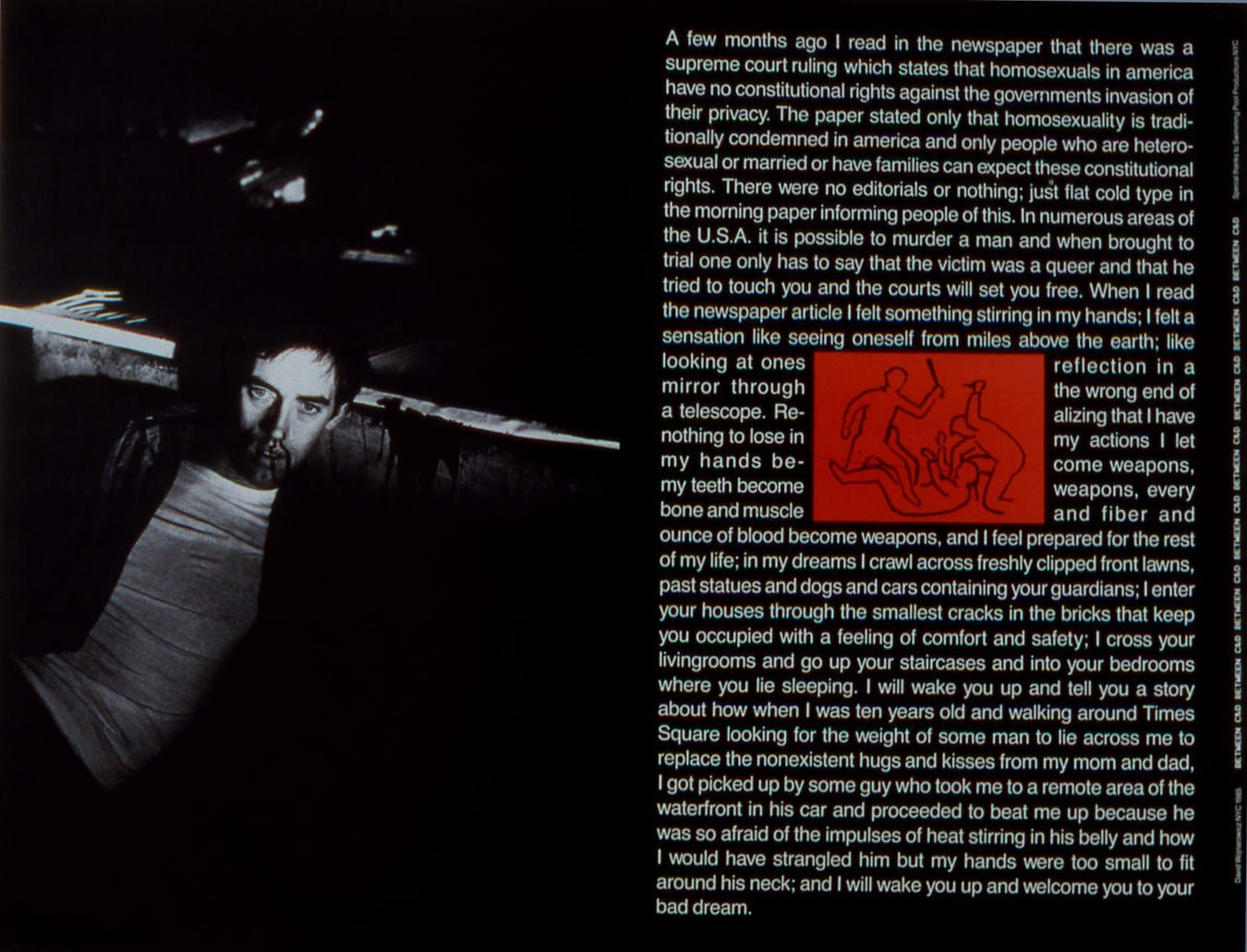
In his final years, he often spoke about what he called “the pre-invented world”: ready-made, commodified, hostile to difference. He developed a dream language in his work as a way of refusing its strictures. Time turned in upon itself, a magical project of undoing. He believed in making the most private things public, that ‘describing the once indescribable can dismantle the power of taboo’. Even at the end of his life, he had absolute faith in the possibilities of the imagination. He knew that history was cyclical, that everything could change.
I think he saw America for what it is: a nation steeped in brutality. His place was always with the excluded, the vulnerable, the ill-at-ease. He would not have been surprised by ICE raids, by state-sponsored cruelty and hatred. But he also told us that the world we see in the media, ‘the bought-up world, the owned world’, is not the real world, that there is another kind of reality and that we all belong by birthright to this deeper, wilder, stranger place.
Olivia Laing will be talking about David Wojnarowicz and The Lonely City at 10 at Union Chapel on 23 June. A special 10th-anniversary hardback edition of The Lonely City by Olivia Laing, featuring a new afterword, will be released on 4 June 2026.
, c. 1980)
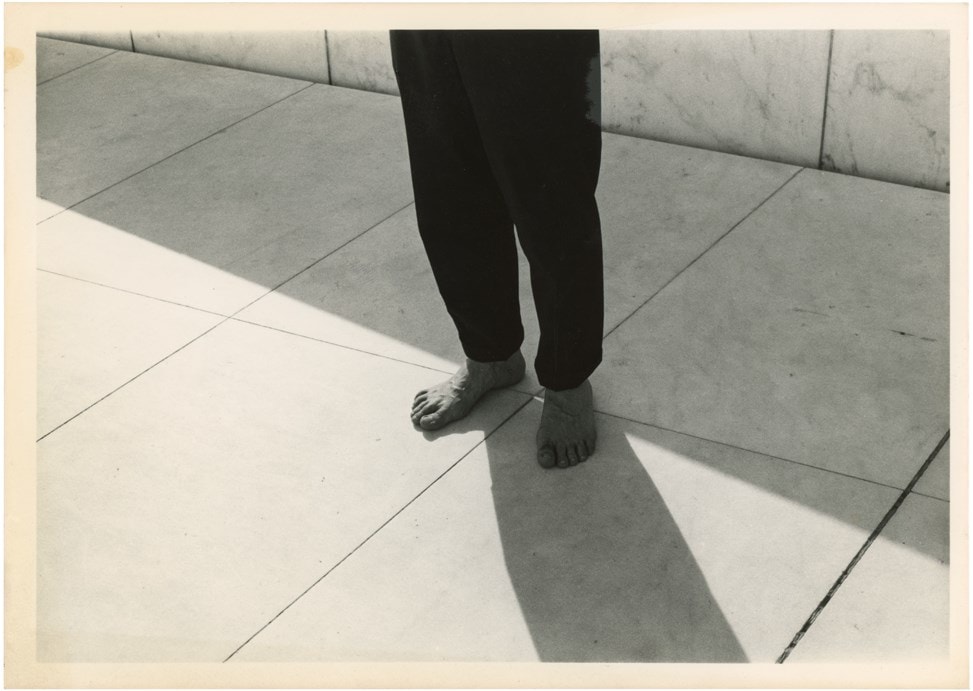
David Wojnarowicz (Silence=Death) 1989. Copyright Andreas Sterzing. Courtesy of the artist; P·P·O·W, New York; and The Modern Institute/Toby Webster Ltd., Glasgow. Untitled (David + Nest + Globe), 1989. Copyright Andreas Sterzing. Courtesy of the artist; P·P·O·W, New York; and The Modern Institute/Toby Webster Ltd., Glasgow. David Wojnarowicz at his Clocktower Studio, New York 1983. Copyright Andreas Sterzing. Courtesy of the artist; P·P·O·W, New York; and The Modern Institute/Toby Webster Ltd., Glasgow. Image supplied from The Modern Institute: Copyright the Estate of David Wojnarowicz. Courtesy of the Estate of David Wojnarowicz; P·P·O·W, New York; and The Modern Institute/Toby Webster Ltd., Glasgow
Images supplied by The Modern Institute and PPOW: Copyright the Estate of David Wojnarowicz. Courtesy of the Estate of David Wojnarowicz; P·P·O·W, New York; and The Modern Institute/Toby Webster Ltd., Glasgow. Special thanks to Olivia Laing, Isaac Alpert at PPOW, Fales Library, Calum Sutherland and all at The Modern Institute, Honey Webster and Sam Talbot
This story is taken from the Summer/Autumn 2026 issue of Another Man, Volume II, Issue V, which is on sale internationally from 30 April 2026.
