A daily edit of our favourite blogs

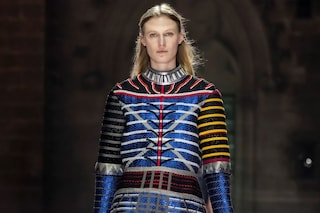
Margiela, inevitably here and now, by Marina Faust

—by A BLOG curated by / Wednesday, February 24, 2010

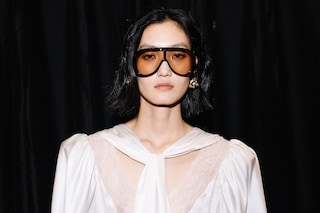
Backstage at Maison Martin Margiela SS' 92, by Marina Faust

In our second contribution from the wonderful Paris-based photographer and artist Marina Faust, we present an article that she wrote on the history of the Maison Martin Margiela in 1996 for Purple Magazine. Many thanks to Marina and to Purple Magazine for their support.

*                       *                       *

MARTIN MARGIELA, INEVITABLY HERE AND NOW

October ’89. Paris. People talk about Martin Margiela who has presented his collection on a terrain vague. I am intrigued and attracted. Sounds alternative or underground. We hadn’t had that for a while.

Fall ’90. I visit the showroom. Everything is painted white, even the TV. Assimilation of a place as he found it. Don’t destroy what has already been lived through, introduce yourself. An attitude he applies as much to objects as to clothes. I feel at home.
Else, one of the members of the tight group around Margiela leads me in. I plunge into the collection, up close, and lose myself in the details. Forget the superficial. Respect it all. The linings are a fundamental part of the whole. Inside/outside. Men’s vests for women, dresses and skirts are long. Rectangles are tied around the hips. You wear them over your jeans. Folded they are the size of an envelope. The folds are part of the piece. Any shape of body can do it. Invent yourself. Show the fringing fibers of the material. No need to hide a cut in a hem. The five buttonholes on the sleeves are real. Play with them. This is not about pretending. It is about being. I am impressed.

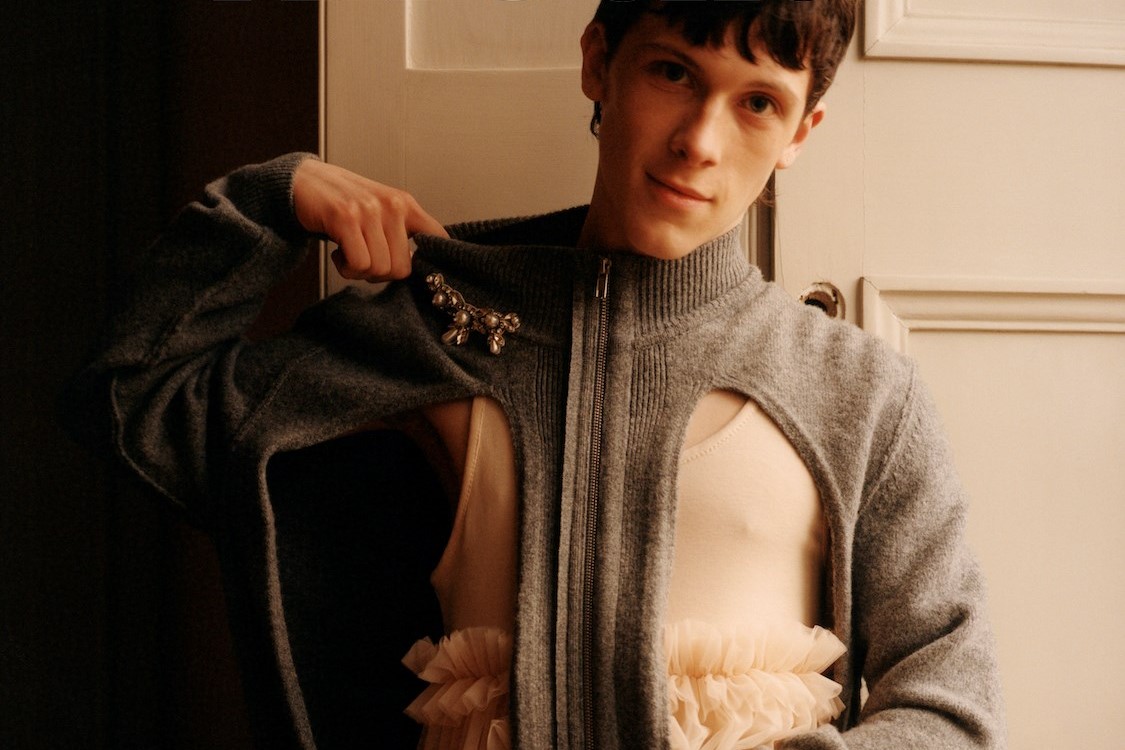
March ’91. Presentation of the winter collection. Come over and have a drink. Women are dressed, prepared and made up all day long. They walk, stand, converse, come and go. There is a wide range of age and morphology. It feels human. I photograph. I fall in love with a deconstructed sweater. Upper body, hips and sleeves. Wear any of it separately if you want to. Ribbons are dropping from the central piece. You tie them around your torso. Ribbons are on skirts, inside jackets, on jabots. They decorate hands, are braided around fingers. Their function as elements of garments has evolved into ornaments for the body.

October ’91. Basic material: vintage scarves. Chosen, assembled, in their original shape they are sewn together, become skirts, shirts, tops knotted around the body. Touch anything and make it into something. The blue jeans painted all in white or all black (’91). Deviate the functions. The plastic bag T-shirt (’89), the sweater made of military socks (’91). While people are walking into the candle-lit metro-station to see his next performance Margiela continues the motifs and colors of the scarves onto the women’s bodies. Stripes, spots, squares, triangles are painted on arms, hands, legs, shoulders and chests. Don’t be limited by a fabric. Transgress and go further.

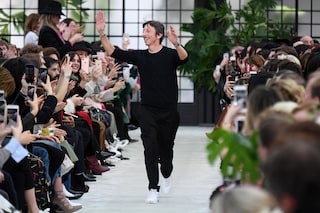
Backstage at Maison Martin Margiela SS' 91, by Marina Faust

October ’92. Two different scenes. Same time. Concept (one of many): Jenny Meirens, the second, essential and one heart and mind of the company. Disorientation. People are angry. They can’t have it all. Color: white. The women walk barefoot through the crowds. A small branch of fresh green box leaves is hanging from their necks. Even their eyelashes are white. It is peaceful and strange. They look like Renaissance hippies of the future wearing dusty antique velvet and brocade jackets. The sleeves are too long as always, the shapes tight. The bodies seem totally at ease in their costumes. Woodstock revisited with Ophelia. Heavy metal bracelets decorate the upper arms. Later I hear the other show was all in black.

Spring ’93. New York. Downtown Manhattan. I walk into a coffee shop. A young man is leading me to the table. “Is this a Martin Margiela jacket?” “Yes it is.” “Oh, it is wonderful!” That was swift and sensitive, especially among a rushing crowd of hungry people. America. Undoubtedly he has become the hero. As for myself it adapts harmoniously to me and what is mine, which actually provokes occasional encounters with Margiela fans as if we were complicit mutants from that very special planet.

October ’93. Choose the best of five years, dye the whole thing, put it in an ex-supermarket and show it again. Interrupt the flux. Don’t go with it. Don’t feed the ferocious hunger. Resist. It works. I want a second set of every piece in grey. There is a structured thought behind every presentation. It is always intelligent.

March ’94. Barbie and Ken. Everything is proportionally enlarged from the holes in the stitches, the metal buttons to the seams, the hems and the zippers. Compose a collection of Barbie clothes, make them big, put them on human-size dummies, wrap a transparent plastic bag around their heads and stick black tape over their eyes. Barbie hardcore, refined version. Perfectly harmonious with pieces from any of the previous collections. Astonishing. It is rolling. No show. Only clients. Privacy. I feel good in the new showroom. Looks like an old hangar.
Additional group: an edition of old garments. Chosen, exactly reproduced and labeled. My favorite: the tailored jacket for men, Germany 1970 by Martin Margiela 1994. Double identity. First and second. Style reference: Serge Gainsbourg in the ‘70s. The collection will only be shown to the press and public six months later when it arrives in the shops. Courageous. Permanent attempt to break the routine and the established.

March ’95. Veils cover the women’s faces. They are walking between benches. The circus is packed. The record is scratched. Disorienting interruptus aspect of the show. The colors of the outfits change very subtly from black to brown to pink and hyper fuchsia. Zip an overall up your body from the ankle to the neck. Throw a fur collar over your T-shirt. Slide long leather sleeves up your arms. They were gloves before but the hands are gone. Music switch. Sixty-nine women take their veils off. Hundreds of fuchsia balloons travel on the wind back home with me.

Spring ’96. I am wearing a photographed coat, a coat of my photograph… Margiela recycles the recycled and himself. A picture of a vintage or a Margiela dress, of a jacket or a shirt is printed on a different fabric and on a different pattern. Self-appropriation. A woolen sweater becomes a nylon T-shirt. A heavy coat becomes a light one. A dress becomes another dress. The dress of a dress. If you have the original dress and the photographed dress, you have the same dress two times but not at all. Confusion. People want to touch the buttons but they can’t. Illusion.

October ’96. Men carry devices on long sticks to throw light beams on the women who walk in front of them. Illumination of the precious in the dark. Rhythmical motion in harmony. Black shadows are painted on the faces. Red lips smile along to show Hollywood-white painted teeth. Nylon stockings cover the shoes. Stocking outside, shoe inside. A plastic garment bag is recycled into a transparent raincoat. Don’t bother with the garment, wear the bag. Transparency. Protection? Emphatic sense of freedom and consideration for the body and its fragilities.

Sign: the first one in the zodiac. Persona: discretely very present, nearly never not working, tender, obsessed. Concern: Don’t look at me. Look at my work.

*                       *                       *

Martin Margiela, inevitably here and now.

Marina Faust, 1996.


View original post


More from this blog


Related Articles


Daily Columns on Fashion, Culture and Ideas