
"For me, it’s just trying to find new ways to put paint on that will be surprising. I like the appearance to change from one picture to the next and it is a proposition for people and seeing – how to look at pictures...
"For me, it’s just trying to find new ways to put paint on that will be surprising. I like the appearance to change from one picture to the next and it is a proposition for people and seeing – how to look at pictures. What can a painting do? Probably something I asked when I started. There’s a joy of painting, optimism and hope that one can enjoy, that there’s a good thing rather than an indeterminable end in death. It’s not really life and death. It's death and art. That’s the difference for an artist; the thing you leave behind is some kind of truth. That’s in those things that what we’re fighting for. If you’ve decided you’re going to engage with this practice, you don’t want to mess with the work. When it comes to the integrity of anyone, making a film, what you’re doing, it’s got to be right."
"When it comes to the integrity of anyone, making a film, what you’re doing, it’s got to be right"
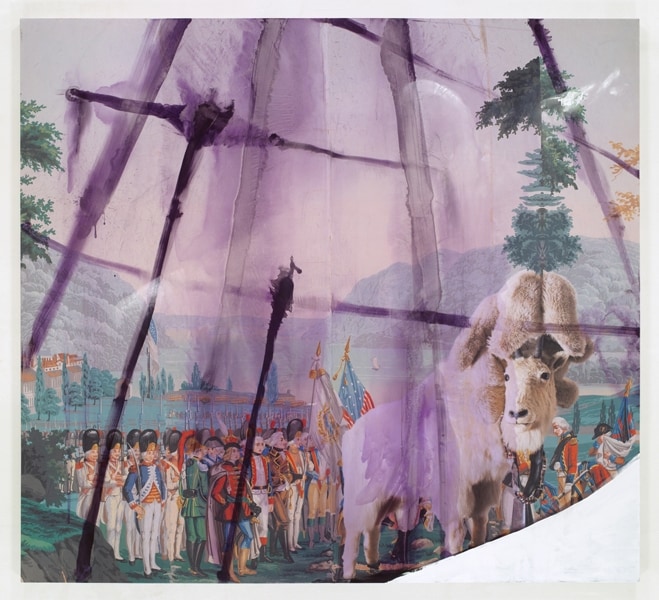
The infamous Julian Schnabel garnered recognition for his "plate paintings" in the 1980s, where shattered porcelain plates were glued to flat surfaces. His latest series combines Indian deities, history paintings and animals with vast washes of purple ink. Schnabel is a painter who lives and works in New York and is the director of films such as Basquiat (1996), Before Night Falls (2000) and The Diving Bell and the Butterfly (2007).
His latest exhibition Deus Ex Machina is on show at CFA Berlin and runs until July 28.
Text by Nadja Sayej
Nadja Sayej is a Gonzo art critic best known as the host of ArtStars*, the new art criticism. She writes for VICE, the New York Times, among others, and lives in Berlin.
