
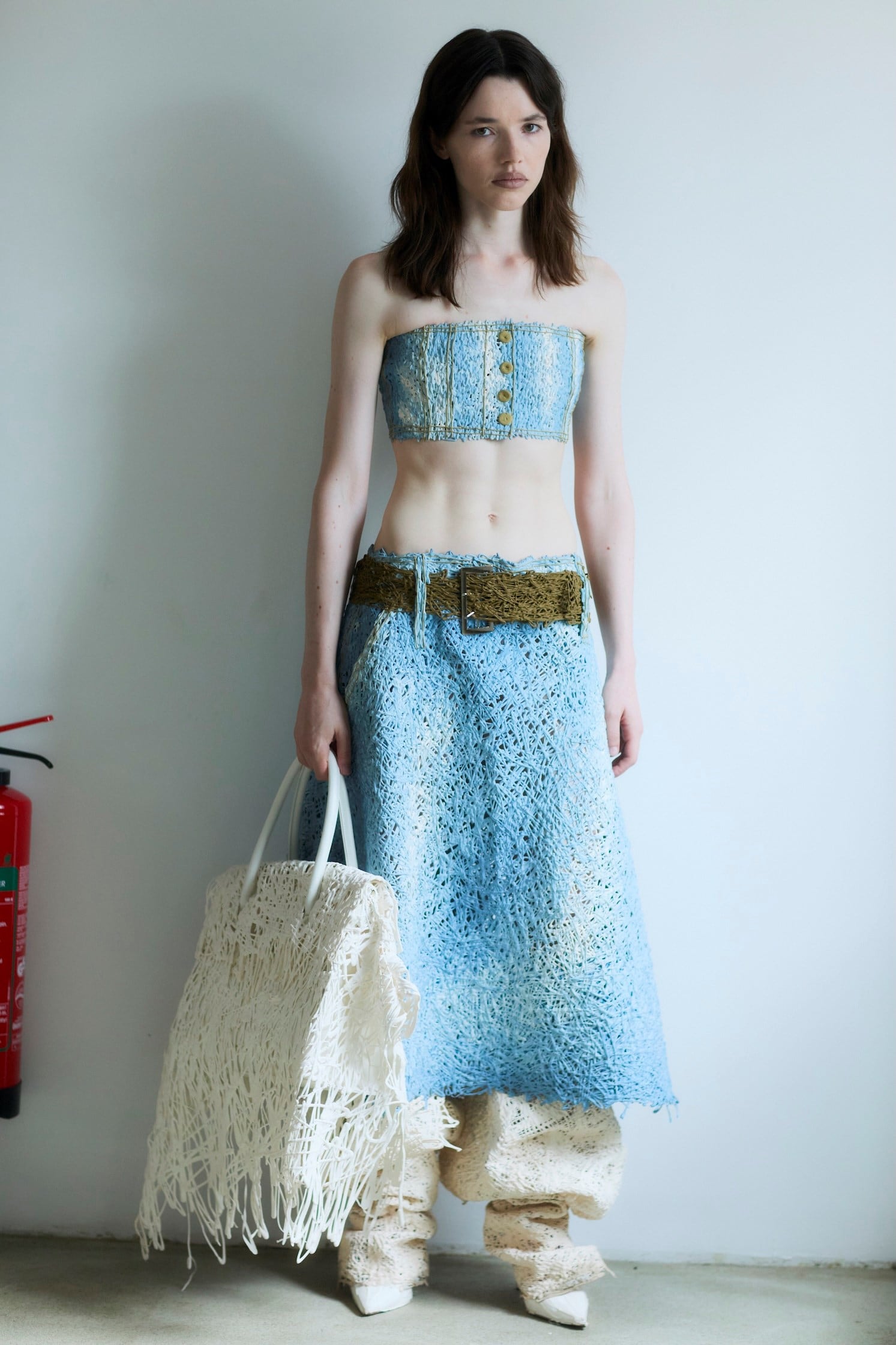
Rumour has it that Berlin Fashion Week is eclipsing London. I’m not entirely convinced, but there is something in the rough-and-readiness of it all – the freewheeling creativity, the raucous mood – that recalls London Fashion Weeks of an earlier, less polished vintage. Some of that comes down to the remarkable support designers on the schedule receive from the German Fashion Council, which comes with a not-inconsiderable €25,000, as well as opportunities to take their work overseas, to Korea and Japan, and place it in front of buyers and press. Some of it is more elemental – to put it simply, Berlin is a very good time. Across four days, the city seemed to host parties in every available pocket, each to varying degrees of disorder. I won’t write what was allegedly inside the piñata at the Barragán afterparty, but let’s say it all felt very much in the spirit of the city.
Now the dust has settled, the ashtrays have stopped smoking and the beer bottles have been shovelled into the recycling, here are six of the best shows we saw at Berlin Fashion Week Spring/Summer 2027.



GmbH
What a way to throw a birthday. With Arca on the runway, GmbH’s tenth-anniversary show in Berlin shimmered with silvered tracksuits, glinting surfaces and the slogan, “See me, feel me, hear me, love me, touch me”. But Benjamin A Huseby and Serhat Işık were not simply polishing up the brand’s greatest hits, turning instead to the city’s largely erased fashion history, namely the Jewish designers, tailors and salon owners who helped make 1920s Berlin a fashion capital before their works were destroyed by the Nazi regime. Those references surfaced in archive garments, Clara Böhm-inspired collars and “couture tracksuits” that translated hand-beaded glamour into clothes for today. In a city still rarely taken seriously as a fashion capital, GmbH made a case for Berlin’s lost lineage.
Read our interview with Benjamin A Huseby and Serhat Isik here.
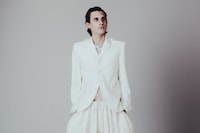





Marke
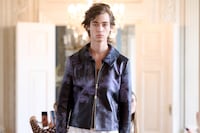
At Marke, Mario Keine did what Mario Keine does best: put his head in books, old things and all the romantic debris of history then turned it all into clothes. Titled Relics & Remnants, the Spring/Summer 2027 collection imagined a solitary wanderer moving through time, with Renaissance slashes, Baroque underthings, floaty culottes, Victorian formality and sportswear all drifting into one. The floor was scattered with antique letters on loan from an antiquities supplier, some of which were apparently stolen by guests. (Give them back!) But in fairness, there was something almost too thematically perfect about relics becoming remnants in real time. At the ICC Berlin, itself a living archive of former lives, Marke made history feel pilferable.
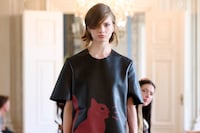
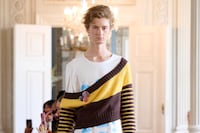
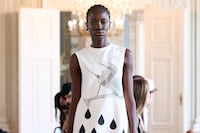

Andrej Gronau
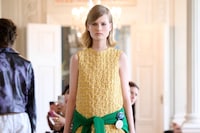
Inside a fabulous rococo-style building, the clothes at Andrej Gronau’s Spring/Summer 2027 show were teeming with hand-drawn cats, mice, flowers and tiny narrative oddities, but felt less frosted than seasons past. Titled Island’s Isolation, the collection imagined the garden as a miniature world, borrowing from Francis Bacon’s strange colour tensions and Karl Blossfeldt’s botanical photography. “I realised that I love colour, I love prints,” Gronau said backstage, “but at the same time I want wearable clothes that you can wear in the office.” As he shifts away from knitwear towards sharper colour blocking, prints and easier shapes, he seems to be finding his language. “I’m more a colourist than a pattern maker,” he said.
Kasia Kucharska
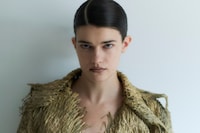
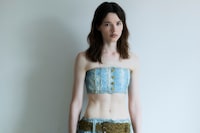
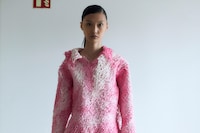
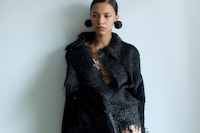
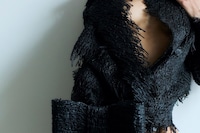
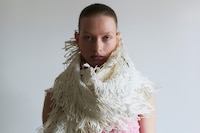
Kasia Kucharska’s Spring/Summer 2027 collection was best seen up close, which made a presentation the right format for its strange little deceptions. Trench coats, denim jackets and knitwear appeared familiar at first glance, before revealing themselves as latex impostors, all trompe-l’œil trickery and sly glitches. Childlike scribbles, missing details and multiplied elements gave the collection the feeling of a wardrobe caught mid-malfunction. Made in collaboration with Nike and AAS, the immersive presentation pushed that idea further, with models moving through warped everyday routines, stopping at each wall like video game characters. Everything looked almost normal from outside the glass windows of the space, but nothing was quite what it seemed.




Kolya Bogatyrev
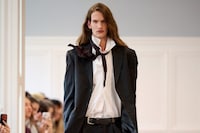
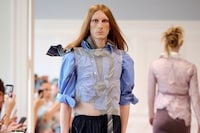
Kolya Bogatyrev’s Spring/Summer 2027 show began with two children, no older than five, skipping through the space to open the doors: an adorable trick that might have curdled, but didn’t. Titled Classical Reminder, the collection was about life’s ordinary moments becoming memory, with a multigenerational cast making that point without too much hand-wringing. The clothes played a funny game of reconstruction. Quite normal shirts were trapped under sheer, skin-tight layers, leaving you wondering where styling ended and design began, but then emerged ties frozen mid-wind gust, skirts were made from polo shirts stitched together and one excellent pair of shorts that seemed to come from two upturned pairs of jeans. It was weird but warmly so; a little Vetements, without the dark dystopia.




Barragán
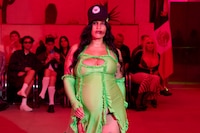
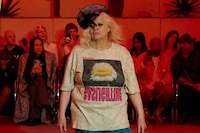
For Barragán’s first formal runway presentation since 2023, the Mexican Embassy in Berlin became a gorgeous diplomatic fever dream for a collection about Mexican identity and belonging. It opened with a pregnant woman, grounding the show in the body before Barragán sent it careering elsewhere – one model carried a perspex box of cockroaches, others walked with struts reminiscent of a GTA V character, hands buried down trousers, skin tight boxers flashing the name of a popular gay porn site on their waistband. Backstage, Victor Barragán sprayed champagne over anyone within range, drank from the bottle himself and was met by a clapping community. Later, at STUDIO IIII for the afterparty, a piñata was beaten down by muscled men in Speedos (and its contents immediately became folklore). I’d say Berlin suits Barragán.
