
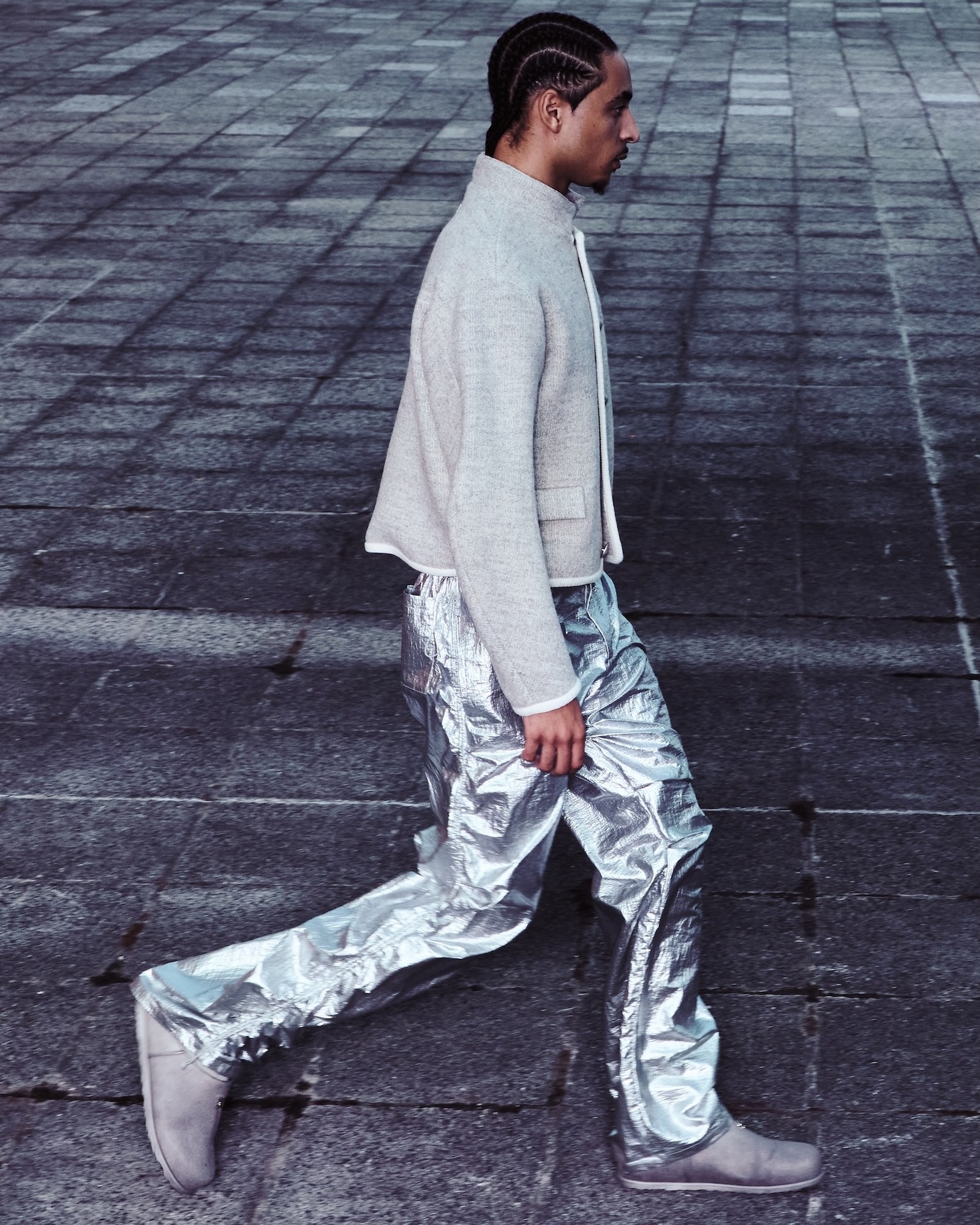
There was a shimmer to GmbH’s tenth anniversary show in Berlin. It was literal in the silvered tracksuits and glinting surfaces, made more human in Arca walking the runway – a figure from GmbH’s history returning to the family table. Sometimes it came through words, too, with the phrase “See me, feel me, hear me, love me, touch me” appearing on clothes and echoing across the soundtrack like a plea, or a love song.





But the collection’s real brightness came from something kept decades in the shadows. Benjamin A Huseby and Serhat Işık say they founded GmbH in 2016 “to tell stories”. Ten years on, their story led them backwards – both through the brand’s own archive of sexy sports and clubwear cut close to the body and into a largely erased chapter of Berlin’s fashion history. “Thinking about our ten years, we started looking at why we started GmbH in the first place,” says Huseby. “It felt like our instincts were very pure from the beginning.”
Their research brought them to Modestadt Berlin, Gesa Kessemeier’s 2025 book on the city’s forgotten fashion history. In the 19th century, Hausvogteiplatz became the centre of Berlin’s ready-to-wear industry, and by the 1920s the city had grown into a fashion capital in its own right, with Jewish designers, tailors, entrepreneurs, shop owners and clients central to its rise. This is the part of the story most people do not know, which was precisely GmbH’s point. “People complain that Berlin is in the backwaters of fashion,” says Huseby. “How can the city improve, how can it become more professional, better, more serious? But looking back at this history, before the war, it wasn’t a given that Berlin would become secondary.” Işık is more direct. “Fashion was the second-biggest industry in Germany,” he says. “It was on par with Paris in the 1920s and 30s, and it got completely destroyed. All that information, all the pieces, completely vanished.”


After 1933, Jewish fashion businesses were seized, their owners forced to sell, exiled, deported or murdered. Jewish textile merchants and traders had settled around Hausvogteiplatz in particular, and from 1933, Jews were banned from working in the fashion industry, forced to sell property and deported if they could not flee in time. Companies were “Aryanised”, their owners robbed, displaced and murdered. In November 1939, Nazi stormtroopers raided hundreds of Jewish companies and shops across Germany, particularly in Berlin.
GmbH, a Berlin house founded by two queer designers of minority backgrounds, was looking back at a Berlin fashion world shaped by Jewish makers and then destroyed by nationalist violence, while presenting in a city where history hasn’t settled. “As our minority communities are facing increased state repression and marginalisation, as well as the extreme right is marching both figuratively and literally through our streets, GmbH will resist,” reads their notes. This is not an abstract position for GmbH. At their Autumn/Winter 2024 show in Paris, Huseby and Işık opened with a ten minute speech calling for a ceasefire in Gaza, the release of hostages, a free Palestine and an end to the occupation; the collection, Untitled Nations, included keffiyeh pieces made in collaboration with SEP, whose hand-embroidered textiles are produced by Palestinian and Syrian refugees in Jordan’s Jerash Gaza camp.

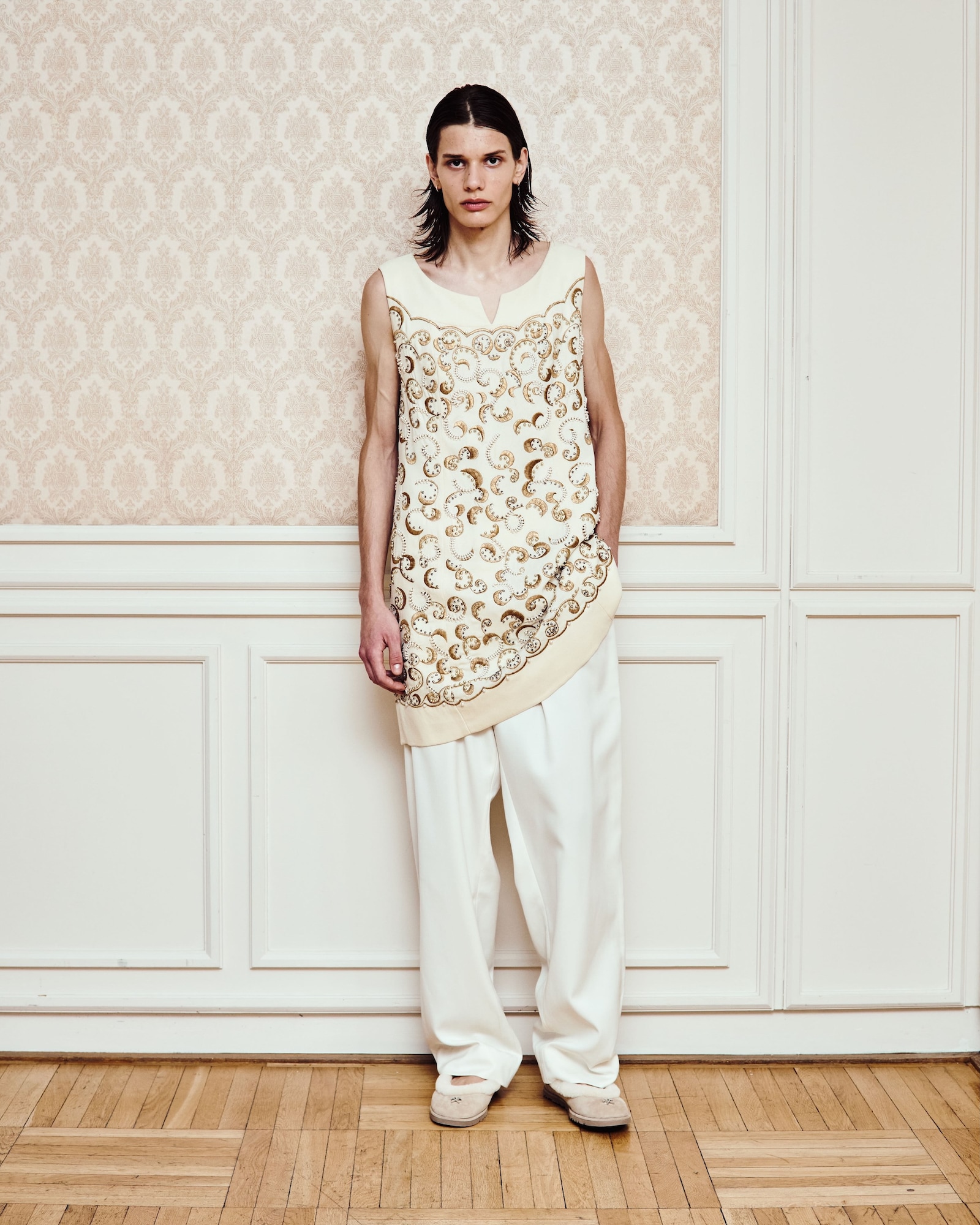

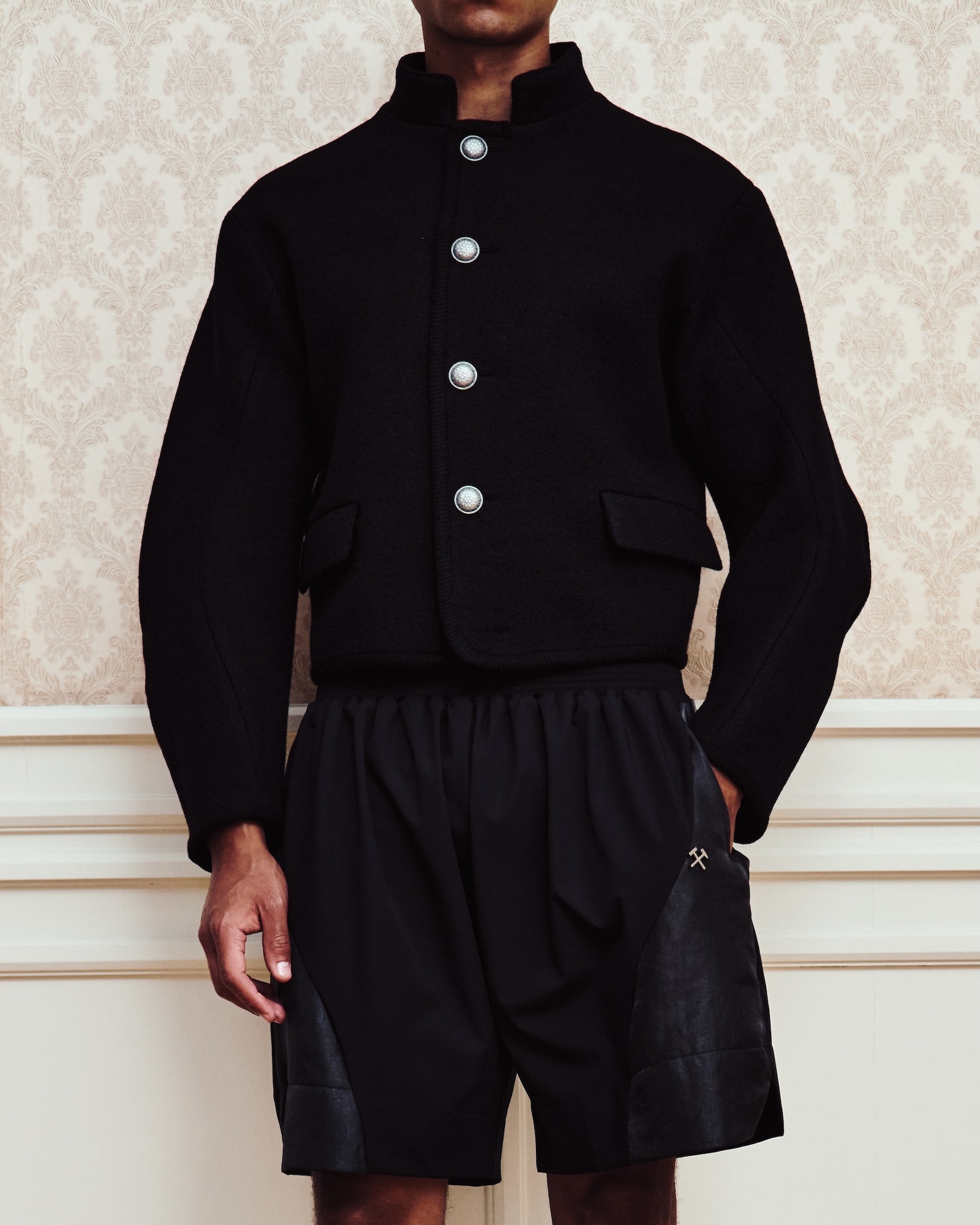
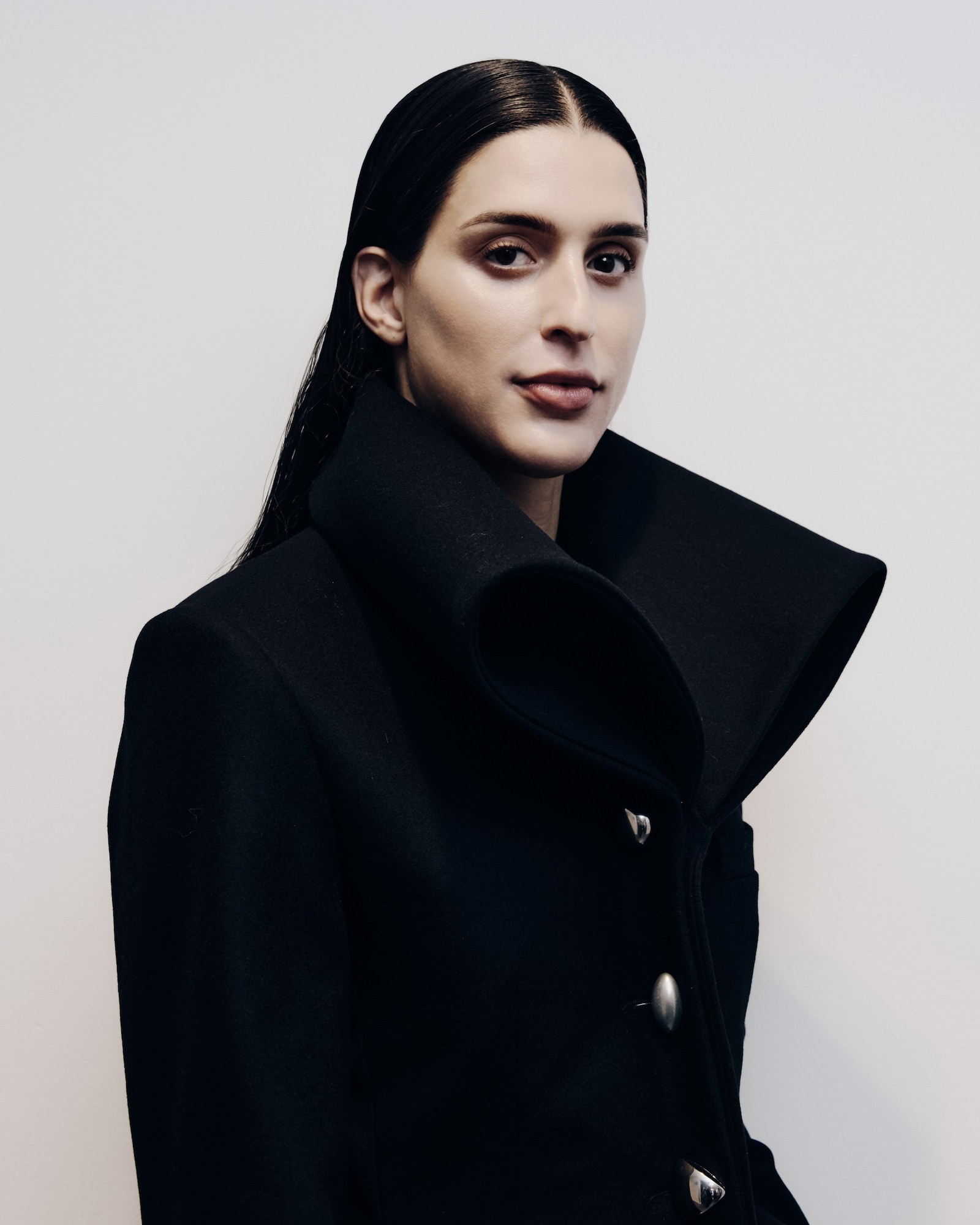
The collection began from GmbH archetypes – sleek sportswear, sensual severity, garments that enhance and protect – before opening them up to the ghosts of Berlin couture. The most literal references came through archive garments from Julia Schwarz, a major private collector of Berlin fashion. “We went into our own archive, into her archive. We spent a lot of time talking about the past and the fashion, and were actually able to see the clothes. They’re incredibly made.” Three coats at the beginning of the show were recognisably GmbH, but with collars inspired by a Clara Böhm design from the early 1930s that the designers had seen only in a photograph. “We had our couture pieces, we had the ones from over 100 years ago, some from 1910, 1928, and it felt so natural to incorporate [them],” says Işık. “It feels like the city is ready to have this happen. It’s not something we sought out. It came to us.”
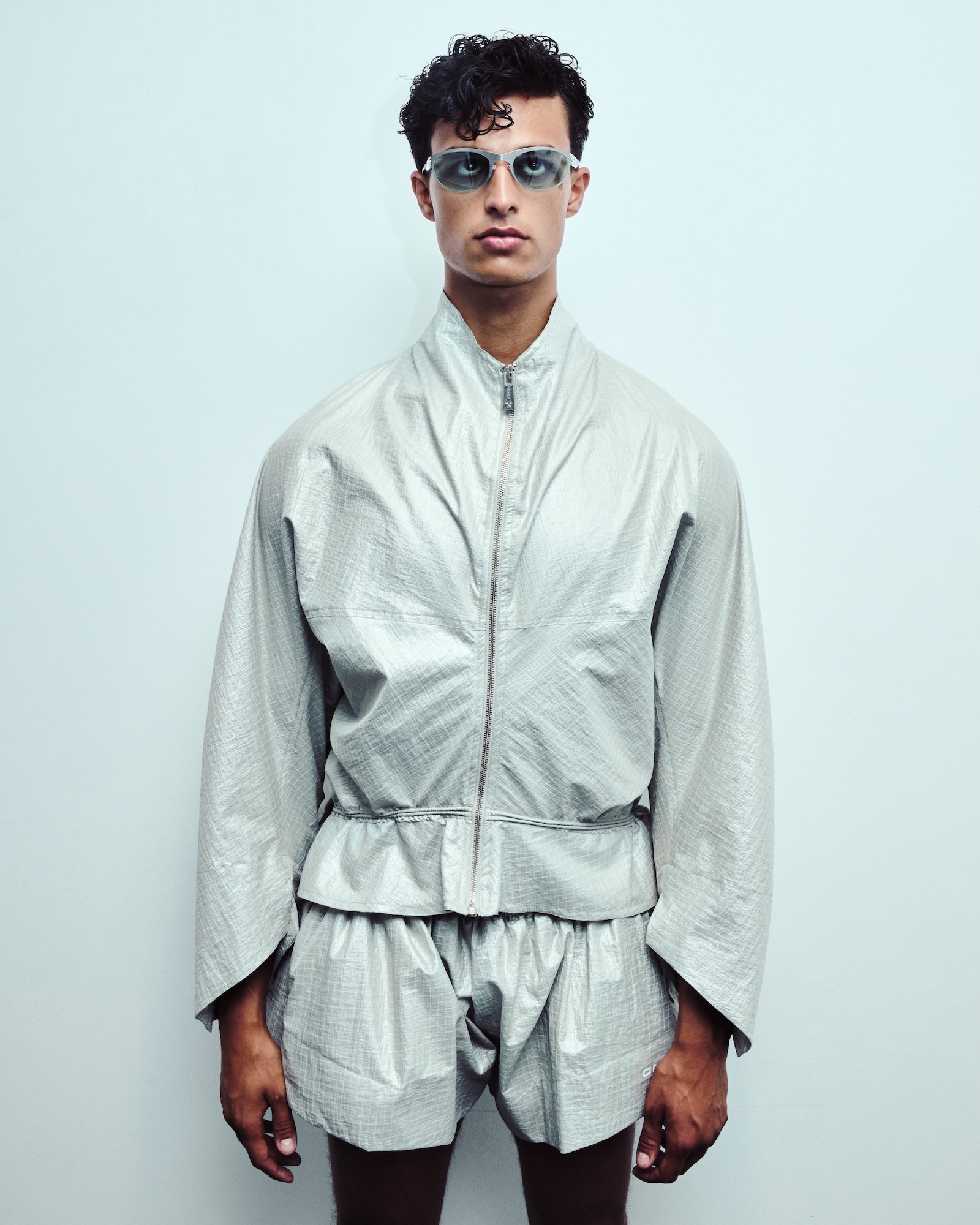
They translated that Böhm’s haute couture into outfits of today: tracksuits, technical lightness, clothes designed for movement. Silver became a contemporary answer to the hand-beaded couture pieces Huseby and Işık encountered in their research. “How can we make something that is as sparkly as these hand-beaded dresses and still make it feel very wearable and real?” asks Huseby. Işık laughs describing the result as “couture tracksuits” – practical, light, easy to put in a backpack, good on a Lime bike.

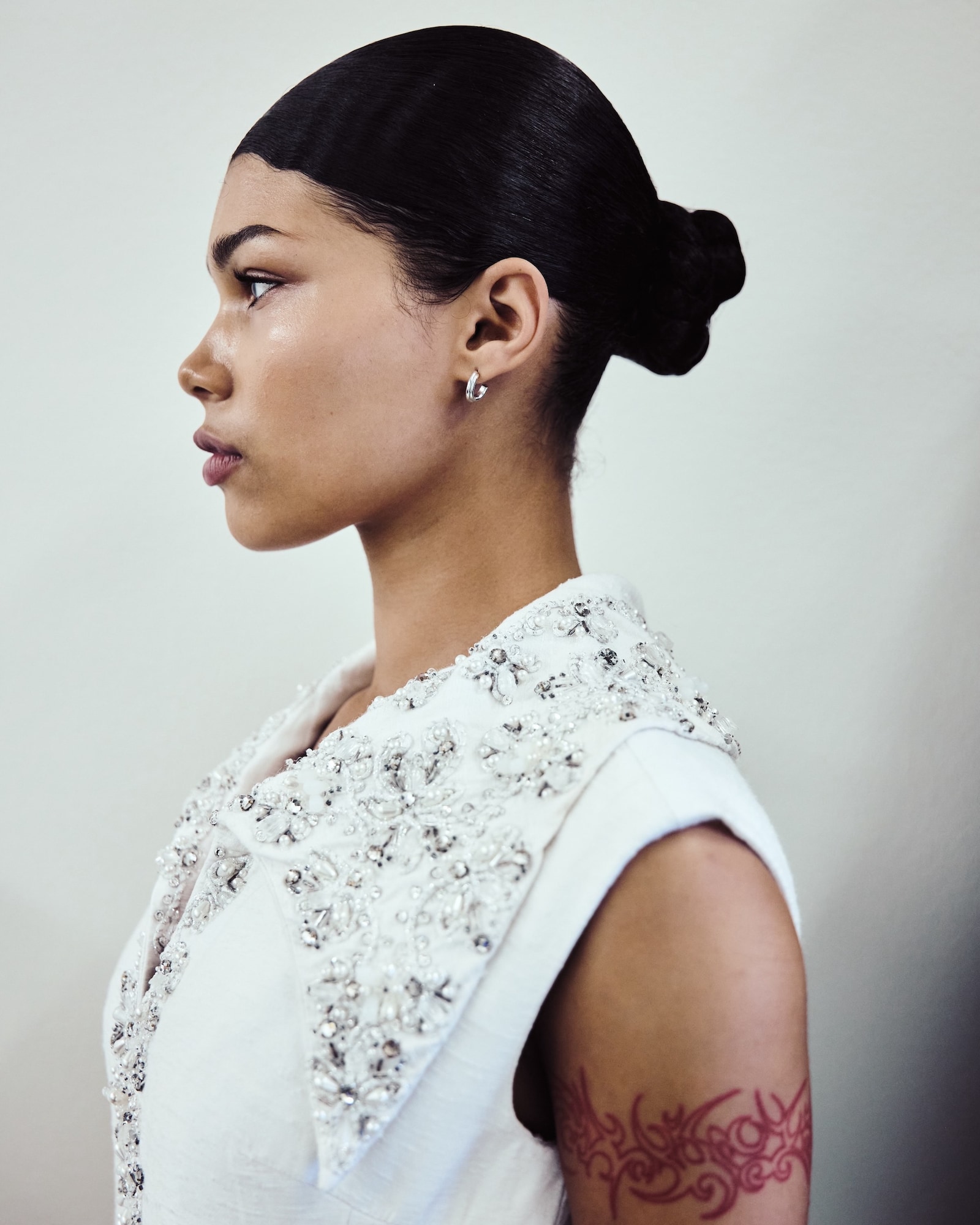


What does it mean, then, to build an archive where one has been denied? GmbH’s answer was to braid together what survived: photographs, garments, research, the brand’s own ten-year wardrobe. Huseby points out that, 100 years ago, Berlin and Paris were not strangers. “There was a community between them and the Parisian designers,” he says. “They did shows and exhibitions together, they were friends, they were sharing resources.” The lost cosmopolitanism gave the show its emotional charge, but still, GmbH kept its own body in the room. “Alongside that, it was also about the wardrobe we started making for our friends,” says Işık. “The sexy sportswear and the clothes we live in. It was very important to exist within that conversation as well. It all relates to the body – one way or another, you have to wear the clothes.”
Arca’s presence crystallised the feeling. She was one of GmbH’s first collaborators, with Huseby and Işık making custom looks for her in the brand’s earliest days. “It just felt natural for this celebration to come together again,” says Işık. Other longtime friends returned, on the runway and to the front row. “We’ve all kind of grown up together,” Işık says.

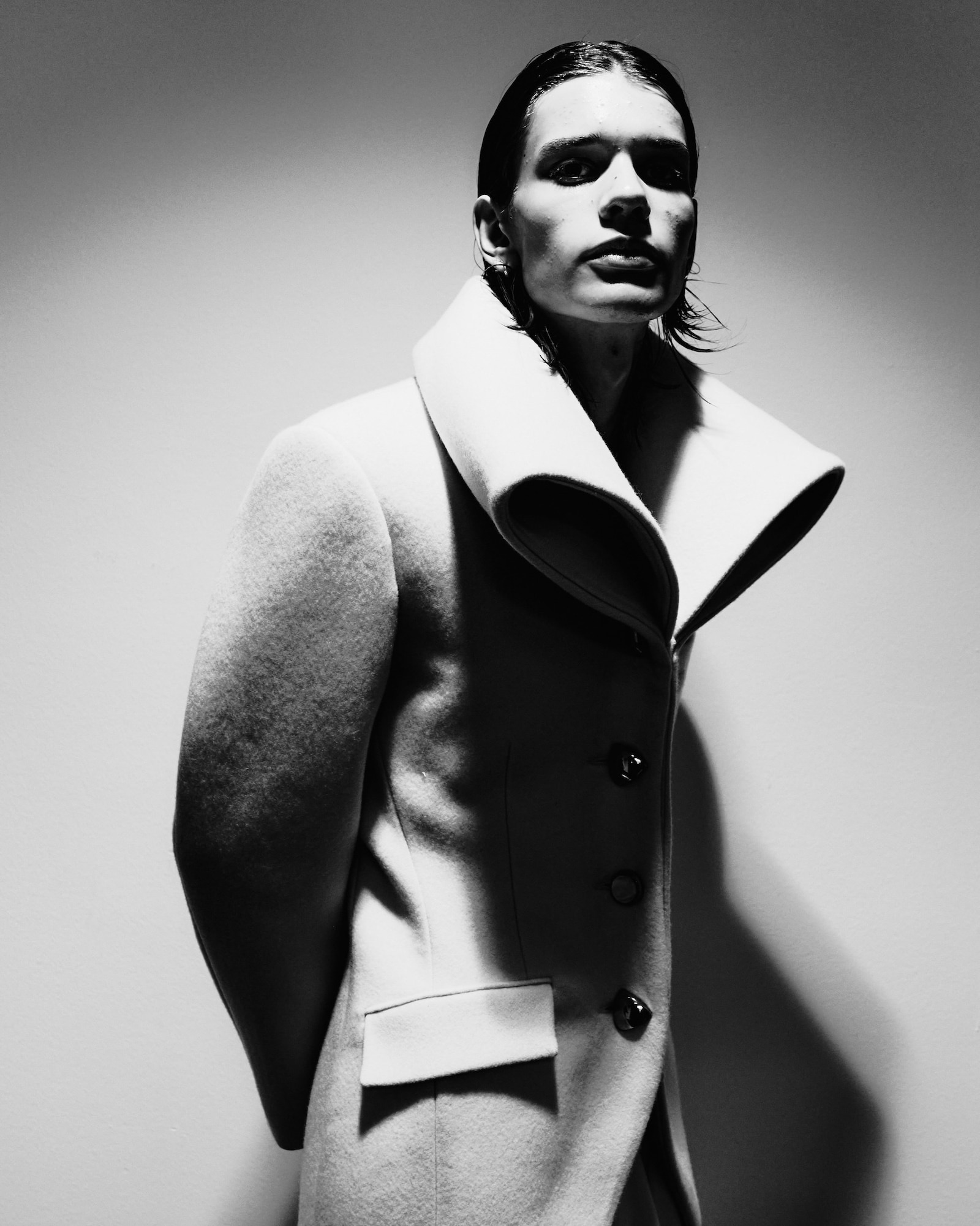

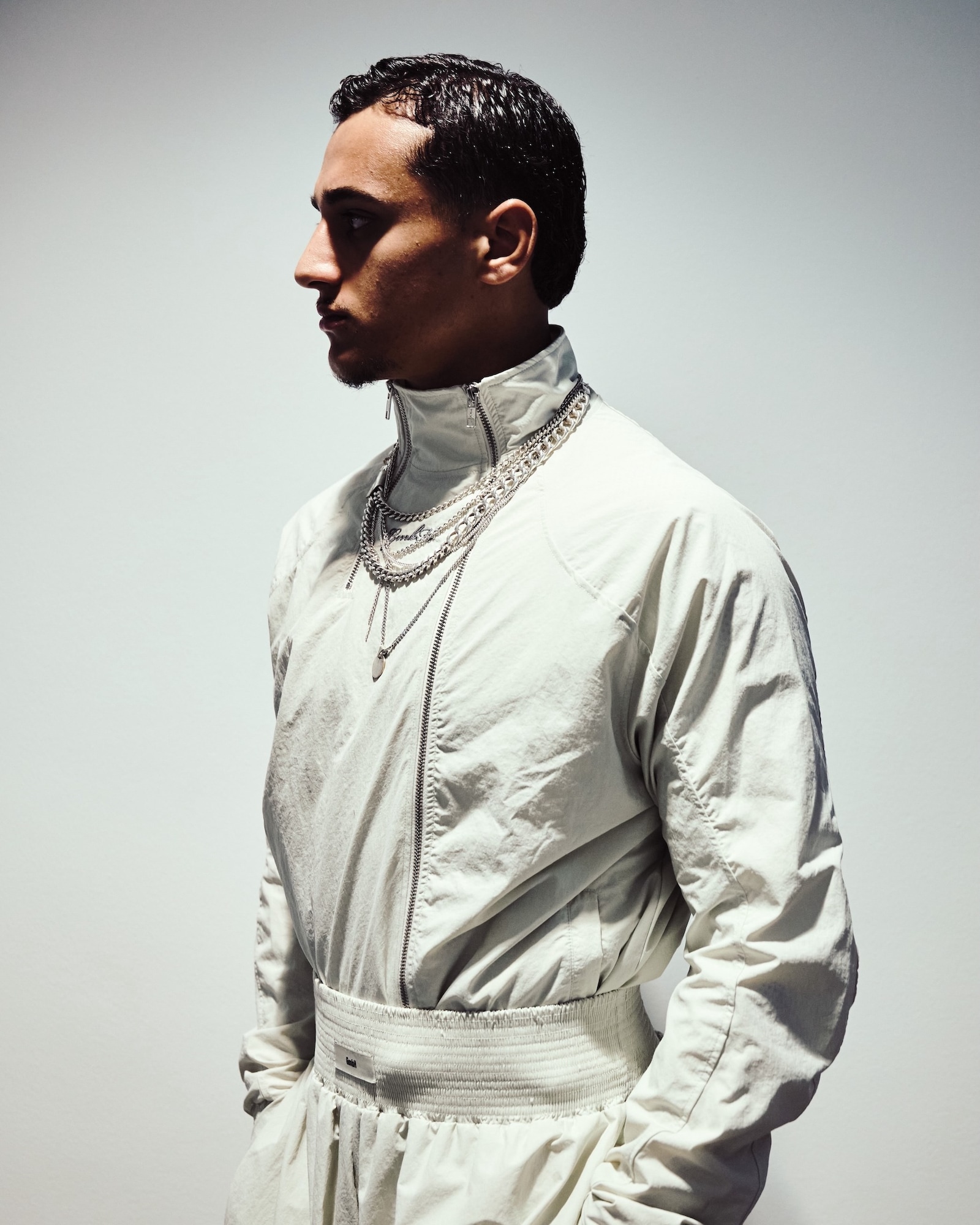
GmbH has often been asked why it is so explicitly political, as though fashion’s natural state were neutrality. This was a devastating rebuttal; Berlin’s fashion history was erased by politics, not bad taste, and the city’s present is no less entangled: with the rise of the far right and repression of minority communities. “This obviously makes it very clear that fashion is political,” says Işık. “All of this history has been erased because of the Nazi regime, because of politics, so anyone who says fashion is not political has lost their minds.” Huseby goes further. “The world is going more and more right wing,” he says, “and I think fashion in the last few years is taking the same turn.”
In Berlin, a city still more readily associated with nightlife than fashion, GmbH insists on reclaiming its own lineage, its ghosts of fashion past. And what a history. Ten years in, the brand is not representing the German capital abroad, it’s helping the city recognise itself.
