
The fifth season of Girlhood Studies is called Primary Sources. How have notions of adaptation, translation, and the thin line between fiction and memory formed depictions of girlhood? Expect the same studies of film and visual culture, but with a closer look at the texts they draw from.
Perhaps because it’s Christmas, perhaps because I’ve been overdue on this column, but red shoes have been haunting my steps all month. I’ve written before about the charge that our most girl-coded garments and accessories have always possessed for me – a charge that is felt regardless of whether a girl happens to be wearing them. For me, that charge is never greater than in a pair of ballet shoes; certainly never more strongly felt than when those ballet shoes are red.
Matthew Bourne’s 2016 ballet, broadly based on the Powell and Pressburger 1948 film, is currently playing a new run at Sadler’s Wells. It’s lovely: a jazzy, period-specific confection, and perfect for Christmas. But, for me, it glides and darts about the surface of what The Red Shoes – both the 1948 film and the 1845 Hans Christian Andersen tale – is really, substantively about. The production’s take on the fate of a young female ballet star is like Baz Luhrmann’s take on sex work in Moulin Rouge!: the sheer spectacle is the message.
 Red Shoes %239, 2025)

Meanwhile at Art Basel Miami, Maya Man showed her piece (The Angels Wanna Wear My Red Shoes) with bitforms gallery. (Man and I first bonded a couple summers ago over continuing to age and yet never letting go of investigating girlhood). The generative work scrapes user-generated posts from Depop of individuals selling red shoes, displayed on a collection of screens. Man is interested in how teenage girls combine the language of advertising with intimate, almost domestic image-making in such listings. Separately, during this time I find myself regretful for missing out on some Maryam Nassir Zadeh knee-high boots that were only £40 (feeling they were “too red”, I demurred). The listing was, of course, on Depop – perhaps they popped up on Man’s screen at some point in time, disappearing just as fast.
All month at home, I’ve been exercising again thanks to a woman in Los Angeles called Marnie who I pay £35 a month to instruct me in barre. Using a chair and performing the repetitive steps, which exist in a vacuum from their original ballet context, I find my mind wandering to what she is wearing and how lacking my own barre clothes are in comparison. I keep catching on her favourite: not ballet shoes, but Marnie does have a favourite pair of red leg warmers, worn across multiple clips as she extends her foot up and down, down and up.
What links these encounters? They isolate the symbolism of ballet from the personal. Or, the shoe from the girl. This all made me interested to rewatch my favourite film, The Red Shoes, to re-read the fairytale: to rediscover the girl at the centre.

A common theme in discussing Powell and Pressburger’s take on The Red Shoes is to similarly say: it’s not really about the girl. But people love saying this about movies that have young women at their centre. Call it the Tiqqun-ification of coming-of-age film criticism. I watch a clip of Michael Powell, who seems to be the sweetest man who ever lived, in Martin Scorcese’s wonderful 2024 documentary about the directing duo, Made in England: The Films of Powell and Pressburger (how the cake was cut: Powell directed, Pressburger wrote, and together they produced). In it, the director similarly erases the girl from the story, saying it is a film about the torture of making art. “[The Red Shoes] was about art, it was about nothing and no one else, so nothing but the best of art would do.” Scorcese, Powell, Pressburger: for these men, they watch The Red Shoes and merely see themselves, driven mad by pursuing creative goals.
Such a statement, bolstered by Scorsese’s own commentary, might suggest to us that this story about a young ballerina, torn between pursuing her art and romantic love, isn’t about girlhood at all. But to say as such, in my book, is the same as saying that red shoes are ever just red shoes. After all, those men would never face the same threat as Moira Shearer’s Vicky Page does, in this story: that either she must continue to dance, or become a housewife.
For the next part of my search, I went back to the text and found all of the darkness of Powell and Pressburger’s film there, and then some. In Anderson’s fairytale, a girl who desires pretty red shoes and loves to dance is taught a lesson when the shoes force her to dance forever (and yes, as ballet master Boris Lermontov pithily puts it in the movie, “the girl, of course, dies in the end.”). She is obliged to dance on and on, “over thorns and stumps till she [is] all torn and bleeding”, eventually knocking on an executioner’s door to end her pain. “And then she confessed all her sin, and the executioner struck off her feet with the red shoes; but the shoes danced away with the little feet across the field into the deep forest.”


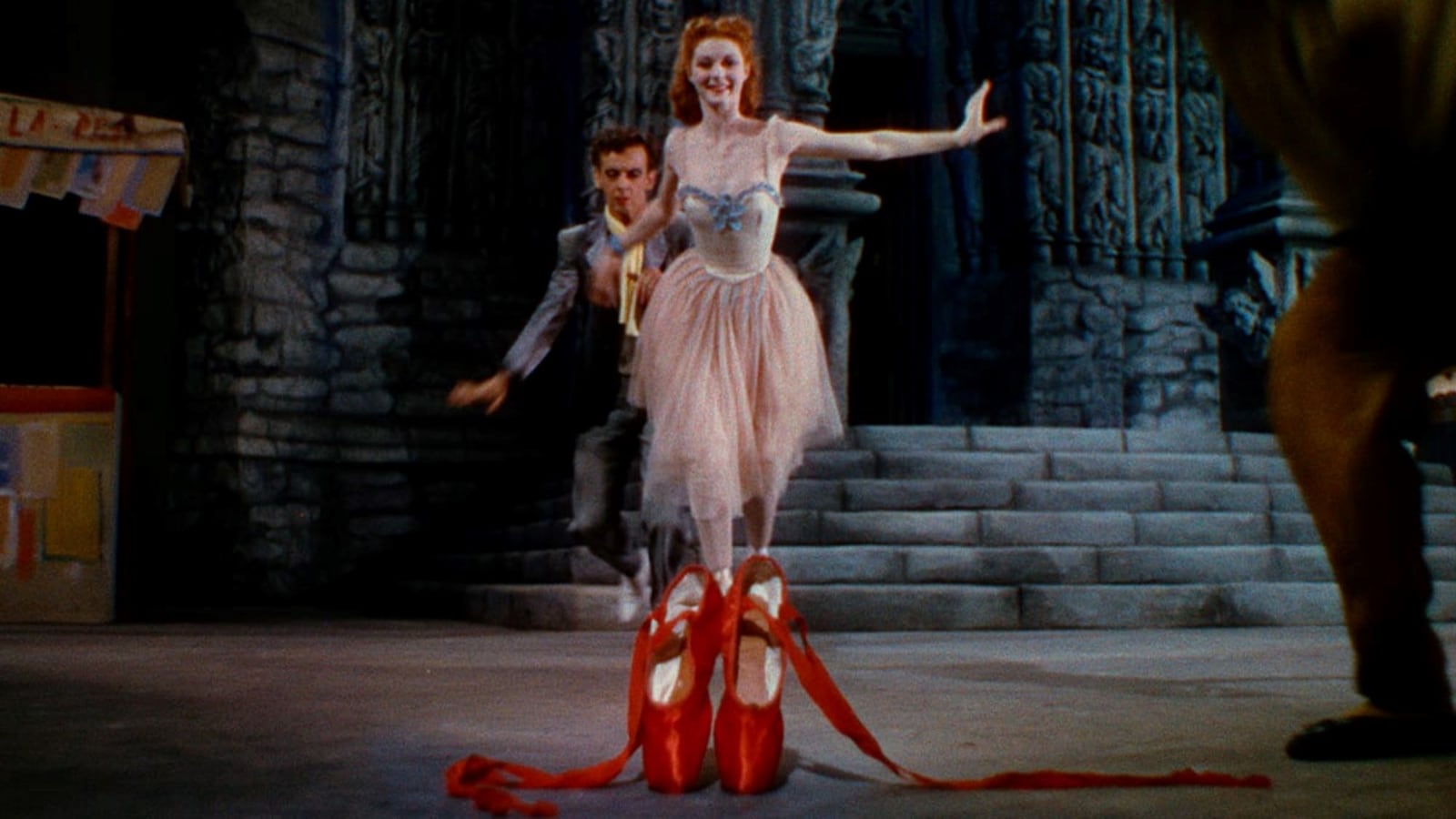
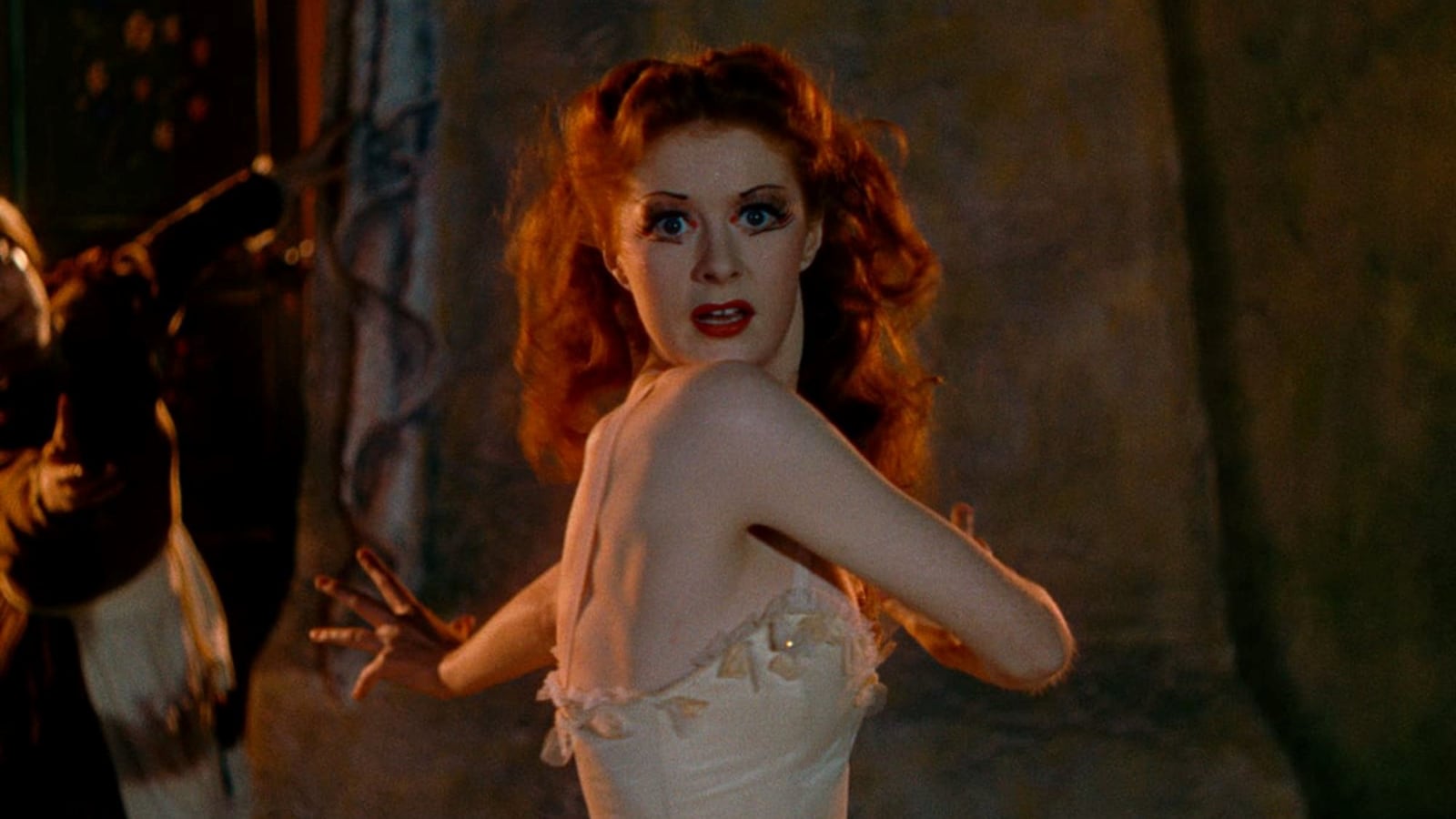
As is usually the case when you read fairytales better known through adaptations, I admit I had forgotten how gruesome this is in its original form. Powell and Pressburger’s power has always been in their unflinching examination of such feminine pain. It is impossible to forget the close-ups in The Red Shoes: Moira Shearer’s heavily made-up, wide-eyed mask of terror, her sweat registering as tears. But their vision is further bolstered by cinema’s inimitable potential for the surreal and fantastical. The famous ballet performance within the film was an unnervingly radical decision on the part of the directors, really like nothing ever seen before. But I also love the quieter moments they build in that suggest the shoes are imbued with dark magic: when they seem to be missing right before the performance starts, or when we see many pairs lined up in a row and one pair is selected with a powerful tap of a cane, like an anointing. In Powell and Pressburger’s case, such moments where they isolate the shoes are, actually, a tool to suggest their potency.
But this is still all nothing without the girl who is so invested in them. In the text, I found another ribbon that really tied together all these cultural representations of this mythical girl and her mythical shoes.
Using the fairytale as a basis, I came to realise the real reason The Red Shoes continues to stick so fast to culture – like the shoes on the girl’s feet – is that it is a story about a girl who is feeling herself and who gets punished for it.

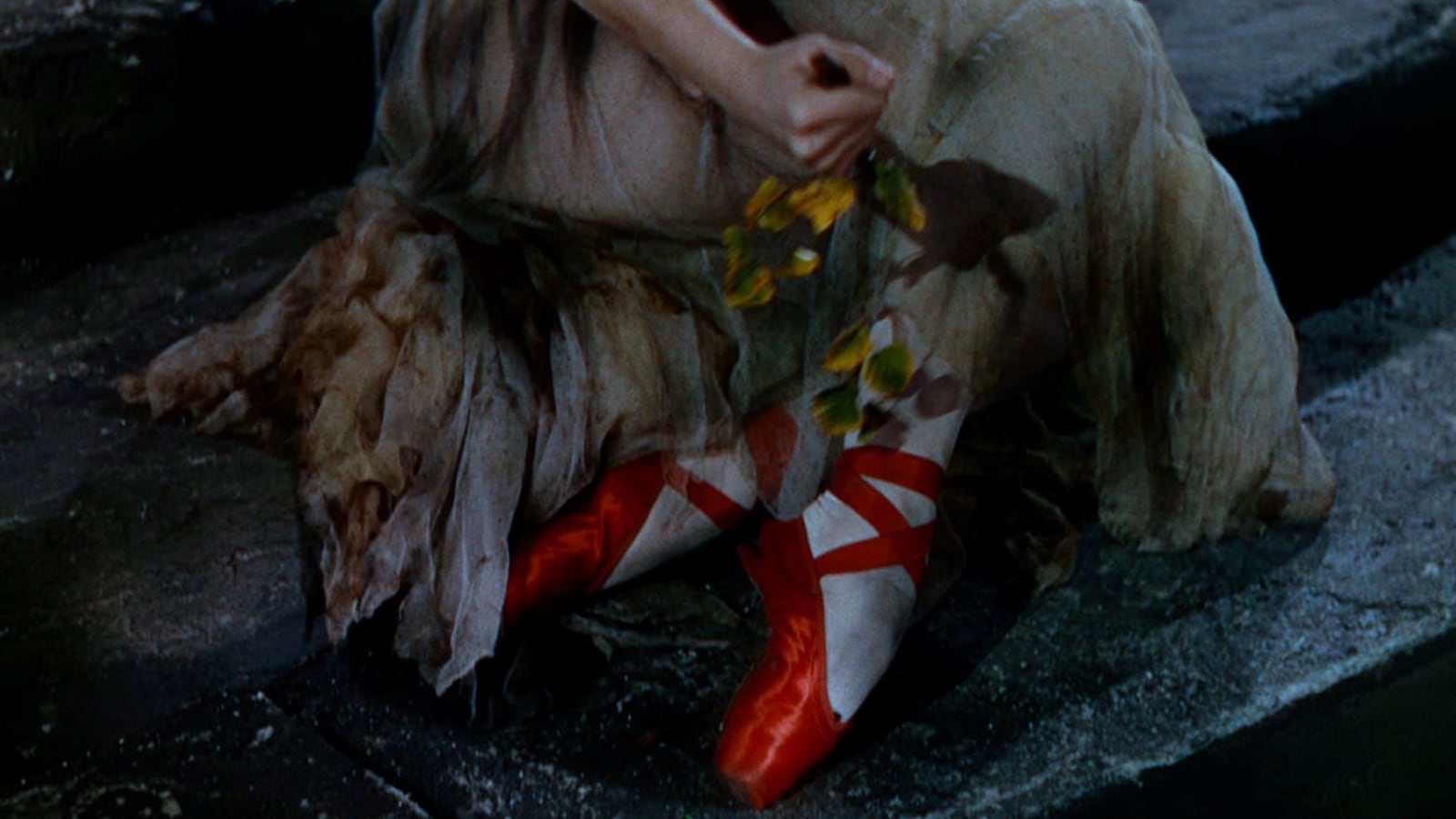
That notion – the pressure to display, and being punished for it when you do – speaks to a more universal experience of girlhood well beyond these stages. And ballet is the perfect eternal medium to tell that story because it is about work and artistry, but also – and this is key – feminine attention. Powell and Pressburger’s film is about a girl who is told she is not special, but believes deep down she is, and then can only be accepted as such under the gaze of multiple men; how can such a story but be about the state and contradictions of girlhood? In the fairytale, Anderson characterises the pull of the mirror for the young girl before the shoes have even appeared: “She was taught to read and sew, and people said that she was pretty. But the mirror told her, “You are more than pretty – you are beautiful.” (I asked Romy Coppola a question for a recent magazine story, and this idea of the warped pull of the mirror reminded me of her answer: “[It’s a misconception] that we’re shallow for just focusing on our looks … the tech corporations are to blame because nobody’s nature or instinct is to sell themselves online.”)
“She’s putting too much into it,” says a character at one point about Vicky, in rehearsals for The Red Shoes and killing herself to be perfect. “Why don’t you tell her!” Speaking to young feminine effort and resilience, it’s almost the most telling line of the whole film.
Funnily enough, another tidbit from the documentary that stuck with me, is from a letter that Michael Powell sent Martin Scorsese when he was first sent a version of the latter’s debut, Mean Streets, to watch. He wrote, among many compliments for the first-time director, that he “got a little tired of all the red.”
