
The writer-director discusses her debut feature Blue Heron, a moving portrait of grief, memory and family history inspired by her own past
Writer-director Sophy Romvari is speaking to me at the tail end of the North American publicity tour for her debut feature, the remarkable Blue Heron. “It seems to really access people’s vulnerability in a way I don’t know how to articulate, because it’s such a gift, but also it’s so heavy,” she reflects, describing “cryfest” early screenings of the film. “It’s a weird thing to be grateful for, that people are crying, but of course I’m really happy to know that people are so open to receiving the film.”
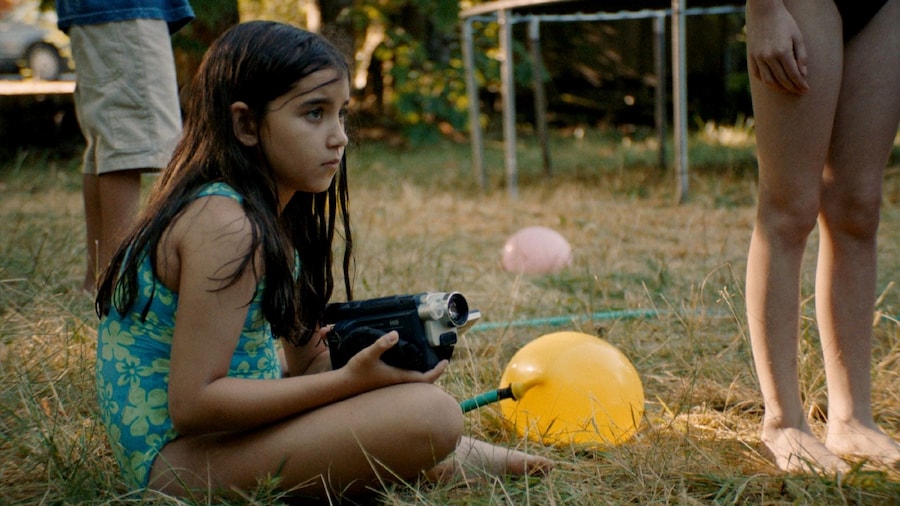
Blue Heron begins by following eight-year-old Sasha (Eylul Guven) through one Nineties summer. As her Hungarian migrant family settles into a new life on Vancouver Island, the erratic behaviour of Sasha’s eldest brother, Jeremy (Edik Beddoes), escalates alarmingly. Later, the film pivots into what Romvari calls “her version” of a coming-of-age story, as adult Sasha (Amy Zimmer) grapples with Jeremy’s death by making a documentary. Inspired by Romvari’s own family history, Blue Heron works through grief and memory, blurring the real and imagined past.
Memory’s imperfect nature, and the desire to revisit its landscapes and artefacts, have proven fertile ground for Romvari, who has spent the past decade making celebrated hybrid documentary shorts. Blue Heron’s extraordinary emotional resonance has invited some to see it as pure autobiography, but Romvari distrusts that impulse. “I can’t recreate my brother; I can’t recreate this time in my life. The accuracy is very limited, especially when you’re trying to interpret a person.”

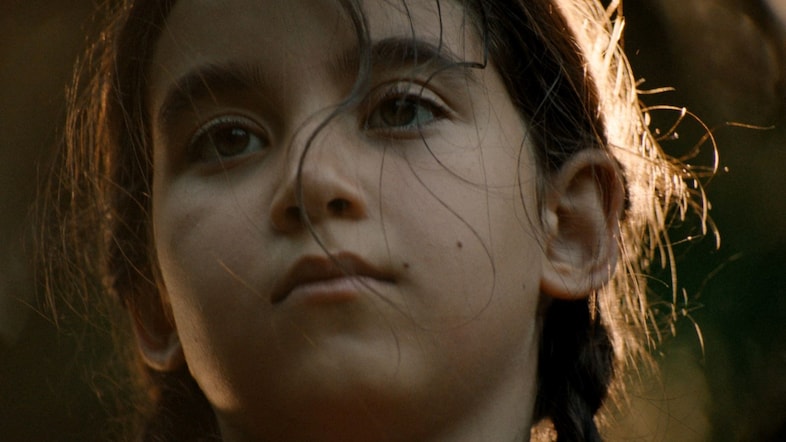
Romvari is more interested in what kind of “emotional truth” can be gleaned by engaging with the past. We speak about the idea that no two siblings have the same parents, that in some ways we don’t have the same parents as our younger selves. Seeking to understand her brother, Sasha confronts that disconnect head-on: “I always wanted to show that chasm between childhood and adulthood; what you understand as a child and then how it gets reinterpreted in adulthood.”
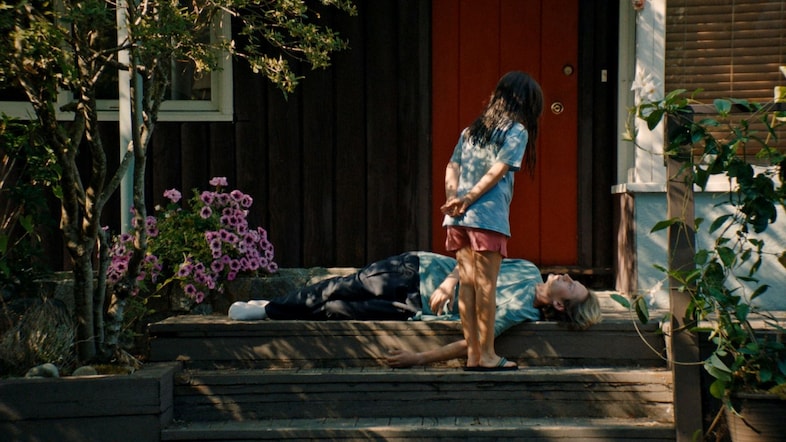
Blue Heron clears this chasm in one scene, when an adult Sasha answers the phone to her distressed mother, calling from the 90s. It’s a gut-punch that lurches the film into a different register, highlighting its construction as it destabilises it. Adult Sasha is somehow granted literal access to the past, revisiting that summer in an act of time-travel as simple as getting in her car and driving there. “I think traditionally this film would be crosscut between the two timelines,” Romvari reflects, but it was “structurally really inspiring, the idea of going from childhood into adulthood and having them be visually juxtaposed, but with that frustration that you can’t change things.”
Visually, Romvari was inspired by her father’s own home videos: “They were shot quite artfully and beautifully, oftentimes at a distance, with a long zoom, because he was never trying to interrupt.” Cinematographer Maya Bankovic uses distance to capture the watchfulness of a child, slowly zooming in to show how attuned Sasha is to the tumult at home. But Romvari also wanted to show the things Sasha could not realistically have had access to. “Because when I conceptualise memory, so much of it is things that we didn’t actually see. It’s things that you imagine or you heard about, or maybe a photograph you saw.”

The impulse to document is everywhere in the film – in photographs and their negatives, home videos, audio recordings, case files and even objects that become waypoints connecting past and present. “There’s a theme throughout of the things that we inherit,” says Romvari, who at one point in the film has Sasha’s father wordlessly place a camcorder into his daughter’s hands during a crisis. Guven’s face conveys a beautiful mix of alarm and appreciation, and we feel the weight of the object in her hands. “[I’m] always trying to find a practical reason [for these emotional beats]”, she explains.
One affecting sequence emerged from a workshop Romvari ran with a group of social workers, using her own family’s case files: “It was a very organic process, that was then quite constructed in how it’s presented [...] It was just one of the ways I tried to utilise a documentary tool and have it be part of the fiction format.” The emotional charge of that melding is powerful, and is reflected in the way Romvari and Zimmer “really co-created the character. [It was] very symbiotic, I guess: Sasha, Amy, Sophy, all kind of integrated into this Persona-esque character.” That Bergman-like doubling mirrors the audience too, bouncing our own emotions on to the screen.
Anyone familiar with the emotional livewire of grief, or the struggle of loving someone in crisis, will find its current humming through Blue Heron. But Romvari says the film helped her find perspective on her own complicated feelings relating to her brother. We speak about how deliberately the film considers anger, which is “the thing I struggle the most to feel,” the director says, especially when grieving: “You don’t want to attach those feelings to someone, especially if you no longer have access to them […] Part of why I’m glad I made this film [now] is because I had more perspective and I was able to put that anger aside and make a more compassionate version.”

It’s painful to see Sasha and her family manage their frustration with and desire to help Jeremy, who is clearly living with some kind of undiagnosed behavioural disorder. Sasha’s Hungarian parents struggle to navigate an obtuse social welfare system in language both clinical and foreign, and Jeremy himself has shut down: with only one line of dialogue in the film, he is unwilling and unable to externalise his interior world.
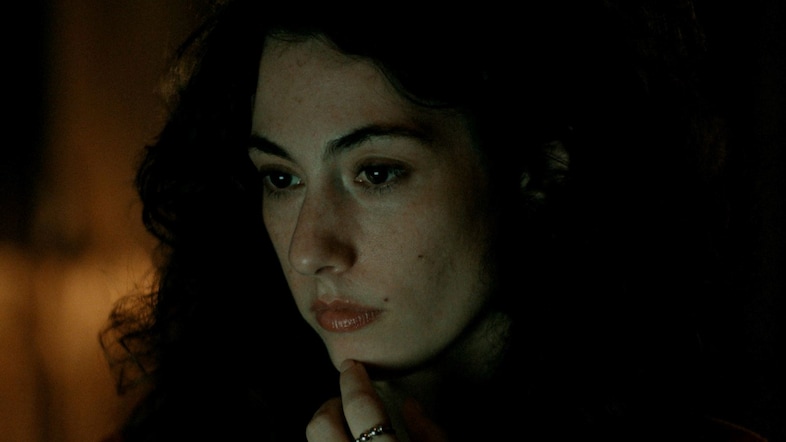
Ultimately, Sasha’s documentary becomes an intervention. Taking on the role of social worker, she furtively records her visit to her parents in the 90s past. There is an element of wish fulfilment to this final act, which toys with the idea of travelling back in time to achieve closure, but in the end the film is clear-eyed about the limits of traversing our memories. Zimmer’s performance in these scenes is among the year’s most special. She perfectly conveys Sasha’s bittersweet acceptance that she can’t consciously change a past which is always reshaping itself.
The film closes on a pair of letters – one that presents Sasha with “an opportunity to present her findings”, and one from an old friend of Jeremy’s that Sasha reads aloud. “It’s the first time we hear about Jeremy from a non-clinical perspective,” says Romvari, “and it was important that we end on the note where he’s being humanised.” For Sasha, the letter offers a perspective outside of her own, which feels freeing and resonant with the deep empathy Romvari has for her characters and the viewer. The past does not have a fixed truth, the film seems to say; there are always new avenues through it.
Blue Heron is out in UK cinemas on 26 June.
