

The acclaimed performer has become a mainstay in the German auteur’s increasingly spare, haunting cinema – what’s the secret to the strange magic they produce on screen?
There’s something ineffable at the heart of Christian Petzold’s cinema, a mystery that refuses to unravel. More often than not, that mystery revolves around the figure of Paula Beer: a mainstay across all of Petzold’s films since 2018’s Transit, the 31-year-old actor has become the riddling presence at the heart of his work. “I feel like every character in Christian’s movies that he has a relationship with are kind of a mystery for him,” says Beer. “When I prepare his characters I always feel like I can’t fully grab them, because they are a bit on their own, you can’t put them in a category … They’re layered and complex, because that’s what life is about.”
In Miroirs No 3, a fragile dance between two women who unlock a new lease of life in each other, we’re introduced to Beer as Laura, a young woman lost in reverie on a motorway bridge. Is she contemplating suicide? The scenes that follow certainly support the theory, as she takes off with her boyfriend and two friends on a trip to the countryside. Laura seems distant on the way there, and shares an odd moment of telepathy with a woman (Barbara Auer) stood tending to her plants outside her home when she passes by her in the car. Later, when Laura tells her boyfriend she can’t go through with the trip, he drives her back to the station but crashes the car en route.


Laura stumbles clear of the wreckage and the woman from the house, Betty, takes her back to her cottage while she phones for an ambulance. The paramedics offer to contact her parents, but Laura wants to stay put, so Betty agrees to let her stay while she recovers. In no time at all, the pair slip into a codependent relationship concealing secrets on both sides. “The moment of the crash was important for Laura,” says Beer. “I always saw it as a reincarnation, like the phoenix rising from the ashes. She gets this second chance at life, like, ‘Here it is, you can take it.’ And then this woman appears and kind of saves her and takes her into her house; it’s a little bit like a fairytale.”
Perhaps not buying into this particular fairytale are Betty’s son, Max (Enno Trebs), and husband, Richard (Matthias Brandt), who seem equal parts concerned and disturbed by this strange turn of events. Betty, it turns out, has reasons of her own for wanting Laura to stay; her own daughter, Yelena, committed suicide some time ago, and Betty never got over her grief. Will Laura discover the truth about her host? Of course she will – but Petzold seems less interested in the suspense inherent in his premise than he is with working through the strange metaphysics of the relationship. In one interview, he described the film as “the story of a dead girl who comes back to life”, a statement you could choose to take metaphorically, as Beer suggests, or more literally, with Laura appearing to Betty as a reincarnation of Yelena.


“Christian loves ghosts, and I think ghosts always play a part in his movies,” says Beer, diplomatically refusing to be drawn on the theory. “It’s like with [Beer and Petzold’s 2020 film] Undine, which is a fairytale as well, even though it’s not dressed up in the typical fairytale costume. It’s more like a modern version where reality and fairytale becomes one. Because you have these surreal elements within this quite straightforward aesthetic [in his films], it makes you ask questions, ‘Where am I? What’s happening? Is the film really about this or that, or is it about something totally different that I didn’t get?’ I really like that about Christian – that he’s in between genres.”
Beer first teamed with Petzold on Transit (2018), a breakthrough feature for the auteur starring Franz Rogowski as a man on the run from the fascist authorities in an imagined France of the present. Her character in the film, the wife of a famous writer awaiting her papers to flee the country, is a kind of chimera that Rogowski keeps chasing through the city, a fleeting presence that Beer found it hard to pin down. “For a long time during the shoot I was insecure with that,” she says, “but I hadn’t really learned how Christian worked yet.” Part of the problem, she says, was learning to let go in the moment – a naturally conscientious performer, she says that preparation is key for her before going into a scene, “but with Christian I understood that actually it’s about being very relaxed and letting things come on their own, and if you’re able to trust the situation, you’re more alive in a way.”

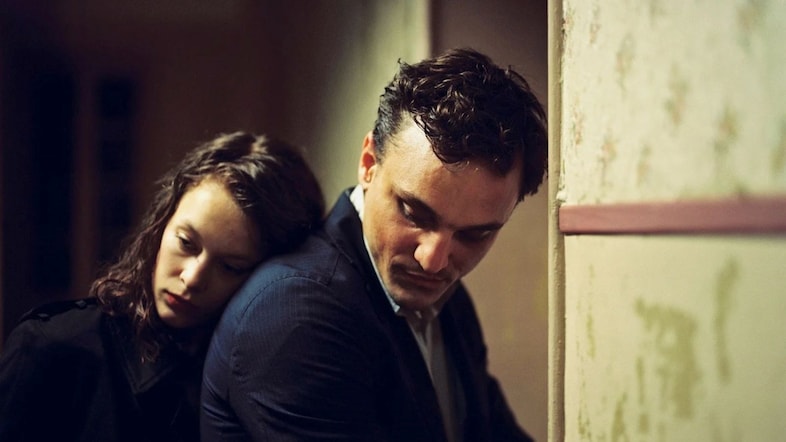
The collaboration kicked up a notch with Undine (2020), a semi-mythical romance drawing on Berlin’s traumatic history, where she says she and co-star Rogowski plucked up courage to tell Petzold where to cut lines they could deliver without speaking. In Afire (2023), she plays the warm-hearted yin to Thomas Schubert’s boorish yang in a caustic comedy of manners that paints her as the smartest person in the room. And Miroirs No 3 saw her once again spar with her director on equal footing over the film’s planned ending, which she sensed from very early on just wasn’t going to work. After long hours in the editing room trying to make it stick, Petzold finally called Beer to ask if they could reshoot it, which they did, with the actor appearing in close-up to mask the fact she was now heavily pregnant. “We’re very close when we work together and respect each other a lot,” says Beer of their working relationship, “but we don’t take each other too seriously, which I think is a good combination.”
In a way, Beer’s journey to becoming Petzold’s go-to performer was signposted just as Paula and Betty’s is in the film. She recalls seeing Nina Hoss, the director’s acclaimed leading lady on Phoenix and Barbara, on a poster when she was young and thinking – she says this with a funny little flourish – that she looked like a “world star!” Years later, when she picked up a Marcello Mastroianni award at Venice for her performance in Frantz (2016), it was jury member Hoss who was on hand to present her with the prize – a symbolic passing of the torch from an actor who has gone on to international acclaim in the likes of Tár and Hedda. Beer, who is also fluent in English and French, says she’d like to work more with directors outside of Germany, but prefers not to say who exactly. She compares performing in another language to Laura’s situation in the film, feeling strangely liberated by the experience of living in a perfect stranger’s home. “It’s almost like if you go to another country and you don‘t know anybody there, then you have the opportunity to be another version of you, right?” says Beer. ”[Whereas] if you stay where you are for a long time, then you always remember who you are. I’d like to be a different version of myself.”
Miroirs No 3 is out in UK cinemas now.
