
Focusing on three young female athletes in the lead-up to a fictional Olympic Games, Giulio Bertelli’s artful debut feature is an alternative universe of woozy rhythms and dream logic
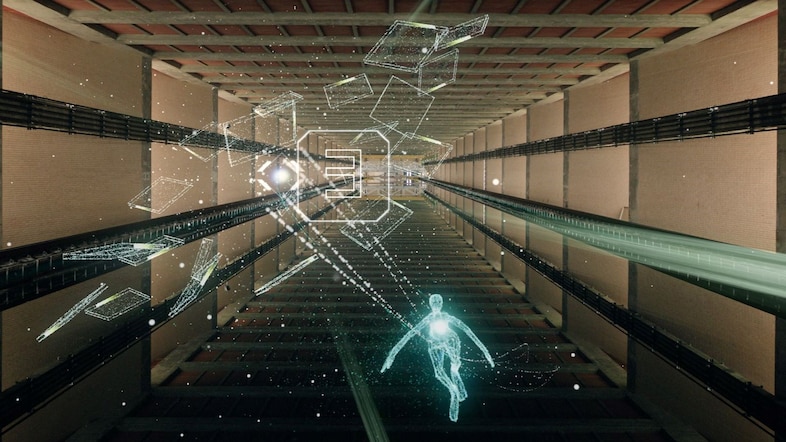
Giulio Bertelli describes his artful feature debut as “techno realism”. A hybrid of documentary, drama, video games, sci-fi-like interfaces and the replays and commentary of sports broadcasting, it has the uncanny feel of a William Gibson novel, transplanted onto celluloid. After taking home the FIPRESCI Prize at Venice Critics’ Week last year, this month Agon is available on MUBI from 24 April, and part of the Lincoln Center’s New Director/New Films series, which champions filmmakers pushing the art form into new terrains. “I wanted to take a cinematic approach to how it feels to be on YouTube,” the Italian director says over the phone from Milan. “Both in the idea of scrolling without seeing but also the pace of it: at times very fast, but also with these slow stretches – I wanted to translate that feeling.”
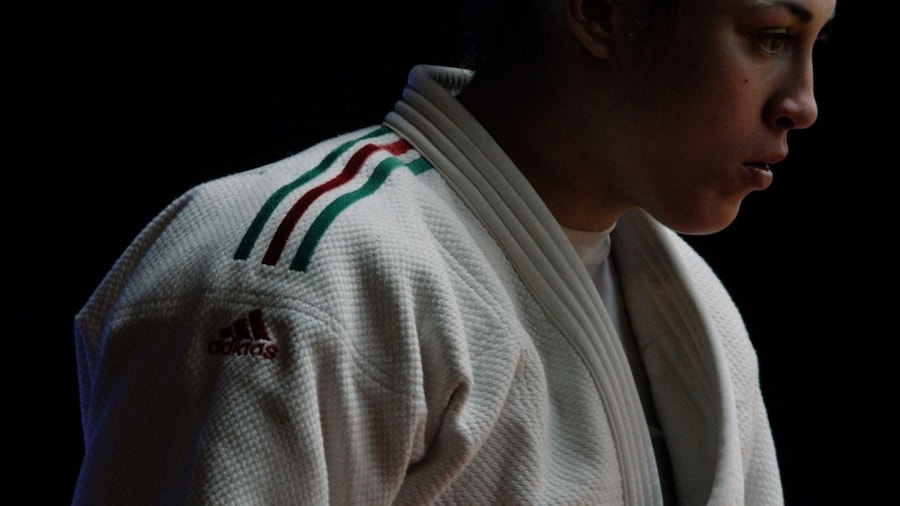
Titled Agon – for the Greek god of conflict and contest – Bertelli’s film focuses on three young female athletes in the lead-up to a fictional Olympic Games: a judo champ (played by real-life judoka Alice Bellandi), a rifle shooter, and a fencer (actors Sofija Zobina and Yile Vianello respectively, both of whom recently starred in Alice Rohrwacher’s La Chimera). But where most sports-related narratives dwell in the adrenaline-fuelled window of public glory or defeat, Bertelli’s is an altogether stranger and more layered undertaking – an alternative universe of woozy rhythms and dream logic that dwells in the 90 percent of an athlete’s life not ordinarily on show, as his trio navigate not just gruelling training but the intense solitude and pressure-cooker existence that might be as necessary to contemporary world-class competition as a ferocious drive.

It’s a state of mind Bertelli has some personal knowledge of – the 35-year-old took something of an unorthodox path into film after first studying at the Architecture Association and then becoming a competitive offshore sailor for a decade. With Agon, he summons all the rigour those two previous lives of his suggest. “From sailing, I know how it feels to go through this loneliness and preparation and physical pain, having to fix problems or hide them from others. Just being with yourself, with your physical or mental pain, to achieve the result,” he says. “The sports I chose for Agon – judo, fencing, shooting – don’t really have any public crowds, which is similar to competitive sailing because the moment you leave the dock, you’re just with your crew in the middle of the ocean. Maybe that unconsciously helped me translate the idea that when you’re at the peak of your performance, you’re actually kind of alone.”
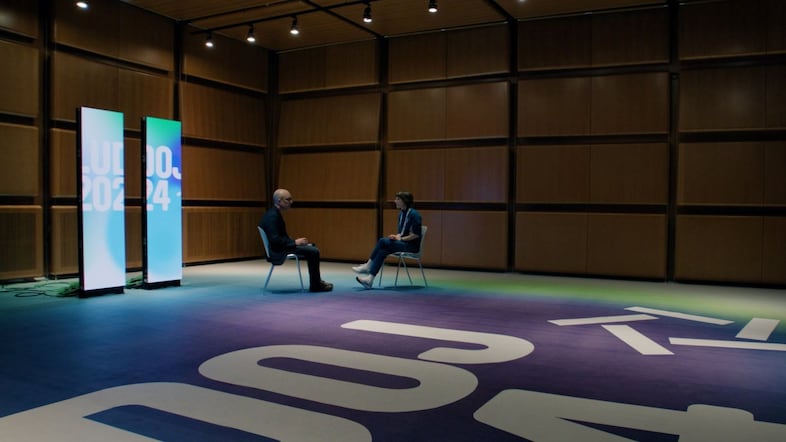
Agon’s soundscape reflects that solitude: instead of a stadium’s roar, we see streams of emojis, hear the nagging vibrating of a phone or the thump of a body hitting the mat. Looming behind the intimate, diary-like footage of his competitors is the corporate behemoth of the Olympics itself, with all its branding and bureaucracies and spectacle. Bertelli says he chose the three disciplines for their historical origins in warfare, now transmogrified into sports, entertainment and video games. “It’s real pain in simulated warfare” he says, and each of the athletes face their own battles: queasy knee surgeries, social-media firestorms, and for Vianello’s character, the psychological burden of an unconscionable tragedy. In Bertelli’s late-capitalist Olympics, the flesh and bone of his athletes’ bodies are entwined with all the high-tech apparatus that accompanies sport at the highest level – the sterilised medical environments, faceless hotel rooms and precision technology involved in pushing a human being to the peak of their abilities.

The filmmaker’s interest in high-achieving environments may have been forged from a young age – he’s the son of Miuccia Prada and Patrizio Bertelli. “I was very lucky from a cultural point of view, and clearly cinema was always there,” he says of his early years. “As a teenager, I just chewed through thousands of films, whatever I could put my hands on.” The aural inflections of Francis Ford Coppola’s claustrophobic masterpiece The Conversation fed into Agon, as did Francesco Rosi’s neorealist 1965 film The Moment of Truth, with its blurring of documentary and fiction. “I was also thinking about the Johnathan Glazer film Under the Skin, for that notion of making a movie about aliens but in a way that hasn’t really been done before. I wanted to make a movie about the Olympics that wasn’t really like anything else,” he says. “It’s a movie about life and violence, and this relationship between ambition and delusion and results. When you are a professional athlete, you’re never there to just participate, you’re there to win. But at the same time, you have to hold the idea in your head that when this doesn’t happen, your life doesn’t finish.” His three imaginary athletes’ lives might be specific and extreme, but at heart Agon is a meditation on the experience of not quite achieving what you set out to do – and surely all of us can relate to that.
