
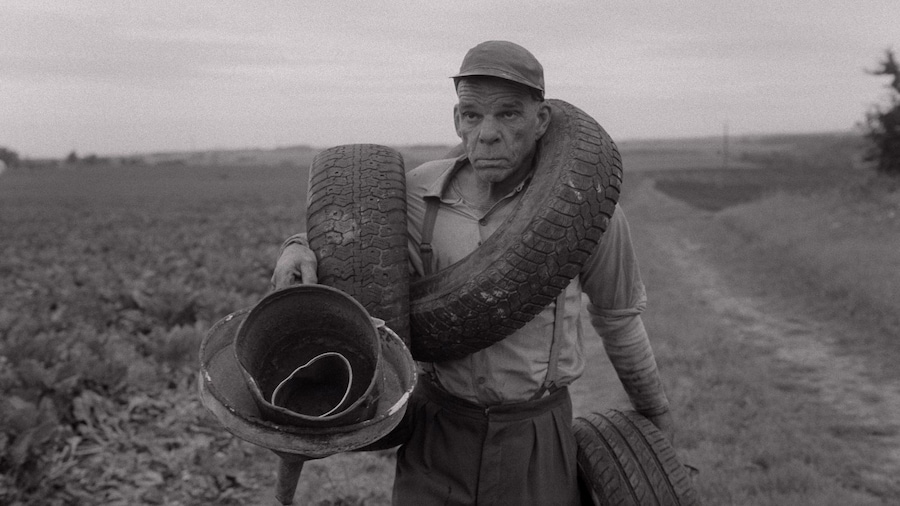
The French actor and genius physical performer is back with one of his best roles to date in Redoubt. Here, he talks about the real-life eccentric at its heart – and his own outsider approach to art
If you’re unfamiliar with the magic of Denis Lavant, do yourselves a favour: before reading this story, watch the 30-second music promo he made with Yorgos Lanthimos for Radiohead in 2016, where the actor can be seen enjoying his lunch in a cafe. How long did it take before you realised there was no sandwich?
“There is no sandwich” makes a good mantra for Lavant, one of France’s most instantly recognisable performers and a singular, eccentric presence who might just as easily have been an acrobat, a mime or a magician. (He trained in the first two before joining the Paris Conservatoire to study performance.) Through his career, he’s breathed fire, stopped traffic, hypnotised chickens and shadowed a monk on an agonisingly slow journey through the streets of Marseille. Even his adverts are legendary, his balletic turn as the devil for a Jonathan Glazer Flake commercial proving too racy for the suits at Cadbury’s.

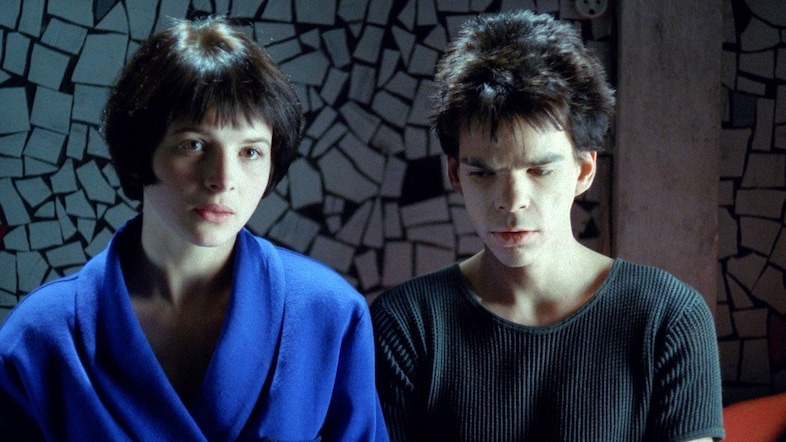
Now, 40-odd years after director Léos Carax made him his muse in Boy Meets Girl, kicking off an extraordinary run of films making sublime use of his talents, Lavant is back with a major new role in John Skoog’s quietly riveting rural drama Redoubt. The film is based on the life of Swedish farmhand Karl-Goran Persson, an eccentric figure who turned his home into a fortress during the cold war to protect the community from attack. Skoog had grown up with stories of his madness, and first explored his life’s work in an art installation before reimagining it for his fiction-feature debut.
“You can definitely see it as a kind of outsider art,” says Lavant of the shelter, which survives today as a site of curiosity for the locals. “For him it was useful, it was something that was intended to help people, but you could also say he was an artist. He just didn’t think of it that way.” When Skoog approached Lavant about the role the actor accepted right away, struck by parallels between Persson’s life and certain roles he’d recently performed, from a VR installation on Henry Darger, a Chicago janitor whose gargantuan fantasy novels were discovered after his death, to a reading of Franz Kafka’s short story The Burrow, about “this half-human, half-animal character with this paranoid desire to secure a place that was designed to protect”.

Lavant plays Persson as a well-meaning man-child and holy fool of sorts, but Redoubt is no wish-fulfilment fantasy à la Forrest Gump, and Persson’s efforts are met with indifference and even hostility by the locals, who don’t know what to make of this outsider in their midst. Slowly but surely, his home becomes a folly, ostracising him from the same people he is trying to protect – and in the end it takes a stranger to see it for its beauty. “I took all the railroad tracks,” Persson tells the stranger, pointing out the pilfered bits of material he used for the build. “Can you hear the trains sing in them?”
“I can’t see [Karl’s story] as a tragedy,” says Lavant. “All I can say is I felt a lot of joy spending time with this character, who is afraid but always positive – if the bomb really had gone off it would have been a tragedy, because there’s no way the building he created would have withstood it. But it doesn’t. That’s why you have this woman who is perhaps the first person to see the house for what it is, and she compares it to the gothic cathedrals she learned about at university.”

Looked at one way, Lavant seems an odd pick for the role of Persson, as a non-Swedish speaker who had to be coached on his lines by Skoog’s own mother. But the actor’s natural affinity for outsiders and physical grace soon outweigh any such concerns, Lavant laying bare aspects of the character through the tireless, slightly overzealous energy with which he attacks his work. “It can be quite a scary challenge at first,” he says of performing in another language, “but it becomes fun after a while … It’s about finding the music of it.” For the practical aspects of the role, Lavant shadowed members of the construction crew tasked with creating a full-scale replica of Persson’s home, observing their movements till they came naturally to him. Crucially, the aim was to look like he knew what he was doing, not to actually be able to do it – Lavant laughs an emphatic “no” when asked if he’s ever gone method for a role.
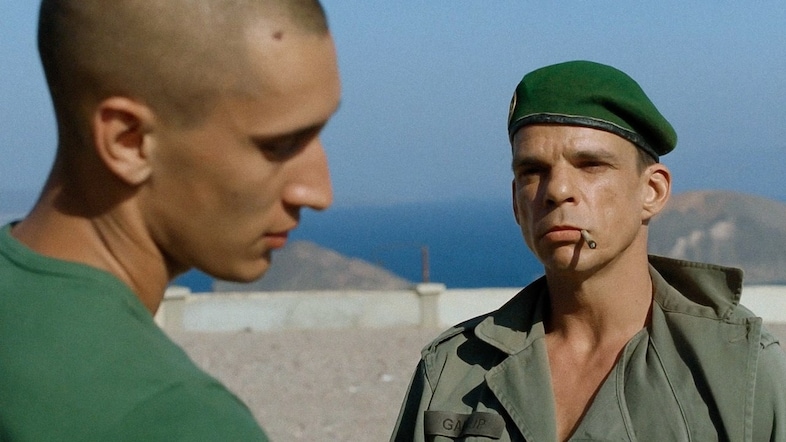
Of course, Lavant is renowned for the physical artistry he’s brought to roles throughout his career, so much so that his highlights reel is often reduced to a stunning series of balletic coups that straddle the line between comedy and tragedy. There’s the joyous, wounded-romantic’s run down the street in Leos Carax’s Mauvais Sang (recreated by Greta Gerwig in Francis Ha); the unforgettable dance scene at the end of Claire Denis’ Beau Travail, in which he plays a repressed French legionnaire finally getting his freak on; and his howling-mad performance as “Monsieur Merde”, a grotesque, sewer-dwelling creature who terrorises the Paris fashion world in Holy Motors (Carax again). Lavant cites the latter as a favourite – “He’s just so anarchic, he’s this mad child who does exactly what he wants and has his own language” – and says there’s a possibility he will return, having revived the character briefly in Carax’s cine-memoir It’s Not Me in 2024.

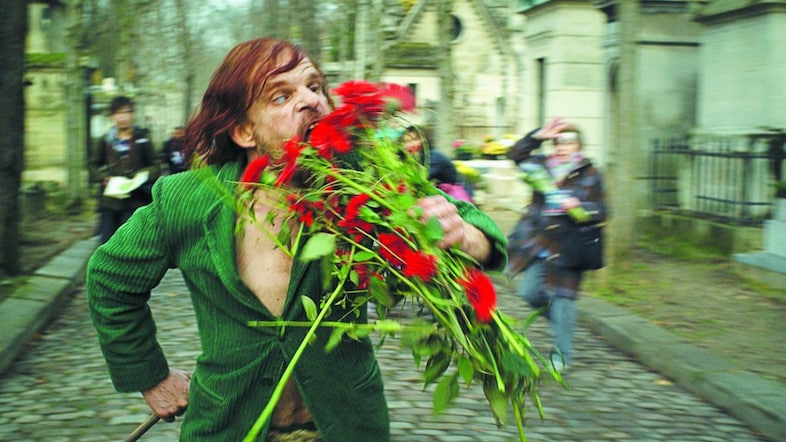
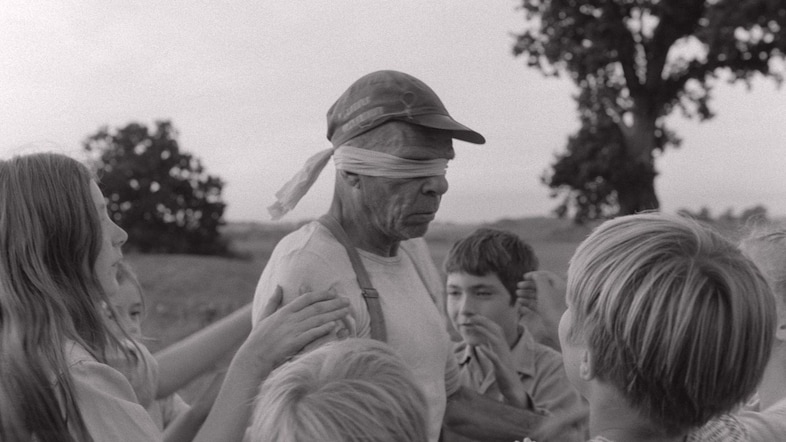
Lavant’s is a style of acting that goes all the way back to the roots of cinema, and childhood heroes like Buster Keaton and Charlie Chaplin. (He played a Chaplin impersonator in Harmony Korine’s loopy sad-com Mister Lonely in 2007.) It’s a performance style only rarely seen on screen nowadays, though he cites Joaquin Phoenix’s transformative turn in Joker as a recent favourite. “I found it extraordinary how he was able to express that madness through contorting his body,” says the actor, who considers the physical aspects of a role before anything else. “Especially having worked so much with Leos, when I’m reading a script, I’m always thinking of the physical demands it will place on me.” In Redoubt, as well as adjusting his gait to let Persson’s monomania peek through, he added shade to the character through his particular set of skills, including a scene where his character delights the local kids by successfully hypnotising a chicken.
Before he goes, I ask Lavant a question his character is asked in Holy Motors, about why he continues to perform at the ripe old age of 64. “Pour la beauté du geste [for the beauty of the gesture],” he says with a laugh, sensing his cue. “I know that’s the ‘right’ answer, but it’s true that Leos seemed to guess something of my character with that line. But I should add something about its meaning that perhaps won’t translate into English, which is that it’s about what I myself find beautiful, but also that I expect nothing in return.”
Redoubt is out in UK cinemas now.
