
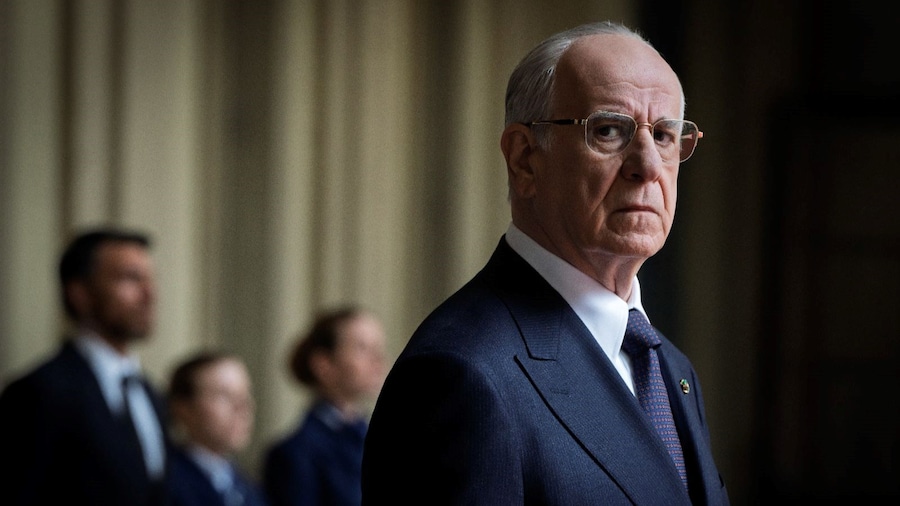
The director and lead actor Toni Servillo open up on their seventh collaboration for the screen, a wintry reflection on power, fragility and the importance of doubt
Neapolitan filmmaker Paolo Sorrentino has many recurring themes and motifs – beauty, loneliness, tradition, electronic music, sensuality as a window into the soul, often all bound up within a single protagonist. But he has one true acting muse – Toni Servillo, who shares with Sorrentino a Naples birthplace and a fascination with the conscience of powerful Italian men.
“[Sorrentino] gave me a real present [of] seven beautiful, wonderful characters,” says Servillo. It’s the day after the Venice Film Festival premiere of their latest collaboration, the meditative presidential drama La Grazia, and AnOther has been invited to roundtable interviews with both the film’s director and its star. Servillo plays a fictional president of the Italian republic with only six months left of his seven-year term. He’s Mariano De Santis, a Catholic, widowed, serious jurist with no extravagance or frivolity – his political peers honour him with the nickname “Reinforced Concrete”.
With finality on the horizon, De Santis is increasingly vexed in his search for lightness, clarity and absolute precision, something that’s relatable to Servillo. “It’s something that’s difficult to acquire and conquer,” says Servillo. “There is a famous story regarding a French writer from the 1700s [Blaise Pascal] who apologises to a friend by saying, ‘I would have liked more time to write you a shorter letter.’ This is, I think, what any artist is trying to do. Reducing, reducing, getting to the essential.”

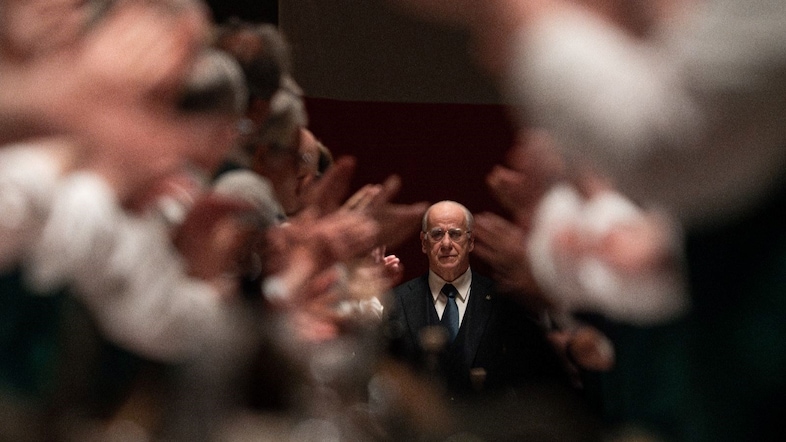
The president’s final weeks are disturbed by some difficult ethical problems – De Santis must decide whether he should sign “right to die” euthanasia legislation, and if two convicted killers should be granted clemency. (The literal translation of the title is “the pardon”.) The more he dwells on his presidential responsibilities, the less they feel separate from his personal crisis – namely, his late wife’s infidelity, a betrayal that still stings 40 years on.
“I discovered that in painting this fictional portrait, I was describing my idea of what politicians should be like, all over the world,” explains Sorrentino about the idealised vision of politics that De Santis represents. “It’s very rare to encounter men of power that believe in politics almost as a religious vocation. Nowadays, decisions are no longer pondered. [Politicians] are no longer moved by doubt and meditation. They are moved by certainty, [...] but they seem to be certain of something that doesn’t exist. Only someone who doesn’t have an insight into something can be certain of that something.”
To Servillo, today’s political climate equates asking for time to wasting time. By contrast, De Santis is careful, patient and mannered, but teeming with half-swallowed emotion. Unexpected opportunities for psychological reflection occur in quiet, strange moments – like a video call to an astronaut floating completely alone in space, or watching a prize horse suffer dreadful agony.

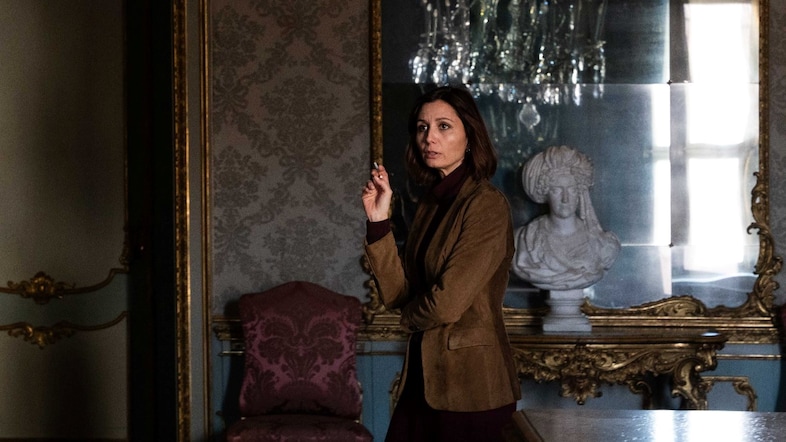
The film’s subdued, serene atmosphere and melancholic, often painful reflection on the bonds tying the past to the present puts La Grazia in conversation with Sorrentino’s two most recent works, the semi-autobiographical The Hand of God and his “feminine epic” Parthenope. “It’s true that my past three films have seen me more involved as a human. They become more personal and more sentimental, and I let myself go more.”
But as rare as doubt and meditation are in today’s cultural climate, Sorrentino wanted his wry, affecting political drama to look forwards as well as backwards. “This new generation believes in the importance of fragility,” explains the director. “My generation, and the generation of my protagonist, believe that fragility is something to be fought, even violently, with strength and power.” That younger generation in the film is represented by De Santis’s daughter, Dorotea (Anna Ferzetti), who works on the euthanasia bill in her father’s library, and by his successful pop music producer son living in Montreal. Sorrentino underlines the different worlds of parent and child with his trademark comedic juxtapositions – which, of course, means that we see his mild-mannered president rap. Servillo called the scene “molto difficile.”
“Paolo had a lot of fun because he knows my deep, absolute passion for classical music. I wake up every morning listening to Tchaikovsky, Chopin, Bach, Mozart,” he explains. “But I think putting rap in it was a clumsy attempt for this man to try and keep up with modern times.” To further illustrate this point, one of De Santis’s final moments in office sees him awarding the Order of Merit of the Italian Republic to Italian rapper Guè. “When my children heard that I was acting opposite Guè, they wrote to all of their friends and they said, ‘My father is acting with the king,’” the actor recalls.

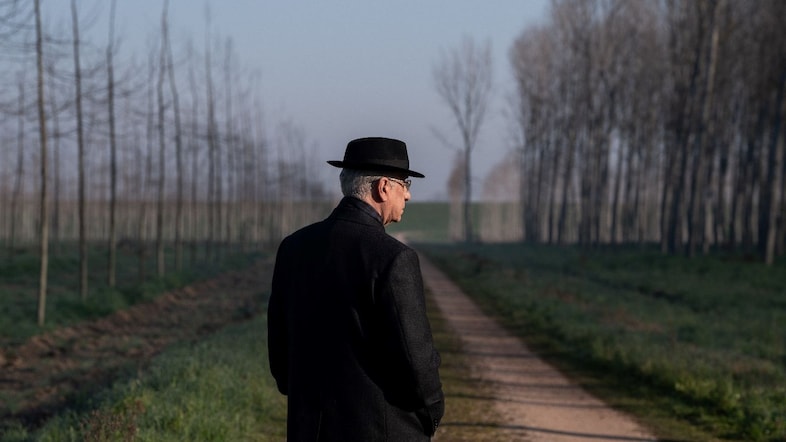
Guè’s cameo appears minutes after a scene between the president and one of the candidates for pardon, a teacher (Vasco Mirandola) who killed his wife deep into her battle with Alzheimer’s. Set in a prison visiting room, the pair share a soulful, philosophical conversation that has an intimate, humanist power in a film with many heightened, even surreal flexes. This blend of tones and emotions is second nature to Sorrentino: “I grew up with a whole generation of filmmakers – directors and screenwriters – who went under the label ‘commedia all’italiana’, which translated to the ability of writing screenplays perfectly balanced with drama and irony, melancholy and stupidity.”
This is not the first politician Servillo has played for Sorrentino: in 2008’s Il Divo, he played Italy’s seven-time prime minister Giulio Andreotti, whose tumultuous career left an ambiguous legacy; in 2018’s Loro, he played notorious populist Silvio Berlusconi. But the fact that De Santis was invented out of whole cloth has made it easier for him to become a favourite character for the pair, even more than Jep, the protagonist of their Oscar-winning The Great Beauty. “This is probably true for Paolo as well – before this movie, the character for which we felt most affection was Il Divo, but after looking at the reactions last night, I think that La Grazia will take over and replace what Il Divo meant for us.”
Servillo immediately walks this back, substituting favouritism with artistic benevolence. “I’ve already lied because I no longer have any relationship with this character. Once you’ve finished, the character belongs to the audience. I think this means that you’ve given something to the audience, a present, something the audience didn’t have before. Now the character lives in the minds of the people watching – provided that they want to keep it.”
La Grazia is out in UK cinemas on March 20.
