

Filmmaker Mascha Schilinski recounts the story behind Sound of Falling, an unsettling, century-spanning fictional portrait of the women who inhabit a farm in Germany
When Mascha Schilinski took off to a farm for a writer’s retreat during Covid times, she was overcome by a feeling of déjà vu. “It brought me back to this feeling I had from childhood,” says the German director over Zoom, dialling in from the same farm that would later serve as the location for her new film, Sound of Falling. “I remember I would ask myself who was playing here before, who was sitting exactly where I’m sitting now, all the thoughts they had on this spot and how they’re in me now.”

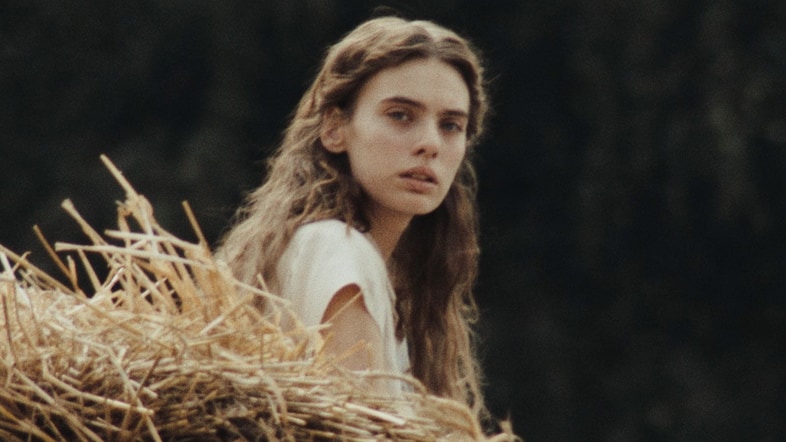
Schilinski and her co-writer on the film, Louise Peter, took the trip to Altmark, a rural part of Germany popular with weekenders visiting from Berlin, with the idea of working on their own separate projects. But as the red wine flowed over nights in at the farmstead, they found themselves returning to ideas they’d long since been drawn to. “We’d been discussing for a long time subtle questions like ‘What is written into our bodies through time?’, or ‘What determines us long before we were even born?’” says Schilinski, who is back at the farm to help out on an art project one of the residents is prepping. “But we weren’t sure how to turn it into a film, because all the things that I was interested in were almost invisible in nature.” Alighting on an old photograph of three women taken when the site was still a working farm, they thought they’d found a “vessel” for their themes.
Like that, the seeds were sown for Sound of Falling, a fictional portrait of the women who’d lived at the farm – their fears, their desires, their innermost secrets – over the course of a century. Eerie and impressionistic, the film flits with ghostly intuition between the stories of four young women: Alma, a precocious seven-year-old and keeper of secrets living in the 1910s; Erika, a 1940s teenager erotically fixated on her uncle’s amputated leg; Angelika, an impulsive teen coming of age during the dying days of the GDR; and Lenka, a newcomer to the community drawn to another girl whose mother has died. The finished screenplay proved as elusive as the subject matter, taking the best part of four years to produce. “It took a long while to find the right structure,” says Schilinski, “because whenever we tried to create a plot or to create characters, immediately everything I was interested in disappeared. In the end, we had to find a structure [that was more] like memory itself, which is so erratic and associative and unreliable.”

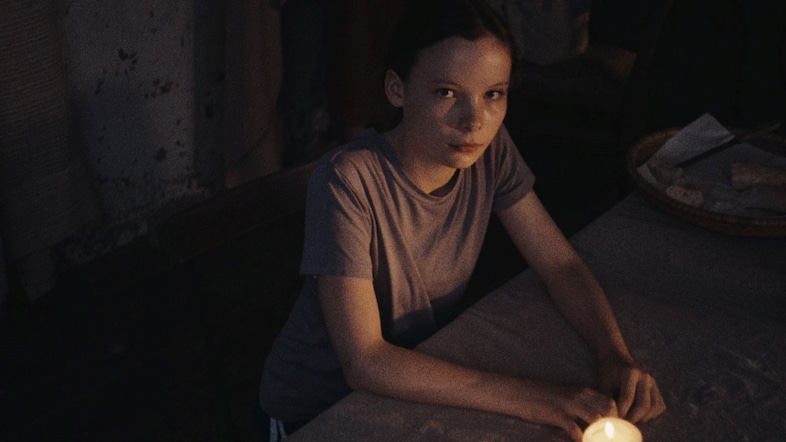
The result is a sustained feat of non-linear storytelling, the hypnotic, elliptical editing combining with a range of visual motifs – hands shot in close-up, bodies that betray their owners’ real feelings – to suggest the ways in which these girls’ trauma echoes through the years. Surprisingly, the film was not initially intended to revolve exclusively around its female characters, but Schilinski and Peter uncovered “so many of these untold, tiny stories [about women] that we decided to put them at the centre of the film”. The director cites a memoir she read as part of her research, about the female author’s ostensibly “idyllic” childhood living on a farm in the early part of the 20th century: “It was written in this very pragmatic, almost chatty tone, but in between all this stuff about doing the laundry or making dinner we would find these very shocking moments, written in such a way that they were easy to miss.” One such moment made its way verbatim into the film, when Alma remarks that the maids on the farm “had to be adjusted to make them harmless for the menfolk”. “It became like this puzzle, in a way, of what might have really happened,” says Schilinski.
One crucial piece in putting the puzzle together was the sound design, which goes a long way to establishing the film’s unsettling mood. In lieu of a traditional score, Schilinski amps up and occasionally undercuts the drama with a series of unnerving whooshing sounds, looped record static and sudden silences that suggest a lurking presence at hand. Those sounds were all in the screenplay, says Schilinski, “but then of course we had to find them. That’s when Billie Mind came on board and other amazing sound artists like Michael Fiedler. We would discuss how a black hole sounds, for example, or how does it sound a thousand metres under the sea? Because I had the feeling when the women are looking directly into the lens, it’s like they are looking into the world, and the world is answering through sound.”

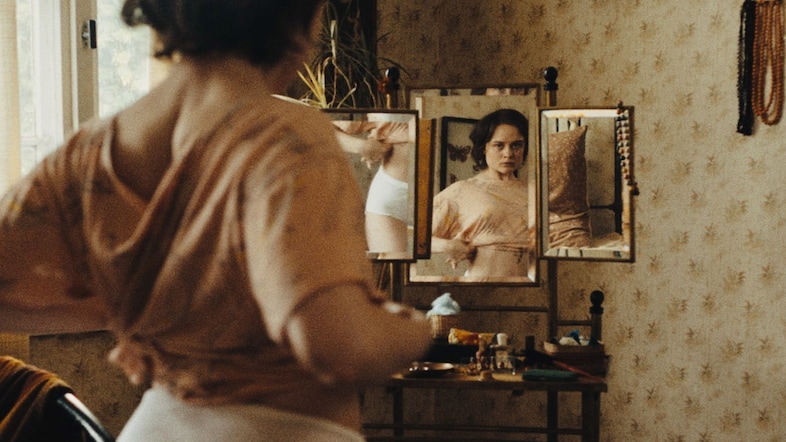
Another inspiration was the work of Francesca Woodman, an American photographer whose eerie self-portraits struck a nerve with Schilinski and became a reference the director would use with the crew to communicate tone. “I just found it so interesting that she anticipated her own death in her work,” says Schilinski of the artist, who took her own life at the age of 22. “When you look at her picture, there’s this motion blurriness that just feels really ghostly; it’s like she’s entering another world already.” That same feeling courses powerfully through Sound of Falling, whose women all yearn to slip the bonds of the historical moment they’re born into – including, presumably, Schilinski, who seems to reach through the screen in moments and touch them.
Hands shown in close-up blur the lines between living and dead; bodies betray their owners’ real feelings; the river next door to the farm, marking the border between East and West Germany in the film’s postwar scenes, lurks as an ever-present threat. The elliptical structure serves to loosen the bonds between cause and effect, mirroring these women’s desire to free themselves from historical time and, in turn, their own oppression.
The Sound of Falling is out in UK cinemas now.
