
A gorgeous, bittersweet family drama from Hlynur Palmáson and Mascha Schilinski’s Cannes prize-winner Sound of Falling are among the picks of this month’s cinema releases
The Love That Remains
From 20 March
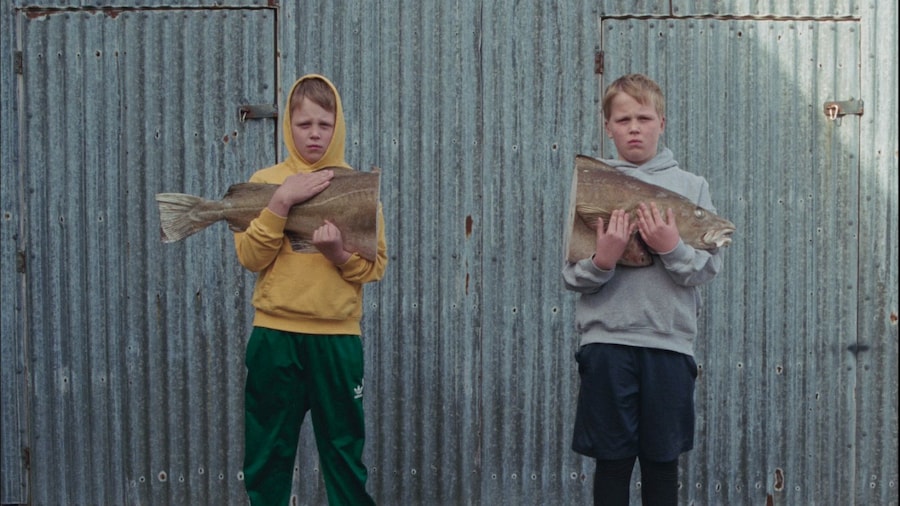
The Love That Remains is a bittersweet ode to the trials and unassuming pleasures of middle age from Icelandic director Hlynur Palmáson, best known for his brooding, elemental dramas (Godland; A White, White Day) but sparkling here in a change of pace that only confirms his talent.
The drama unfolds over a year in the life of Anna (Saga Garðarsdóttir), an artist, and fisherman Magnús (Sverrir Guðnason), as they come to terms with their separation while bringing up three young children. Magnús, a tragicomic figure who hasn’t quite moved on from the relationship, skulks about the house hoping to get laid in between long shifts spent at sea; Anna, looking to exhibit her work, plays host to a gallerist from Denmark who spouts a tedious “monologue of death” while displaying absolutely no interest in her art.
What happens, though, is mostly immaterial in this sly series of vignettes sending up middle age in all its ever-changing moods – the mindless toil, the undercurrents of lost vagueness, the odd bouts of horniness serving up sad reminders of spent passions. In one scene, a day out in the country sets the stage for a moment of bliss when Magnús steals a glimpse under Anna’s skirt; in another, Magnus is cut adrift – quite literally – by his shipmates when news comes through of a family emergency. The passing of time is another theme: echoing Palmáson’s own flair for incorporating time-lapse photography into his work, Anna’s artistic practice revolves around large metallic sculptural pieces which she assembles and then leaves out to rust, allowing nature to do the rest.
Given the episodic structure, it could all feel a bit slight coming after after the epic storytelling sweep of Godland. But while the drama is small-scale, Palmáson roots these domestic passions in the grandeur of the Icelandic landscape – here seen in rich blooms of colour as summer sweeps in, as well as its more familiar, blasted forms. And if there’s a sense that the self-penned script runs out of road 15 or so minutes before the end, it does nothing to dispel the abundant charms of this film, which capture something of the warmth and contours of everyday family life – its holiness, in a sense – even at its most messy and imperfect.


Sound of Falling
From 6 March
Four generations of women living on a German farmstead come under a startling lens in Sound of Falling, director Mascha Schilinski’s Cannes Jury prize-winning second feature. In the 1910s, seven-year-old Alma (Hanna Heckt) bears witness to a series of family traumas too painful to be acknowledged, starting when her brother, Fritz (Filip Schnack), is maimed in a “work accident” that is really nothing of the kind. 30 years later, Fritz becomes the object of wayward fascination for his teenage niece, Erika (Lea Drinda), whose own niece Irm (Claudia Geisler-Bading) lives at the farmstead some 40 years later with her daughter, Angelika (Lena Urzendowsky), who is sexually abused by her uncle. Finally, in the 2020s, a family from Berlin moves out to the farm, where their own daughters flirt with tragedy of their own. Schilinski’s drama is an unnerving study in gender oppression, its eerie editing and sound design giving form to a fear that, like its title, hovers at the edges of perception itself.

Resurrection
From 13 March
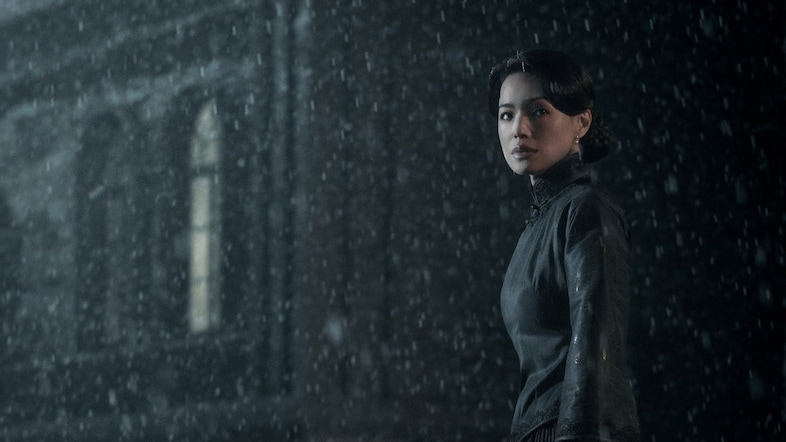
Another beautiful and baffling vision from emerging slow-cinema maestro Bi Gan, Resurrection is a sci-fi parable about a future in which dreams have been banished. The film stars Jackson Yee, a boyband star in his native China, as a “deliriant” who hides from the authorities inside old movies to continue his dreaming. When the woman (Shu Qi) sent to track him down finds him holed up in an opium den – a stunning opening sequence ripe with references to silent-movie classics – she becomes intrigued, letting him replay scenes from his life before killing him. The narrative then unfolds as a series of dreams reflecting Gan’s own obsession with the century of cinema, from German expressionism and film noir to the postmodern pop stylings of Wong Kar Wai. It’s a ravishing love letter to the form but, without the sort of resonant emotional chord to sustain it, can make for a frustratingly insular watch.

Broken English
From 20 March
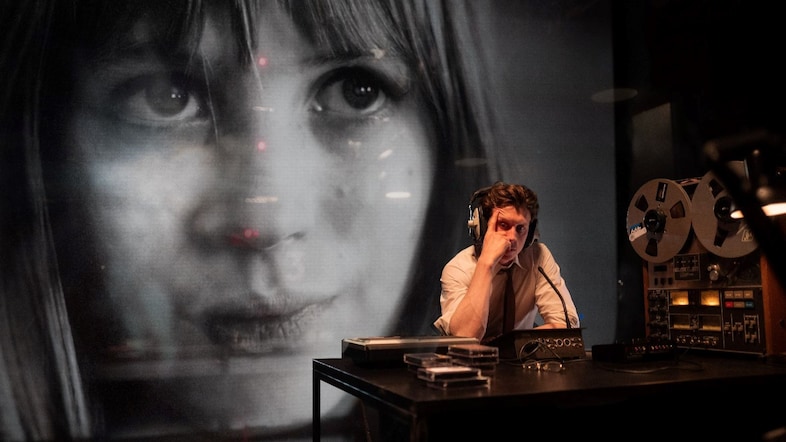
For their moving new documentary, filmmakers Jane Pollard and Iain Forsyth hit on a slightly goofy premise; at the “Ministry of Not Forgetting”, an Orwellian bureau tasked with resetting the narrative on historically misunderstood figures, Marianne Faithfull emerges as prime candidate for their first case. And with good reason: a gifted singer-songwriter who bounced back from addiction to make the best work of her career, the late British actor, musician and muse remains known for – and in some ways tarnished by – her association with the Rolling Stones in the late 1960s. “Well, fuck that,” says the bureau’s chief (Tilda Swinton), who orders her colleague (George MacKay) to bring Faithfull in for questioning.
When the musician finally shows, it’s a bit of a shock; confined to a wheelchair, Faithfull has been left reliant on an oxygen tank by a near-death brush with Covid in 2020. But she soon proves wily and disarming company in a series of reminisces about her career, which was dogged by misogyny long before a fateful – and largely fabricated – run-in with the tabloids mired it in scandal. That particular incident is discussed not with Faithfull herself, but a roundtable of women including Edith Bowman and Bat for Lashes’ Natasha Khan, in one of the film’s more inventive moments. But its most poignant scenes all come through Marianne, right down to a cracked yet commanding performance of Misunderstanding that would prove to be her last.


Below the Clouds
From 27 March
Nearly two millennia after it buried the city of Pompeii, Mount Vesuvius is stirring again. Shaken residents make calls to the emergency services after a 3.5 magnitude earthquake hits – did this mean the volcano was about to blow? Was it being monitored, or would they, like the inhabitants of Pompeii preserved by the same ash that buried them, be “left to die like rats”? Gianfranco Rosi’s documentary is a striking and poetic meditation on the passing of time in the shadow of oblivion, shot in silvery monochrome that drains the Neapolitan region of its familiar patchwork colour. Moving cryptically between bookstore owners and shipworkers to the subterranean tunnels where history is conserved and destroyed in the city, its thesis is handily outlined by an unnamed curator, who observes wistfully of a room heaped with forgotten cultural treasures, “Time destroys everything, preserves everything, and then returns to us in an unexpected, unforeseen way.”
