
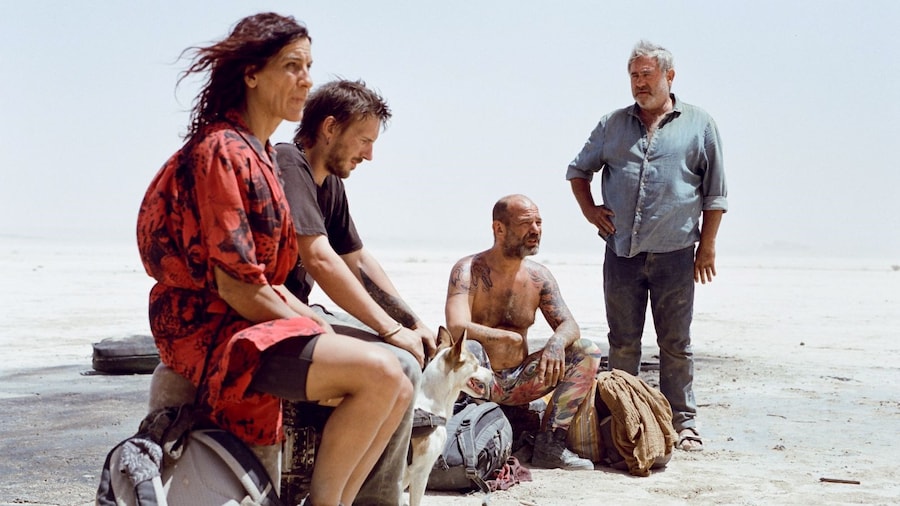
“Watching my film, you die,” says director Oliver Laxe of his unlikely Oscars contender, an extraordinary road trip that is shaking audiences to their core
I meet Oliver Laxe back from a 20-minute power nap in a Thameside hotel, a red-eye flight from the night before catching up with him. At 6’6” with a long mane of dark chestnut hair, Laxe might be taken for a handsome cult leader, or a well-heeled extra from Interview With the Vampire. In fact, he’s the director of Sirāt, the year’s most transcendental cinematic experience and a film he likens to a form of “sorcery”. An unexpected Oscars nod for best international feature has taken him around the world on a gruelling press tour, and he is, as a result, feeling rather tired. I ask him if he’s ever been forced to talk about himself at such length before; he tells me after so much blather, things stop making sense and you start to feel sad. “Fortunately I’m also really narcissistic, so I just really like to speak,” he adds with a sheepish grin.
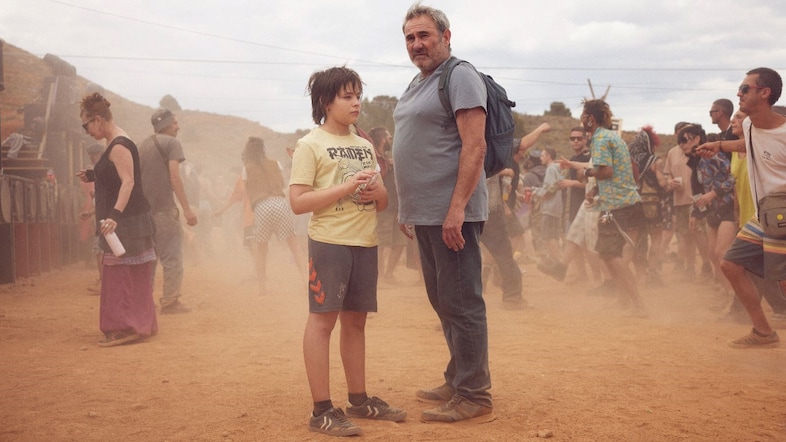
There is plenty to talk about with Sirāt, though professional courtesy forbids me from revealing much of it here. The story concerns a man (Sergi Lopez) who takes his son (Bruno Nunez Arjona) to the rugged wilds of Morocco in search of his missing teenage daughter, riding convoy with a group of new-age travellers on their way to a rave in the desert. But Laxe’s film turns on a clutch of shattering moments that take us to the dark heart of this odyssey – and the less said about those, the better.

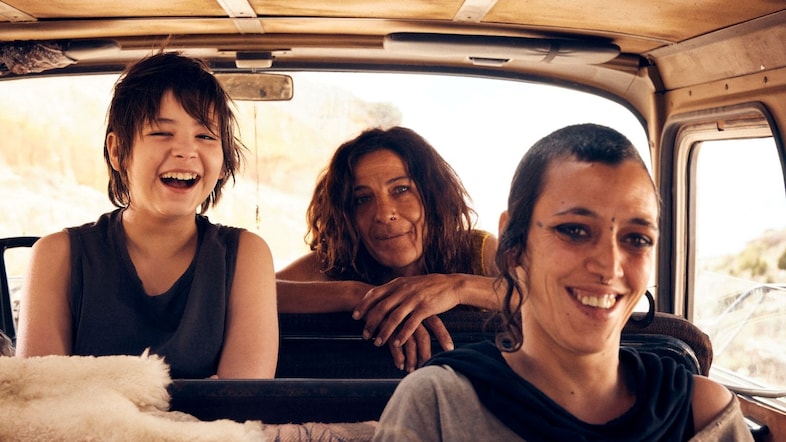
“Watching my film, you die,” says Laxe in quiet, Galician-accented English whose sleepy tones it slowly dawns on me I’ve begun to mirror midway through the interview. “But people [have also said] they have a feeling of being more connected to life after watching it. People are more in their bodies, which is something we wanted. We wanted to suspend this level of perception, [through] the brain, which takes up too much space. I would say what we did is [closer to] a kind of shock therapy, you know?”
What you absolutely should know going in is that Sirāt is one of the best adverts for the collective pursuit of cinemagoing around. Kicking off with a humungous rave in the desert that serves as our surreal introduction to the cast, it’s a film that takes two of the absolute worst aesthetic phenomena of all time – trance music and new-age hippies – and makes something undeniably, monumentally cool with it. (Kangding Ray’s thumping soundtrack, also Oscar-nominated, is key to its success.)
Paul Thomas Anderson knew something was up when he saw the film: having caught the first ten minutes in bed, the One Battle After Another director leapt out from under the covers, got dressed and cranked the rest of it full volume in his basement cinema, according to Laxe. He’s just one in a long line of auteurs falling over themselves to heap praise on the filmmaker’s vision, from Michael Mann and John Waters to Luca Guadagnino and Pedro Almodóvar, a producer on the film, which won the Jury prize at Cannes last May.

Finally, in January, the film made the cut for best international feature at this year’s Oscars – no mean feat for a film so unapologetically avant garde in intent. Laxe is understandably pleased about all this, but can’t resist a dig at some of the other movies in contention. Some of those films, he says, have ideas that are good, but the images that end up on screen are “dead”. (He’s not saying which.) “I mean, an image is not just an image, you know?” Laxe teases. “It’s something that has a lot of layers, and we as filmmakers can be our own worst enemies of our images.”
It’s a problem he ascribes to the long gestation process a film typically goes through to make it to the screen, from script to preproduction and the rigors of shooting. (Sirat itself began with an image that came to Laxe of trucks speeding through the desert.) How does he, as a director, ensure his images survive the transition to the screen? “There’s a word in Arabic, dhawq, which is really important in Sufism,” says Laxe. “It means ‘taste’. It’s really just about that. If it’s tasty for me, I know I’m going in the right direction.”
Like his film, Laxe seems to be operating on a slightly different wavelength from everyone else. Born in Paris to Galician parents, he studied filmmaking in Barcelona and was on an Erasmus year in London when he met some “crazy poets” from Tangiers, who convinced him to move to Morocco. It was here he made his first feature, 2010’s You All Are Captains, and developed an interest in Sufi mysticism that courses through his work. (In Islamic tradition, sirāt refers to a bridge connecting heaven and hell.)

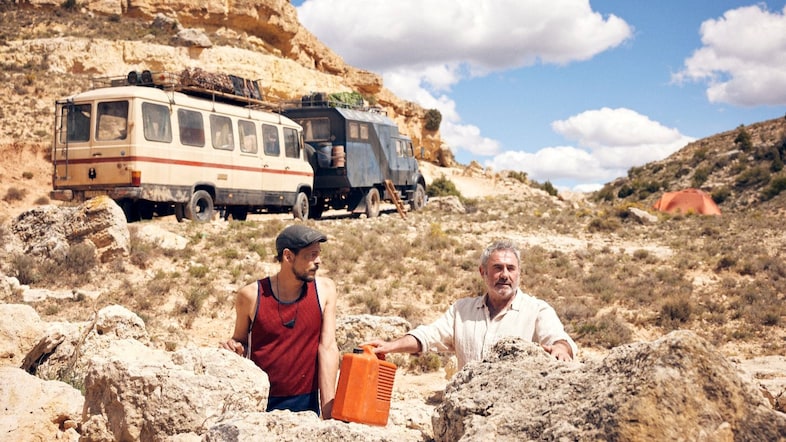
The journey these characters undertake is as much a metaphysical one as a literal one, and an air of end-times menace hangs over the film. When a news report comes in over the radio about an escalating conflict that sounds a lot like a new world war’s about to kick off, one of the characters asks, “Is this what the end of the world feels like?” But Laxe winces when I drop the word “apocalypse” into the conversation, pointing out the term’s original meaning as an unveiling, a drawing back of the curtain to reveal deeper hidden truths. “It was my intention to evoke that feeling that we are on the edge of an era change,” he says. “That one world is dying and another could start.”
Laxe talks animatedly about society’s rampant “thanatophobia” – fear of death – and how, as a culture, “we try to distract ourselves more and more from this”. Instead, his film “obliges you to look inside”. I’m curious, how much does he consider himself a spiritual person? “A spiritual person is someone who doesn’t know they are spiritual …” says Laxe, sounding unsure for perhaps the first time in our conversation. “You know, I’m more one of these people who talks too much about spirituality. I talk too much.” The narcissism again? “Yeah. Sometimes, as human beings, we need to create an idealistic image of ourselves, to project this image we can identify with … But if I look at my work, I can say yes, because I think that Sirāt has a spirit in it, a soul, definitely. I mean, it’s an animal, it’s a beast.”
Sirāt is out in UK cinemas now.
