
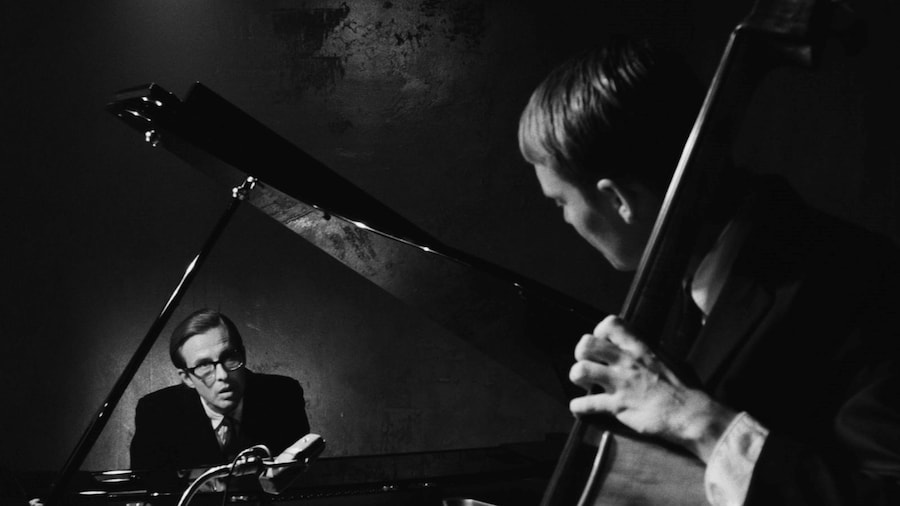
The star of Joachim Trier’s Oslo trilogy gives a masterclass as tortured jazz icon Bill Evans in Grant Gee’s new film, which just premiered at Berlin Film Festival
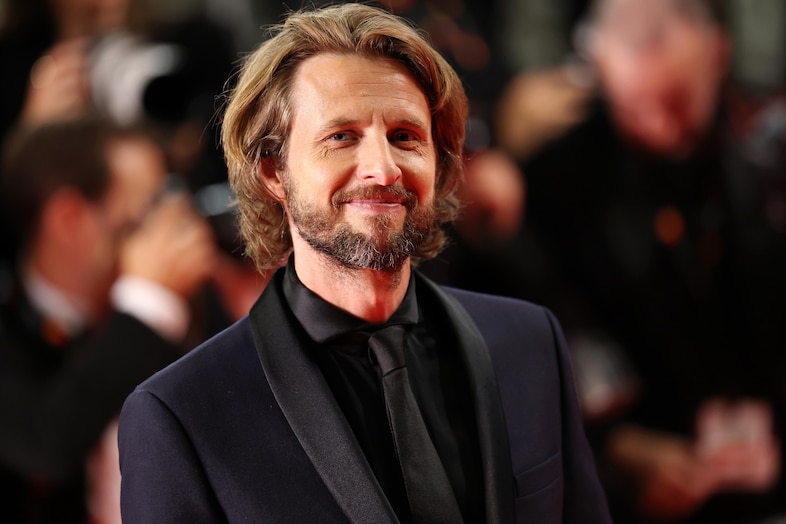
“Sometimes an intermission is part of the music,” American jazz pianist Bill Evans is told in Everybody Digs Bill Evans. The first fiction feature from music video and documentary filmmaker Grant Gee is an intense portrait of an interval in Evans’s life where he stopped playing, deep in grief and heroin addiction after the death of his bandmate in a car crash. It had its world premiere on Friday at the Berlin International Film Festival, where Oslo-born star Anders Danielsen Lie sits down with us to talk about getting inside that moment.
Evans, a pianist who cut his teeth playing in Miles Davis’s band, formed his own trio with bassist Scott LaFaro and drummer Paul Motian in 1959. Two years later, they played a residency at New York’s Village Vanguard which was live-taped and released as two of the most revered jazz records of all time, Sunday at the Village Vanguard and Waltz for Debby. LaFaro died just ten days after the residency ended, sending Evans into a deep depression.
“When you listen to those recordings, it’s like listening to one organism,” said Danielsen Lie. “So when Scott LaFaro died, it was like cutting off a limb. He was totally unable to play in the months that followed. But then, everyone who played with Miles Davis had been told to play less, and constantly be aware of the musical effect of silence. It’s very, very important in jazz to shut up. So for me it’s kind of a metaphor for what jazz is about too.”
Everybody Digs Bill Evans plays out in smoky living rooms and grainy black and white, with flashes forward in lurid colour, as Evans leaves his empty apartment and the jazz scene to stay with his blue-collar parents in Florida (Bill Pullman gives a career-best performance as his alcoholic father), and the family of his schizophrenic music teacher brother in Manhattan. This attempt to extricate himself from drugs and co-dependent chaos with partner Ellaine Schultz (Valene Kane) only landed him amidst relatives troubled by their own demons, in a culture of unspoken repression around mental struggles, and a life dogged by more catastrophes.

Grant Gee adapted Everybody Digs Bill Evans, along with screenwriter Mark O’Halloran, from Owen Martell’s novel Intermission, in which Evans was written as if he were a ghost in his own story. He shot it on a limited budget in just a few weeks, with Cork in Ireland standing in for the United States. Danielsen Lie found it hard to believe it was Gee’s first foray into fiction features. “It seems like he’s done this forever,” he says. “It’s interesting because he’s been very humble and very curious in working with actors. It’s a thing that reminds me of Joachim Trier, who never gets rid of his curiosity working with people, and with actors who are often self-absorbed and nervous.”
Danielsen Lie, a frequent collaborator with director Joachim Trier on films including current Oscar frontrunner Sentimental Value, brings a piercing, introspective depth and voraciousness as Bill Evans, with his slicked-back hair, thick tortoiseshell frames and air of stark, intellectual dishevelment. It’s not the first time the Norwegian star has played a heroin addict; in Trier’s Oslo, August 31st, he gave another memorable performance as a man just out of rehab struggling to reintegrate into society. “I wouldn’t say the film with Joachim was a direct source of inspiration,” he says, “but the thing about addiction is it sometimes camouflages personality, so when people are in a severe state of addiction, they behave in a similar way because the drugs are kind of directing your life.”
But it was the performer’s own musical background that sealed the role. Danielsen Lie, who also works as a practising GP in Oslo when not on set, has a skillset way beyond that of most high-level actors, and piano is another. “I’m a big jazz buff,” he says. “I discovered Bill Evans some 25 or 30 years ago. I’ve been playing a lot myself, so he’s been a huge source of inspiration. You can’t really transform that knowledge of his music into acting, but it gave me some confidence that I, being Norwegian, could play an icon in American cultural history.”
Listening to the actor describe Evans’s vision of jazz is a kind of poetry in itself. “He would compare his art with Japanese horticulture,” he says. “He was very obsessed with refining. You have to find your artform, and then it’s all about constantly refining that, more than innovation, or trying to find the new hip thing. But, paradoxically, he was a big innovator himself in jazz. He transformed the way people played on the piano, freeing the piano.”
Danielsen Lie draws a connection between Evans’s approach to jazz and his father’s love of gardening. “I sometimes think about that with Bill, that he had these plants he was constantly nursing and cultivating. So there’s a deep contrast between the way he looked at his art and his life, which was in total disarray. That’s the paradox and one of the enigmas about him.”
