
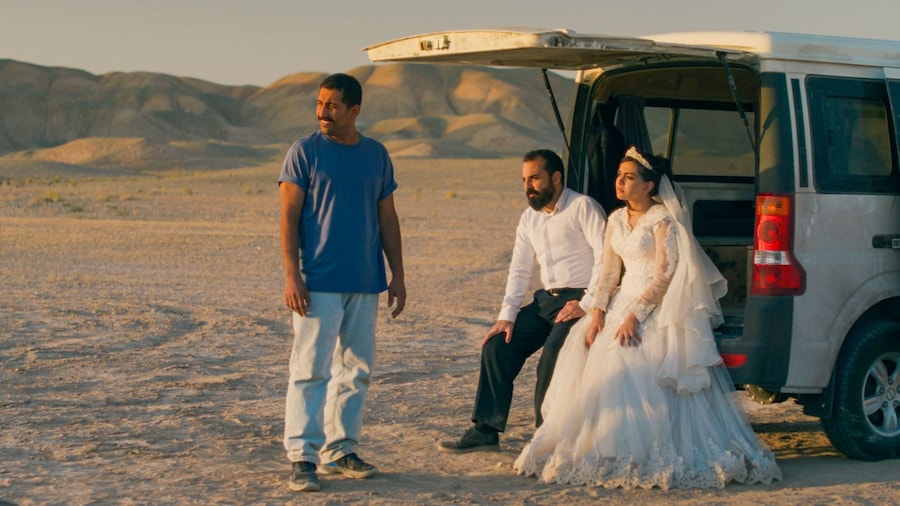
Jafar Panahi shoots in total secrecy and once smuggled a film out of the country inside a cake. Now, the Iranian director faces jail time once again for making “propaganda against the state”. What drives him to keep going?
Even shrunk down on a tiny Zoom display, it is difficult not to be slightly in awe of Jafar Panahi. Probably the world’s most famous dissident filmmaker, he is also one of Iran’s most prolific – this despite a 20-year filmmaking ban, during which he has made six feature films in secret. One of them, 2011’s meta-documentary This Is Not a Film, was smuggled out of Iran on a USB concealed inside a birthday cake. His most recent, the Palme d’Or-winning It Was Just an Accident, follows his most recent period of arrest in Iran’s notorious Evin prison, and follows a group of political prisoners who encounter their torturer after their release. Panahi baulks at being called brave, insisting he just wants to make films. On Zoom, he is dressed entirely in black, decked out in sunglasses indoors at 11am New York time. Bravery may apparently be up for debate; but what is undeniable is that he is utterly, monumentally, staggeringly cool.
What is also undeniable is that Panahi would hate this kind of praise. Filmmaking for him is decidedly not a vanity project; he talks about it instead as a kind of vocation, a deep impulse that he has to satisfy, and a human right that he insists upon asserting. “When I received the initial sentence that banned me from working, it was a huge, profound psychological shock,” he says. “I kept thinking, if I can’t work then what can I do?” His response was both to retreat underground and to manipulate the cinematic language available to him, placing himself within meta-films that become mediations on the very act of artmaking itself. “Whatever I would think about, whatever I was interested in, I saw through myself and what was happening. That’s why I began to appear in front of the camera, because it was the story of myself, the story of my work.”

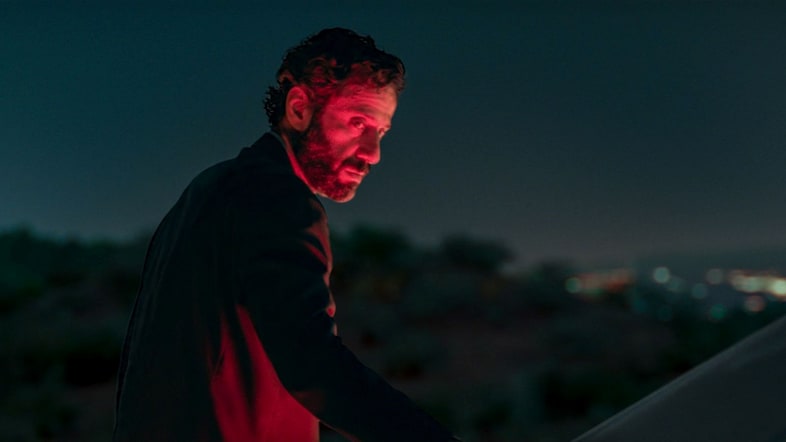
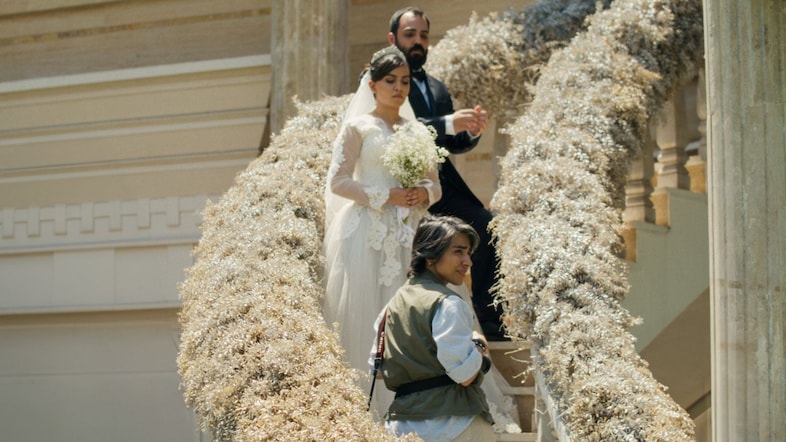
It Was Just an Accident is Panahi’s first traditional narrative feature since his ban in 2010, yet his insurgent approach to filmmaking has not changed. It was filmed once again in secret, evading censors and using unobtrusive equipment and a small cast and crew (an actor might also do the set design, or assist with the script, he explains). And much like his previous films, it is a work very much filtered through the director’s own experiences – of imprisonment, of state violence, of the capillary reach of the Islamic regime in every strata of Iranian life. “Being a social filmmaker means living under the current circumstances,” he says. “Maybe under different circumstances you would work a different way, but because you’re a social filmmaker, you get your ideas from your environment. If I hadn’t gone to prison, if I hadn’t met [similar] people, maybe I would never have made this film.”
The spectre of imprisonment looms large over It Was Just an Accident, as each of the characters is forced to reckon with the trauma done to them by the state, and the sudden agency to wreak revenge, should they wish it. Less a film advocating for resistance, It Was Just an Accident is instead an exploration of cycles of violence, and what it means to extricate yourself from their totalising atmosphere. It is ardently anti-regime, not just in its critique of the state but also in its refusal to absorb the state’s practices, both cinematic and social – the master’s tools, Panahi well understands, will never dismantle the master’s house. And ultimately there is nothing more anti-authoritarian than making the film that you want to make, in all its moral complexity.

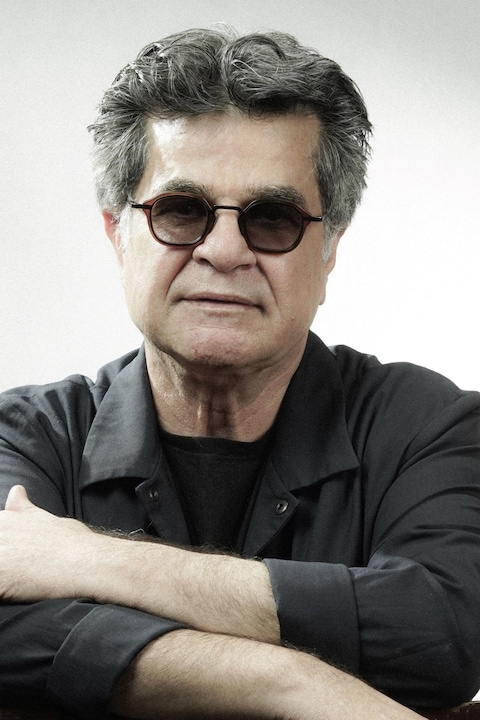
“Listen,” Panahi says, leaning forward. He sounds, as he does throughout our conversation, extremely definitive. “There are two kinds of filmmakers in the world. There’s the kind that asks what the audience wants, and makes films according to that. That’s 95 per cent of filmmakers. But there’s also the kind that says, no, I’m going to make my own film and the audience needs to come and find me. The audience needs to meet me where I am. And this kind of filmmaker isn’t prepared to come under the control of anything. Not the censors, not the audience, not the state. He makes the film that he believes in.”
Panahi refers to himself as a social filmmaker, from the Farsi word اجتماعی, meaning ‘of society‘ or ‘of the community‘. He categorically refuses to be called a political filmmaker, despite many people – from the Iranian regime to his own admirers – considering him as such. He is extremely immoveable on this. “A political filmmaker has an agenda,” he says. “If someone agrees with their ideology, they are the ‘good guy’ in the film, and if they disagree, they are the ‘bad guy’. But a social filmmaker doesn’t have absolutely good or bad characters, he allows everyone to say their piece. If this were a political film, the interrogator would never have been allowed to speak. He would never have been allowed to defend himself.”

How does he feel about the axiom that all art is political? He stares back. “I don’t even know what that means,” he says flatly. I try to sum it up: the idea that all art, even if not intended to be explicitly political, is somehow intervening in a political context. He nods slowly, considering. “I think I see this as to do more with politics and political systems,” he says. “In Iran, even wearing clothes becomes political. If you don’t wear clothes how the state wants you to, from their perspective you’re fighting against them. So they throw you in prison or fine you or whatever. It’s a political angle on everything: art, clothes, the things you say.”
Panahi and I speak four days before the news breaks that he has once again been sentenced to imprisonment by the Iranian regime. The same week, at Marrakech Film Festival, he revealed he would return to Iran following the press tour for It Was Just an Accident, presumably to carry out the sentence. It doesn’t really matter how many times this has happened before – the news remains gutting. But his return to Iran is unsurprising: the same spirit that moved him to make films is the same spirit that seemingly compels him not to accept exile.

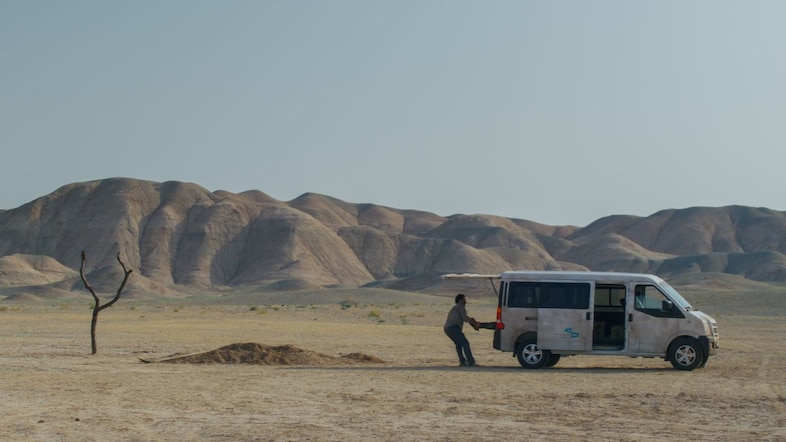
“I’m Iranian,” he says to me, when I ask how he positions himself within the national tradition after decades of cinematic subterfuge. “I was born in Iran, I only have one passport, I live in Iran and I draw inspiration from the people around me, but I make the films that I want to make, the kind of cinema that I find valuable.” It is a classic Panahi answer: defiant in its simplicity. His films might speak to vast political concerns but ultimately, like the very conditions under which they are made, they come down to a simple matter of personal freedom. It is the ideal that Panahi has been pursuing his entire career – against every possible odd. To pick up the camera, and to make the film that he wants to make.
Interpreter: Iante Roach
It Was Just an Accident is out in UK cinemas now.
