
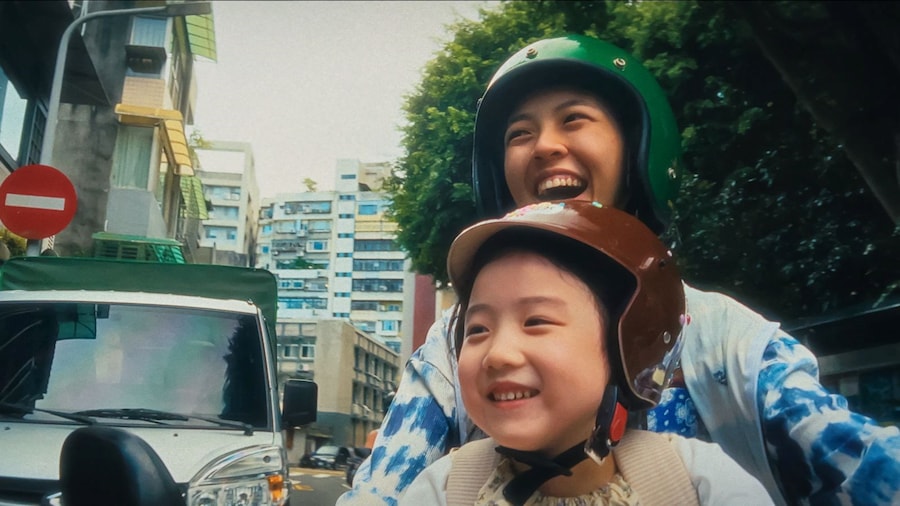
Shih-Ching Tsou sets the Taiwanese city aglow in this beautifully crafted drama from the producer of The Florida Project and Tangerine
As Sean Baker’s longtime producer and creative partner, Shih-Ching Tsou has had a shaping hand in some of this millennium’s defining indie films. On Take-Out (2004), co-directed with Baker, she helped map the socially conscious, shot-from-the-hip style of filmmaking the Anora director would soon become known for, with the story of a migrant worker forced into debt slavery made for just £3,000. And on Tangerine (2013), Baker’s breakout tale of a transgender sex worker celebrating her release from prison, it was Tsou who reassured her former college roomie that shooting on an iPhone 5s was the right way to go.
“I remember Sean was so worried about it,” says Tsou, who served as a producer, costume designer, bit-part actor and goodness knows what else on the film, a landmark in digital filmmaking that set the scene for later films like Steven Soderbergh’s Unsane and 28 Years Later. “I had to convince him that the most important thing was the story, and whatever camera you use, that’s just tools, you can use whatever that fits the project, just like all the Dogme 95 films we used to watch together.”
In Left-Handed Girl, Tsou steps up with a solo directing debut made, just like Take-Out, for a few thousand dollars and shot, just like Tangerine, on an iPhone. It’s a project she considers a culmination of her 25 years in the industry, making smart, charismatic films about marginalised communities able to reach beyond the usual arthouse crowd and connect with wider audiences.
It’s also, coincidentally, the first film that she and Baker talked about making together. Soon after they met, Tsou told him a story about her childhood in Taiwan, where her grandfather took her to task for using a knife with her left hand – the “devil’s hand” in traditional lore. Baker loved the idea and the pair began working up a script, but a trip to Taipei in 2001 convinced them the film lay beyond their limited means, so they began working on Take-Out instead. Years later, when Red Rocket competed at Cannes in 2021, Tsou finally found backing for her story.
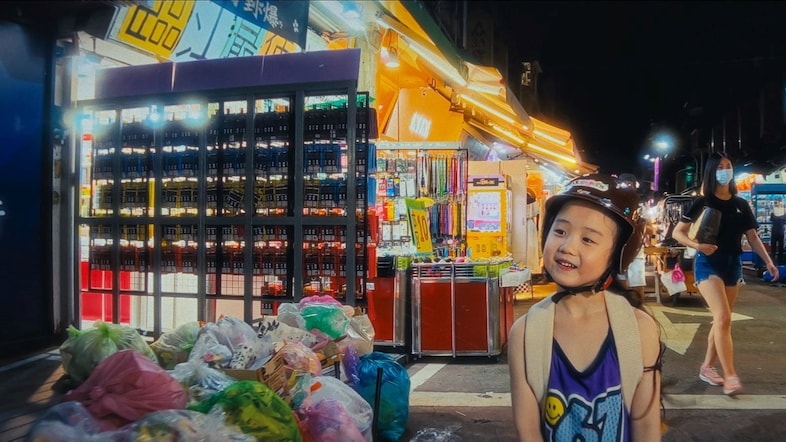
Left-Handed Girl spins a memory of childhood injustice into a sharply observed, warm-hearted study of four generations of Taiwanese women. Beautifully performed by its leads, it’s a loving portrait of family dysfunction with echoes of Hirokazu Kore-eda’s Shoplifters or, in one explosive dinner-party scene, Mike Leigh’s Secrets and Lies. The drama unfolds through the eyes of I-Jing (Nina Ye), the five-year-old girl of the title who creatively interprets her grandad’s reproach to embark on a low-level crime spree across Taipei. I-Jing’s mum, Shu-Fen (Janel Tsai), runs a noodle-stand in the city’s night markets, but is landed with a mountain of debt when her estranged husband falls ill. And big sister I-Anna (Shih-Yuan Ma) seemingly hates everyone and everything, but shows glimpses of affection in short supply from her mum, who is seemingly too harried to notice.
As a mum to a nine-year-old daughter herself, Tsou says she relates to Shu-Fen as a “very typical Taiwanese mother – you know, a lot of times they have so much going on in their lives they don’t have the energy to care for the emotional part of their being.” Shu-Fen is at her most vulnerable in dealing with her own mum, who turns down her request for money on account of Shu-Fen still being married – and therefore someone else’s problem. “A married daughter is like water that’s poured out,” she notes, a line that lays bare all the ways in which Taiwanese society favours its menfolk.

“It’s not just Taiwanese, but Chinese culture,” says Tsou, who describes her own mother as a classic “tiger mom”, pushy to the point of being suffocating. “There are a lot of Chinese immigrants throughout different countries in south-east Asia, so its culture is actually very spread out. That’s one thing I’ve noticed with families that immigrate to another culture, they follow those traditions even more strictly than in their original countries. When you don’t fit into the culture you’re in, you cling to the old thinking that you knew from back in the day.”
Tsou finds beauty in the “ordinary places” of Taipei, the city she left to pursue her studies in New York, from the rich golden glow of the night markets to the neon pinks and greens of the betel nut stand where I-Anna works. Tsou cast Ma, a recent college grad who’d been working as a model, in the role after reaching out to her on Instagram. “I had to send her my IMDb profile to reassure her I wasn’t a scam,” she laughs, “but she sent me an audition tape and her performance just blew me away.” Throughout filming, Tsou worried she’d made the character too unlikable; it was only in the edit that she saw the subtle transformation in Ma’s performance. “That’s when we started to see, like, oh my God, she really has that range. Slowly we get to this point where we see her being more of a role model, especially when she takes I-Jing through the market to return the stolen goods.”
In the end it’s I-Anna who is the film’s moral compass, bringing family secrets painfully into the light when everyone else is content to just look away. Ma’s embodiment of the character is all the more impressive from a first-time actor, conveying all of I-Anna’s rage, shame and buried tenderness in a performance of controlled physicality. It is perhaps her courage, her determination to break with tradition that brings her closest to Tsou, a cinematic mould-breaker finally emerging into the spotlight.
Left-Handed Girl is out on Netflix now.
