
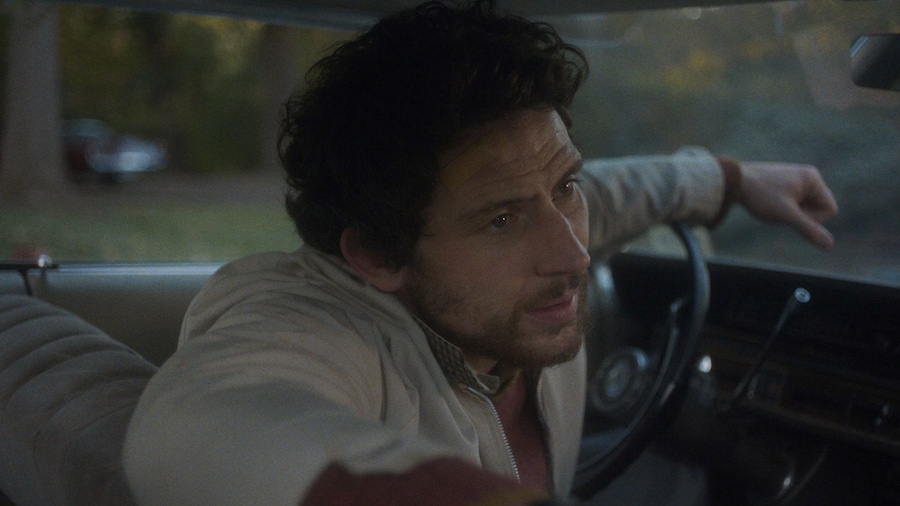
Kelly Reichardt’s subversive heist film starring Josh O’Connor as an art thief on the run is smart, subtle – and timely
On a recent Monday in October at 9.30am, a group of professional thieves snuck into the Louvre and made off with eight sets of Napoleonic jewels. The break-in was meticulously planned and executed, and the thieves fled the museum in under seven minutes. The same cannot be said, however, for the protagonists of Kelly Reichardt’s new – and conveniently timed – art heist film The Mastermind, which opens in UK cinemas this weekend.
In Reichardt’s film, a restless, unemployed carpenter and failed art historian, JB Mooney (Josh O’Connor), enlists his buddies to steal paintings by the American artist Arthur Dove from their local museum in Framingham, Massachusetts. The trio is spotted by a group of schoolgirls, has a scuffle with a security guard, and then fails to last more than a few days before being pinned for the robbery, with Mooney setting off on the run across the northern US. Unlike the Louvre thieves, Mooney et al are overly confident and haphazard; Reichardt’s rendering of their failed caper, however, is anything but. Like all of her films, it is measured and subtle, demanding close, careful attention.

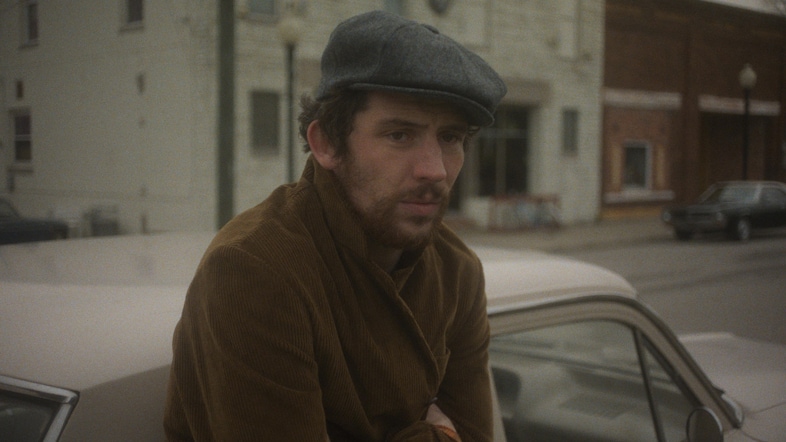
If you are familiar with the director’s more recent work – Certain Women (2016), First Cow (2019), Showing Up (2022) – the idea of her making a heist film might sound surprising, but what interests Reichardt is the possibility afforded by starting out in a known genre, what she compares to a “safety net” for the audience, and then “letting the film unfold in an open way” that leaves you “unsure of where things are going, just as Mooney is unsure of where things are going and has to improvise from that point”. This form allows Reichardt to work across registers familiar and new, spanning both the patient, long takes for which she is known, and an experimentation with more uptempo, even handheld shots, scored to jazz by Rob Mazurek and Chad Taylor.
This is in fact Reichardt’s third “crime film”, following her debut feature River of Grass (1995) and Night Moves (2013), though each subvert the genre in their own way. In particular, Reichardt is interested in the kinds of characters these types of films focalise: “There is a prototypical antihero that comes along with the territory of this sort of film. He’s one of these guys from the 70s Hollywood New Wave, who are out looking for personal freedom, and that can be really glorified.”
The film is set in 1970, an ideal moment for thinking about the politics of freedom in American culture, particularly as it arcs away from the liberatory movements of the 60s and into the rise of neoliberal individualism born in the 70s and 80s. “My students always mush together the 60s and the 70s – no, no, no! I wanted to be really particular,” says Reichardt, a film professor at Bard college in New York. “1970 is important because it’s the end of the 60s – that dream is over, but the new decade hasn’t begun yet. The [Vietnam war] draft is still underway. It’s the year the National Guard went on to college campuses. It’s the year of the Kent State shootings. America expands the Vietnam War into Cambodia. The country is super polarised.” The film is set in what she calls the “haze of post-60s-dom”, which cuts through the narrative in the form of antiwar protests, news footage, Nixon posters, draft dodgers and amplifying police overreach.

Despite this poignant historical thinking – and its resonances with events happening in the United States today – Reichardt insists that politics are only the backdrop to the film, and doesn’t want them “to be a forefront thing”. For her, they sit at the edges of the film, much like they do for Mooney, who is too self-involved to notice what is hanging over the rest of the country: “I did it in the peripheral, like it would be in his mind.” But if the film is indicting Mooney for his ignorance in the midst of all this turbulence, it seems ironic to suggest that the audience, too, should shelve the film’s political consciousness in favour of its A-plot. Moreover, the cinematography of The Mastermind sings a different tune than Reichardt does in our interviews: while Mooney fabricates a fake ID card in a hotel room, the camera pans away to a TV set showing footage of American soldiers invading Cambodia, and later, as he sits in a café, clashing protestors erupt into his table and literally block the camera, slamming their fists against the window and shouting at the hippies on the other side: “Why don’t you make something of yourself? You’re a bunch of freeloading pinks!” (The rejoinder to “make something of yourself” is also levelled at Mooney by his father, a judge, earlier in the film.) Though politics are meant to be in the background, they continuously spill out into the foreground, begging for our attention.
Of course, the film also arrives amid growing threats to free speech under the Trump administration, embodied by the draconian response to campus protests over the war on Gaza, as well as investment in the film’s distributor, Mubi, from Sequoia Capital, a venture capital fund who have invested extensively in Israeli arms companies over the past two years. Reichardt seems uncomfortable discussing the political resonance of her film, preferring to focus on its technical merits. (She has similarly insisted that her 2013 ecoterrorism drama Night Moves is a character study, not an ideological statement.) But these merits are not so easily divisible from the thematic possibilities in her work, which extend this question of attention in ways that have long put those at the margins of American life at the centre of her frame. Further, it is often through the ways that her characters notice (or choose not to notice) one another or their environments that certain kinds of relationships are enabled or frustrated, as in Certain Women, when a man from whom Michelle Williams’ character tries to buy stone refuses to make eye contact with her and negotiates only with her husband, or in the tender, nascently queer looks that Lily Gladstone’s character makes to Kristen Stewart’s, who heartbreakingly fails to look back. Who we notice, whose looks matter, and where our attention is drawn seems to be the backbone of not just this film’s social and political potential, but also of Reichardt’s work in general – as well as a site of friction between what she says of her films, and what they seem to say to audiences and critics.
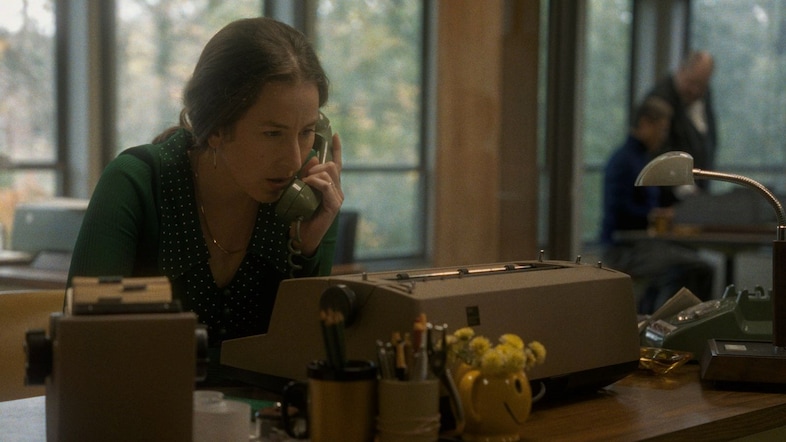
The film is described in press notes as demonstrating that “actions have consequences” – Mooney’s vision of a quick, foolproof job is contrasted by the bitter reality, but he’s far from alone in paying the price for his misdeeds, as he leaves behind his wife, Terry (Alana Haim), and their two young sons to go on the run. In films like this, says Reichardt, “one person’s personal freedom usually falls on the shoulders of someone else, and oftentimes, that’s the woman in the room”. This uneven landscape of justice is present in other ways too, as when we hear on the radio of student protestors who charge faculty with attacking them and facing no backlash, or witness a nonviolent activist being bludgeoned in the head by police. It seems instead that some people get some consequences, and that the cycles of violence, punishment, extraction and suffering are messy and incoherent rather than straightforwardly just, a far more poignant image of American culture than a “crime always pays” logline would suggest.
The radio broadcast that follows the film’s opening credits (designed by artist Marlene McCarty) quotes from a young protestor who notes “generally tremendous feelings of powerlessness, cynicism, apathy on the part of large numbers of people”. Mooney’s family are barely listening, if at all. From this point, The Mastermind seems to diagnose an environment in which for some, the only liveable response to injustice is to look away, and for others, to die trying to get them to see.
The Mastermind is out in UK cinemas now.
