
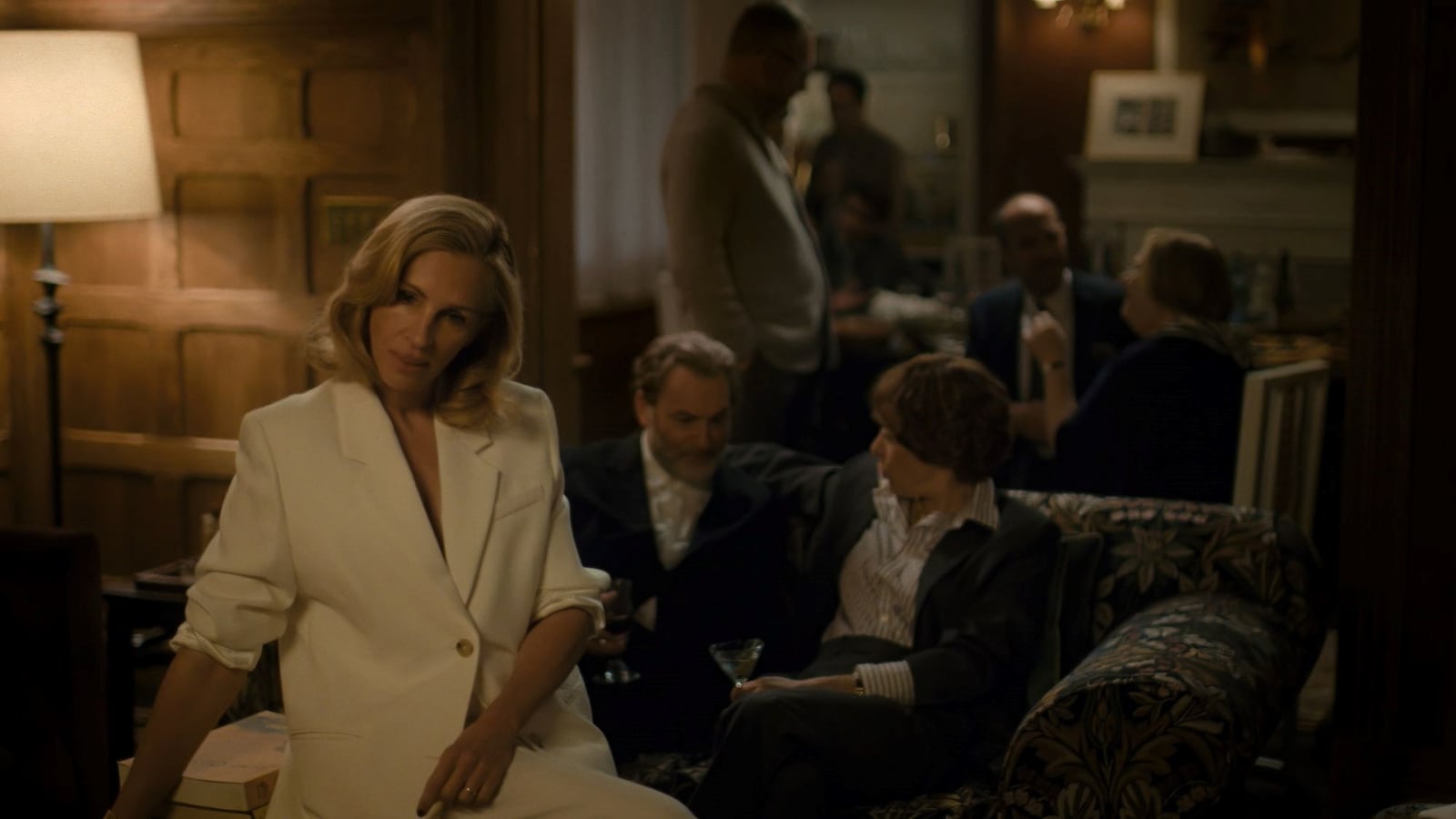
In Luca Guadagnino’s cancel-culture drama After the Hunt, Julia Roberts plays an Ivy League professor forced to reckon with secrets from her past when a colleague is accused of sexual assault. “It happened at Yale,” runs the first line from the film, but in reality, Guadagnino staged the action on a meticulously recreated version of New Haven built by his longtime collaborator, Stefano Baisi, at London’s Shepperton Studios. Baisi joined the director’s interior architecture firm, Studio Luca Guadagnino, in 2017 as an architect, and later transitioned into production design when Guadagnino enlisted him for Queer, his first cinematic project.
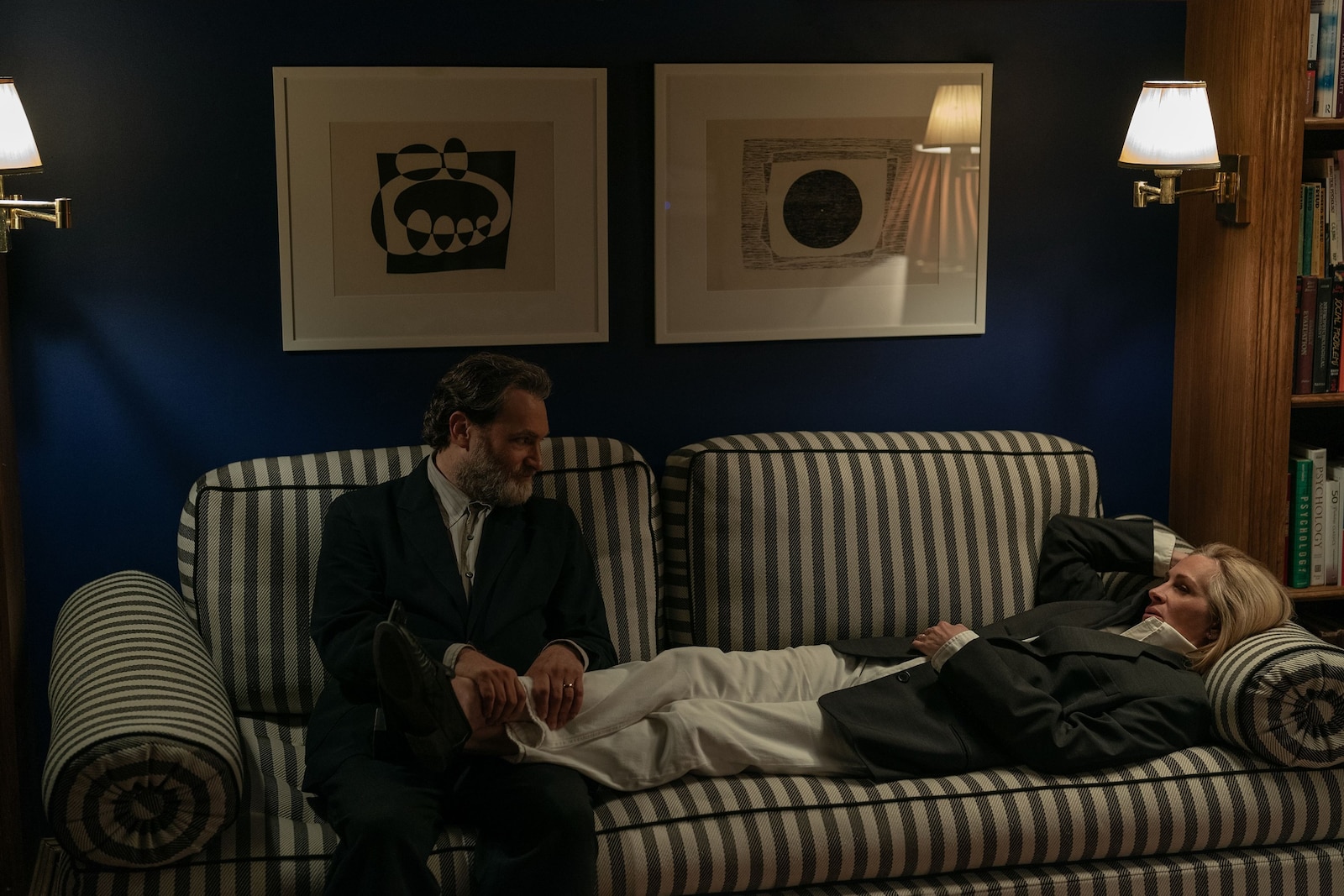
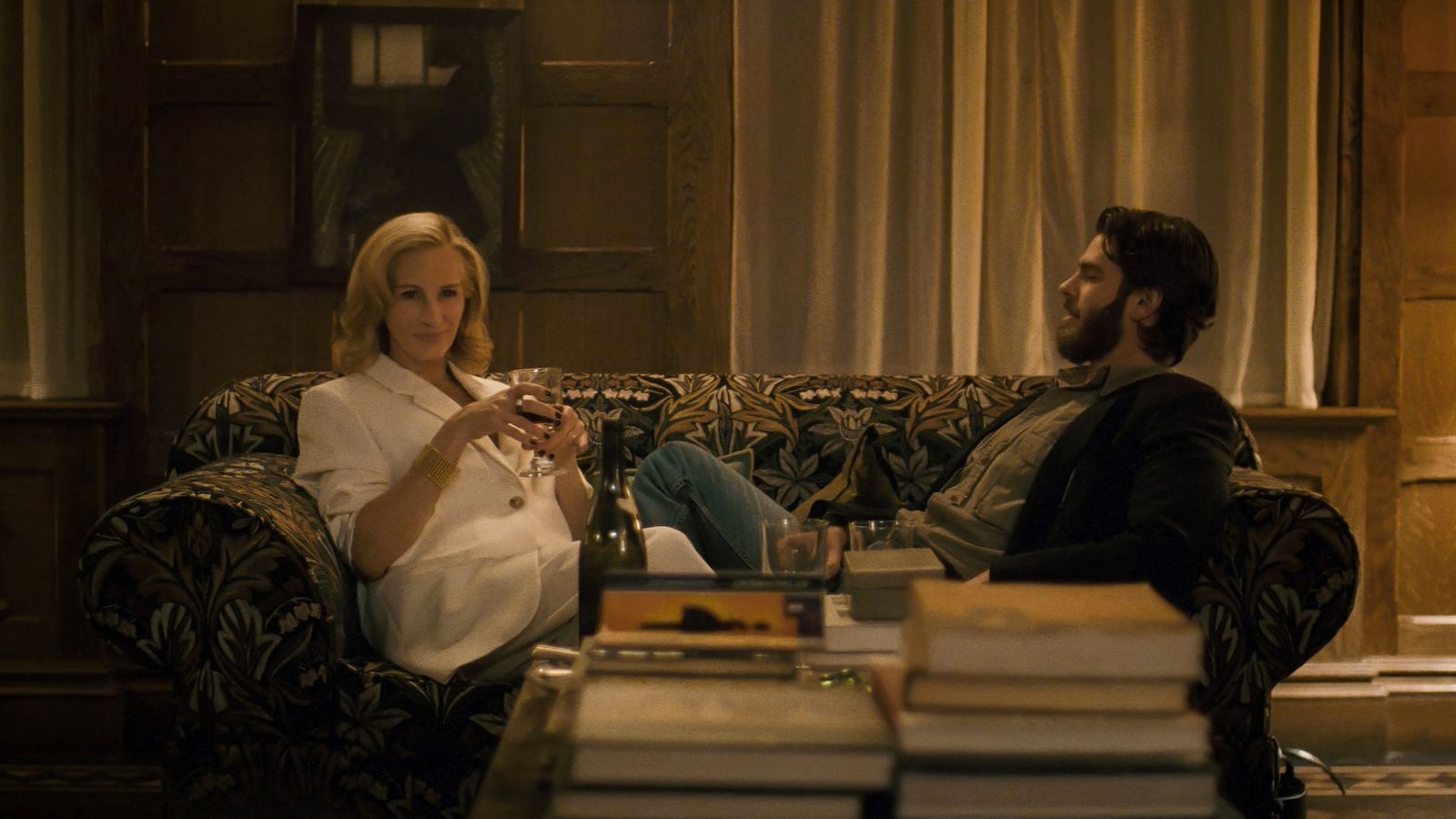
In researching After the Hunt, Baisi spent time in New Haven, observing its vernacular architecture – from the beloved Indian restaurant Tandoor to the windowless, monolithic Beinecke Library. These studies were not mere exercises in replication but in revelation. His careful arrangement of materials and props shape the film’s psychological landscape, where each environment – from Alma’s (Julia Roberts) stark waterfront apartment to psychotherapist Kim’s (Chloë Sevigny) chaotic office – reflects the characters’ tensions between truth and self-preservation.

For Baisi and Guadagnino, design is a narrative strategy. That sensibility has made them a natural fit beyond film; most recently, they designed the set for Jonathan Anderson’s womenswear debut for Dior, where models emerged around an echo of the Louvre’s inverted pyramid. It’s a clear example of how the pair have become orchestrators of visual culture, using art, fashion and architecture to tell stories that can’t be contained within a script.
Annalise Kamegawa: In After the Hunt, Alma exists in two very distinct domestic spaces. There’s the home she shares with her husband, Frederik (Michael Stuhlbarg), and the apartment she has on the waterfront. How do the design details in each set speak to the two sides of her character?
Stefano Baisi: We wanted to create three layers of history in [Alma and Frederik’s apartment] where the first one was of his grandparents [who passed down the home]. We started thinking they could have escaped from Europe, bringing with them the experience of the Wiener Werkstätte and the Bauhaus. We were thinking that his grandfather was an architect, and we started from there, designing and recreating furniture from that design experience.
In that apartment, when [Alma and Fredrik] started living together, they brought their personalities ... Of course, they, like everyone, have secrets. They hide secrets and they tell lies to people. In this apartment, I think there is more that is hidden. Whereas the Long Wharf [Alma’s second, more secluded apartment], in my opinion, is more of a mental space. It’s where Alma works and can be herself in some way. What do you think, Luca?
Luca Guadagnino: I agree. I think the infrastructure of the two apartments is so different. In a way, the waterfront Long Wharf loft that she’s renting to write is a sort of blank canvas for her thread of thoughts and her intimacy as a woman alone. The way in which Stefano designed the space is remarkable in showcasing that. It shows us, the viewer, as soon as we enter the space, this tension that she [is holding]: there’s the public persona she has created to impress an audience, in the theatre of the apartment [she shares with Fredrik]. Then there’s this very bare-bones flat where she probably had more capacity to be herself.

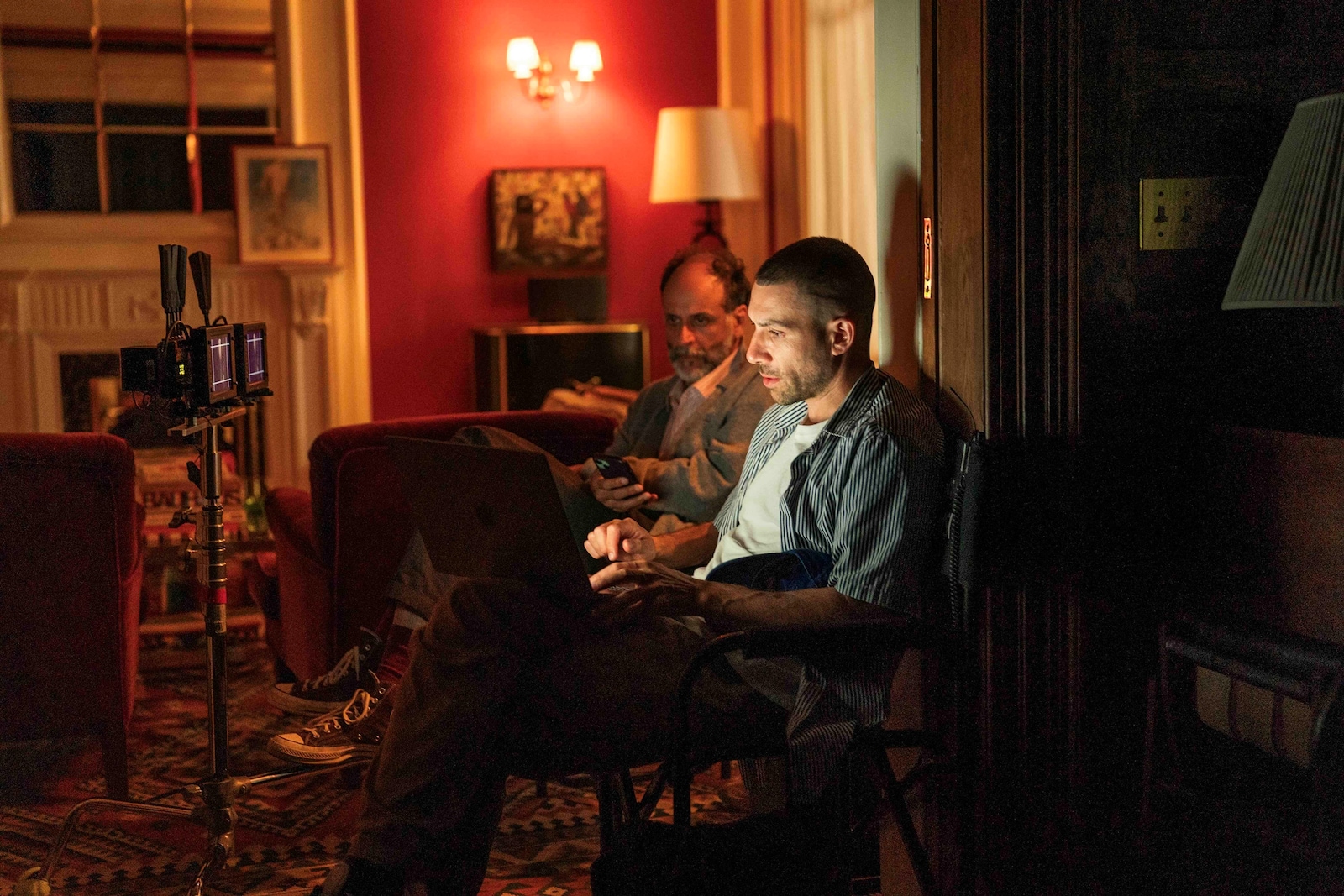
“I discovered another way to design. It’s a completely different job and view, from the lens of the camera and the eye of the characters in the story” – Stefano Baisi
AK: Luca, how has design become so central to your practice in film?
LG: I don’t know if the practice of design has become central to my work in cinema. I think those are two disciplines that I like very much. I do them individually, and sometimes they merge in some places … but generally speaking, [they are] two different mindsets and two different approaches to craft and art and expression. It’s very connected, because I’m the same person. But at the same time, I don’t want to connect them forcefully.
AK: Stefano, how did you start to see design from the lens of cinema? When you were doing design [as an architect], were you also looking to cinema as a doorway into design or was it the other way around?
SB: I was fascinated by cinema. I was a viewer, and I never imagined being a designer in cinema until you [Luca] asked me. But of course, when I started, I discovered another way to design. It’s a completely different job and view, from the lens of the camera and the eye of the characters in the story.
LG: I think that one thing to be said is that when designing something for a client, you relate to an individual’s psychology. You somehow try to use that knowledge about the client so you can do your own thing. But [Stefano is] right in saying that, when you do movies, it’s about the characters and the story, so you have to be very truthful to that.

AK: Talking about design beyond cinema, could you speak about your recent collaboration on Jonathan Anderson’s womenswear debut for Dior?
LG: This was a wonderful proposal that Jonathan made to me and Stefano. I can speak for both of us when I say we were so happy when he asked. This was like a moment.
BS: Yes, I was very proud and honoured to design that space with Luca.
LG: Jonathan is relentless and tireless and he has this amazing brain. The process was inspiring because we went through different ideas and then Jonathan said, “We are [in] the Tuileries, opposite the Louvre. One of the symbols of the Louvre, let’s also say France, is the upside-down pyramid.” From there on we developed what we feel is an architectural, almost museum kind of space.
SB: I would say monumental.
LG: Monumental, for sure … It was a great experience. It was done throughout the summer while we were shooting a movie called Artificial, so it was a nice diversion from cinema. Then to see the space filled with an amazing movie by Adam Curtis, the clothing and the models, was just fantastic.
After the Hunt is out in UK cinemas from October 17.
