
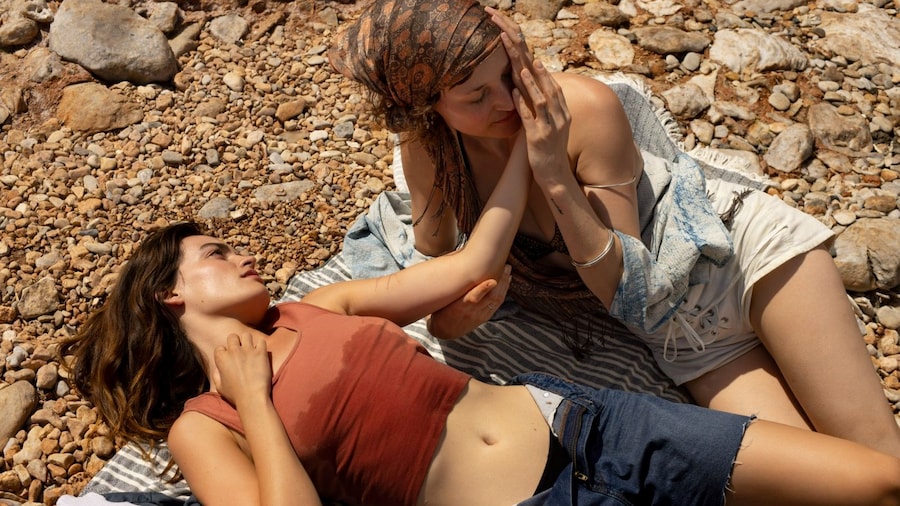
British screenwriter Rebecca Lenkiewicz discusses her sun-scorched directorial debut, starring Emma Mackey and Vicky Krieps
If you visit the cinema this weekend, there might be two movies written by Rebecca Lenkiewicz on offer. Evidently prolific, the 57-year-old Plymouth-born filmmaker juggles, by her own reckoning, three or four projects a year. As a playwright whose CV lists 26 productions, she was the first woman to have her work performed on the National Theatre’s Olivier Stage; as a screenwriter, her credits include She Said, Disobedience and the Oscar-winning Ida. “I’ve had seven films made from screenplays, but I’ve written far more,” she says. “When I’m feeling down, I think, ‘How many of my scripts actually get made?’”
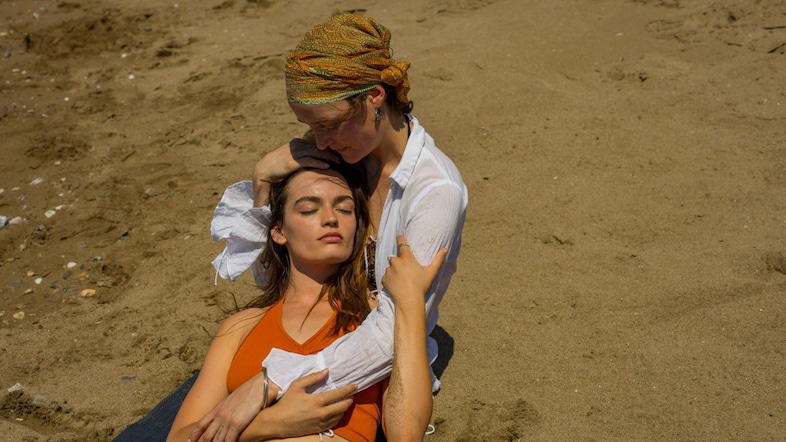
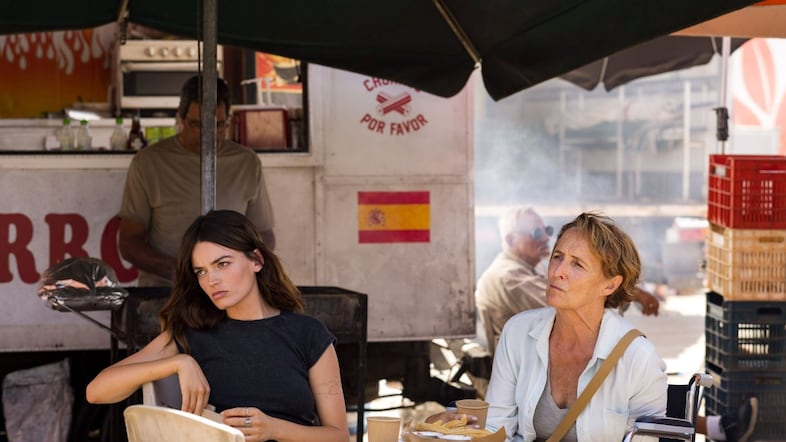
A few weeks ago saw the release of the Gillian Anderson-starring drama The Salt Path, which Lenkiewicz wrote for Marianne Elliott to shoot. Today, Lenkiewicz is discussing her directorial debut, Hot Milk, which she adapted from Deborah Levy’s 2016 novel of the same name. Set during a sweltering summer in Spain, the delayed coming-of-age tale follows a 25-year-old loner, Sofia (Emma Mackey), who deals with her codependent mother, Rose (Fiona Shaw), and a potential romance with a horse-riding local, Ingrid (Vicky Krieps). “Sofia is in an incredibly febrile time,” says Lenkiewicz. “She knows she loves women, but this is the first woman she’s fallen in love with. Everything’s on fire. There’s dreams, there’s lust, there’s sensuality. It’s all coming together.”
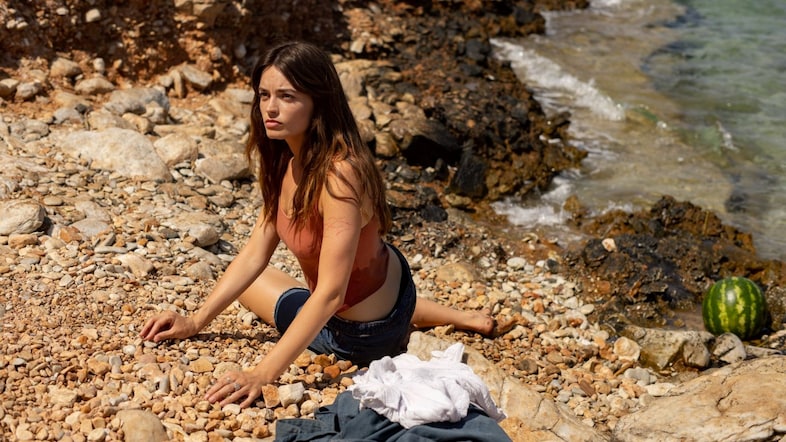
A wannabe anthropologist, Sofia has put her studies and social life on pause so that her wheelchair-bound mother can visit a clinic in Spain. Suspecting that Rose’s illness is merely psychological, Sofia finds her frustrations reflected in her environment. In one sequence, jellyfish are prominent because, as Lenkiewicz explains, they’re a “creature that has no heart or brain, only appetite, and so are a symbol for sex and lust”. In another, Sofia imagines herself drowning while strapped into a wheelchair.
A few years ago, it was reported that Jessie Buckley would play Sofia. “When Jessie left, Covid happened, and I was watching Sex Education and Emily,” says Lenkiewicz. “I just thought, ‘Oh, you are Sofia.’” Whereas Buckley specialises in restless energy, Mackey’s Sofia is fuelled by a simmering stillness. “Emma’s face is amazing to watch. You want to know what’s going on inside her head.” We discuss the maturity in her eyes. “Sofia’s been a carer since the age of four. There’s a weight to children who’ve had to grow up too quickly.”
Hot Milk is a peculiar film that benefits from multiple viewings. If you find the ending too ambiguous, rewatch the first minute and be stunned. In fact, Lenkiewicz originally opened the drama with an even more striking flash-forward: boys finding an empty wheelchair, and Rose in a lorry with a female driver. “Deborah’s ending is very different,” says Lenkiewicz. “She was supportive and gave detailed notes about drafts.”

In the screenplays by Lenkiewicz I could find online, it’s like she’s directing on the page. The opening scene of She Said – Maria Schrader’s 2022 drama about the New York Times investigation into Harvey Weinstein – specifies the David Bowie lyric that will accompany the “young and brilliant atmosphere” of a nightclub. “I write as if I’m painting a picture,” she says. “It’s not just conversations. I’m trying to become each character. If there’s a David Bowie song, I’m dancing in it.”
Highlighting the bravery of the women who dared to go on record against Weinstein, She Said depicts a groundbreaking moment in the film industry. When I saw it at the London Film Festival, it received a standing ovation. Ultimately, the film made around £10m from a £23.5m budget, and earned zero Oscar nominations. “I felt so proud to be part of it,” says Lenkiewicz. “I met survivors, and they were incredible. To me, it’s very much about the resilience of the women involved, and not giving Weinstein any oxygen. It felt like the industry didn’t embrace it. That was a shame. Donna Langley [at Universal] was very proud of it, and said, ‘You always want to make money with films, but with some you don’t care – it just has to be out there.’”
I ask Lenkiewicz about her credit as ‘lead writer’ on Steve McQueen’s Small Axe. The 2020 anthology comprises five films, none of which name her as an actual writer. “That’s a long and complicated story,” she says, laughing, before pausing to pick her words carefully. “It was a very awakening process. Writing can be an incredible challenge, and I loved researching that project, and I loved being the lead writer in the room. But politics happened. It was very painful, actually.” Can she elaborate? “I was on the project, and then I wasn’t.” An awkward pause ensues.

I bring up a quote Lenkiewicz made at an industry event in 2022, about being “sacked with no warning after working on a project for three years”. She confirms it was Small Axe. “It’s very hard. That happens with writing where you are emotionally invested in something, and then it’s taken away from you, either because they want an American writer or somebody else. And it’s hard, because these people are inside you. It’s not like you sign a contract and you’re just doing a job. It’s deeply emotional.” At least you get paid for the work? “The pay doesn’t affect it. It’s always hard. It still happens to me. You’d think with the years it would happen less, but it’s a volatile business.”
Lenkiewicz is currently working on Small Hotel, a play starring Ralph Fiennes which premieres in October. Before Hot Milk, she’d only spent three days on a film set. “My knowledge of directing comes much more from theatre,” she says. “In the edit, I had voices telling me, ‘It’s your first film. Listen to what everyone’s saying.’ I showed it to directors I’d worked with.” Is that why Todd Haynes is thanked in the credits? “Yes. We were working on an amazing project that’s not been made yet. He told me he loved the film, but to think about the rhythm. That gave me the ballast to say to everyone, ‘This is what I think.’”

Like a play, Hot Milk is unafraid of silences, which makes it an anomaly for a film in the streaming era. The quiet moments also enhance the impact of Mackey’s screams, the terror of an unruly dog barking, and the intensity of the third act’s shift into the thriller genre. “Some of the scenes feel quite theatrical to me, but in a very authentic film way,” says Lenkiewicz. “There’s a rhythm to the film where it feels quite slow, and then it [picks] up. Silence, I think, is very beautiful.”
Hot Milk is out in UK cinemas now.
