
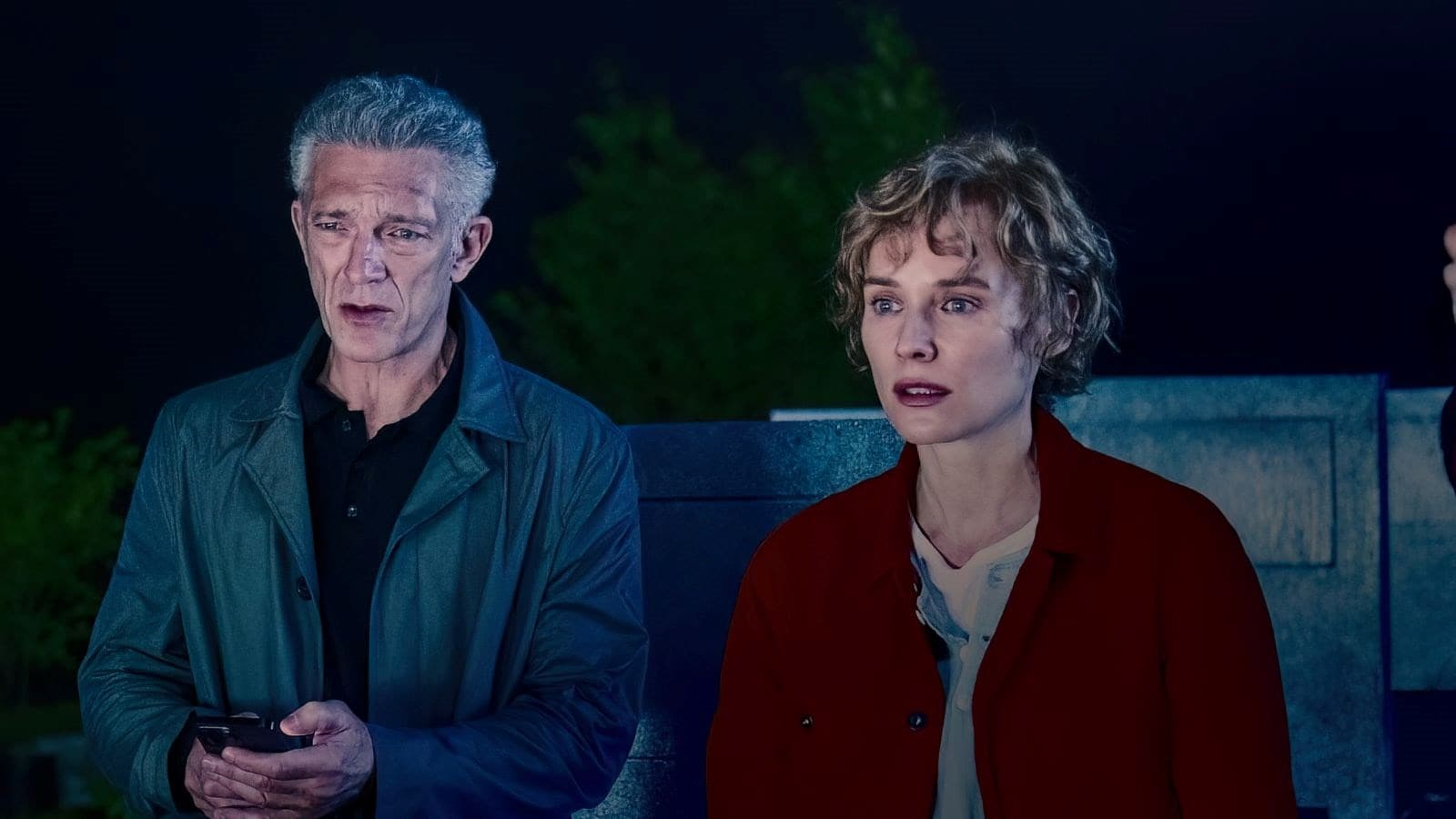
Sometimes there’s a line in a film and it’s like there’s a whole world of feeling contained within, so much so that you know instantly it’s the wellspring for the whole piece. In The Shrouds, it’s a line played for uneasy comic effect, where Karsh, a widowed tech entrepreneur played by Vincent Cassel, spoils a blind date he’s on with a moment of extraordinary candour: “When they lowered my dead wife’s coffin into the ground at her funeral, I had an intense urge to get into the box with her.”
David Cronenberg, it turns out, was possessed by exactly the same urge when his wife of 38 years, film editor Carolyn Zeifman, passed away from cancer in 2017. He honoured the feeling as only he could, by writing a paranoid conspiracy thriller about a man whose grief for his own wife is so great he creates a new form of wearable tech – the ‘shrouds’ of the title – that allows people to watch their loved ones decomposing in real time. At its heart is a fine performance from Diane Kruger, pulling triple duty as Karsh’s wife, Becca, stricken with cancer; twin sister Terry; and an AI avatar of Becca that Cronenberg modelled on ‘grief tech’, a burgeoning real-life industry aimed at bringing the dead closer to the living.
In fact, Cronenberg originally conceived the story as a series for Netflix, rewriting it as a feature when the streamer withdrew its support. The results are strange, funny, moving, philosophically rich and – in one sex scene between Karsh and his ex-sister-in-law, Terry – unexpectedly hot. If the violence is mild by the standards of the one-time body-horror maestro, the moments where Becca appears to Karsh in a series of dreams, her body steadily being erased by the disease, linger just as long and painfully in the memory.
Here, the 82-year-old director narrates his film’s journey to the screen, and why technology today is far more “spooky” than anything he could have imagined.
Alex Denney: When Karsh is on a blind date at the start of the film, he tells this poor woman about the urge he felt to get into the coffin at his wife’s funeral. Apparently these are feelings you really did experience?
David Cronenberg: Right, yeah. I just had this incredibly strong, visceral, direct feeling that took me by complete surprise as she was being buried. I mean, in retrospect it almost seems obvious, and I’m sure I’m not the first one to have felt that way. There were many responses I had to my wife’s death that I couldn’t have anticipated. I could make three more or four more movies based on those feelings, so this is just the tip of that particular iceberg. But, yes, I totally felt that I could not bear to be separated from what was left of her, which was her body. And if I had been a high-tech entrepreneur, I might well have come up with what Karsh came up with. That’s really it. My version of that was to make this movie. His version was to create a cemetery.
AD: It’s really funny, that scene.
DC: That really happened, by the way. I mean, it wasn’t in a restaurant I owned and I didn’t have the cemetery outside, but I did have a date where the fact that I made strange movies was [discussed]. She was very curious to know what it would be like to be on a date with David Cronenberg; I think she was more interested in me as an object of study than as a human being. So some of that dialogue is pretty accurate, I must say.

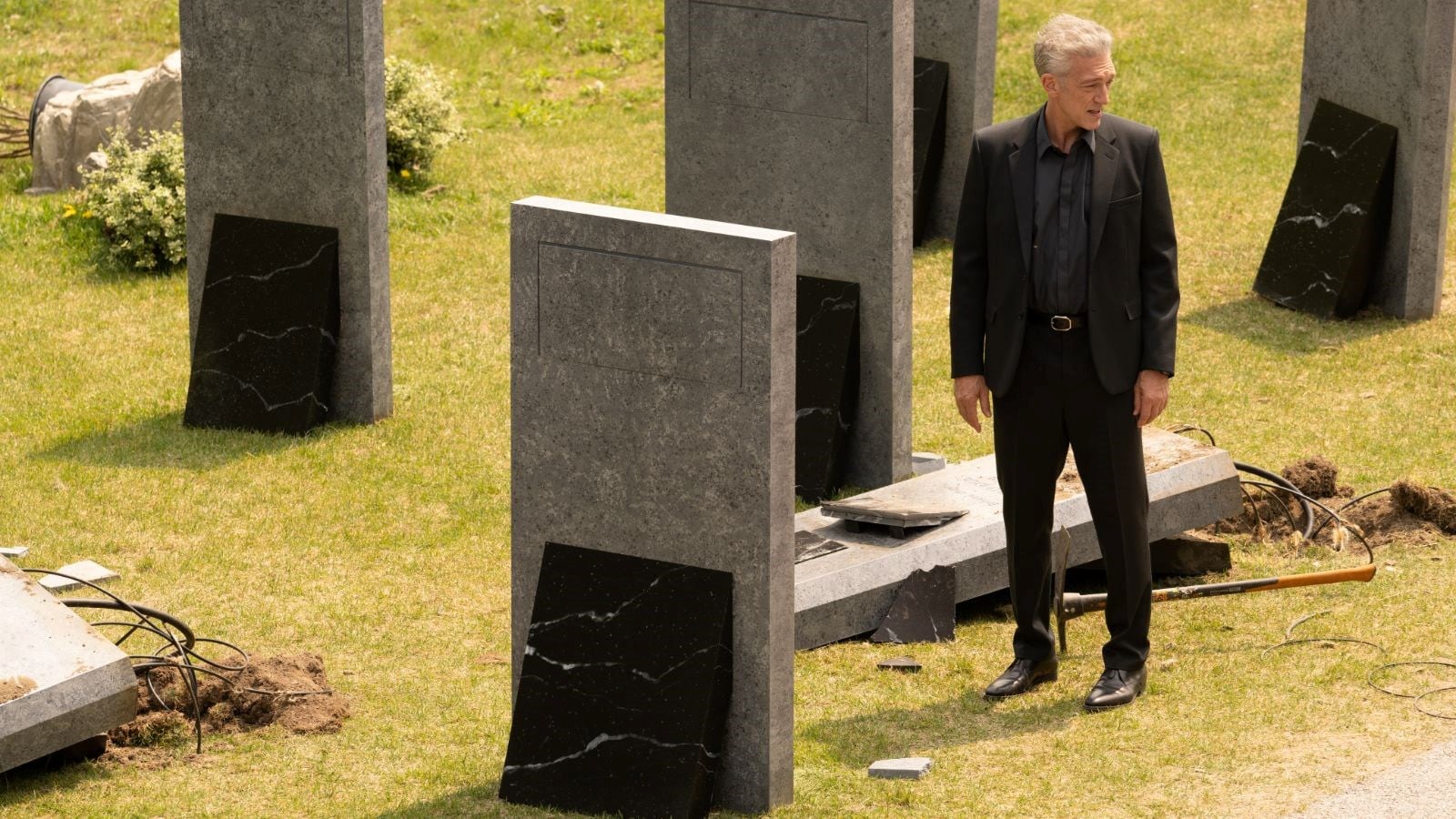
AD: You’ve described a goal of your work in the past as being not to turn away from the body. Was that a difficult thing to do with this film, in light of how personal it is?
DC: No, it really felt very natural. [I remember] when I was making Naked Lunch, I said to William Burroughs, ‘I don’t think I can make this movie if I’m not allowed to use some incidents from your own life, particularly the shooting of your wife and so on.’ And he said, ‘I don’t separate my life from my art, so do whatever you want.’ I felt the same way about this. It wasn’t autobiography I was making, but there was no separation from my feelings in the real world and what was going on in the movie. People also ask me if it was cathartic, and the answer is no, absolutely not. But there is an element in all art of playfulness. No matter how sombre or dark your film is, when you’re making it, there’s usually a sense of play among your cast and crew. It’s a natural human thing to do.
AD: Is it part of the joke in this film that people would willingly buy into this technology? Or is what Karsh is proposing no weirder than having an AI avatar of a deceased family member on your phone? Which is a real thing, I believe …
DC: Well, it is pretty weird because now, with the advent of cellphones, most people have incredible data on their loved ones, their children, their wives, their husbands. They’ve recorded greetings. They’ve taken samples of their voices and their bodies in motion. The technology is here. And there have been real instances [of this] – there’s a wife who’s recreated her husband and can talk to him the way you would talk to ChatGPT, where you could almost feel like this person is still alive and available by phone at any time of the day or night to talk to you. As if they were living in some other city. It’s not exactly like watching your dead loved one decompose, but it’s spookier in a way, because this creature is going to talk to you, give you advice, tell you that it loves you, and talk to you about incidents from your past, like when you went on that trip to Switzerland. [In some cultures] they put the bodies of the dead on top of a little tower that they make and leave them there naked, so that vultures, which are part of the ritual, will come and tear them apart. You would think that that was too macabre for anybody to do, but they’ve done it for centuries. When you start investigating burial rites, you find some extremely bizarre, kind of science-fiction versions of it.

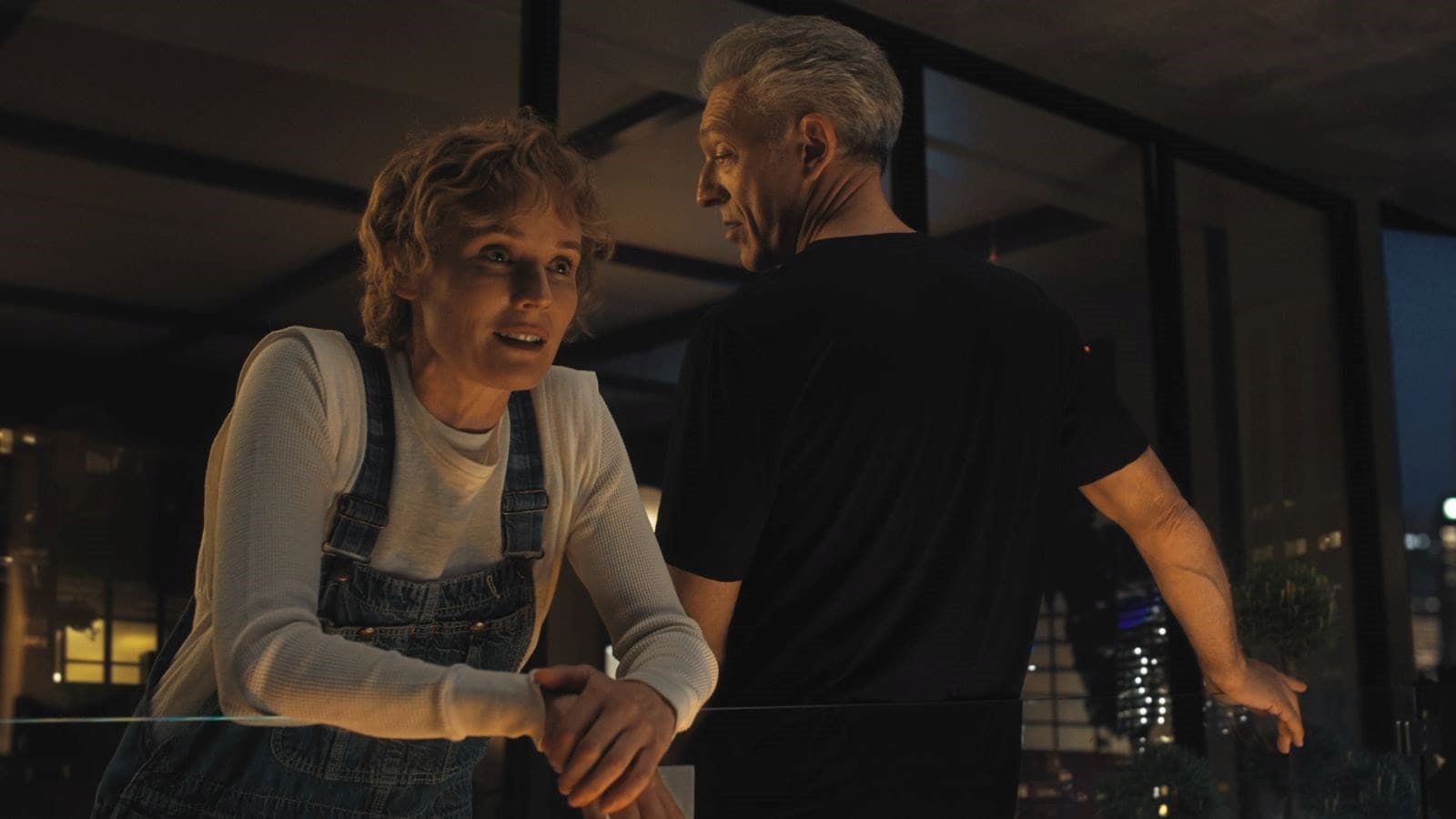
AD: There’s also a thread of sexual jealousy running through the film. It’s as if Karsh experiences the loss of his wife as a betrayal of sorts, even before he starts to question her fidelity.
DC: After somebody whose life has been totally intertwined with yours dies, you go through the things they’ve left behind, and that includes notebooks and emails and all kinds of things. I remember as a kid [the man next door] died, and his wife of many years discovered he’d had a mistress. She didn’t discover it until after he was dead, and so that left her, as you can imagine, thinking her whole life had been some kind of betrayal. There’s also guilt when there’s a death, like, ‘Did I do enough? Was I supportive enough?’ There’s this weird mixture of guilt and suspicion. I found that that’s rather common when it comes to the death of an intimate. You discover things; it just seems to be the nature of the beast.
AD: Is that where the conspiracy elements of the film come in?
DC: The conspiracy element is kind of, how is it that this person died? She was younger than I was, and I should have died first. What happened? Could it just be random? Could it be genetic? Was it something toxic? There was an incident in her youth where she was given medication that later was considered to be toxic, and was taken off the market. It gives meaning to death, because otherwise the death is meaningless, and we have evolved to look for meaning everywhere. It’s like if somebody gets hit by a car. Is that really the end of this person’s life, that you just stepped off the kerb at the wrong time? Is that it? Because that’s meaningless, and that’s very difficult to accept. So who was that driver? Did that driver know the person? You know, it really lends itself to conspiracy as a way of creating meaning. And I think almost all conspiracy theories do have that element within them, and it does happen very often after somebody dies.
The Shrouds is out in UK cinemas on 4 July 2025.
