
From exhibitions by Ming Smith and Harry Gruyaert to Park Chan-wook’s lesser-known photographic practice, discover our highlights from the 2026 edition of the French festival
The much-anticipated annual photography festival Les Rencontres d’Arles has returned for its 57th edition, taking over the historic French city with more than 40 exhibitions – alongside countless fringe events – that showcase established icons, overlooked pioneers and emerging talent alike. Here, to help you navigate the packed programme, we’ve compiled a guide to some of our highlights, from a Ming Smith survey to the European debut of director Park Chan-wook's impressive foray into photography.
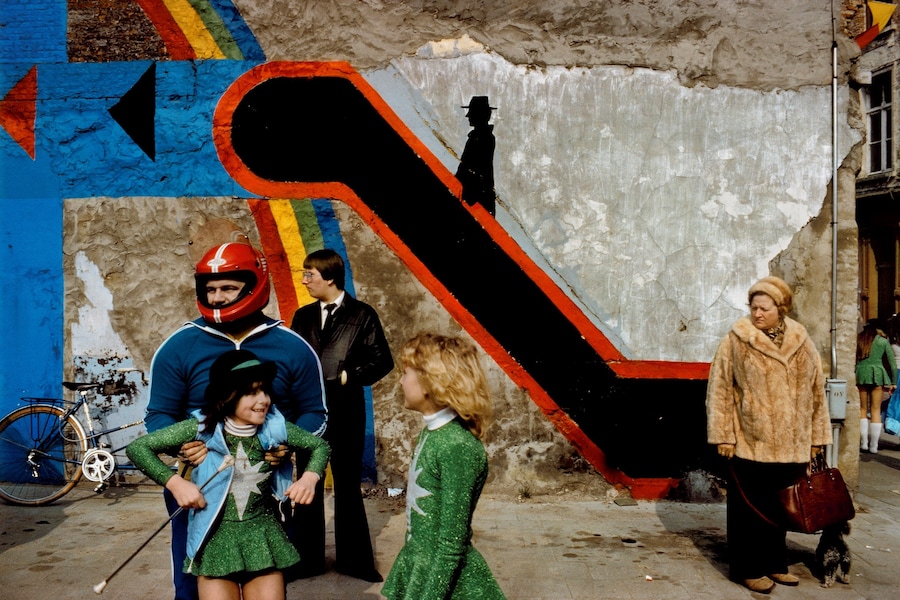
Harry Gruyaert at Chapelle Saint-Martin du Méjan [lead image]
Hiding behind the austere facade of Chapelle Saint-Martin du Méjan, a deconsecrated church overlooking the Rhône, a world of glorious colour awaits, courtesy of Belgian image-maker Harry Gruyaert. The octogenarian photographer had early aspirations of becoming a filmmaker, and his images convey this, defined as they are by a subtle theatricality and gentle humour that render everyday scenes extraordinary. The pose of a muralled silhouette is perfectly mirrored by a figure standing just below it; a woman’s jade-coloured coat matches the stems of the bunches of flowers she’s passing so perfectly that the entire image becomes a study in green. Indeed, most exhibitions of Gruyaert’s work examine either his mastery of colour or his apparently effortless knack for composition. Here, however, the focus is his life-long passion for documenting urban life – in New York, Paris, Tokyo, Moscow, Antwerp, Mumbai, Zanzibar – where he places the anonymous city dweller front and centre of the action (or inaction) to truly sumptuous effect.

Park Chan-wook at Lee Ufan Arles
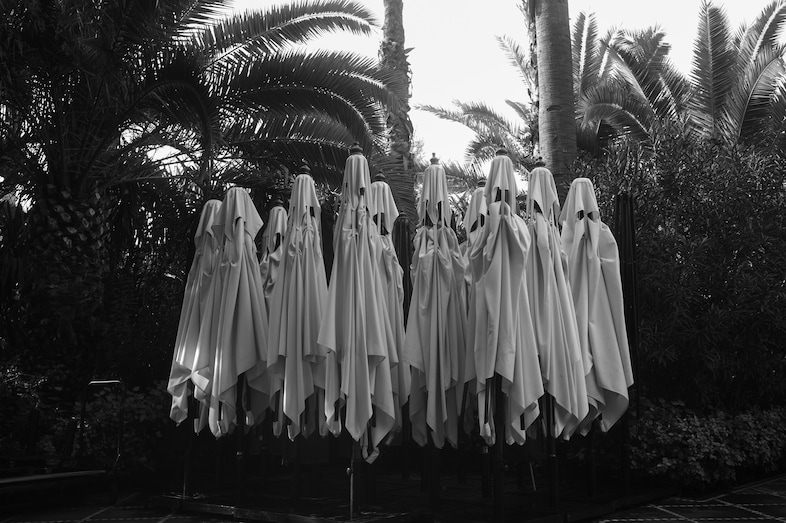
Next: a filmmaker with a lesser-known but no less impressive photography practice. Park Chan-wook – the auteur behind some of contemporary cinema’s most exquisitely crafted thrillers – has taken over the top floor of fellow South Korean Lee Ufan’s foundation in the heart of the city. Beautifully restored by Tadao Ando, the former townhouse is a suitably poetic setting for the European debut of Park’s photographic explorations.
Few photographers possess the director’s finely tuned ability to see – and convey – the narrative potential inherent within a seemingly unremarkable scene. Through Park’s lens, a set of closed summer parasols emerges as a cluster of melancholic ghosts, all drooping white-sheet bodies and gloomy expressions. A lone bird flies toward the mouth of a whorled cloud as if it’s the entrance to a new realm. The curation invites just as much attention: the image of a dead whale is placed alongside a close-up of a weathered grey wall with a stone that looks uncannily like a whale’s face, while a photograph of an elegantly twisted tree trunk hangs next to a dark interior shot with an almost-identical helical column at its centre. The show is a masterclass in gripping storytelling through static imagery and mustn’t be missed.

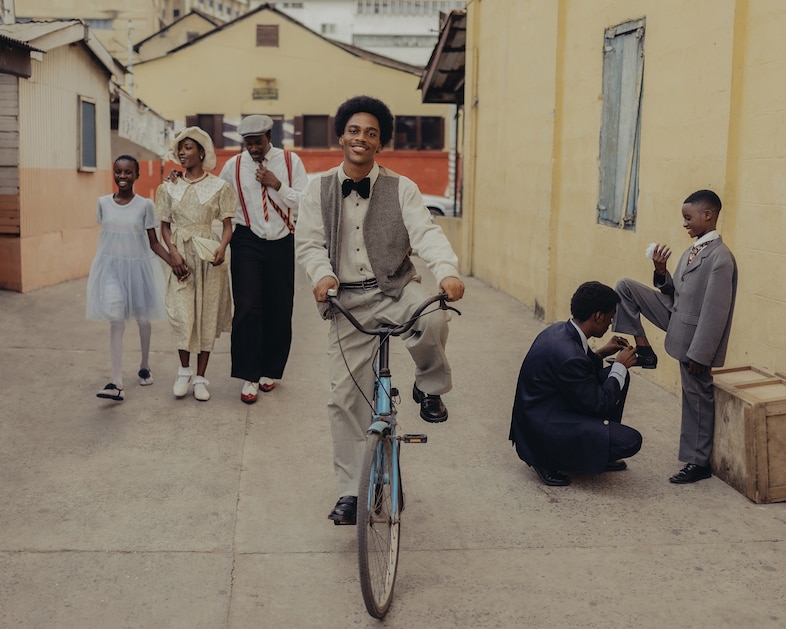
Ghana! Dreaming Independence 1957–1976 at the Palais de l'Archevêché
Inside the imposing Palais de l'Archevêché, one of the festival’s key venues on the Place de la République, a compelling exhibition delves into the history of Ghana’s independence – gained in 1957 after more than a century spent under British colonial rule – and the role of art, music, literature, theatre and dance in reshaping Ghanaian identity thereafter. It features a treasure trove of documentary imagery – by James Barnor, by American photographer Willis E Bell in collaboration with Ghanaian playwright Efua Sutherland, by Paul Strand – all of which opened up “new spaces of representation for the country and its people, far removed from colonial-era imagery”. The show’s final room is dedicated to a new generation of contemporary Ghanaian artists whose practices draw on, and bring new meaning to, such archival imagery. This includes Carlos Idun-Tawiah, whose constructed visual narratives “blend fiction and nonfiction, past and present, memory and imagination to explore the profound beauty and complexity of African life”, and Rita Mawuena Benissan, who translates archive photography into striking textile works.
, 2020–ongoing )
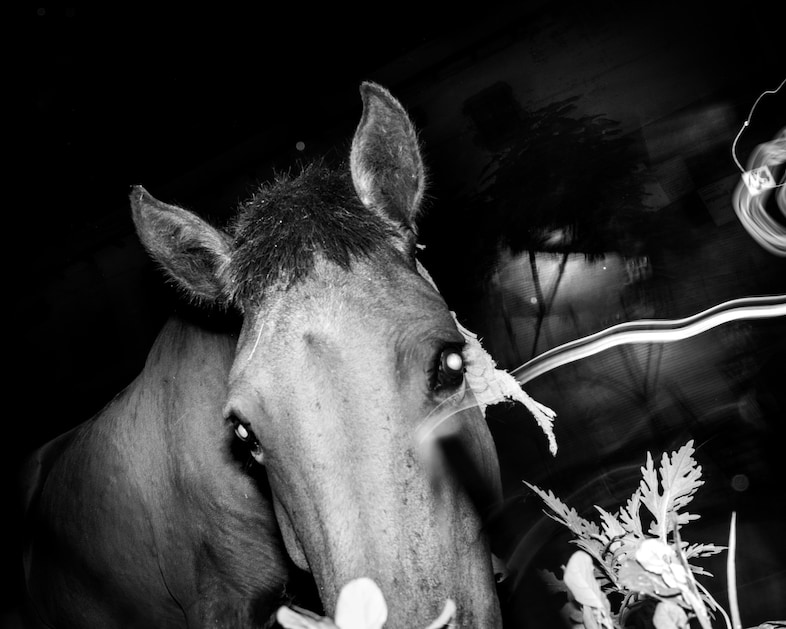
Aman Alam at the Maison des peintres
One of three shows on display at the Maison des peintres this year, Ozymandias by the Indian artist Aman Alam makes for profoundly affecting and beautiful viewing. Alam began the monochrome series – which takes its title from Shelley’s 1818 sonnet reflecting on the illusion of permanence – as a means of processing his grief after his beloved grandmother Naseem was diagnosed with Alzheimer’s. Early works examined his grandmother’s “unique perception of the world amidst corrupting memories and an eroding sense of self”, but the ongoing project soon expanded into a broader enquiry into “what it means to be known, to remember, and to forget”. More abstract images – including fleeting snapshots of animals and a dried walnut resembling the human brain – are interspersed with candid depictions of Alam’s family as they navigate the painful reality of caregiving, as well as intimate pictures of his grandmother performing rituals, such as prayer, that persist despite her cognitive decline. The result is a work that resounds with love just as much as it does loss – and firmly establishes Alam as an artist to watch.

Martine Barrat at Espace Van Gogh
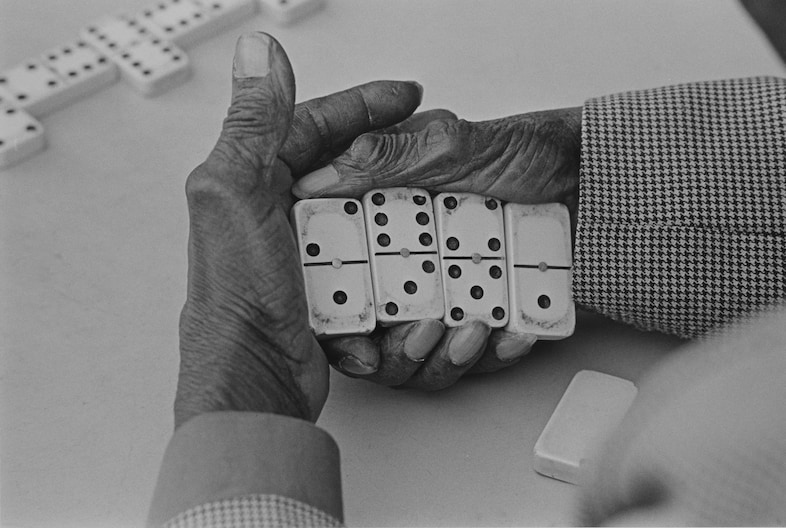
Simone Weil famously declared that attention is the “rarest and purest form of generosity”, a sentiment entirely befitting the work of French-American photographer and videographer Martine Barrat, showcased in an exhibition at the Espace Van Gogh. The 93-year-old artist – who, rather wonderfully, has resided at the Hotel Chelsea for more than 50 years – moved from Paris to New York in 1968 to work as a dancer. An accident scuppered her original plans, and instead she sought a creative outlet in film and photography, finding inspiration and collaboration within the city’s marginalised neighbourhoods.
With the exception of a section centred on Paris, the show homes in on Barrat’s New York studies, revealing a deeply humanist artist whose curiosity comes without judgement, and whose respect and commitment to her subjects have resulted in lifelong friendships – and marvellous work. Highlights include You Do the Crime, You Do the Time, a documentary made with South Bronx gangs the Roman Kings and the Ghetto Brothers, who allowed Barrat unprecedented access to their world, and Do or Die, a raw but surprisingly tender photo series capturing young boxers-in-training across Harlem, Bed-Stuy and the Bronx.
, 2025 )
Denis Valery Ndayishimiye at Croisière
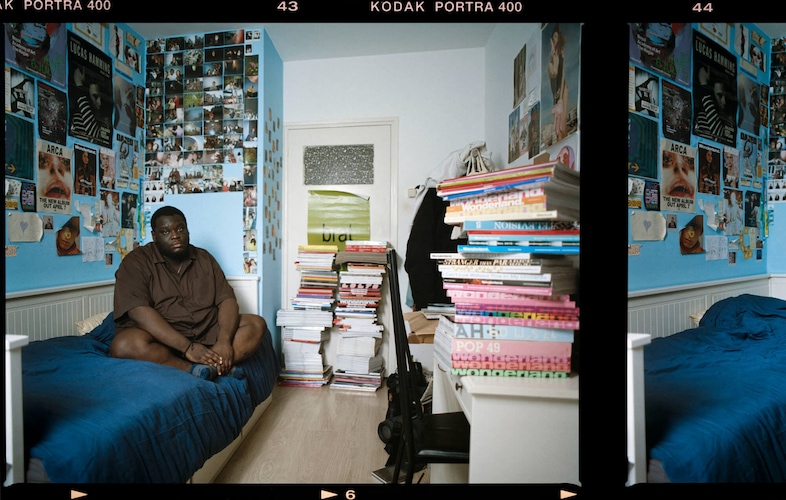
Alongside excellent solo shows by Ivorian photographer Paul Kodjo and German artist Rebekka Deubner at the same venue, three graduates from Arles photography school ENSP have been selected to present images from their degree projects as part of this year’s festival. All are worth a visit, but Can I Come to Your Place? by Denis Valery Ndayishimiye is the standout. The series is a study of “the transformations of Black masculine identities across the European diaspora” and is made up of portraits of male subjects captured at home in Berlin, New York, The Hague and beyond. Each is accompanied by a text detailing the photographer’s encounter with the subject, written in the second person to draw the viewer into the exchange and soften the traditional hierarchy between photographer and photographed. Initmate and engaging, the portraits reveal the quiet complexities of identity, showing Black masculinity not as a fixed idea but as something shaped by friendship, family, solitude and the spaces people call home.
, 2004)
Animal Model at Luma Arles
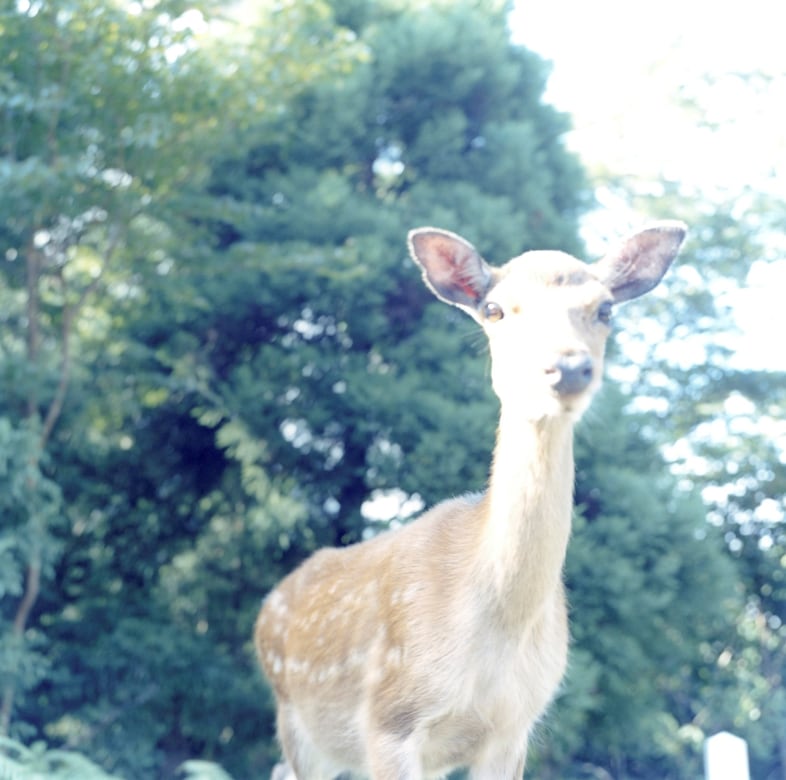
At Arles’ contemporary art institution, Luma, don’t miss Animal Model, a delightful celebration of photography’s encounters with the animal world, which spans two centuries of image-making and features some of the medium’s biggest names. Expect to see Elliott Erwitt’s comedic snapshots of big dogs, little dogs and all other kinds of dogs alongside their humans; Rinko Kawauchi’s lyrical animal portraits from her renowned series Aila; and a touching selection of photographs of the Polish biologist Simona Kossak, who spent more than 30 years living in the Białowieża Forest with no electricity or running water, sharing her home (and her bed) with an array of wild animals. Not to mention Helmut Newton’s iconic shot of a crocodile appearing to devour a Pina Bausch dancer, Martin Parr’s playfully observed human–creature interactions, and much more besides. [NB. While you’re at Luma, be sure to see the brilliant exhibitions by Patti Smith and Soundwalk Collective, and Stan Douglas – both warranting the separate Luma entry fee.]

Ming Smith at L'Église Sainte-Anne
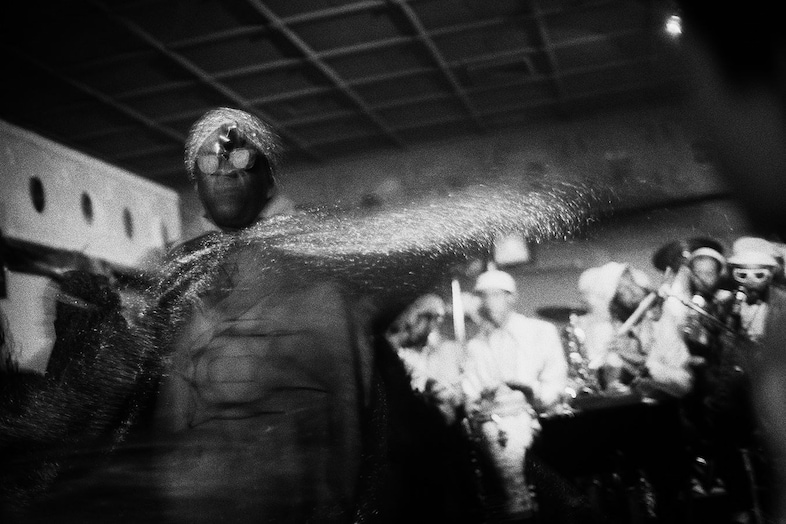
Last but by no means least, there’s the magical Ming Smith survey, Wandering Light, set within the late-Gothic environs of the Église Sainte-Anne. Traversing several decades of the US artist’s career, the exhibition explores the ways in which Smith’s vision has been shaped by her formative travels in Europe – where she soaked up the spirit, history and artistic traditions of each place she visited, including Paris and Rome, while “remaining acutely aware of her positionality as a Black American woman” – and honours her fearlessly experimental approach to photography.
Boasting an extraordinary command of light and composition, Smith frequently employs flashes of motion and colour to lend a blurred softness to her images so that they feel more like memories than visual records. The jazz artist Sun Ra appears swathed in a wash of shimmering light; a hazy gathering of pink flamingos populates a dark forest like something from a dream. “These are not stylistic effects but deliberate modes of attention,” explains curator Daisy Desrosiers in the introductory text. “Smith’s images offer a quiet yet profound reorientation, resisting the impulse to categorise Blackness as stable or legible. Instead, they insist on Black interiority as fluid, complex, and deeply human.”
