
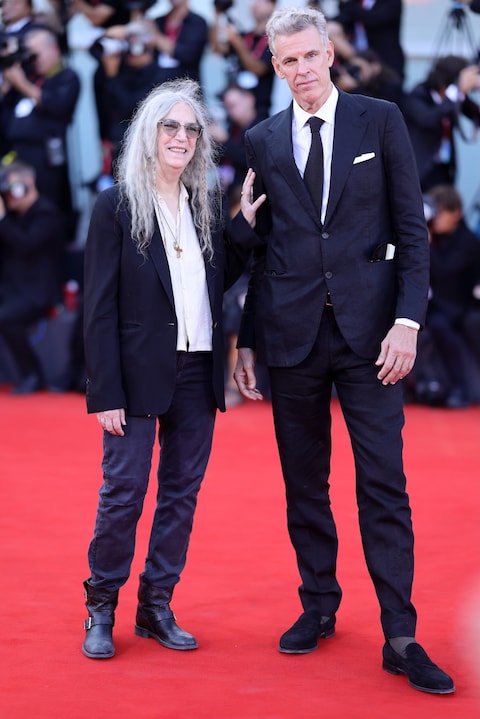
At the opening of their inaugural European exhibition Correspondences at Luma Arles, the longtime collaborators evoke Mary Magdalene, Nico, and a mysterious shaman through poetry and sound
“I’m so lucky. I’ll be 80 at the end of this year and, to be at this age – it’s not like we’re closing down, it’s just getting more open, more refined,” says Patti Smith about her evolving collaboration with Soundwalk Collective. Founded in 2001 by Stephan Crasneanscki, the global initiative counts Nan Goldin, Charlotte Gainsbourg and Jean-Luc Goddard in its long list of collaborators.

“I’m so proud of this connection because I’ve had a band and that’s all collaboration,” Smith continues, during our conversation at the Luma Arles creative campus in southern France, the site of hers and Soundwalk’s latest exhibition. “I was also always happy to be a writer, where I don’t have to depend on anybody. I just write and it’s all coming from myself. Now I have both; I have brothers,” she says of Crasneanscki and sound artist Simone Merli, who joined Soundwalk in 2008. “We’re equally loyal collaborators; we’re of one mind.”
Smith and Crasneanscki met a decade ago, mid-air. The legendary American wordsmith was on her way back from Tangiers, while the French-born sound artist was returning from a trip recording Romani music in Macedonia. On a connecting flight from Paris to New York, Smith noticed her seatmate was reading previously unpublished poems by Velvet Underground collaborator Nico. She and Crasneanscki struck up the conversation that culminated in their first collaboration, 2016’s Killer Road.
“I told Patti my idea of an homage to Nico that was just cricket sounds,” Crasneanscki says. “Nico died in Ibiza in mid-July, on her bike, and the last sound she would have heard was crickets.” To his field recordings Smith suggested adding her own voice, reading the late German songwriter’s final poems. “The following day, Patti came up the stairs to my studio and recorded,” Crasneanscki recalls of their lightning-rod connection. “It hasn’t stopped since.”

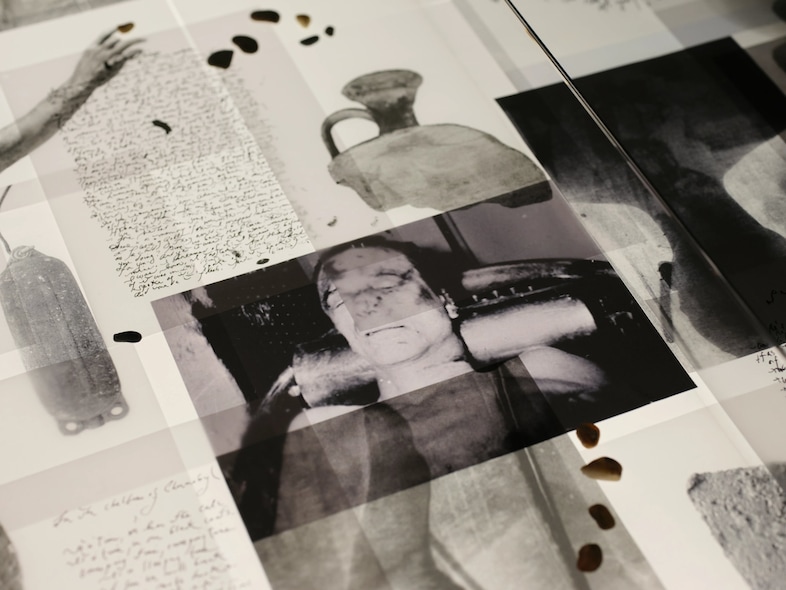
Correspondences is the current manifestation of their evolving creative relationship – and the collaboration’s first major exhibition in Europe. Presented at La Grande Halle, a 5,000-square-meter former ironworks – one of nine buildings in the seven-hectare Parc des Ateliers at Luma Arles – the exhibition includes films, drawings, photographs, field recordings, music, poetry and research in a discursive assemblage that encourages non-linear exploration, meditation and free association. Themes range from climate, ecology, migration and nuclear fallout to religious and spiritual transmission across the ages.
The nexus of the show – a mix of existing and new work – is original and archive footage rolling across four large screens; oceans, glaciers, forests – endangered territories. Whales, children, wildlife – threatened beings. Mary Magdalene, a saint with great significance to the Camargue delta where Arles is located, is a recurring motif and the main character of new sonic and visual installments. This disciple of Jesus is said to have travelled from the Holy Land to the region to escape Roman persecution, where she lived in a mountain cave for 30 years.
Crasneanscki, who, along with Smith, inaugurated the Holy See’s pavilion at this year’s Venice Biennale, spent time in the cave where what is believed to be Mary Magdalene’s skull is protected by monks. “There is an extremely powerful energy there,” he says of the sacred locale. “I was able to record at nighttime; all the sounds of dripping water in this piece is from the cave of Mary Magdalene.”
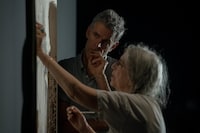
. 2-Channel Video. Courtesy of Stephan Crasneanscki)

Smith’s words mix with the soundscape and moving images. Her poem, Le Mistral recounts Magdalene’s arrival in France: “She walks barefoot upon the loam / She moves among the marshes / Entering another kind of Eden / She basks in the fragrances / Of flowers unknown to her / The samphire shimmering crimson / Sea lavender, silent white lilies / Stems of papyrus and reed”.
Fractured ecosystems and human-made disasters are recurring exhibition themes. Smith’s poem Cry of the Lost channels the child-victims of the 1986 Chernobyl nuclear power plant explosions. Another one lists nearly a century of wildfires. “Nothing is said, just dates and the amount of land lost,” she explains. “It starts with a few thousand acres, and in time it's millions of acres.” Mass Extinction 1946 – 2024 is a similarly accelerated list of the hundreds of species that have been lost since Smith was born. “But in my lifetime, we have lost many / never to be touched again,” she incants.
The genesis of these works is sonic. Crasneanscki shares his field recordings with Smith, who is given prompts, and responds with her words. “It could be inside a reactor in Chernobyl or children playing in a field, bits of conversation, bells chiming, the creaking of boards in a monastery or wolves howling. All these things are brought to me, and my job is to translate that into language,” she says. “People want to use your song or piece of music in a movie – it’s always the last thing they do. But this is opposite. I’m listening to these abstract sounds, then language is produced – and then he shoots the film.”
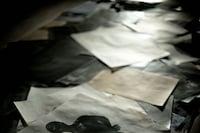
. 2-Channel Video. Courtesy of Territorial Agency)
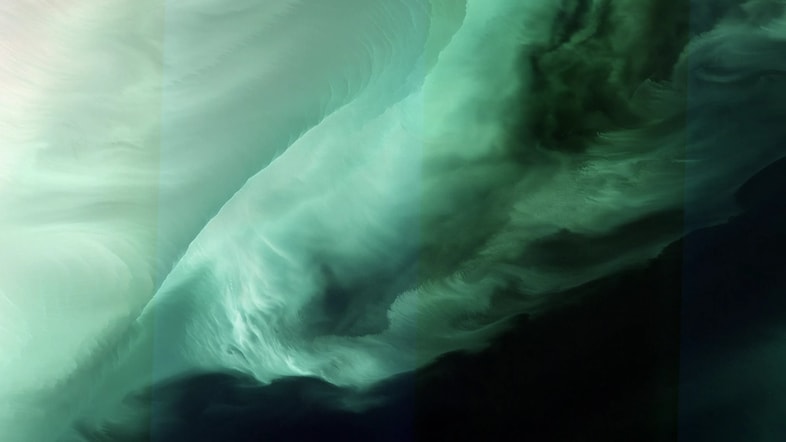
“We don’t really understand sound for what it is,” Crasneanscki adds. “Usually, we use sound as a supportive medium of the visual experience. But it can move you immediately, it can take you very far into memory and into the emotional brain where we don’t have a filter. A lot of the work we’re doing with Patti is based on the idea that sound holds memory, and we can awaken those sleeping memories.”
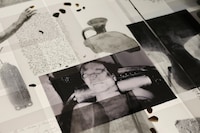
Another mystical figure overseeing the exhibition proceedings is a Siberian shaman; a faded photograph that Smith found and whose presence is a reminder of channelling modalities. “He’s a symbol of this way of communicating that some people believe in, some don’t, or it’s becoming obsolete,” Smith says. “But you know, these things are precious and people should be reminded.” The shaman is one of several illuminated, ghostly pictures and drawings – the silhouette of a deer, ancient flora, runic triangles – that Smith has added gestures to with lines and text, codes and ciphers.
Since their chance meeting in the skies, Smith and Crasneanscki have continued their correspondences by “talking, having dinner, strolling,” he says. “Growing up in Paris I was interested in the Bulgarian Flâneries. Just walking and letting ideas resonate with each other; one story echoes the other and that’s the A/B side of a vinyl. This is the creative mystery of life, this synchronicity.”
. 2-Channel Video.)
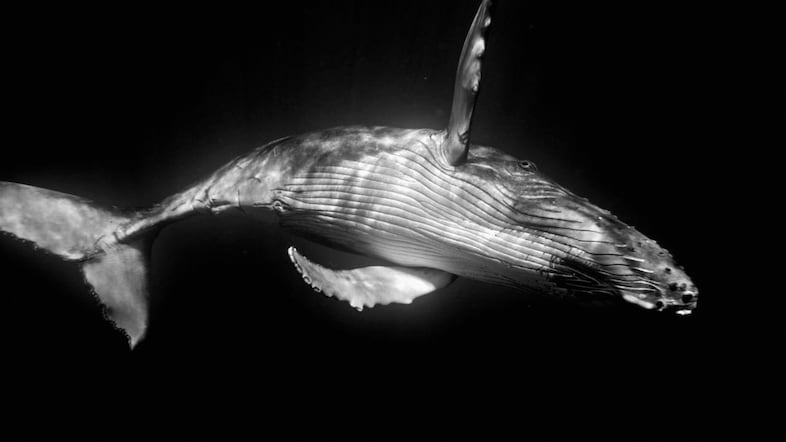
Reflecting on the new exhibition and her work with Soundwalk, Smith sees it as an ongoing adventure. “My writing has a new world. You know, I think oh my gosh where is that going to take me? And it’s just amazing the things that I’ve learned, and that we get to share with other people.”
Correspondences: Soundwalk Collective and Patti Smith is at Luma Arles until 8 November 2026.
