
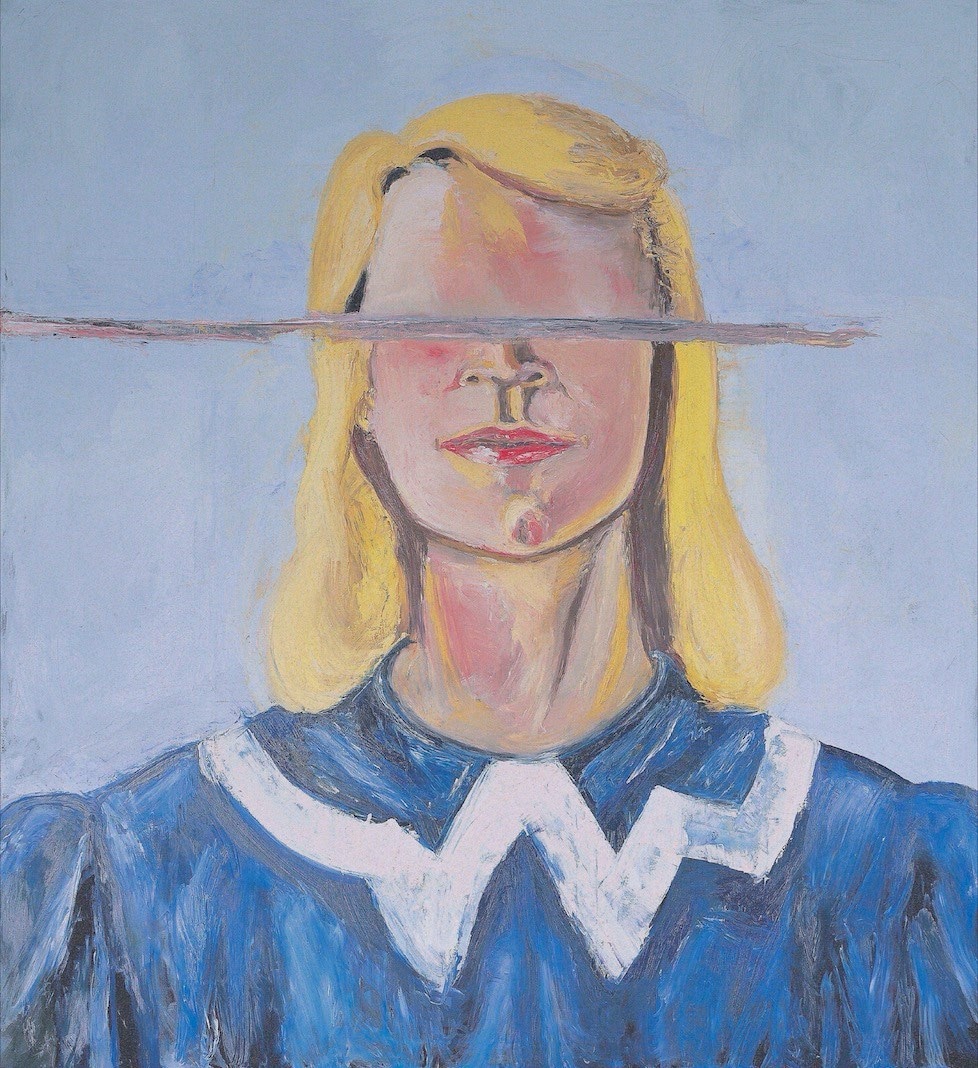
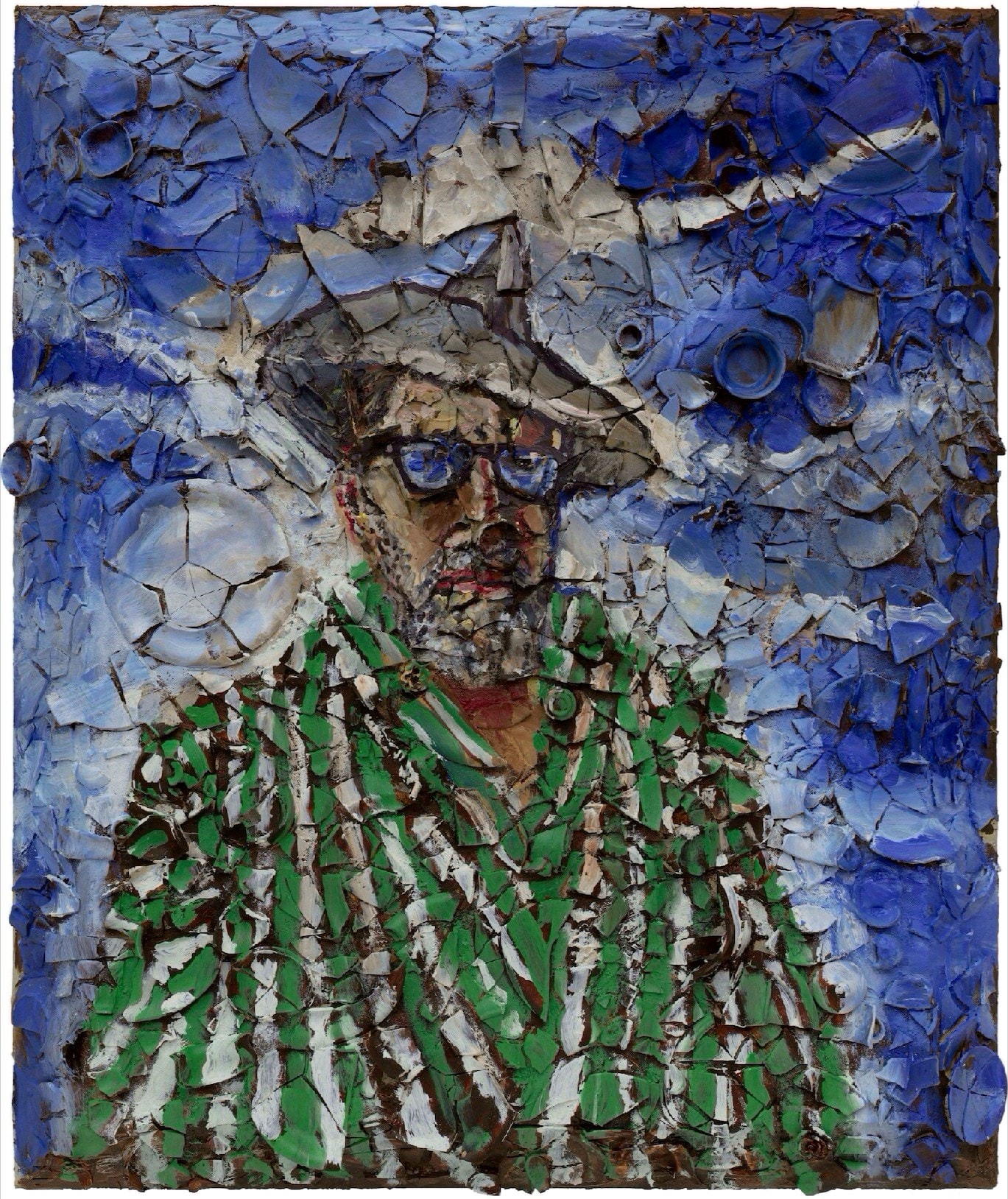
“I painted my way into a lot of trouble,” says Julian Schnabel, “and I painted my way out of it.” The artist, now 74, rose to fame in New York’s art scene in the 1980s. His plate paintings, an ongoing series where shards of broken crockery are placed onto canvases and overlaid with painted imagery, made him a distinguishable figure in an art world then dominated by the flat planes of minimalism. Schnabel was disruptive. His work was challenging. He had an impulse to take things and flip them on their head. It is an energy Schnabel still has today, as an artist and also a filmmaker. A series of Schnabel’s works are now on display at Chateau La Coste – some new, others old, together they showcase this enduring energy.
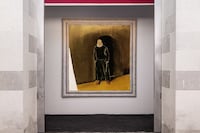
Between Aix-en-Provence and the Luberon National Park in southern France, Chateau La Coste’s vast, 600-acre grounds are populated by sprawling vineyards, restaurants and a hotel. But, populated by works from artists by the likes of Tracey Emin, Frank Gehry, Ai Weiwei and more, it is the sculpture park that makes the estate so singular, demonstrating the dynamic relationship art can have with the environment.
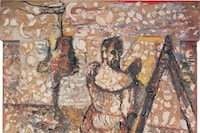
It feels fitting, then, for an artist such as Julian Schnabel, whose decades-spanning career has been marked by this very idea, to exhibit here. “Since the very beginning, he has never let himself be limited to one form, one style, one material, or one period,” Donatien Grau, the show’s curator, explains in the exhibition’s text. Showing works such as The Edge of Victory (1987), made from the floor of a boxing ring and Untitled (Sister of Ozymandias) (1990), made from a sailcloth, the show demonstrates Schnabel’s quest for freedom.
Here, we talk to the artist about the painting as a model for freedom, filmmaking, and the weather.
, 2023)
Jessica Heron-Langton: There are nine works on display that span your five-decade career. How did you decide on which works to show?
JS: It was funny. A young man, the father of somebody who worked at the embassy, came up to me and said, ‘Which one of these are your paintings?’ I said they all are. Donatien Grau [the show’s curator] and I wanted to show nine pictures to create some kind of syntax to understand the many different appearances a painting could take on. We didn’t want to reproduce an image that people are familiar with. It’s not the way I work. Ultimately, I see painting as a model for freedom. There could have been different things in there, but I think those serve the intention of what we wanted to do.
JHL: Your output is varied, but how did that feel, to be asked a question like that about your work?
JS: I thought it was an innocent question. And as Walt Whitman said, ‘It’s OK if I contradict myself. I contain multitudes.’

JHL: Tell me more about the works on display.
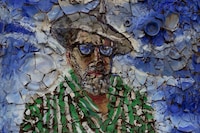
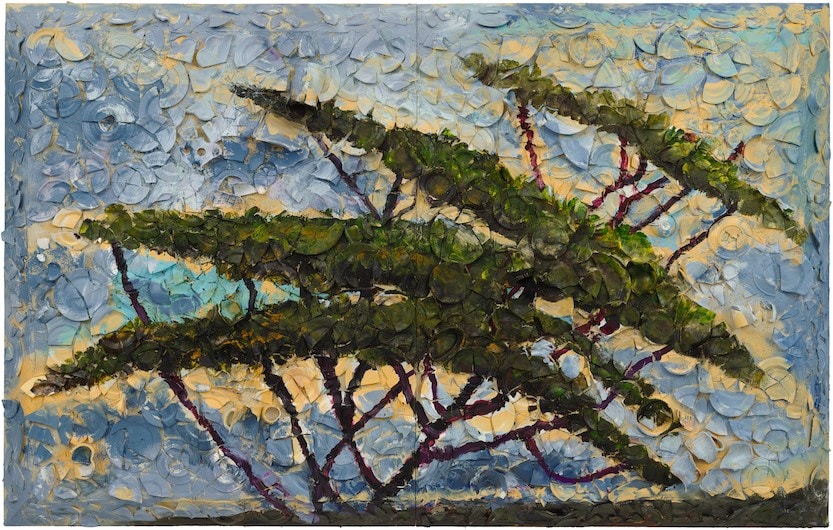
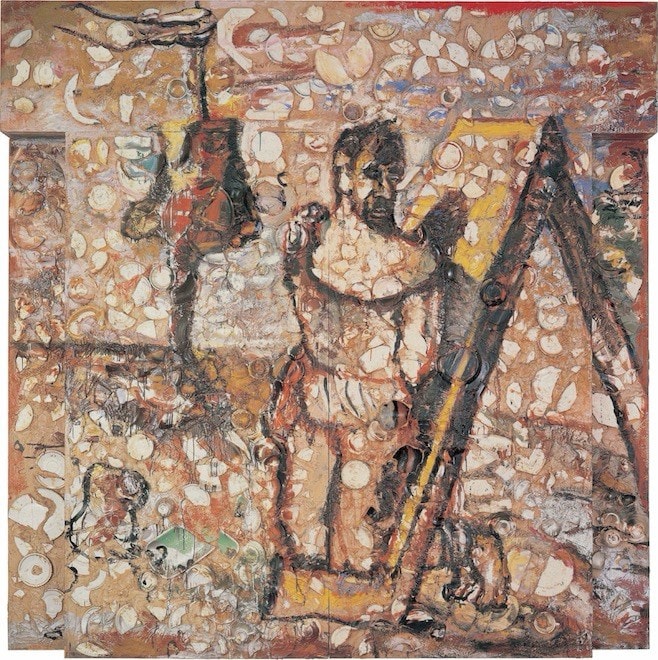
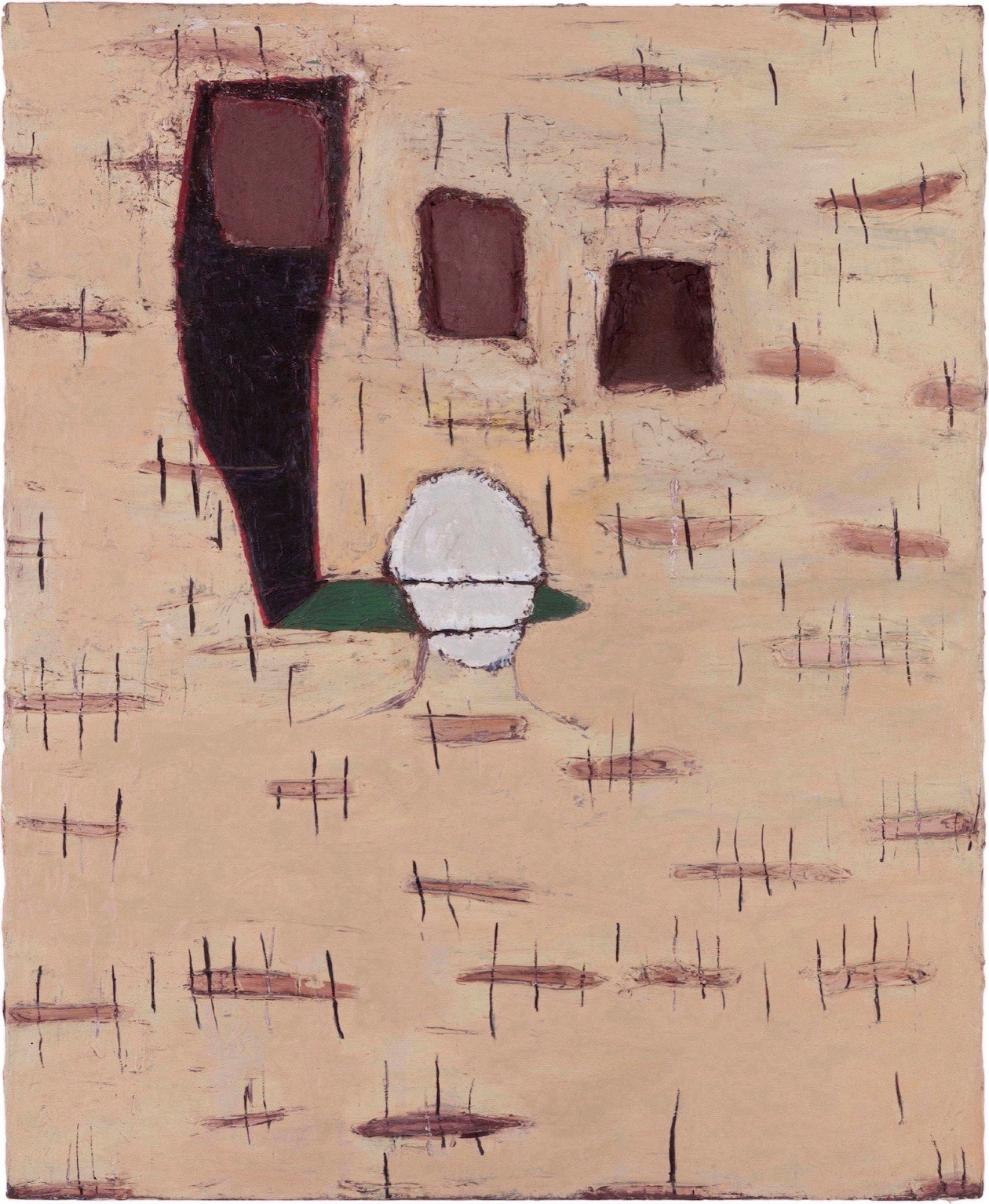
JS: There are works that were made in 1990, which are painted on the back of velvet and have structures and scenes going on across them, which are like protrusions. If you look at Jack the Bellboy / A Season in Hell from 1975, there are lumps and holes cut out of it. The painting Portrait of José Ramón Antero has resin on the surface. Glazing was part of the history of painting, but using resin, a 21st-century material, gives a depth. I was always just experimenting with materials and commandeering their use. The plates existed before, but somehow there were many different possibilities that could exist using that method. The painting Untitled (Sister of Ozymandias) is painted on a nylon sail.
There are some images in there that are figurative and some that are not. I made a point years ago, saying anything could be a model for painting. I needed to build my own receiver for what painting was to me, to make it personal. You see different ways of approaching surface and mark-making.
I’ll see things, whether it comes from film or from a sentence, they’re things that seem to be stored up on my porch that I just take when I need them, and they end up having an impact on whatever the painting might be. It’s just a way of mediating the world.
“I painted my way into a lot of trouble, and I painted my way out of it. I am those paintings. I am my art” – Julian Schnabel
JHL: Your work has always evolved from something else – found objects, the landscape. Has your process of finding inspiration evolved over the years?
JS: I painted my way into a lot of trouble, and I painted my way out of it. I am those paintings. I am my art. It’s like what Max Hollein wrote, ‘I see paintings everywhere‘. I was driving down the road in Mexico, going to a fruit market in the jungle, and there were pieces of material covering the fruit, and they looked like paintings to me. So I’ll buy the piece of material and make paintings out of it. The colour was bleached by the sun, and you can’t find colour like that anywhere else. So, that’s an opportunity. Painting is an opportunity.
JHL: You paint plein air quite often. What is your relationship with the environment when working?
JS: I paint a lot outside. I can see better outside. And I deal with the weather. The weather is part of the construction of the paintings. Wherever I am has an effect on what I’m doing, whether I’m working in Switzerland or working in Montauk. There’s a feeling of weather in the work. The feeling they’re touched by light.

JHL: Grau’s exhibition text examines your relationship to time. Could you talk about that in a bit more detail?
JS: It’s in the film we made about Van Gogh, At Eternity’s Gate, where Dr Gachet, played by Mathieu Amalric, asks Van Gogh why he paints. He says, ‘When I paint, I stop thinking, and I feel I am part of everything outside and inside of me.’ That is what it is to me.
I think all my paintings are time-lapses. It’s about that note – whether you’re a musician or a movie director – it is about that moment where you hang on one second. When somebody hits that note, and they have that moment where they’re totally in concert with everything that’s outside and inside of them.
JHL: You’re showing a very early work, Jack the Bellboy / A Season in Hell from 1975, a painting you’ve seen in many different places and spaces. Do the paintings change each time you see them?
JS: I know what it looks like, but every time I look at it, I see something else. For example, the other day I was having a massage at home and I was looking at a painting called Notre Dame – my fifth plate painting. I was looking at it, and the way the plates were coming down and moving across the bottom made me think, ‘Wow, I’m seeing this painting for the first time.’ There’s always something else to see. And it depends on where you’re at when you stand in front of it. I think they can bring you into their present. Not just me, they bring you to their present. There’s no past, and there’s no future; there’s only the eternal present.

JHL: You have a new film coming out, In the Hand of Dante. What is the relationship between filmmaking and painting? Is it all part of the same need for creative expression?
JS: My films are not biopics; they happen to be about people who lived, and then, ultimately, their portraits and my version of what their lives might have been like, or what might have motivated, deterred or hurt them. From a young black painter navigating life and success in the white art world (Basquiat), to a self-exiled painter in the 19th century (At Eternity’s Gate), or a paralysed magazine editor in prison in his own body (The Diving Bell and the Butterfly), all these characters ask what it is to be human.
It’s my way of mediating the world. I never really knew what I was going to do next. Things just sort of happened and crossed my path and then that tells me what to do. The paintings tell me what to do.
JHL: This show is a retrospective in some way. What do you want to be remembered for?
JS: You’ll figure that one out yourself. I don’t want to go that far; I’m still here. Everything I have to say is in my work. When you hear Willem Dafoe, who plays Van Gogh in At Eternity’s Gate, talking to the young doctor who is letting him out of the hospital after he cut his ear off and asks, ‘Do you think that art can make people feel more alive?‘ Dafoe’s character says, ‘Yes, absolutely’. And I think that’s true.
Julian Schnabel is open at Château La Coste’s Galerie des Anciens Chais until 15 August 2026.
