
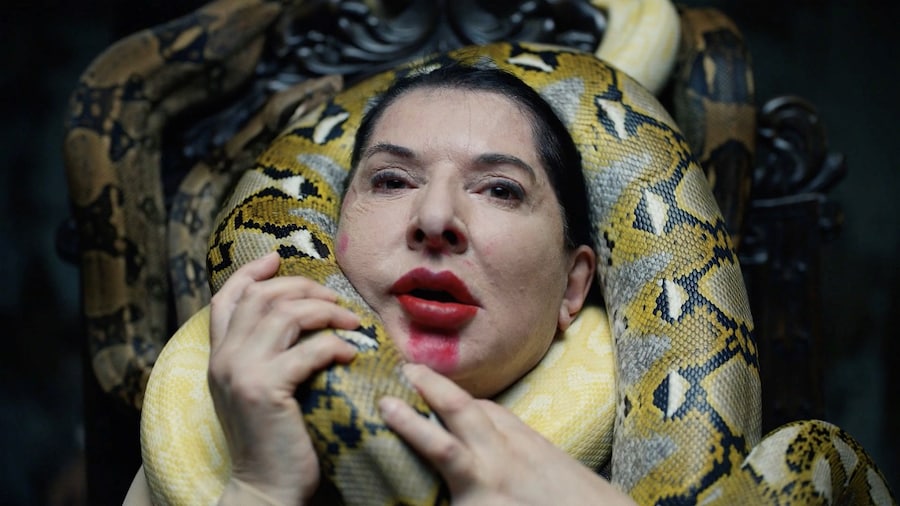
Set to arias from seven different operas sung by Maria Callas, Seven Deaths is an exploration of the idea that a woman may metaphorically die in love many times over
“I am a flickering flame on a lone candle. Exposed to the elements: To wind and rain, to love and hate – in sickness and health,” reads Marina Abramović in the poetic voiceover to one of seven short films, now on display in Seven Deaths, a new exhibition at Copenhagen’s Cisternerne Gallery. “The flame can warm me or burn me. It can light my way or be my guide,” Abramović continues. “But when it goes out, it cannot be relit. I go forever.”

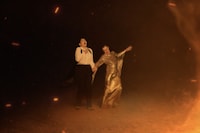




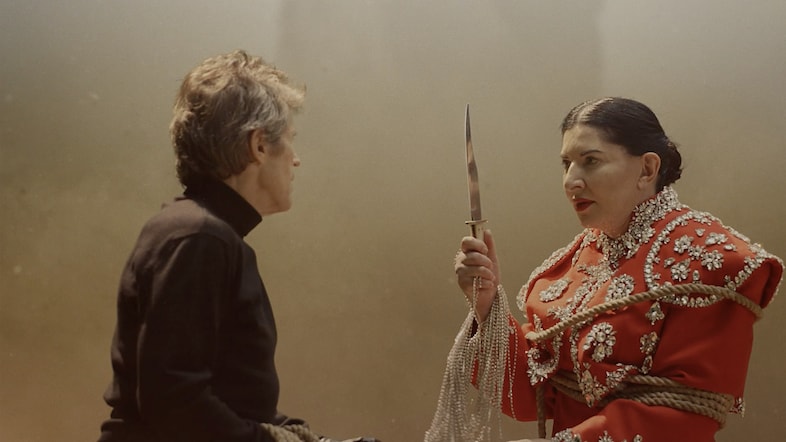
These films, which first featured as part of her 2020 operatic work 7 Deaths of Maria Callas, see Abramović use the plots and casts from operas as a point of departure to freely reimagine dramatic climaxes on the threshold of life’s end, accompanied by Callas’s arias. Snakes, knives, blood, fire, rage, plague and falling from great heights. Time is warped and in slow motion, with each video portraying a female (Abramović) and a male counterpart (Willem Dafoe) taking turns to play lover, murderer, griever or villain. “It’s about death, but it’s also about love,” says Tine Vindfield, chief curator at Cisternerne, who finds this series to be particularly pertinent right now at a time when the world is marked by conflict and crisis.
The subterranean, vault-like exhibition space – once a functional reservoir – only exacerbates the overwhelming gravity of the piece’s thematics. One film plays after another, requiring the audience to follow each video through the 4,000 square foot space, immersed in total darkness, except for the light of the videos.
“Its darkness and resonance creates a space where the work can unfold with greater intensity and the audience becomes physically and emotionally present with each death,” says Abramović. The Belgrade-born, New York-based contemporary performance artist asks us to sit with each, to endure the emotional intensity, to register the detail as we witness the approach to the inevitable end.

“The sense of time, repetition and grandeur that the work contains unfolds in a completely different way in its encounter with the cisterne,” says Christine Buhl Andersen, CEO of the Frederiksberg Museums, which manages the Cisternerne. “It’s not a cinema, it’s not an art hall, it’s not an opera house – but everything meets here in the underground.”
The collaboration with Dafoe brings further cinematic dimensions to the project. (In his gold sequin gown, he’s a total belle of the ball.) This is not the first time the pair have collaborated. In 2011, the actor narrated Abramović and Robert Wilson’s theatrical production The Life and Death of Marina Abramović.
For Abramović, death is not an ending but a repetition we experience again and again. The artist, who in 1988 famously walked 2,500 kilometres across the Great Wall of China over 90 days to conclude a decades-long and turbulent love story of her own, relates this back to her own experiences of sacrifice and pain in love. Be it tragic, unrequited, impossible, all-consuming, forbidden, betrayed – Seven Deaths is an exploration of the idea that a woman may metaphorically die in love many times over.

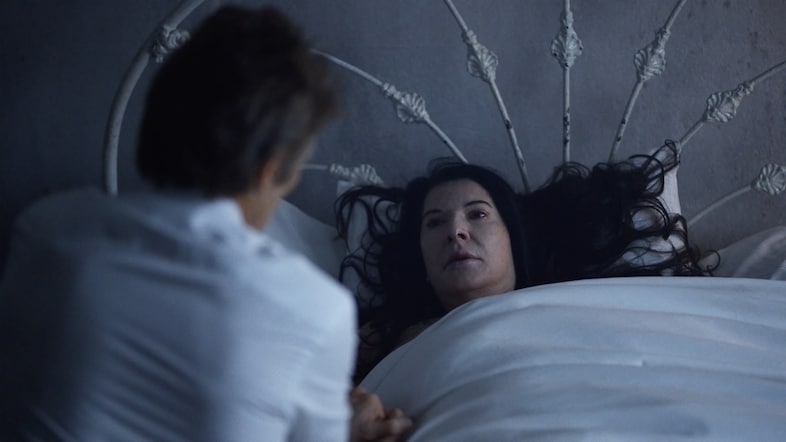
“In these seven deaths, Abramović highlights how women in classical opera are often portrayed as tragic figures who sacrifice themselves for love,” says Vindfield. “They are too weak and must face their downfall, or they’re too strong and must be punished.” The repetition of each film draws attention to this pattern, while also inviting us to reflect on how these narratives have shaped cultural ideas about femininity, devotion and suffering.
Abramović first heard the famed opera singer’s angelic voice on the radio in her grandmother’s kitchen as a young girl; the experience stayed with her. “I think Abramović was not only fascinated by the voice, but of course, also by the myth that surrounds this great opera diva,” says Vindfield. “Callas had an extraordinary ability to embody tragic female characters with deep emotional intensity, and Marina Abramović has on her part explored vulnerability, pain and endurance in her work.”
The artist draws parallels between Callas’s life and her own. At the exhibition’s opening, Abramović comedically paraphrased their similarities: “We both had the same noses, terrible mothers and we’re Sagittariuses.” The real correspondences lie in their conditions for love and emotional intensity, in lives marked by public desire and private loneliness, and in their total devotion to art at a high personal price. For Abramović, Callas’s tragic love stories and her tragic death in Paris, aged 53, are an image of the ultimate consequence of love and lust. Having experienced the tumult of heartbreak too, Abramović says she was fortunate to have found salvation in her craft.

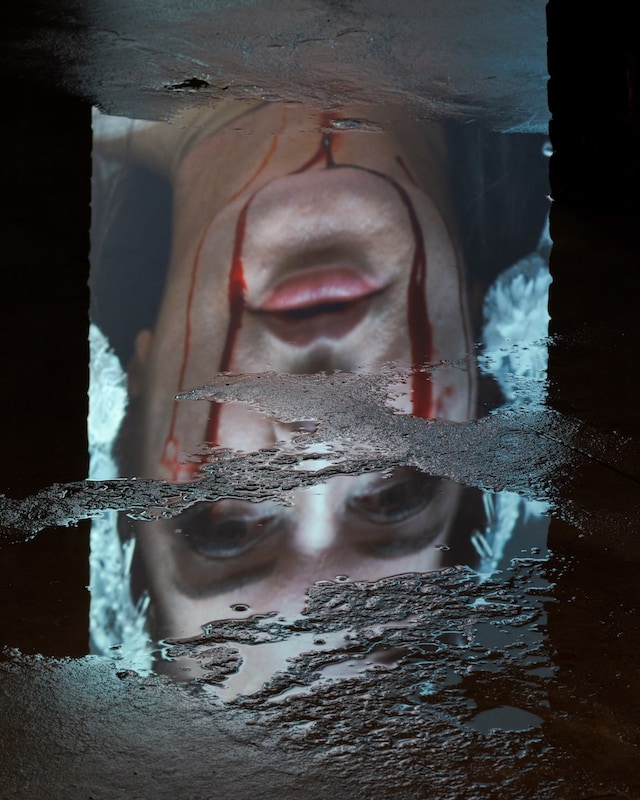
Pulling together threads from her life’s work – the endurance, the extreme presence, with references to past works – love and death emerge in this exhibition as both theatrical figures and personal reflections. Seven Deaths will run until 30 November, when the artist, born in 1946, will turn 80 years old. Later this year, she’ll open a solo exhibition, called Transforming Energy, at the Gallerie dell'Accademia di Venezia, becoming the first living woman to do so.
Marina Abramović: Seven Deaths is on show at Cisternerne Gallery in Copenhagen until 30 November 2026.
