
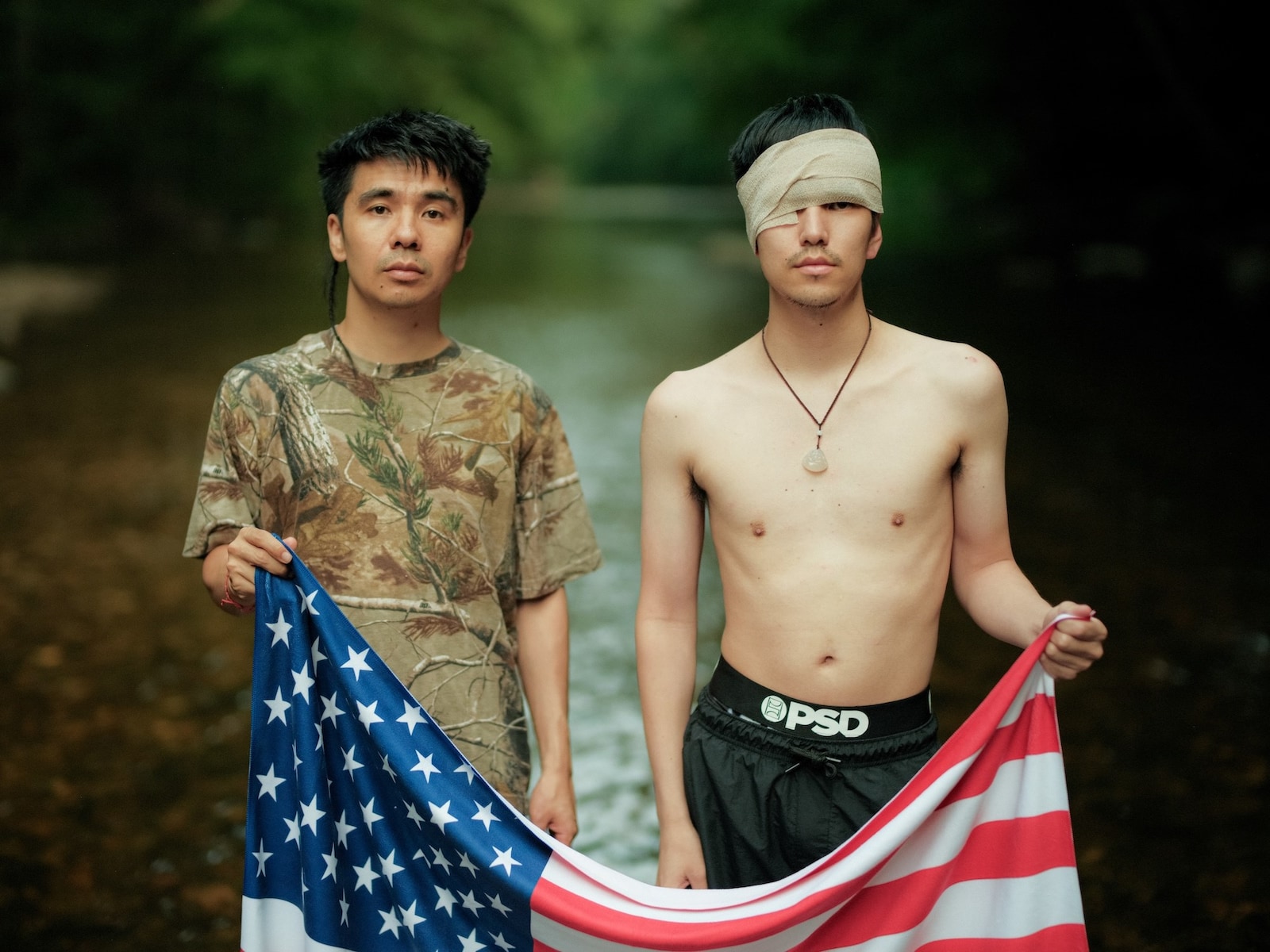
There’s a passage in Ocean Vuong’s second novel, The Emperor of Gladness, where Hai, the troubled protagonist on the verge of personal collapse, finds some temporary balm in the pages of a Diane Arbus photo book. Though Vuong’s novels are only vaguely autobiographical, some details bear more than a passing likeness to reality. As a teenager who enjoyed photographing the local skate culture, his curiosity led him to the photography section of his community college in Connecticut, where he too was drawn to the mythmaking in the books of Arbus, as well as Nan Goldin and Alec Soth.
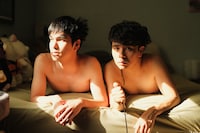
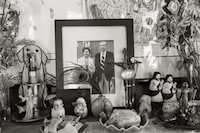
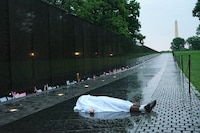
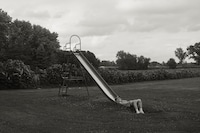
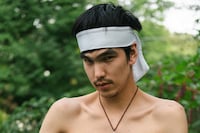
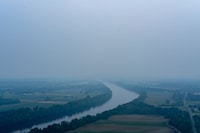
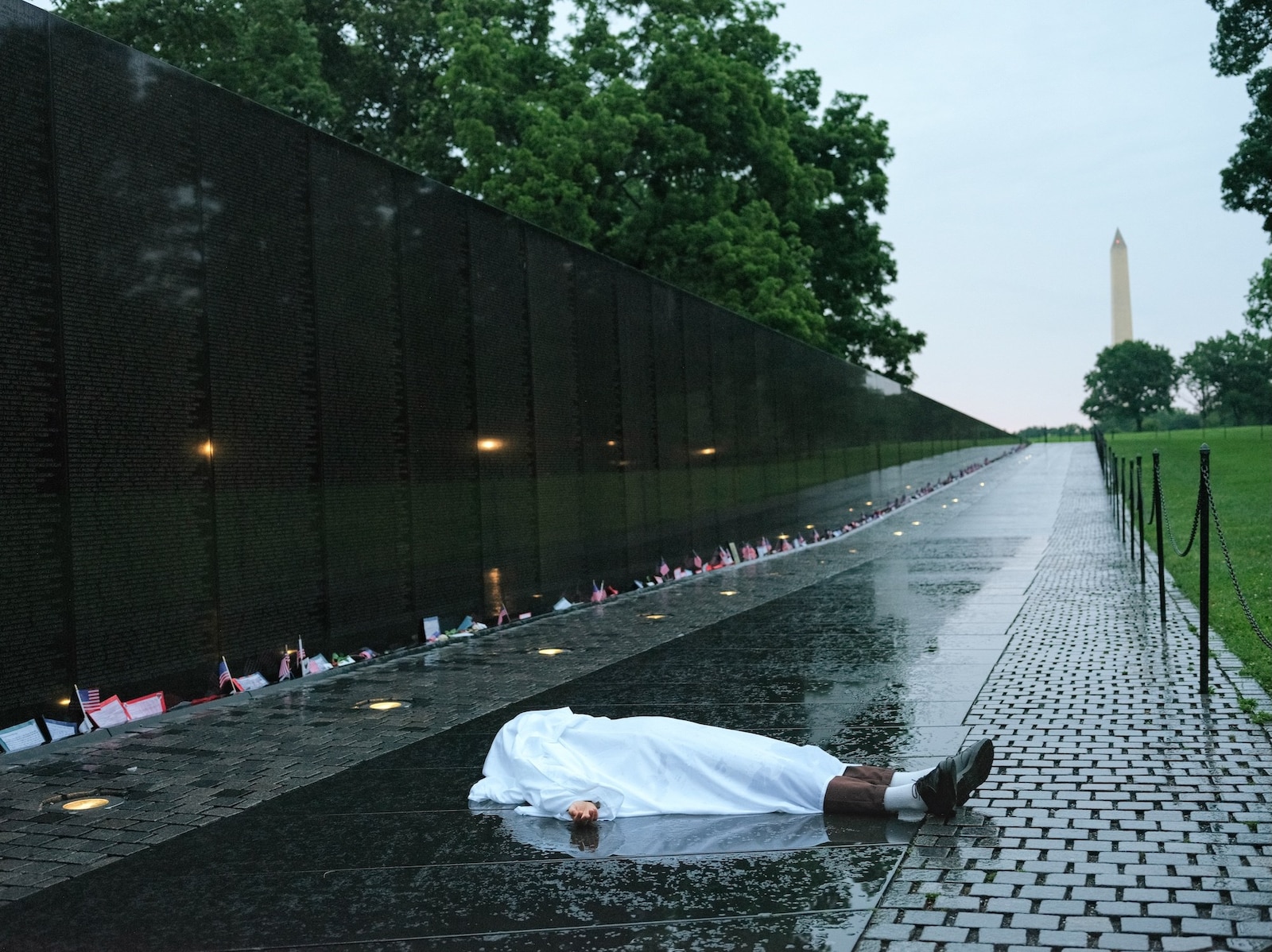
Vuong kept the practice close by, quietly making thousands of photographs during his ascent to becoming one of the literary world’s most recognisable voices. A collection of these is now going on show at CPW in the Hudson Valley, encouraged by the likes of Goldin and Raymond Meeks. It marks the first time his photographs are being exhibited, yet they feel familiar. Symbology bleeds between images and the words many know so well: the close quarters of the nail salon, the vantage over Connecticut’s vast sprawl, the long shadow of the American war machine made manifest in helmets, bandages and patriotic paraphernalia.
The photographs are also an intimate study of grief. Many were made with his younger brother following the loss of their mother, a woman central to his storytelling. To English speakers, the exhibition’s name, Sống, conjures musicality (an incidental emblem of Vuong’s dexterity across media) but the word’s actual Vietnamese meaning, “to live”, offers the more pertinent reading as the brothers navigate what life means after experiencing death.
Speaking from rural Massachusetts, Ocean Vuong reflects on the “naked” act of photography and its capacity to speak in lieu of words.

Megan Williams: How and why did you first find your way to photography?
Ocean Vuong: Photography was my first practice, back when I was 17, 18. One day, I went home and I showed my mother one of my first publications. It was a tiny poem in the Connecticut River Review, a local little journal. I was so foolish because in my pride, I ran to her in her nail salon and I said, “Ma, look. A poem, I did it,” and then her face dropped, and she said, “Well, son, it’s good for you. I wish I could read it.” I forgot, silly me: my mother’s illiterate.
So I borrowed my friend’s camera, the same camera I used to take the skate videos and [capture] the punk shows that they were in, and I started to shoot around our neighbourhood. A poem was not legible to her, but a photo was, so I thought maybe I can reveal my vision to her. I went to the pharmacy, printed out a stack of photos and she said, “Gosh. I didn’t know our life was so sad.” It was just photos of the mills that were broken down, the highways, the empty streets at night. I thought it was beautiful and informative, but she was absolutely right. She uses the word “buồn” in Vietnamese, which if you look in the dictionary, will say “sad”. But in Vietnamese, there are more connotations to that word. One would go look at a sunset as a Vietnamese person and say, “Ah, buồn quá” – “Ah, so sad” – not to cry a deep sorrow or melancholy, but to say, “How beautifully sad that this will go away.” So she used that word, and then I just realised [photography] was something more.
MW: I feel your books have such a kinship with An-My Lê. Her photography deals with the psychic debris and performance and iconography of war, which are threaded into your writing. I also see these themes in your images. Do you see a connective tissue there?
OV: Yes. Also, her interest in taking photographs of re-enactors and the clandestine pre-life of war, right? She takes these photographs in the American southwest desert where military training happens for Iraq, the war that was my sort of coming-of-age conflict as a millennial growing up in the early aughts. The Iraq, Afghanistan Wars, the war on terrorism, the never-ending wars that we’ve now come to associate with the Bush-Obama years. What I love about her work is that you can see there is a throughline between the American boy in the cowboy hat shooting a cap gun in his backyard, which is an innocuous picture of wholesome American boyhood, to physical war that serves an empire. An-My Lê was ahead of her time when she really understood that.

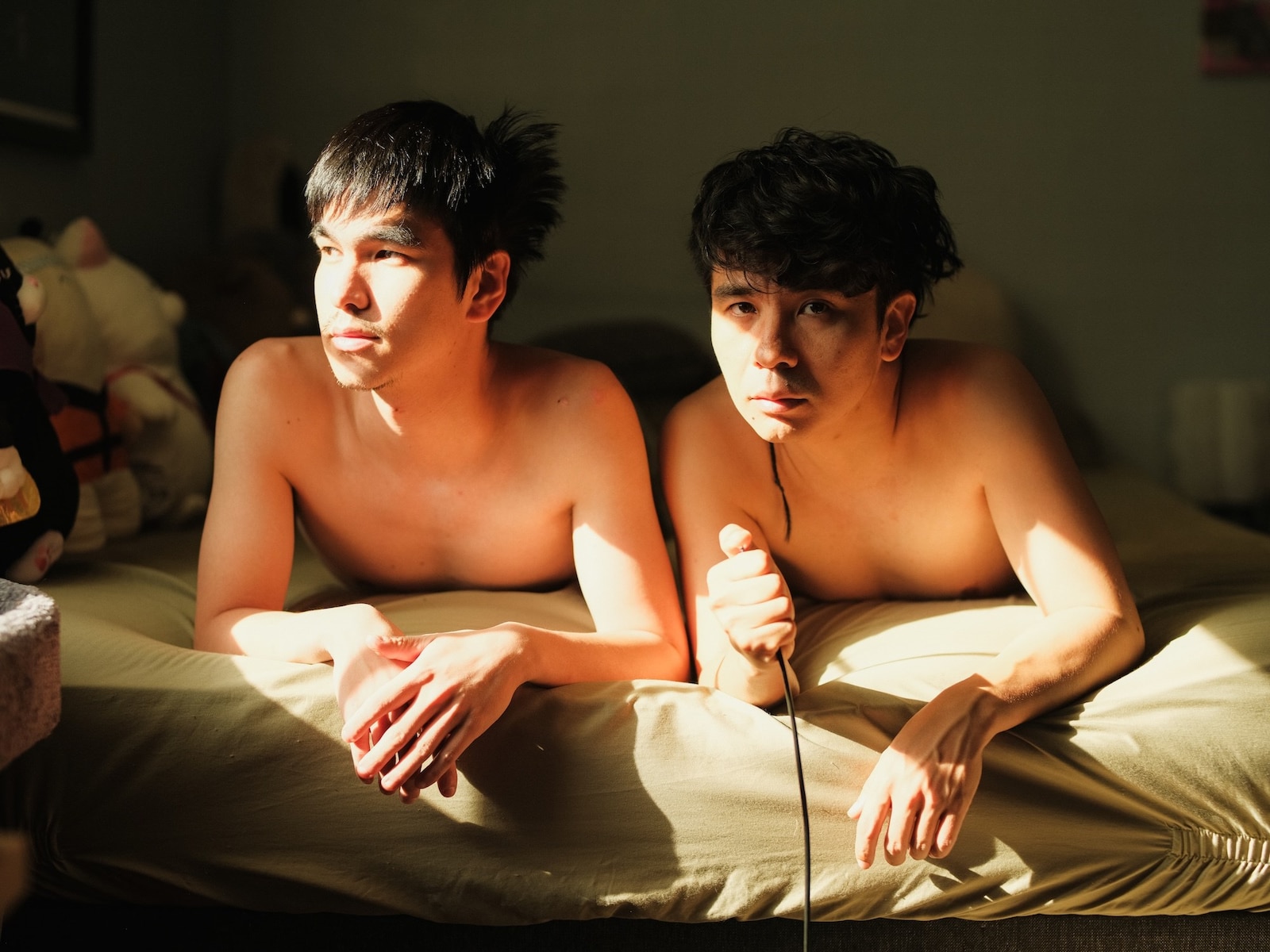
MW: Can I ask how the images were made with you and your brother, and how you used the camera to work through a period of grief and loss?
OV: I always carry a camera – it’s now ingrained in me. It’s part of my writing practice. So when my brother moved in with me, the same process continued. He was just in my view now. I was entangled in his life and he in mine. We’re ten years apart, so there’s a power dynamic: I’m an established professional and he came to me at age 20, not even able to drink, working wage work, which he still does, barely able to drive. It was almost like inheriting a child in many ways. You can see through a [particular] photograph that his room is closer to a teenager’s world. There’s stuffed animals, anime posters. I got to know him through all of this.
I would always have my camera on my dining room table, no matter where I lived, and I’d start to grab it when he was around. Sometimes if I had a tripod, I would let him compose it and then he would step into the frame. So it’s been really, really beautiful that I can share the camera, which you can’t really do with writing because I write by hand – my handwriting, my ideas – and you can’t really share the pen. Also, the pen hovers, hesitates, crosses things out, whereas the camera, it takes. It’s much more democratic, I think, than the pen. It accepts everything in the frame, and sometimes there are things I don’t see until much later.
“The camera is much more democratic, I think, than the pen. It accepts everything in the frame” – Ocean Vuong
MW: What is the editing process like for you? Is it similar to how you might approach a sentence or a story?
OV: It’s much closer to poetry. And that was a strength I didn’t know I had until I started to edit for viewing. When I did my poetry collection, I would tape the poems on a long wall and each poem was like a photograph. There’s no connective tissue, but you have to use resonance and association and velocity, shapes, patterns. It’s really about building sequential repercussion through pattern-making rather than through linearity. And so I was surprised to learn that I was pretty familiar with this, as a poet creating poetry anthologies and collections.
With that said, it’s still really hard because the photographs are much more forgiving. The possibilities are so limitless that you can be incapacitated by it, whereas sometimes with a poem, you can say, “All right, these two poems are too loud, they can’t really stand next to each other. They start to take away from each other. You need a quieter poem here.” Whereas in photography, again, even two really big, busy photographs – depending on what’s in them – have more connective joints that could still work.

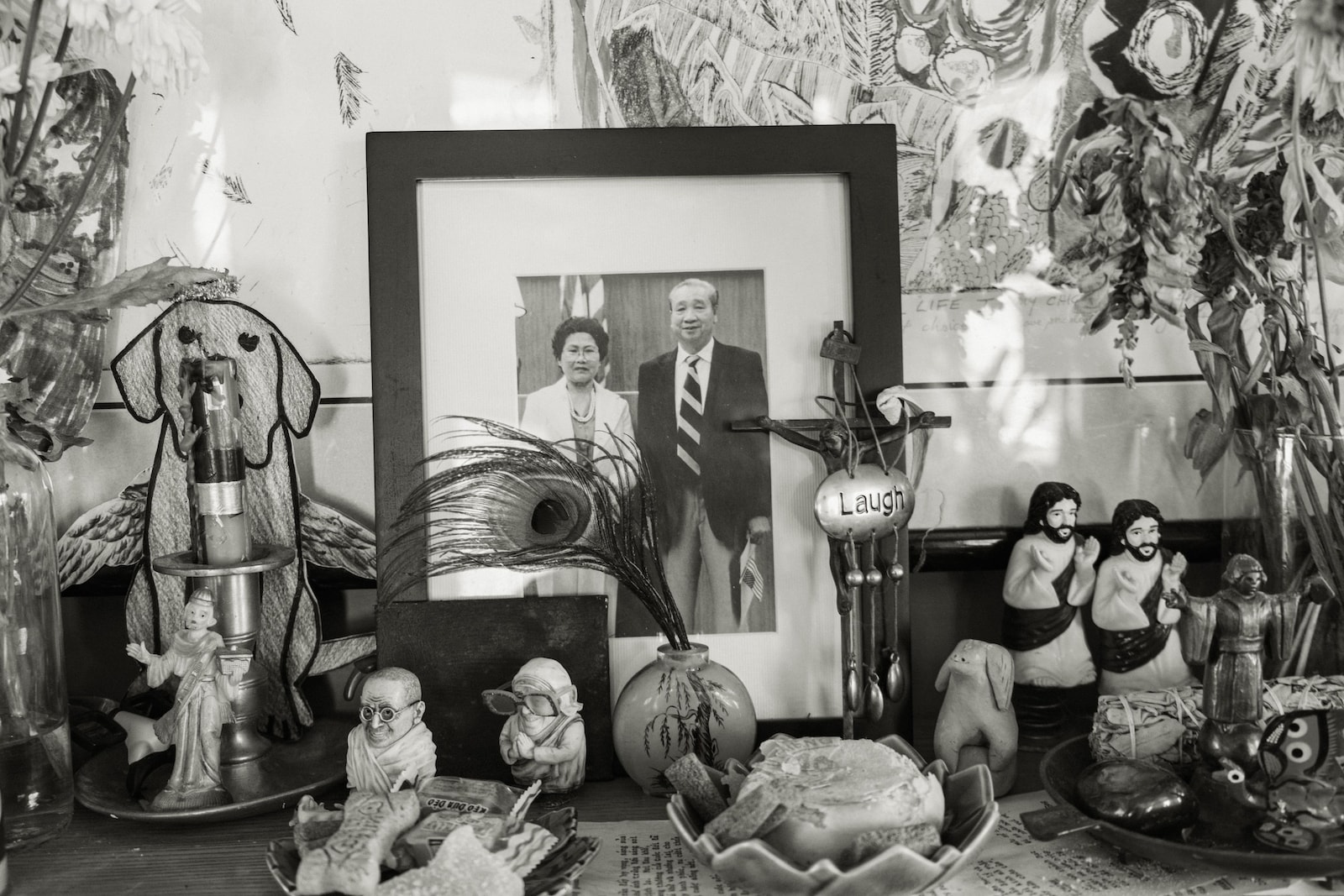
MW: Does it feel vulnerable to be showing this side of yourself that a lot of people didn’t know existed, especially given the subject of the exhibition?
OV: Yeah, 100 per cent. I couldn’t figure out why until I read this interview with Heidegger and this Japanese philosopher named Kuki Shūzō. He says that photography – and film and cinema – is too evidently there for Japanese aesthetics. It’s too real, because the Japanese value a very core aesthetic called yūgen, [meaning] a darkness and an obliqueness that demands an active imagination to fill in the gaps. Fog, mistiness. So a lot of Japanese aesthetics, up until film and cinema, valued a kind of mystery, an anti-realism, an anti-mimesis, an inexhaustible vastness that cannot be interpreted. Without knowing that philosophy, I felt the same thing.
In a way, when you have a photograph of your mother, you no longer need to describe her. And I felt like that finishes. There’s a finiteness to that that scared me, that I was never prepared for. So I think I’m more vulnerable with the photos, not as an artistic practice but as a medium itself, because in my work, although all of it is autobiographical, it is all embellished. A city can rise or fall with a stroke of a pen. And in fact, there’s a lot of obscurity and manoeuvring and dramaturgy in my writing, whereas a photograph reveals exactly where I have stood in a historic moment in time, and that seems absolutely naked to me. So I’m embracing it, but it’s not exactly natural.
Ocean Vuong: Sống is on show at CPW in Kingston, New York from 31 January – 10 May 2026.
