
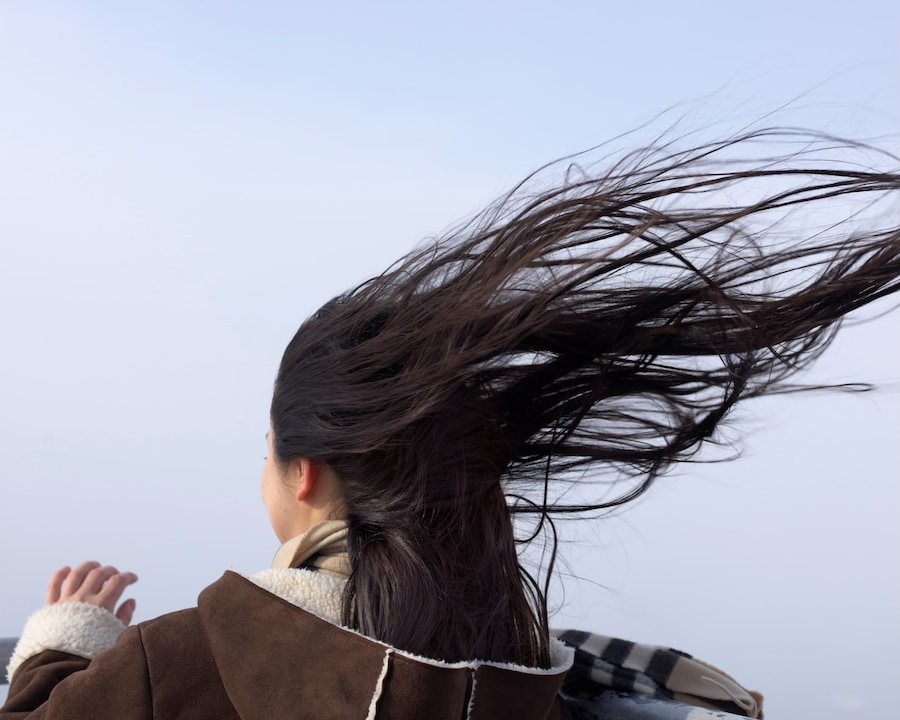
Foregrounding plural perspectives of the continent, the inaugural issue of Asia offers “new ways of seeing and connecting across borders”
There is no single way to look at Asia, and a new publication, simply titled Asia, from editor Ko Ueoka and art director Menghan Li understands this from the outset. In its debut edition, the vast continent is presented through multiple gazes, native, migrant and passerby. The result is a snapshot of the many Asias that exist simultaneously: the remembered past, the observed present and the imagined future, as seen by those who live within these worlds and those who wander through them.
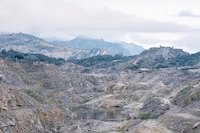
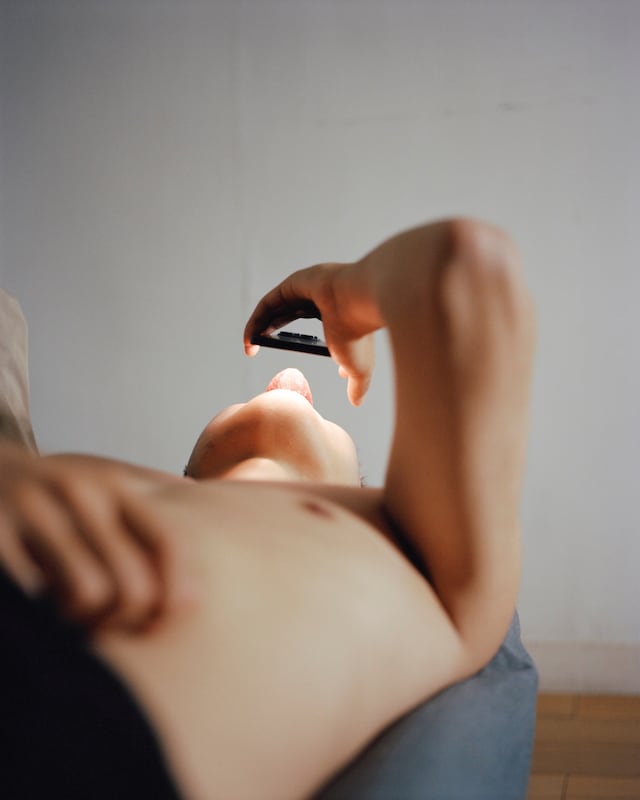
The annual publication is composed entirely of photographs taken across Asia, with its first edition bringing together a wide range of perspectives shaped by geography, history and personal encounters. Among the ten contributors, we find Jungjin Lee shooting the landscapes of South Korea’s Jeju Island, Xiaopeng Yuan depicting youth culture in Shanghai, Sarker Protick conveying life in Dhaka, Bangladesh and Nigel Shafran exploring Hong Kong and Shenzhen. While Ryu Ika captures poetic scenes in Inner Mongolia, Ece Gökalp in Latmos, Turkey and Yukihito Kono in Kanazawa, Japan. The photographs appear like pieces of a larger unfinished story: a hand mid-gesture; cities caught between erosion and renewal; domestic interiors weighted with memory.


Ueoka was born and raised in Tokyo, later relocating to London, then Paris, while Li lived in Japan, the United States and China before moving to Paris to study. Both have remained in the French capital. Displacement sits quietly at the centre of the Asia publication’s formation. Reflecting on its influence, Ueoka notes, “When you live abroad, away from the country where you were born and raised, you’re inevitably forced to confront your own identity. This was a feeling I never experienced while living in Japan.” Physical distance, he adds, has allowed him to re-examine his background and sparked a desire to learn more about Japan and Asia. For him, the publishing project is a means of discovery – a way to encounter an Asia he doesn’t yet know through the eyes of others.
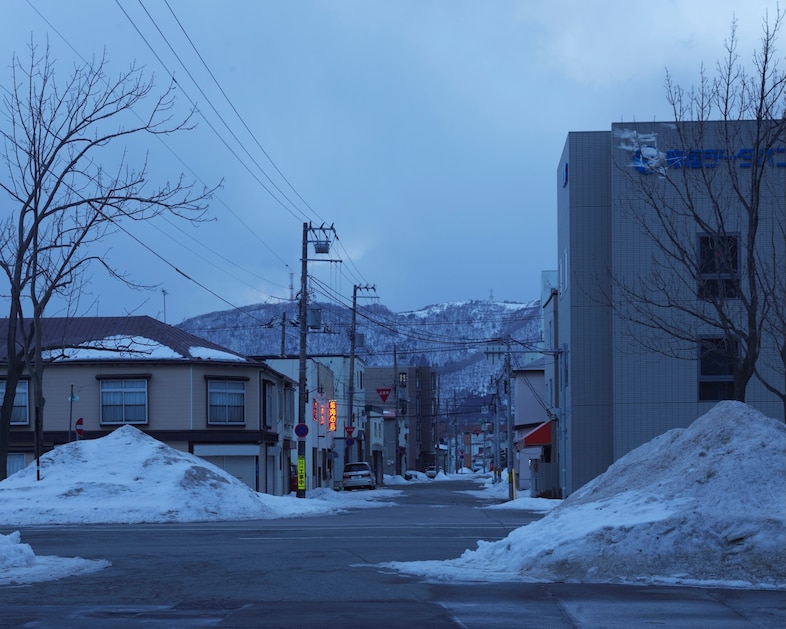
Beyond limits and labels, Ueoka resists defining Asia as a fixed idea. Instead, he and Li aimed to expand the reader’s own internal image of what the continent is and what it might become. This openness is reflected in the publication’s sequencing. Paging through issue one, we begin in 1984 with Martin Parr’s first visit to India, where observations from a local school are interwoven with candid, technicolour portraits and black-and-white images taken in Darjeeling. We then move through time to an unpublished dummy book by Alec Soth, created in Hokkaido in 2016 as a tribute to the Japanese photographer Masahisa Fukase, and onto Farah Al Qasimi’s ongoing exploration of Dragon Mart in Dubai, the world’s largest Chinese shopping and trade centre outside of mainland China.

“The intersection of different timelines is one of the core concepts of this magazine,” says Ueoka. “Works that have stood the test of time, pieces that still feel relevant and ‘good’ long after they were shot, possess a certain strength. At the same time, I want to utilise the inherent immediacy of photography. It’s interesting to feel the passage of time by looking at the ‘then’ and ‘now’ of the same region.”
Likewise, the decade-spanning images gathered across the publication’s 280 pages never submit to a single theme, instead creating a field of relations between past and present, locality and circulation, intimacy and distance. By embracing plurality over a singular narrative, Ueoka’s deliberately non-didactic editorial approach successfully undermines any notions of an authoritative gaze.

The Asia publication took a year to complete, with four months devoted to finalising the ten contributors. Some photographers submitted tightly edited selections; others sent hundreds of images. Ueoka and Li shaped the final edit with careful attention to rhythm, flow and the relationships between bodies of work. There are sequences that trace urban landscapes marked by rapid modernisation, and others that linger on intimate, everyday scenes, which hint at deeper social undercurrents.
The photographers approach Asia not as a singular subject but as an endlessly shifting condition – mutable, contested, unfinished. Each series suggests a region in flux, where history and futurity coexist in a fragile balance teetering between acceleration and erasure. As such, issue one of Asia feels less like a static archive than a living, evolving conversation about place, belonging and change – one we look forward to watching unfold further.
Asia Issue One is out now.
