
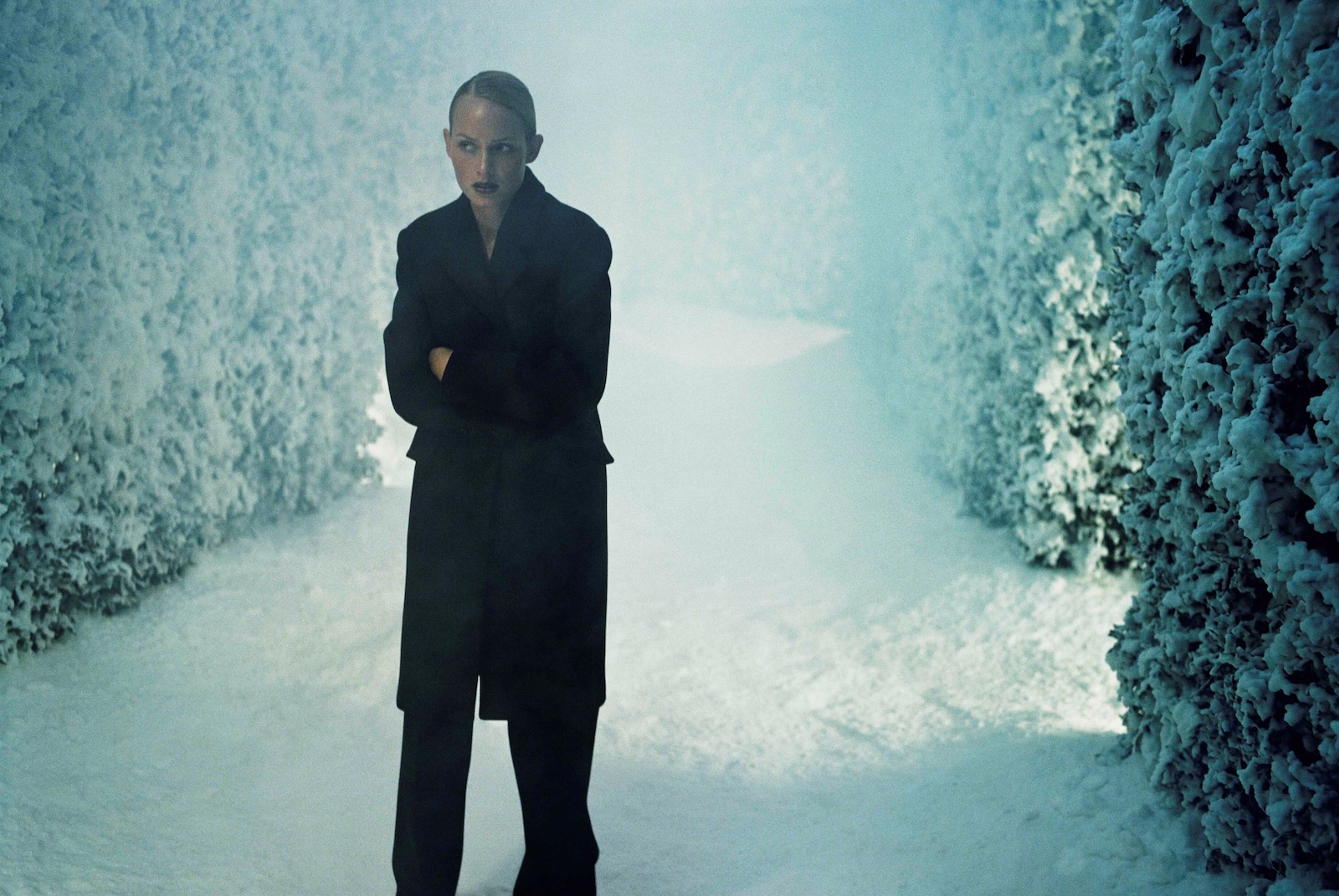
Before attending the recent Spring/Summer 2026 shows, curator Alessio de’ Navasques spoke from his hotel room in Paris about the cultural programme he helps run at 10 Corso Como, the iconic Milanese concept store founded by Carla Sozzani in 1990, now led by Tiziana Fausti. “My aim is to do a series of exhibitions focusing on the 90s, or figures that were relevant in that time, because it is the founding moment of 10 Corso Como,” he says. Previous exhibitions include Archive Circle, a collaboration with Morphine.Online, evoking the aesthetics of the 90s, and Yohji Yamamoto – Letter to the Future, displaying iconic runway pieces alongside past and future collections from the Japanese designer.

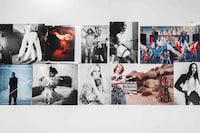
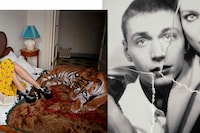
The latest exhibition, Glen Luchford: Atlas, shifts attention to one of fashion’s great photographers. “It’s very interesting to reactivate an archive from a contemporary perspective, whether this is a designer or a photographer,” says de’ Navasques. Acting both as a visual biography of Luchford while also chronicling the changing nature of fashion image since 1990, the site specific installation (designed by Luchford) is composed of large format prints alongside three massive walls layered with over 100 images from Luchford’s archive of iconic editorials, fashion campaigns, portraits, personal memories and outtakes.
In an extensive interview recorded in 1998, now part of the British Library Sound Archive, Luchford explained how his relationship with photography began while living in Brighton in 1986, when his father bought him a camera for his 18th birthday. “It was sort of his narcissistic desire in a way because he really liked photography. He liked the idea of me liking photography,” he says. “It was a bit like snooker. He was like, I like snooker, you should like snooker. So of course, I hated it. But funnily enough, with photography it seemed there was a natural link. I started to take pictures of my friends skateboarding. I could never get on the top of the ramp, but with a camera, you were suddenly invited to the top of ramp because people always wanted their vanity played to.”

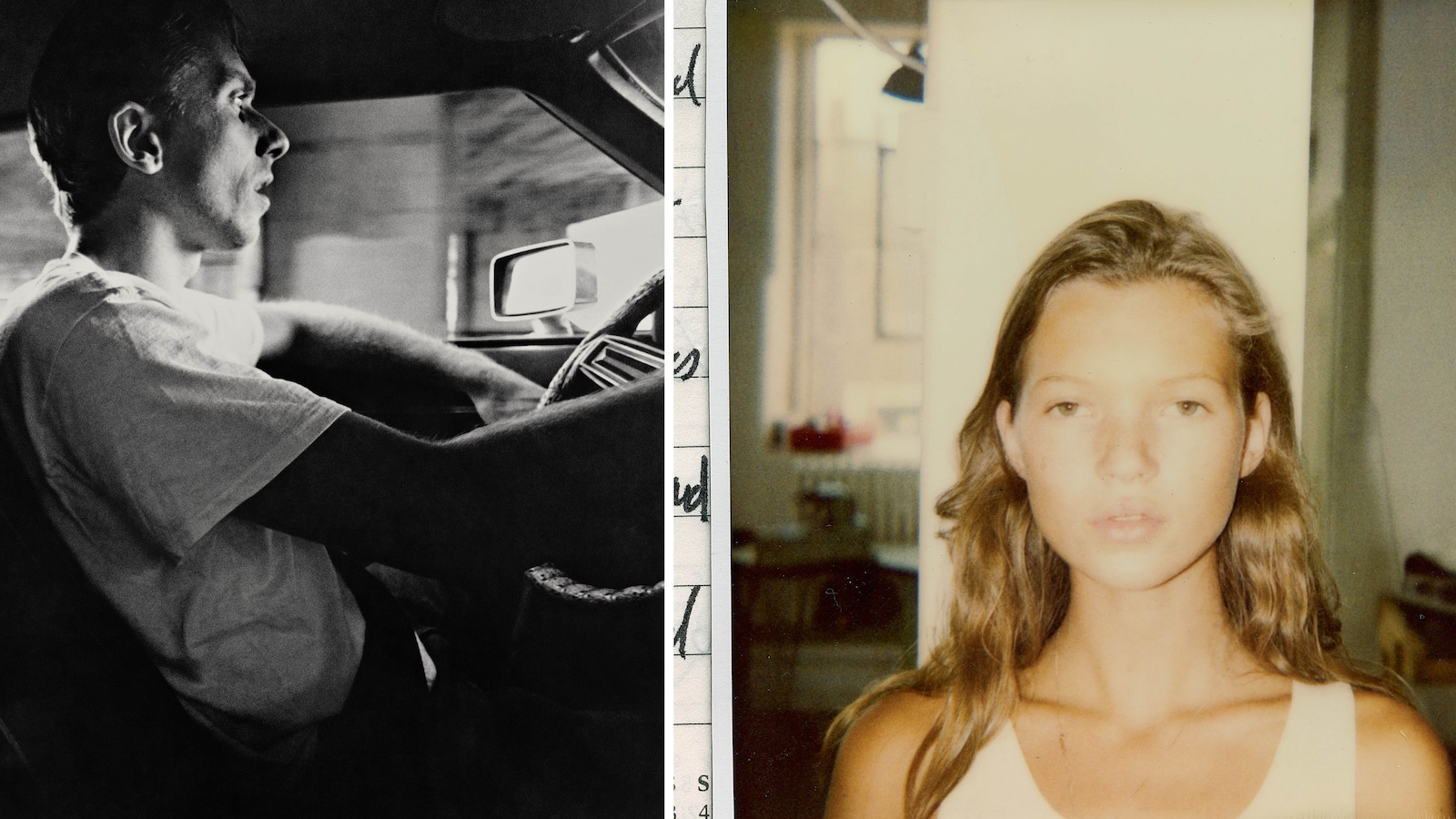
By 1990, Luchford was part of the burgeoning independent London fashion scene, with Dazed, i-D and The Face at its core, the latter giving Luchford his first commission to photograph The Stone Roses. One of the earliest images included in Atlas, a portrait of lead singer Ian Brown, shot on a large format 10 x 8 camera, is an example of Luchford’s dedication to a highly technical approach to studio-based photography. This slickness stands out from the more snapshot-informed aesthetics of some of his contemporaries at the time, and would be the foundation for future advertising campaigns.
The first photograph displayed on the Atlas collage wall is instantly recognisable to many: a 1994 portrait of Kate Moss directing a punch towards the camera against a backdrop of midtown Manhattan. Influenced by the graphic, black and white, New York street photography of William Klein, the image has a palpable dynamism that, according to de’ Navasques, informed the display format. “The starting point for the show was to create movement with the images, having this collage of overlapping images – to put movement into the space.”
Beyond the shared timeline of artist and venue, it seemed inevitable that Luchford’s first solo exhibition would be staged in Italy, thanks to his relationship with the powerhouses of Italian fashion. “I think Glen had two moments in which he created revolution in the industry,” de’ Navasques explains, “with Prada in the mid-90s and with Alessandro Michele at Gucci in 2015.” Images from both are highlights in the exhibition.

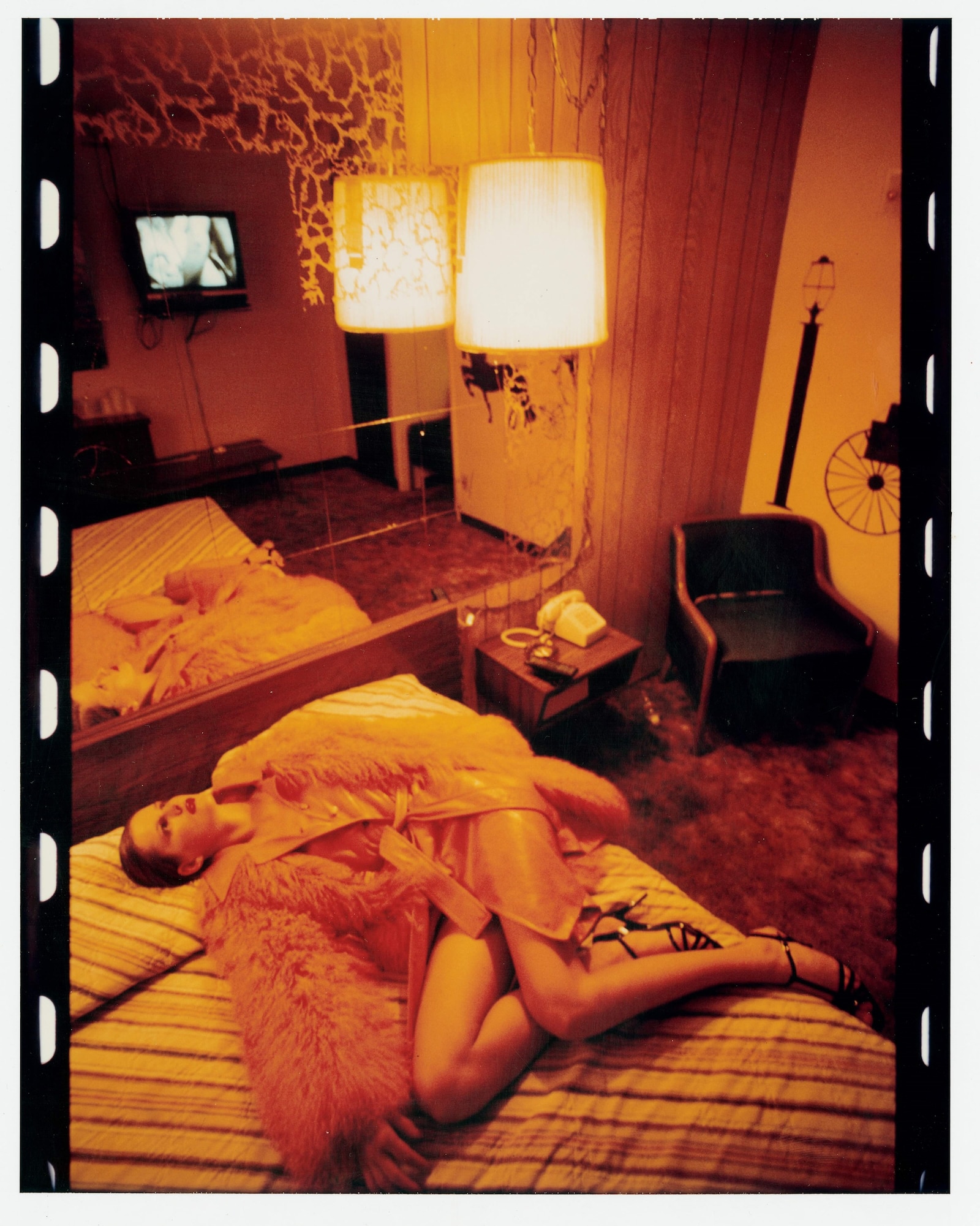
Over just two years (1996-1998), Luchford collaborated with Miuccia Prada on a series of campaigns that are now considered era defining. Seemingly stills from an unidentified film, the images featuring Amber Valletta, Willem Dafoe and Joaquin Phoenix offered an ambitious proposition for the possibilities of a fashion campaign. Acknowledging the influence of directors such as Stanley Kubrick and Andrei Tarkovsky, Luchford utilised cinematic strategies to create images rich with friction and drama, with fashion playing an equal role alongside lighting and set design.
These two periods from Luchford’s archive offer an opportunity to reflect on the dramatic shift in fashion image during these two decades. The Prada images were destined to exist as a relatively small edit of still photographs, mythologised in part by their ambiguity and scarcity. Fans would hunt for the images in vintage print media and archive Instagram accounts would circulate them to a new audience. They would even go on to transcend their original purpose, featuring in an exhibition, Fashioning Fiction in Photography since 1990 at the Museum of Modern Art, New York in 2004.
With the more recent Gucci work, however, Luchford understood that it was essential for fashion image to exist as both still and moving image across the multiple aspect ratios of our screen culture. The aesthetics and spectacle of B-movie science fiction and the golden age of Hollywood musicals offer plenty in the battle for our attention.

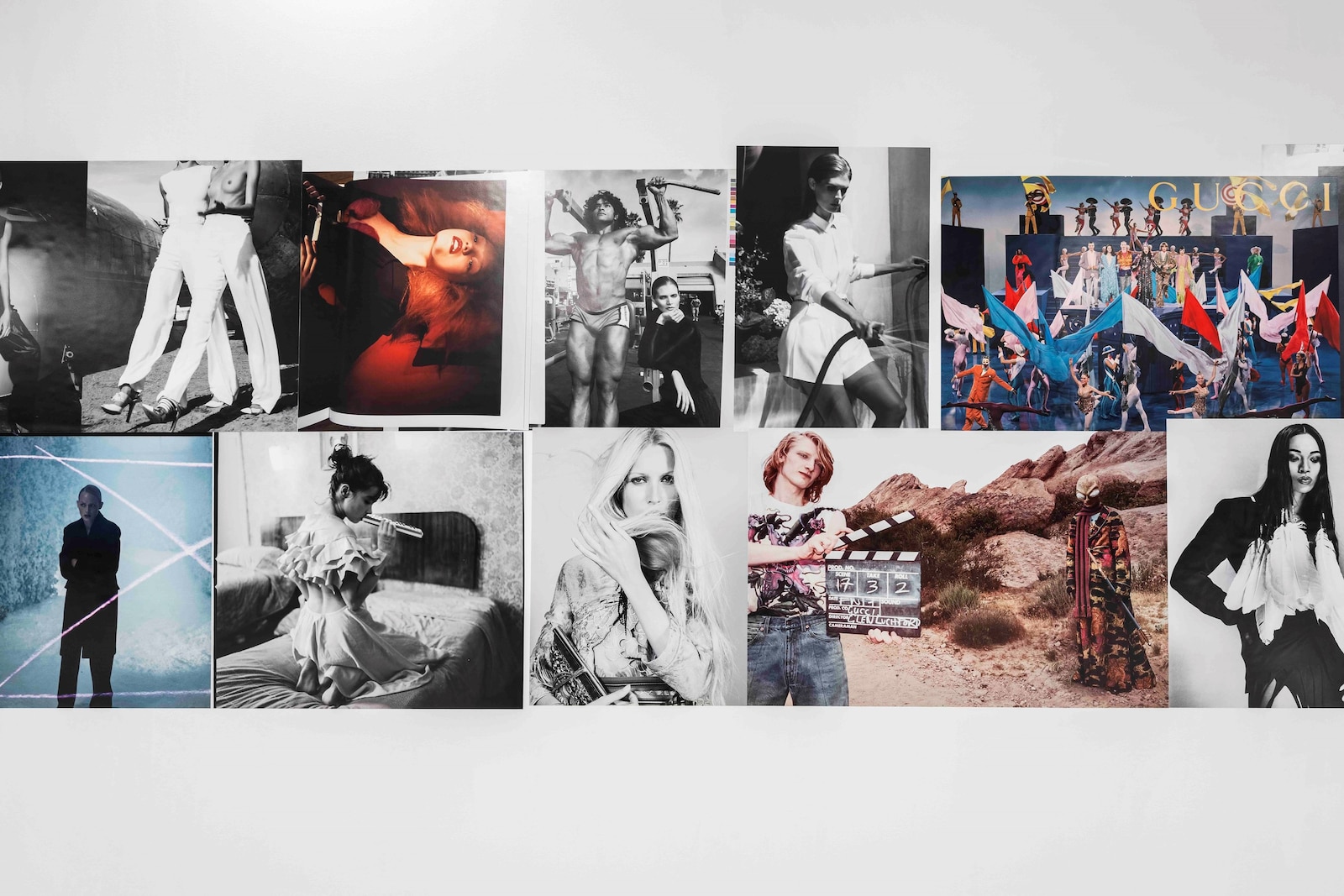
It is still rare for exhibitions to be explicitly dedicated to fashion image, even more so to the work of a single photographer. Yet, Atlas exemplifies how work and venue can unite to tell a story of our time. “The exhibition space at 10 Corso Como is very particular,” says de’ Navasques. “For Milanese people it is like an institution. It’s a place where we all go during the weekend, with kids, to see the exhibition. So, from my perspective, every exhibition must have a didactic purpose.”
Glen Luchford: Atlas is on show at 10 Corso Como in Milan until 23 November 2025.
