
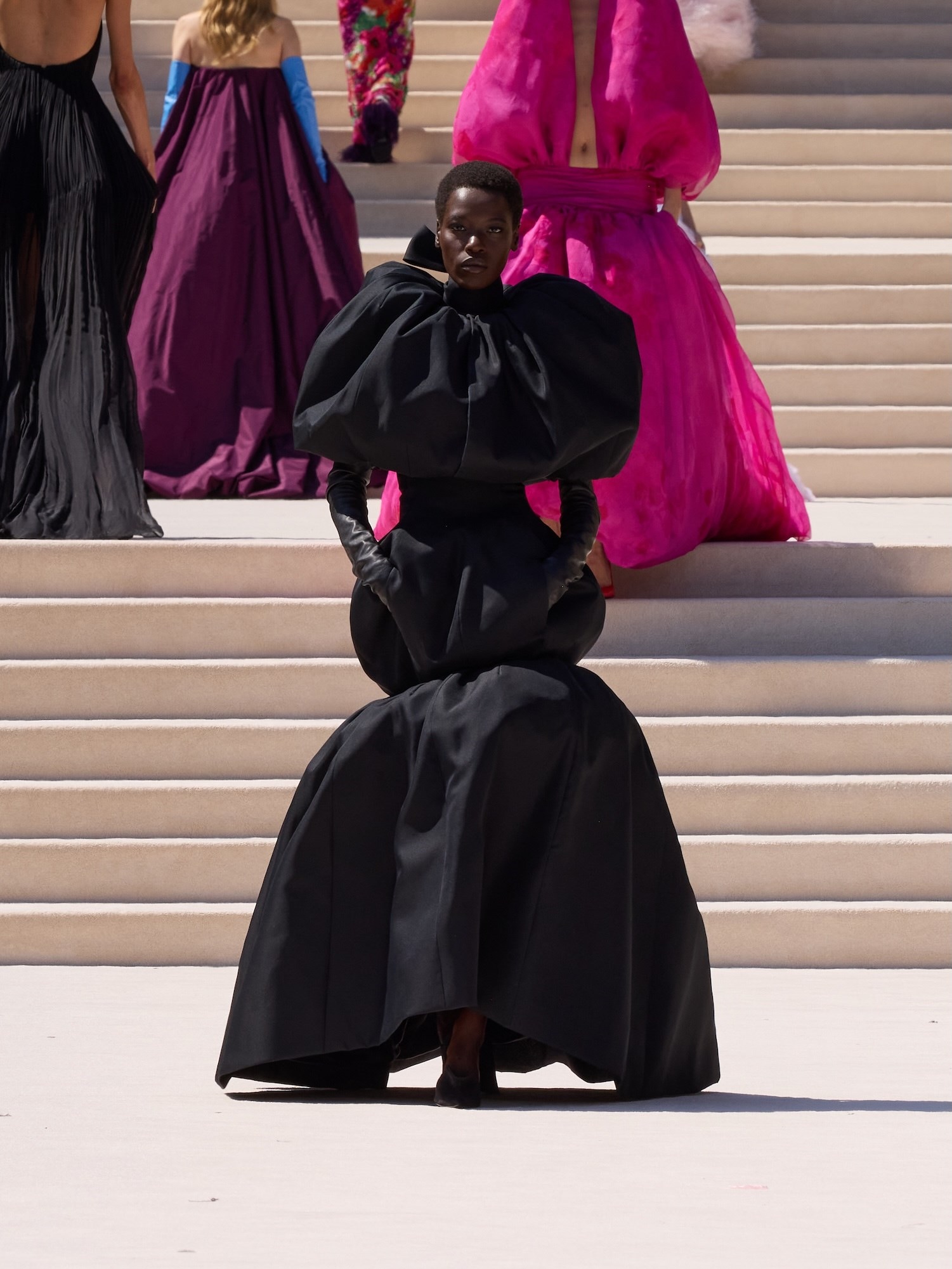
Visiting the inviolate white ateliers of Balenciaga, a few days before his first couture debut for the house, I used the word ‘homage’ with Pierpaolo Piccioli, and he made a face. He cares about words, their meaning and power – and he studied literature, so he knows his shit. Like it or not, I’m sure homage is one he’ll be hearing a lot around this Balenciaga collection, the house’s 55th. If you’re into numerology, that’s got plenty of meaning – around change, transformation, personal growth. Taking your rightful place, making a comeback. How about all of that to lay a groundwork? But Piccioli is right. It wasn’t an homage to the work of Cristóbal Balenciaga: it was more. It did him justice.
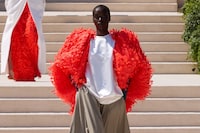
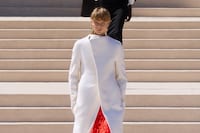
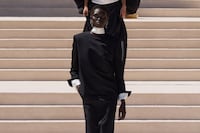
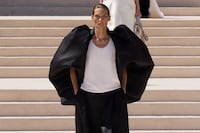
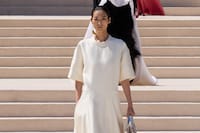
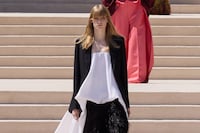
Piccioli did it on his own terms. Rather than the history-weighted salons on the Avenue George V, he opted to show his couture out in the open air – albeit under a baking sun that made it painfully evident we were in 2026, not 1968, when Cristóbal closed his doors and declared there was no one left to dress. Today, there are hardly legion women hankering after couture, but it does have its place in the world. For Piccioli, couture is a place to experiment and astound, toying with colour, shape and form to thrust something into the new. He has often talked about wanting to make a couture that reflects our current moment – which is a moment of hyper-scrutiny, demanding bold gestures, uncompromising statements. Something big and powerful enough to cut through the noise. Or, indeed blast away the walls and break couture out into the real world.
The house of Balenciaga returned to couture five years ago, but its approach was singular, and to a degree siloed. Demna, its former creative director, once told me that he could spend half-a-day debating a particular zipper with his couture team, while in the same time period he would’ve signed-off 30 handbag designs. In an essence, that highlights the anachronistic nature of couture generally, but certainly how it was a one-a-year anomaly at the multi-media, multi-hyphenate cultural powerhouse that Balenciaga has become. Precious and treasured, but at a remove. Piccioli’s approach is something entirely different. “A couture for now,” is what he said he wanted to create – as well a couture that could infect and inflect every aspect of the fashion house. “This is a couture house,” he said to me. “It’s not that haute couture is one thing, and ready-to-wear is completely separate and sneakers are separate. If you think with a couture culture in mind, everything is infused by the same idea.”


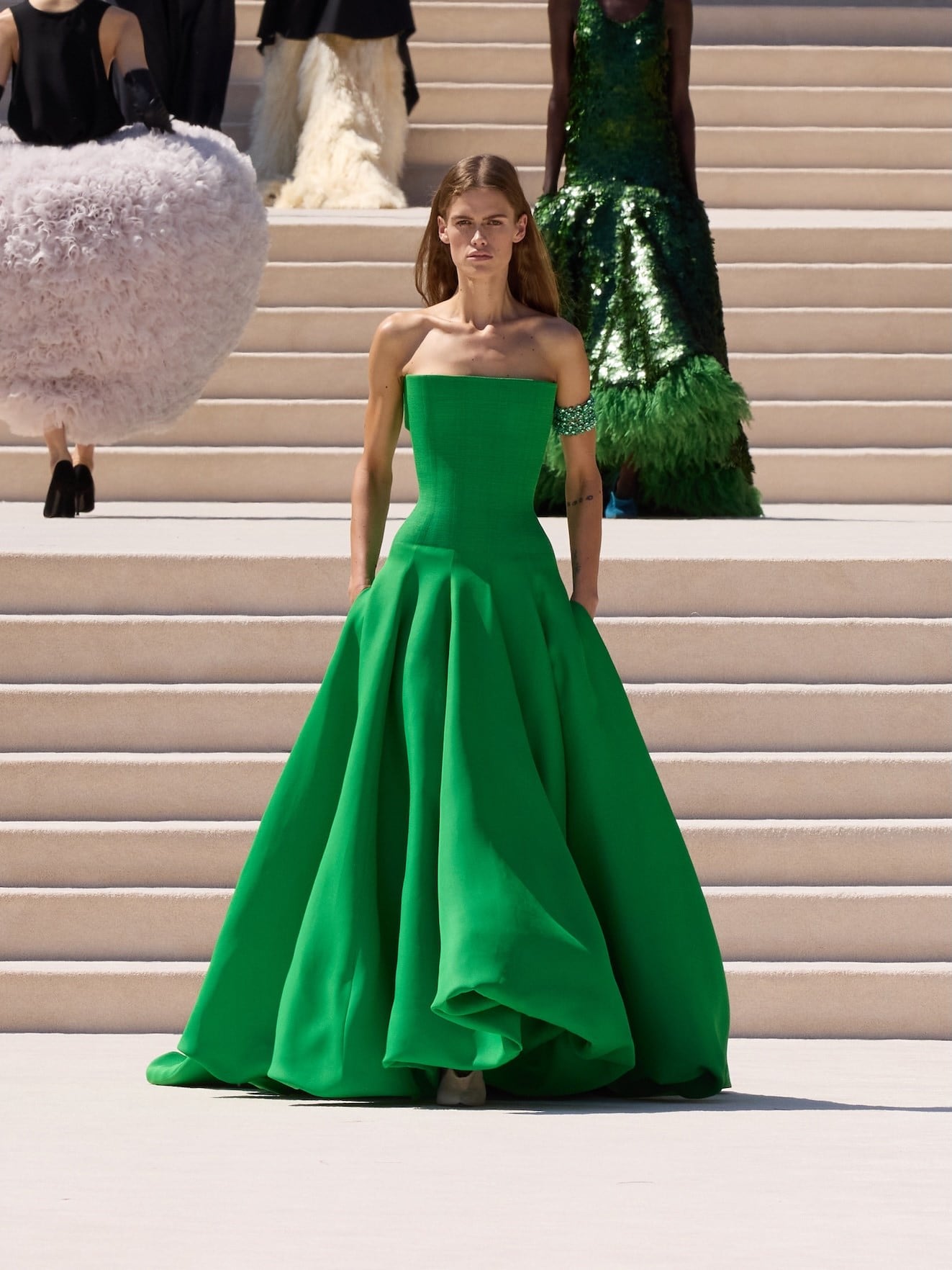
Piccioli has presented four collections and staged two shows since he began at Balenciaga. He’s brought couture fabrics into ready-to-wear, shifted proportions to subtly wink at Balenciaga silhouettes past: the latest pre-collection had great starchy cotton shirts with a slight cocoon and a bumflap train death-dropping to the ankle, like that Balenciaga wedding dress from 1967 that no one needs reminding of. Yet it was here that you got a real sense of his house reset, that re-centring around a spirit and ideology of couture, not just a bit of embroidery and some expensive fabric. Never forget that Piccioli was raised up, fashion-wise, in a palazzo in Rome embedded in a culture of couture at Valentino. For him, it’s a natural habitat, not something sacred and preserved in aspic.
But back to the H-word. Piccolo’s aversion to it is, perhaps, because that would be the easy way out. A reverential re-issuing of shapes and approaches that, in their lightness and abstract architectural structure, can still feel modern. Women still buy and wear Balenciaga haute couture today, because it’s calibrated for life. What Piccioli wanted to do was propose his own version, shaped by the same ideas and ideals. So his clothes were weightless, grand gestures worked alongside ease – trains spilling out from the back of glorified tracksuit trousers, vest tops in silk duchesse satin tucked in, bomber-y jackets in spongy silk gazar inflated like gourds around the shoulders. Those were familiar – not just here, but from Piccioli. He’s a Balenciaga-head – he’s kind of made for this job – and even as we flitted through clothes beforehand, he said he didn’t realise quite how much he had taken from Cristóbal over the years, how blurred the line was between him, and him.

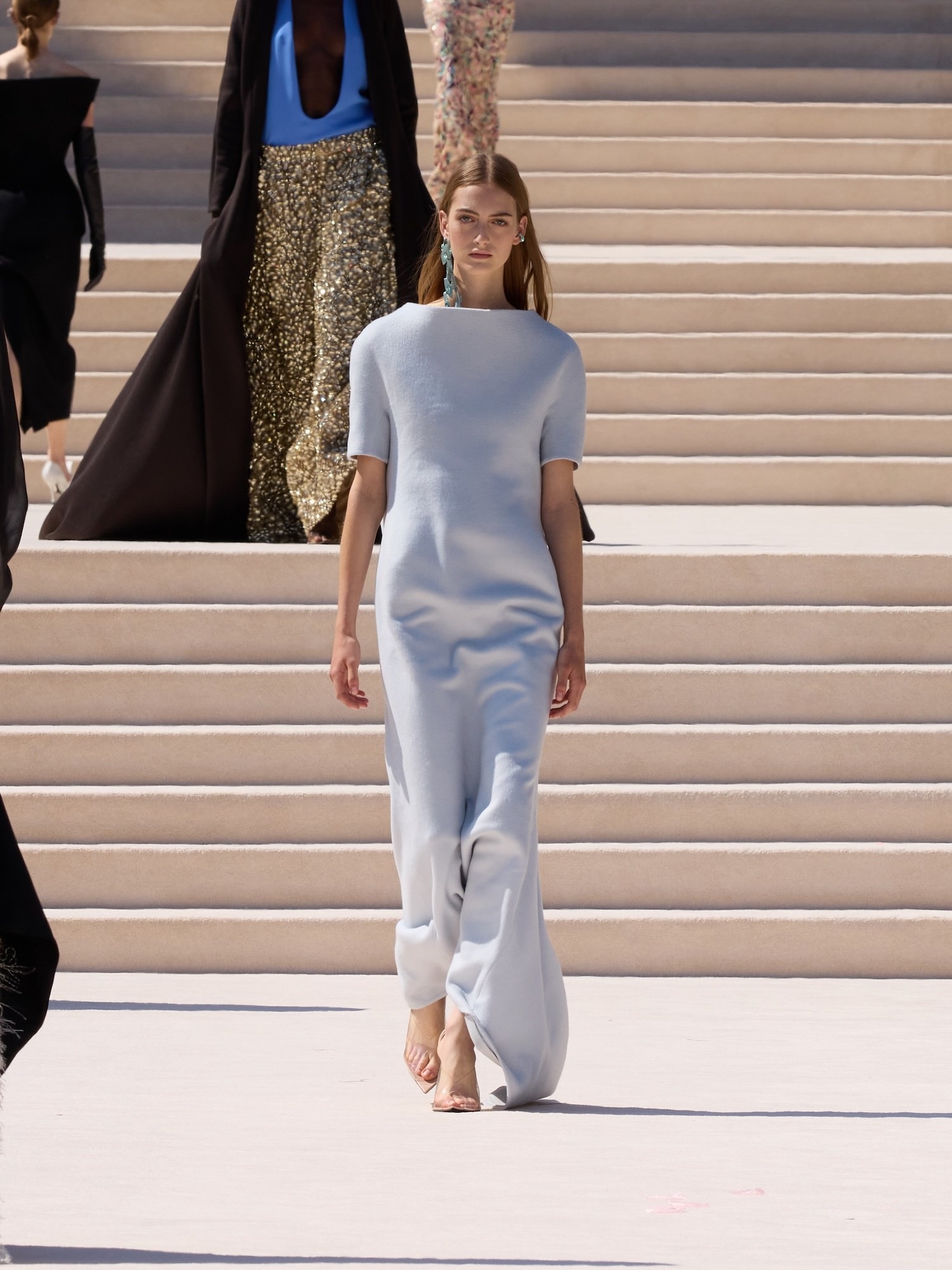

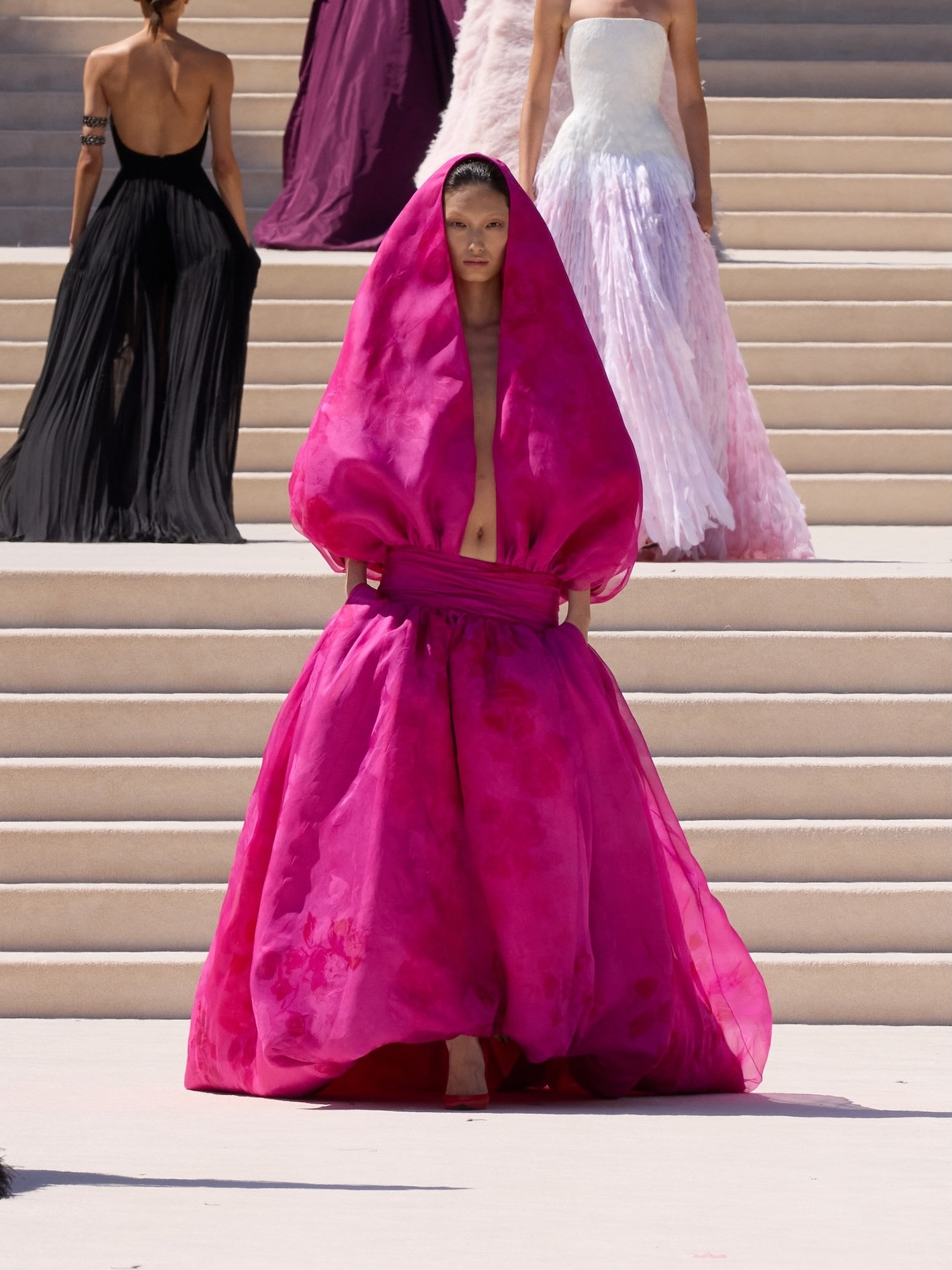
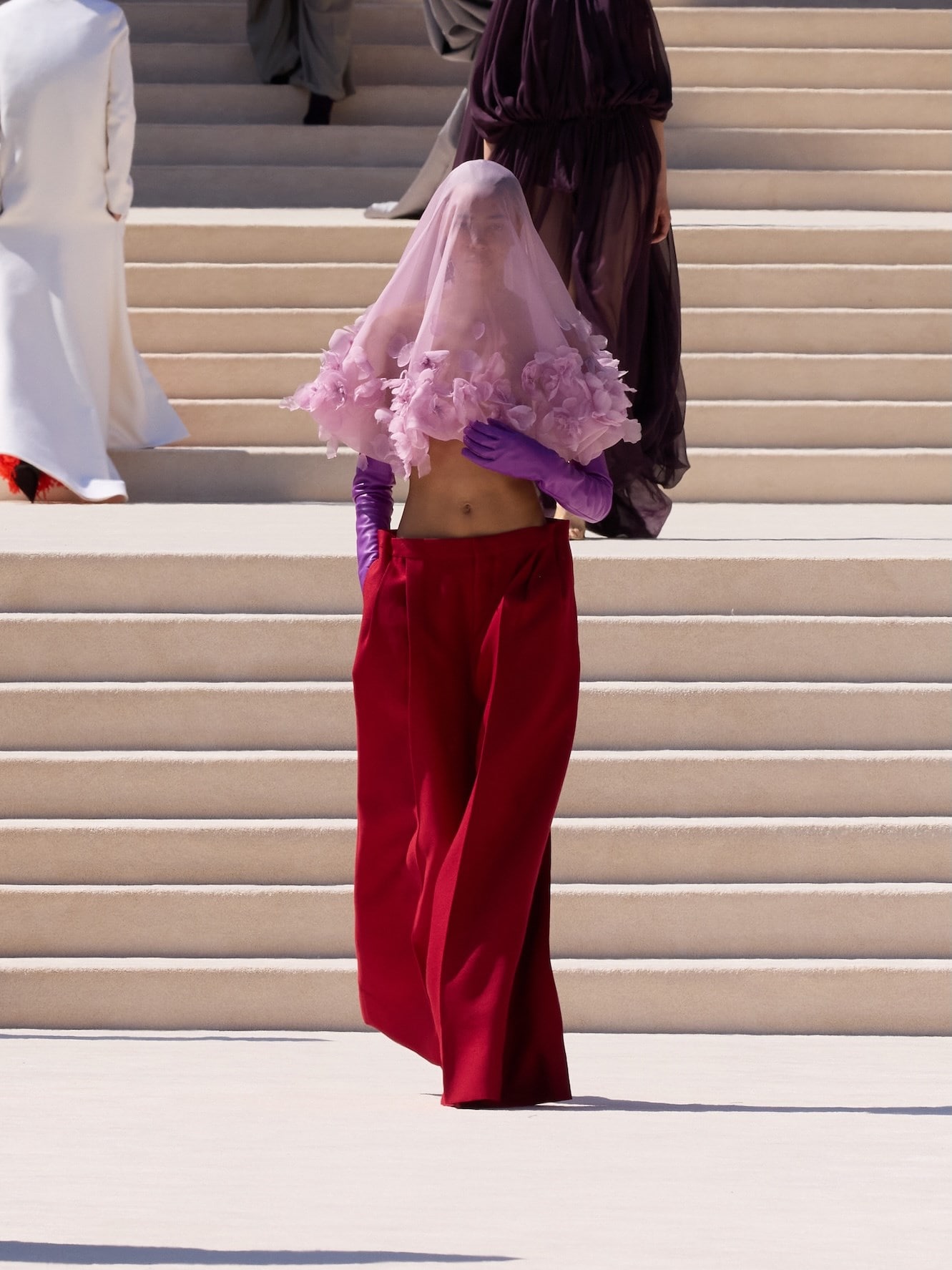
Here, under the beating near-midday sun, their colour was glorious – and that was pure Piccioli. Actually, Balenciaga did plenty of colour – but, of course, we see it all in black and white. That said, he never comboed a fluorescent yellow cashmere coat with glycerine-coated feather trousers in Gonzo lilac, or a Pepto Bismol-pink chiffon veil worn over cranberry slacks and purple opera gloves that made the model look as if she’d dipped her arms in Ribena up to the pits. Piccioli nodded to the house’s (non) colour palette with a sequence of dresses that functioned as ‘shadows’ of predecessors, executed in dead-black. They reset your colour-saturated eyes, and focused you on the form.
It would be reductive to view this as a great glut of a couture show, of evening gowns in the grandest tradition. Yet Cristóbal was not only a modernist, but a futurist – his semi-fitted suit, unfitted suit and bluntly named ‘sack’ dress of the 1950s predicted the silhouette of the 1960s, with its markedly eased forms around the body. Actually, it’s the entire style of the last 60 years: relax fit. Fashion designers can’t shift silhouettes like that any more, especially in couture. But what Piccioli did was to propose new ways of making and working – dresses were based on three-dimensional scans of bodies, in cashmere mounted on moulded leather to create sculptural cocooning forms that resembled Constantin Bracusi sculptures brought to life. In the atelier, they were exceptionally light, starkly modern. The closing wedding dress, a monastic sweep of silk, was made of biologically engineered silk, its structure determined by DNA sequencing by a lab in Munich. Now that’s modern – material, and medium.
But you know what also feels modern? Some of the old stuff. The way these women moved so easily in these clothes, many seeming to float around the body, a weightless stream of silk chiffon taking flight, gazar bubbling, apparently airborne. Skirts, to borrow the words of Pauline de Rothschild, ran a little ahead of one’s walk, hiked up a couple of inches and puddling in back. She was writing about a typical Cristóbal gesture that looks chic but is actually a go-faster measure, to make sure your skirt doesn’t get caught around your legs. Piccioli adopted it – because if it ain’t broke, don’t fix it.
The overriding, overarching, overpowering message at this triumphant show was the undeniable affinities found between Piccioli and Balenciaga – and the powerful relevance emanating from them. How to make couture modern, couture for now? Piccioli asked that question, then proposed a simple answer. How about just making something beautiful? There’s no expiration date on that.
