
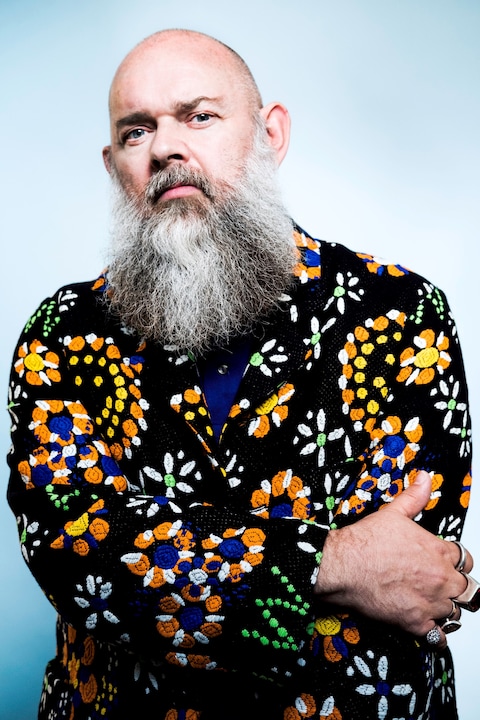
As he marks 40 years of his label, Walter Van Beirendonck shares five lessons on independence, limitation and dreaming the world awake
What does 40 years look like when nothing about the beginning suggested it would last that long? In 1986, Walter Van Beirendonck along with five Belgian friends headed off in a shared van to London where they would present together at the British Designer Show. This journey has been mythologised as the beginning of the Antwerp Six, but it also marked the inception of Van Beirendonck’s eponymous label – of which he celebrated the 40th anniversary this year. Van Beirendonck is the last of the Six still dreaming, provoking and playing.
If there was no plan behind their presentation in London and never any intention of a formalised group, there was a collective nerve that came from going together, a naiveté and openness Van Beirendonck still encourages among younger creatives. “It was rather handy, because we could share the knowledge we each had, and it was really a trial-and-error period,” he laughs. “We just started to make clothes.”
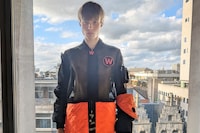
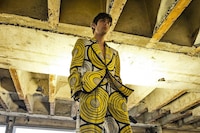
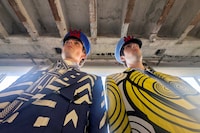
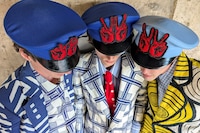
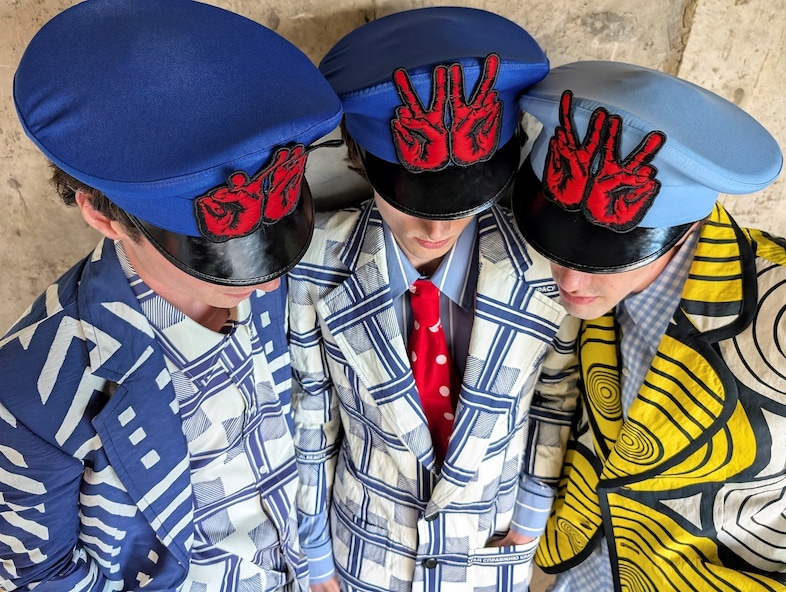
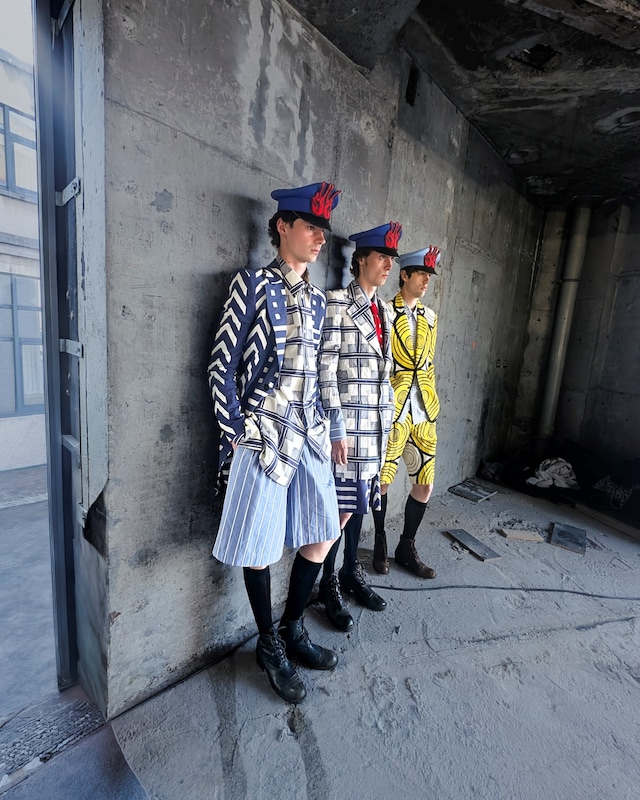
Four decades later, Van Beirendonck’s ever-curious instinct has been encapsulated in a title: “Dreaming the World Awake” – the name of his 40th anniversary collection, presented in June as part of Antwerp’s Fashion Festival. “It covers my way of working, my career, my collections,” he explains, “because besides the dream, I always want to add some reality – to refer to the world we’re living in.” Among his technicolour, graphic garments, the designer has never shied from the world’s darker side – using his brand as a soapbox for safe sex, anti-war and anti-terror stances, and LGBTQ+ rights, sometimes amplified via his robotic alter ego, Pukpuk.
Before a talk with Sara Sozzani Maino at Dover Street Market Paris during Men’s Fashion Week, the designer sat down with AnOther to share five lessons from a colourful career. As the former head of the Royal Academy of Fine Arts Antwerp’s fashion department and now a mentor at Polimoda, few are better equipped to guide the next generation.

1. A public voice comes with an obligation to say something
“I think that every person who has a public voice or can communicate with an audience should do that – or at least try to do it. Tell what the problems are, what the solutions can be. Or how we can improve the world and generate some kind of hope towards an audience.
“Of course, I’m fearful from time to time. And even in such a career, 40 years, there are so many things that have happened – there are real highs and also a lot of lows. My career has felt like a rollercoaster.”
2. Independence is the whole point
“For a while I was working with backers, with companies backing me up, and not independent. When I stopped that, I really said to myself: I never want to be not independent anymore. It’s a very strong feeling of freedom to be independent as a designer. If you want to carry a brand with your name, if you want to really do it as you want, you need this kind of freedom and independence.
“Embracing new technology, or bringing in consultancy work, all of that has a lot to do with budget. The moment you go back to being completely independent, you lose the possibility to go that far. So you have to find a good balance between both worlds – the creative world, and the real one. You can dream, but you also have to be awake.”

3. Find your signature, then give it time
“You have to stand out in a certain way, and then really develop your own signature, and believe in it, and bring it forward, on and on – despite the fact that sometimes it’s really not working out, or it takes much more time than you expect. Time comes together with money, investment. You have to keep on going and keep on believing. In my case it took almost ten years from graduating to having a label that was starting to work.
“It’s not something you can completely predict or organise. It’s so dependent on the people that you meet, the situations you get into, the things that you make – and then eventually you have success, or no success. It’s a tough ride, going up and down, but you have to keep on believing.”
4. Feed the work from the outside
“I did it all the time, from the beginning. I did commercial work, which I always had to do, and then next to that a lot of projects in totally different directions – scenography for exhibitions, working with pop stars, costumes, opera, ballet. So many different things, because each time you start up something new, you discover, and you work with people you didn’t know before, and it’s always nice to do that.
“If you always concentrate 100 per cent on fashion, on the collection, you also narrow down. I like to look in totally different directions.”

5. Let the limitation push you
“Sometimes I made collections without any possibilities, without money – buying stock of old fabrics from the 1960s and 70s, even making a collection completely from scratch. That collection is now in fashion museums all over the world. So sometimes it’s not about having unlimited possibilities. Sometimes you have to find solutions to do something anyway.
“I almost never skipped a collection. I always made one, one way or another, and sometimes it wasn’t as big as I wanted it to be, but at least there was something I could propose to the buyers. That limitation can really push your creativity forward.”
