
The opening outfit of the Victoria and Albert museum’s ongoing Schiaparelli retrospective is the Skeleton dress, a 1938 collaboration between the house’s founder, Elsa Schiaparelli and the artist Salvador Dalí. They both liked spooky-ooky stuff, unsettling people through luxurious fashion that somehow had an element of the distasteful or grotesque to it. That gruesome twosome whipped each other up. Another jointly conceived dress from the same collection makes it look like a woman is clad in a dress stitched of flayed flesh in corpse grey and lilac bruise; a year earlier, they'd plastered a phallic lobster across the crotch of a Schiap gown that Dalí wanted to splatter with mayonnaise (symbolic much?). But without that cummy condiment, that dress is just a sweet cream puff of organdy with a crustacean chaser. The aforementioned Tears dress, a slender column of printed marocain, just looks chic now. Schiaparelli has even made a few reissues. Only the Skeleton dress, trapunto bones seeming to protrude through its skin of black silk crêpe, still retains Schiaparelli’s trademark power to shock.
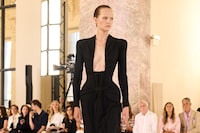
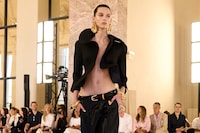
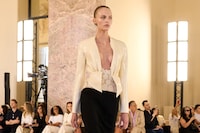
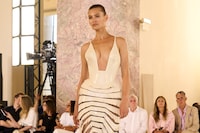
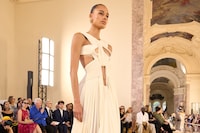
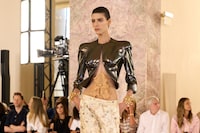
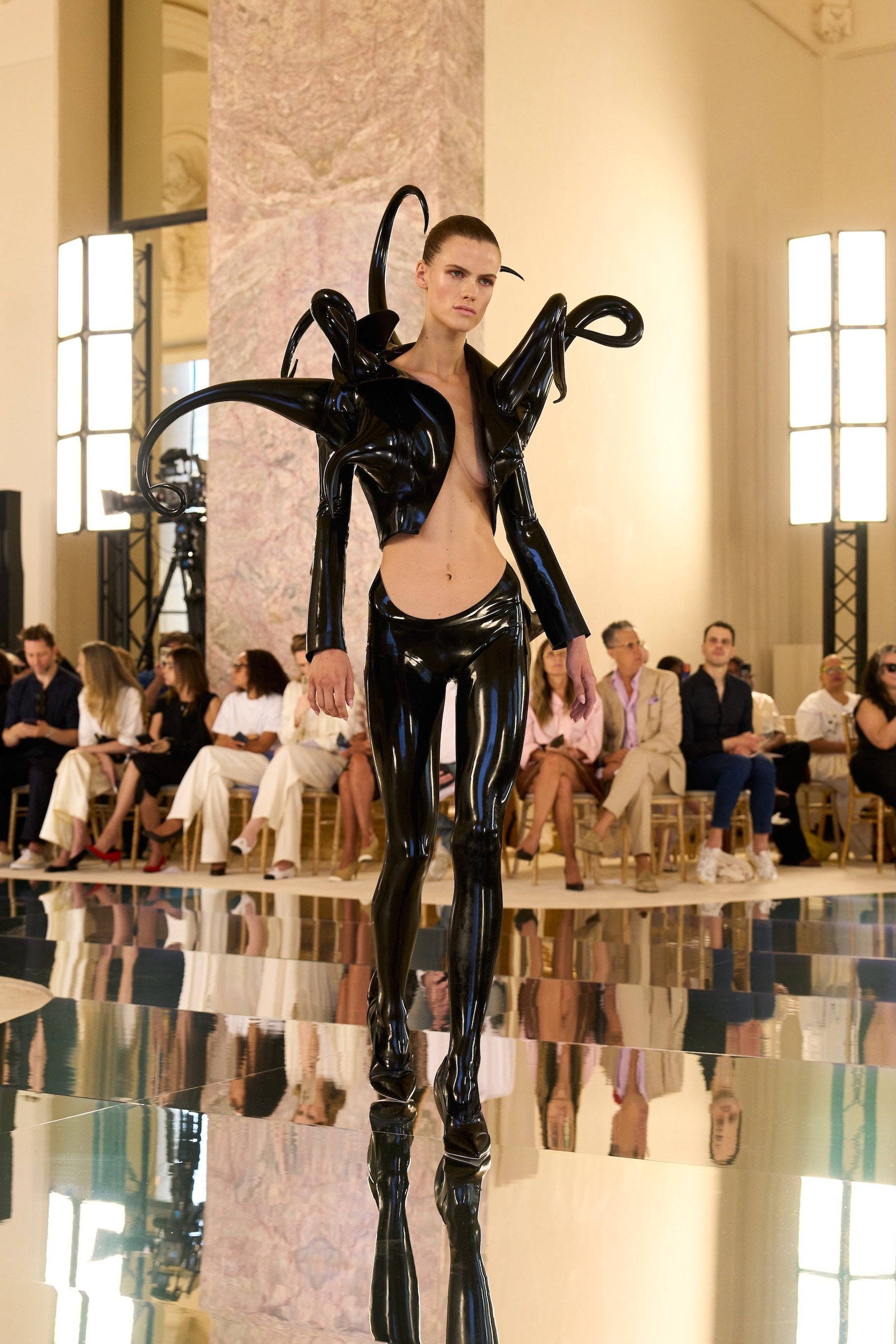
Daniel Roseberry didn’t talk about that dress when unpacking the process behind his Autumn/Winter 2026 Schiaparelli haute couture show. Rather, he mentioned Antoni Gaudí (a few dresses were crusted with embroideries which resembled his mosaics), creative flow and the idea of transforming “the ordinary into the extraordinary.” But there was a feel of the skeleton dress’s enduring ability to unsettle that hung over these outfits. That includes the corporeal – Roseberry didn’t mention bodies, but many of these clothes had a skin-like feel – flaps and labia, silicone flanges trembling like loose tissue on a tight little jacket, others slit open and curled away, as if bodies were being peeled open, dissected. Prosthetics added gyres of skin to models’ ears and navels, while dresses had sections carved out, like organs removed. Roseberry compared his palette of pink, blue and purple to sea creatures – true, that. But it also all looked like viscera. And again, there was a meatiness to some of these dresses, girl suits made of real girls, cutting through the cloyingly sweet, even the elegant, with the sinister and macabre.

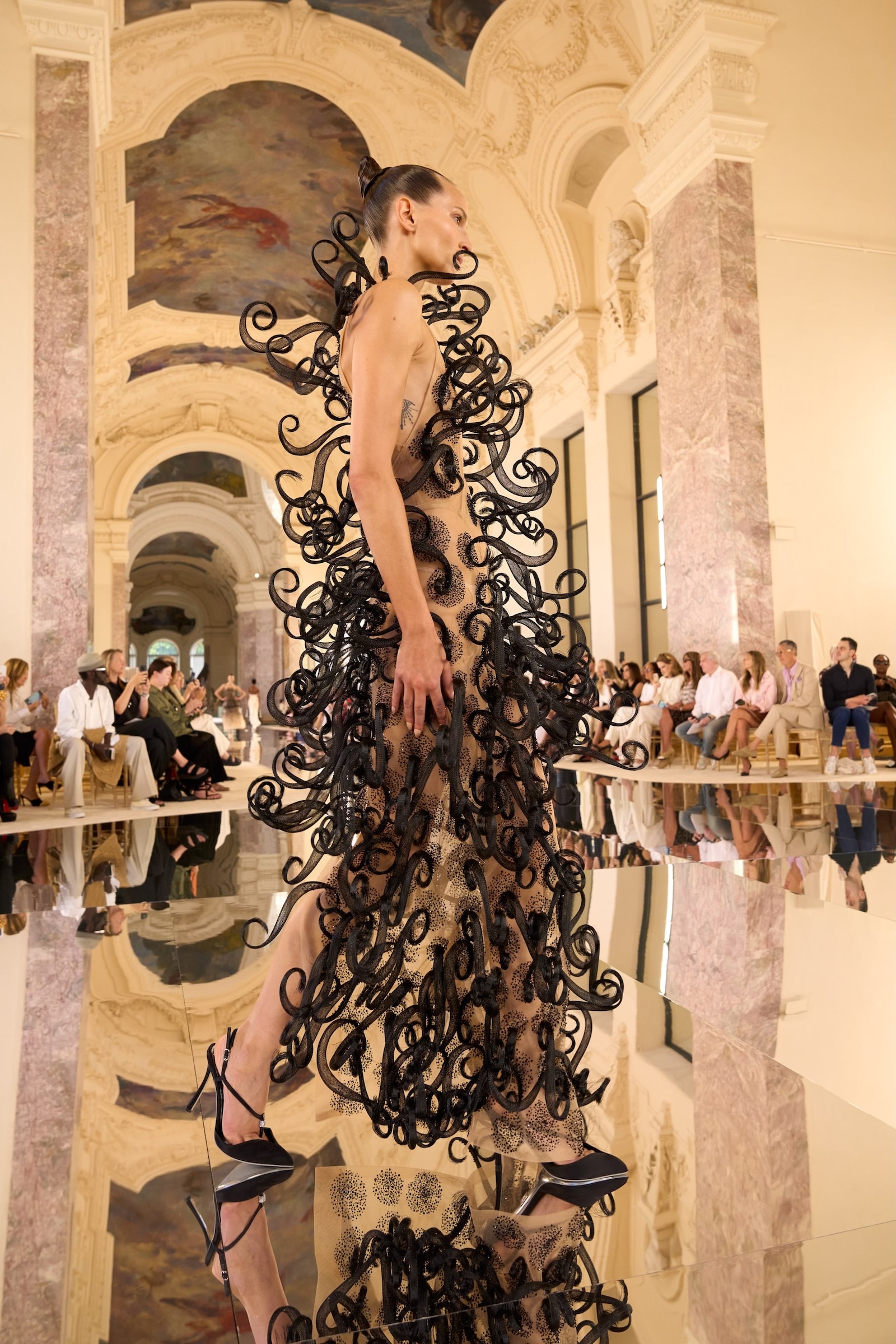

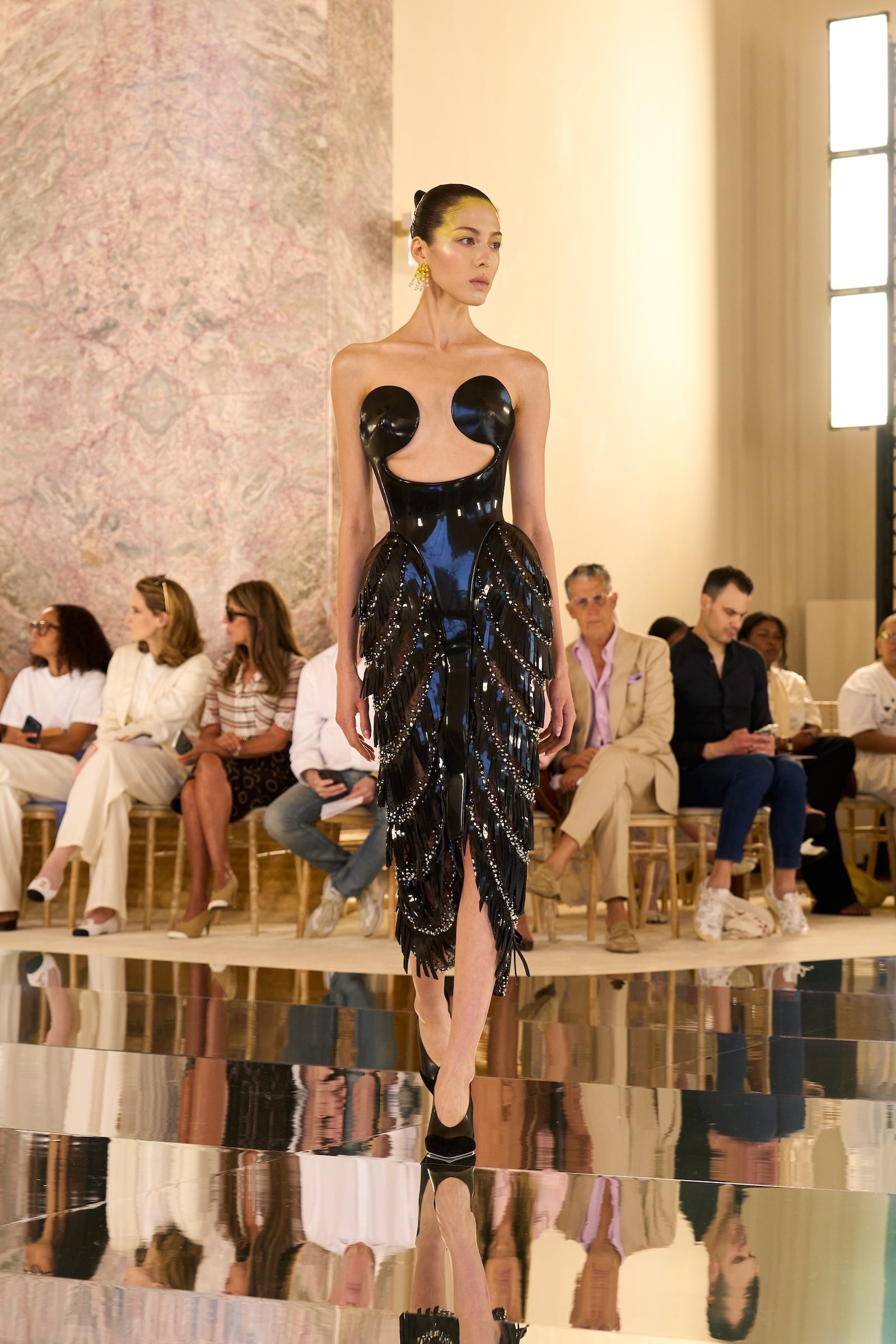
That’s pure Elsa Schiaparelli. You wonder if the contemporary couture clients (many of whom are very familiar with slicing flesh in the pursuit of beauty, of course) perceived all that menace, or if they just saw a fresh, sweet pastel palette, the dresses moulded around anatomical corsets as immortalisations of the female form, like endless reiterations of the frosted glass nude torso that bottled Schiaparelli’s 1937 perfume Shocking. So, was the essence absolue of that Schiap shock still there, or has it macerated, reeking of nothingness? In the bowels of the V&A exhibition, Roseberry told me he was interested in seeing how shocking Schiaparelli’s original creations could still be to a modern audience, injured as we all are to far more unlikely stuff than a shoe on the head. Maybe this was an attempt.

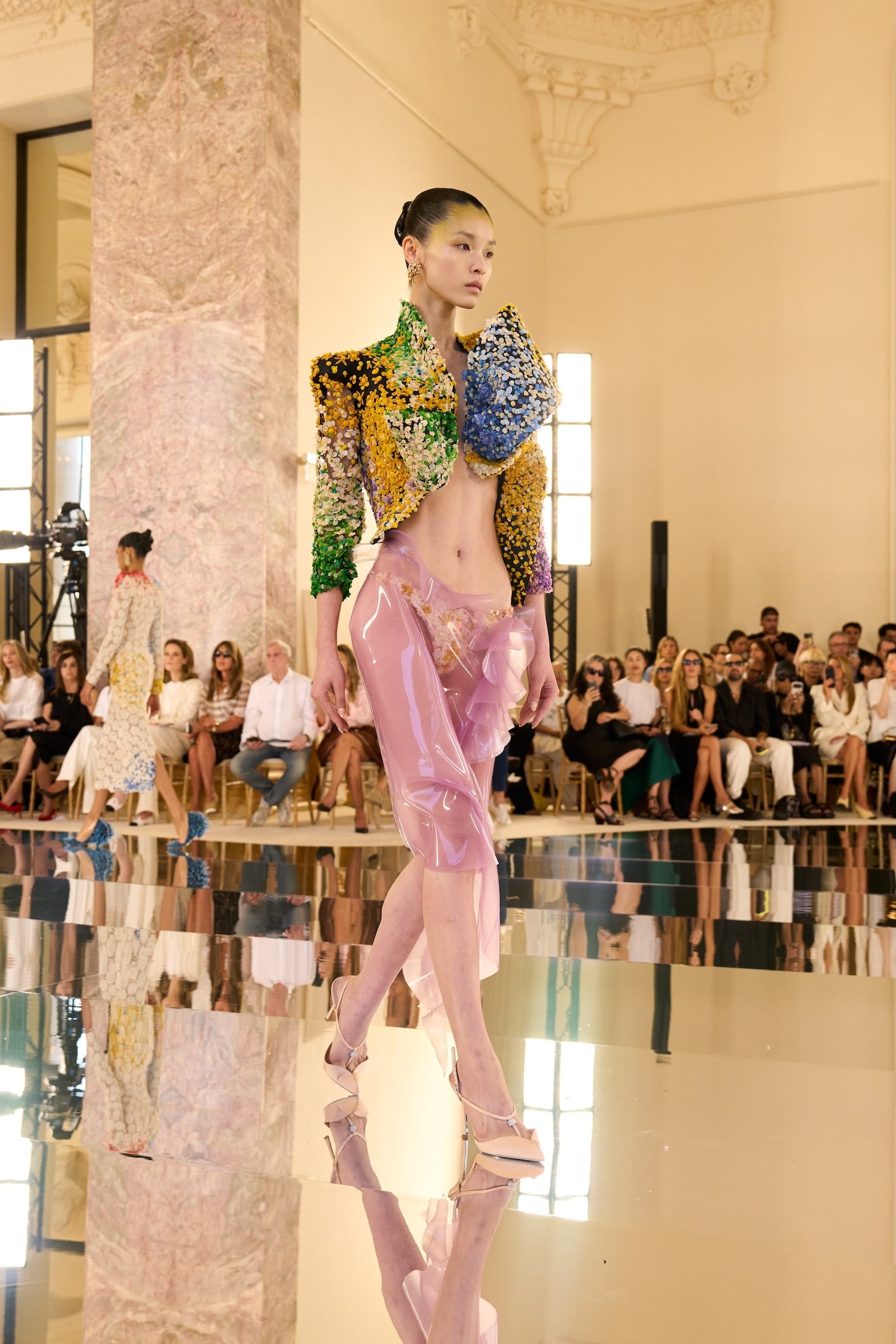

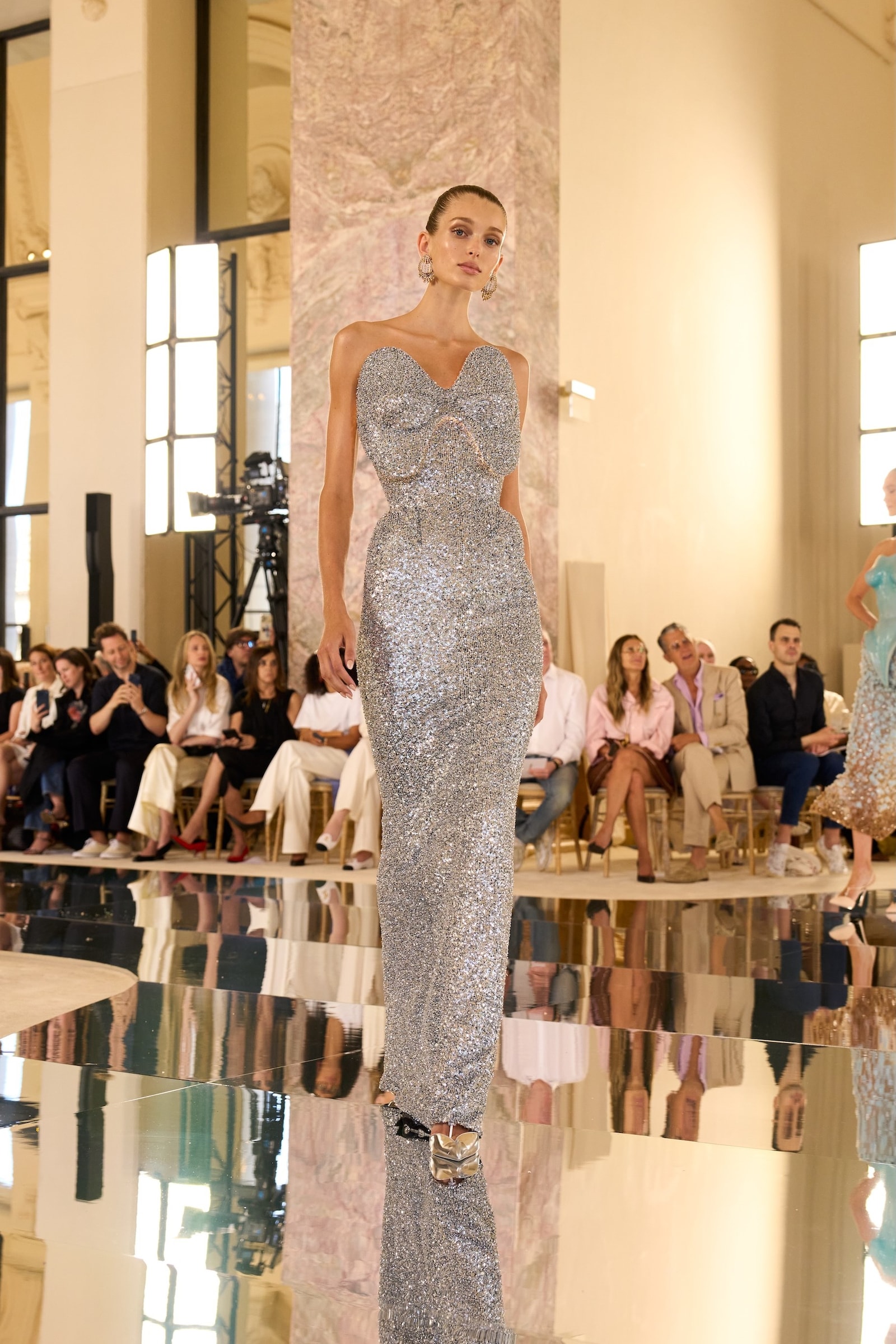
Then again, seeing skin and bone in these dresses is perhaps a very particular perspective. As I said, Roseberry cited ocean life as an influence – Schiap did her lobster, and last season, there was a dress prickled with blowfish spines, so it’s kind of a house signature. You could easily squint your eyes and see the sea, in looks that unfurled with sinister tentacles of latex or wriggly crinoline – although those were a bit Hokusai’s The Dream of the Fisherman’s Wife gone wild. More sedate was a big old Thermidor pink number covered in a Great Barrier Reef of faux coral, and a few finale dresses that lit up like anglerfish with snaking tendrils and sculptural moulded bodices. Earrings were shaped like sea anemones and sponges, shoes looked like you’d accidentally slid your feet into a couple of fat sea cucumbers. And all that silicone kind of looked soaked through, clinging and wobbling, jellified, around bodies.
That’s a way to navigate this terrain, to deep dive into this collection. But a statement from Roseberry leapt out at me. “Naming things, defining things, is comforting. But in doing so, you’re stripping something of its infinite power and magic – you’re making it less terrifying, but also less exhilarating.” Maybe the exhilaration in this collection was its slight terror, in what remained unknown and uncomfortable. That’s quintessentially Schiaparelli.
