
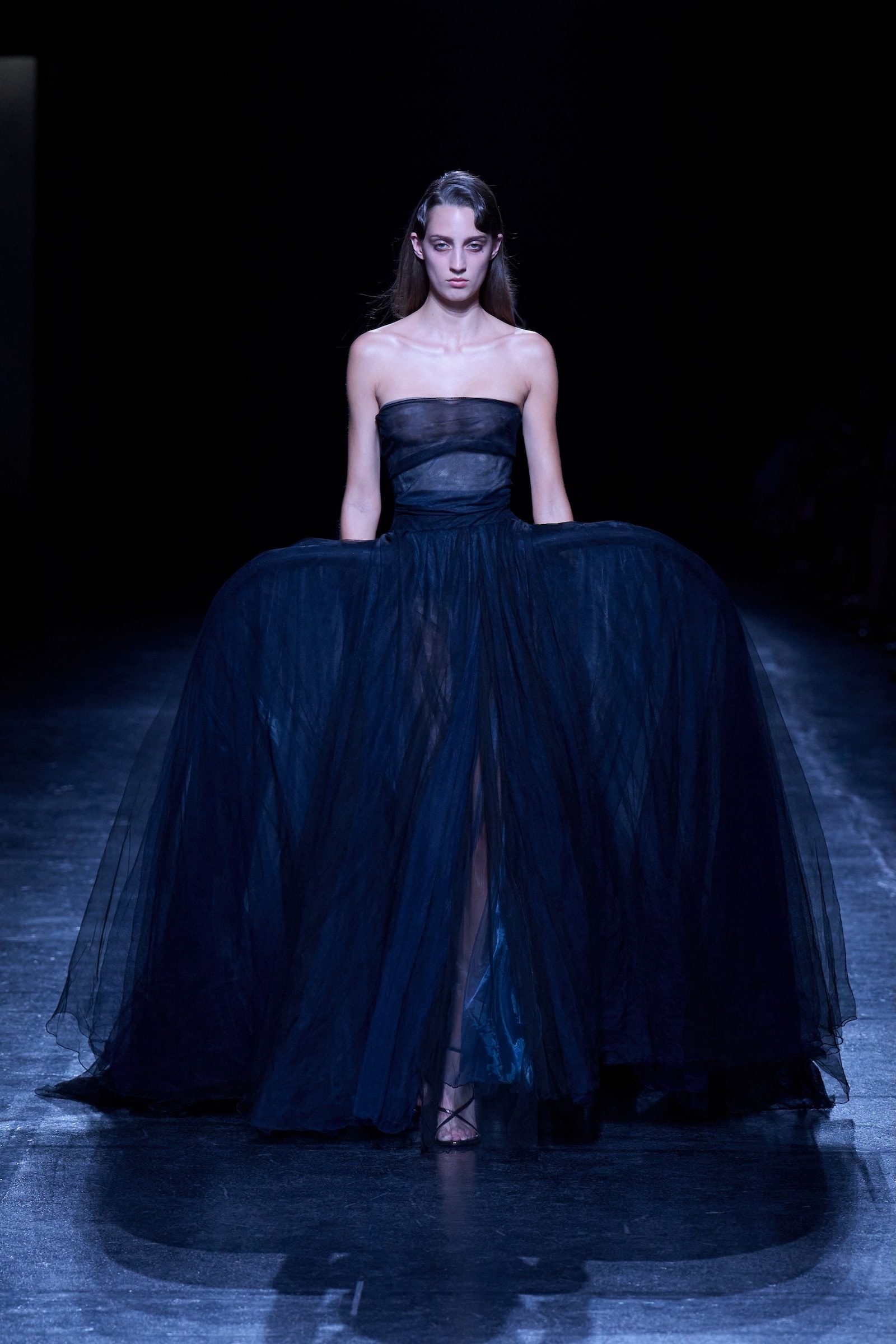
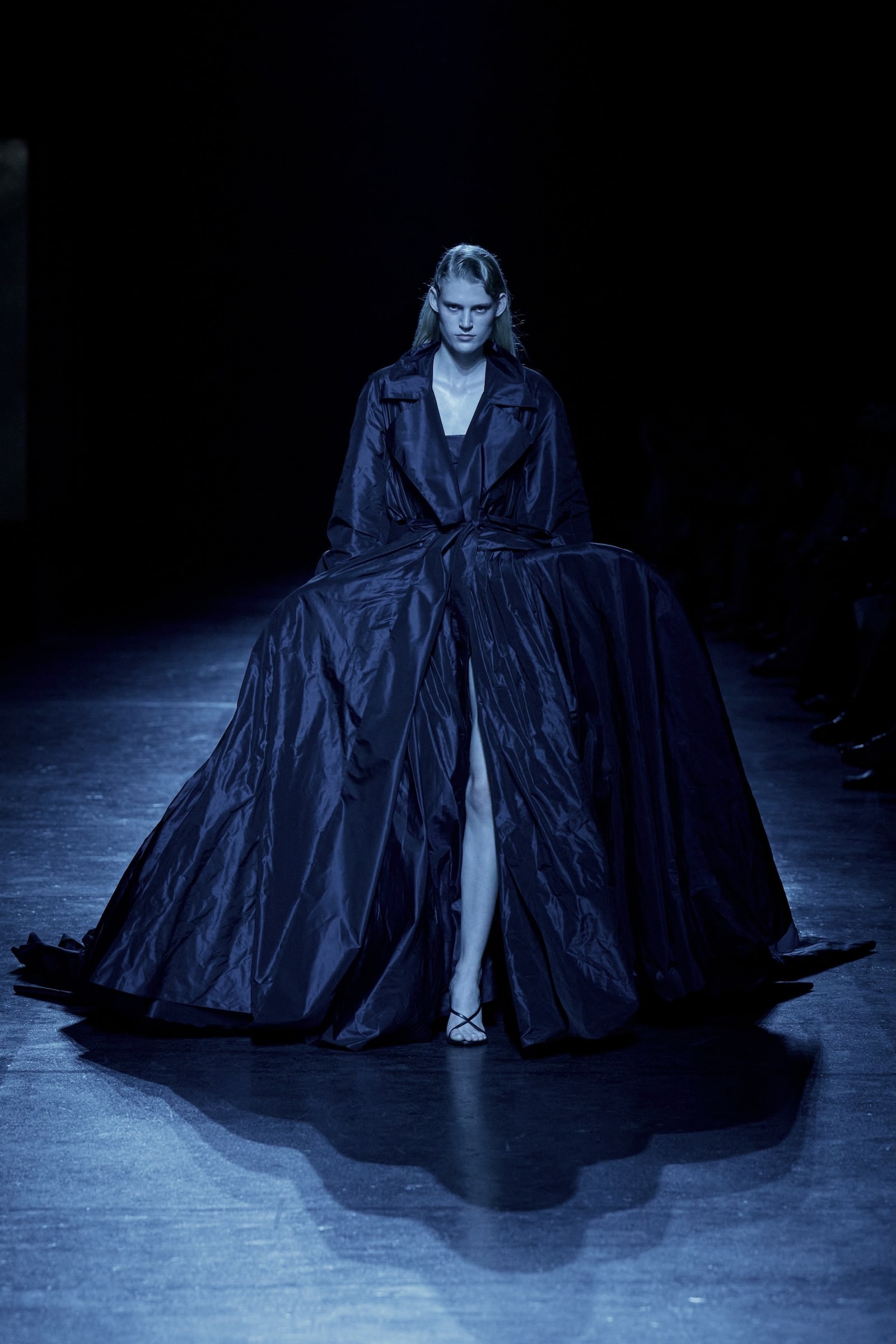
There’s something prescient about circa right now being the moment that Olivier Theyskens returns to the Paris catwalks. His Spring/Summer 2027 ready-to-wear show for the freshly founded Belgian label Boloria came just two days after the new album release by Madonna, the figure who catapulted Theyskens – then a 21-year-old fashion school dropout – to global fame when she wore a slashed open, hook and eye scarred ball gown of tarnished black silk and fumé tulle to the 70th Academy Awards in 1998. His show opened in the same vein, actually, with a flurry of full-blown, full-skirted romanticism, billowing Visconti Il Gattopardo I’ll-never-find-my-legs-again crinoline skirts – they were more like panniers actually, curving like wishbones over each hip, but who’s asking? Theyskens said he wanted them to have a dreamlike quality; they were even followed with a series of bleary eyed male models wrapped in white cloaks, like hyper-elegant bedsheets. Those dresses – in organza layers of purple and blue, some with shoaling silverfish embroideries flitting through – were worn with great taffeta coats, straight out of the 18th century, spilling over the top and trailing in her wake, as a series of museum cases filled with clouds of grey haze. They were kind of mind-blowing. Certainly, these clothes threw back to an earlier fashion era, of grand gestures and narrative meaning, something many have been nostalgically reminiscing about for some time.

Theyskens at his very best deals in the achingly gorgeous. A 20-year retrospective of his career, staged in 2018, was titled She Walks in Beauty, because she does – maybe in a petroleum-blue silk faille gown from the turn of the century (this one, not the last, although there’s a connection), a suit in dulled silk, veiled in spiderweb-fine lace embedded with rose petals from his tenure at the Paris house Rochas, or his winged Nina Ricci evening gown, misted with a fog of ostrich fronds. Under his own revived label, just after the pandemic, Theyskens made elegiac, attenuated dresses patchworked together from forgotten splinters of antique fabrics. They stand apart as, probably, some of the most beautiful dresses I’ve ever seen, in 30-odd years of fashion fandom. And yes, I’m a fan of Theyskens.


You thought back to those dresses as his debut Boloria show unfurled, like the smoke in those glass boxes. Not because of their shape or fabric, especially – although the materials were fine, and the silhouettes slender and elegant and vaporous, as Theyskens does so very well. Rather it was because of that notion of combining fragments of histories, melding together experience through cloth. That was something Theyskens wanted this show to have, he said – a hazy sense of period, a little 1940s, a little 1970s, a touch of the 19th century that he has always loved. Beforehand, he said he wanted to imagine Boloria could’ve existed for a century. If the time was fluid, the place was distinct – it was Belgian, like Theyskens, rooted in the colours of the landscapes and cityscapes (he said a particular shade of pale lettuce-y green reminded him of suburban Belgian kitchens).

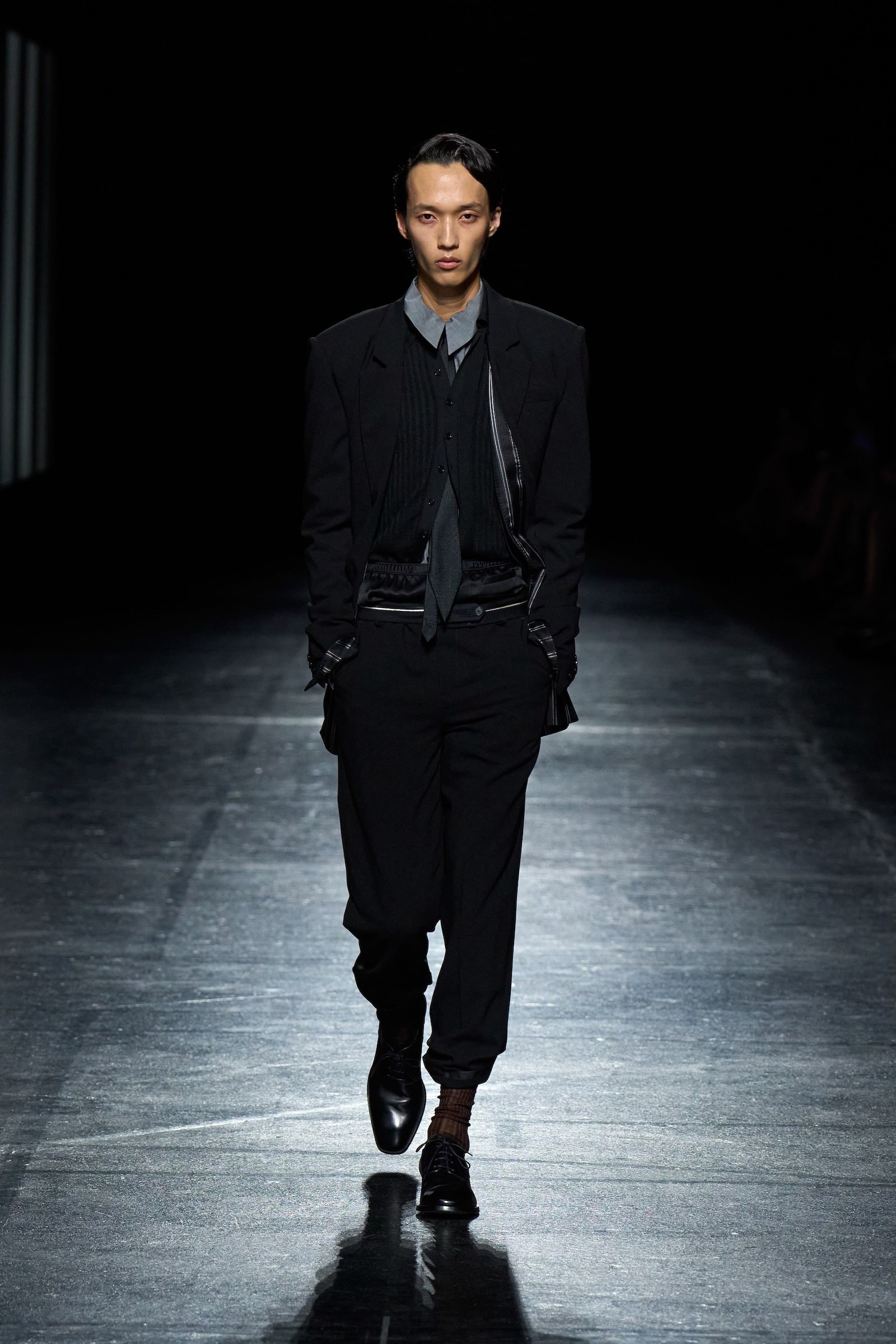

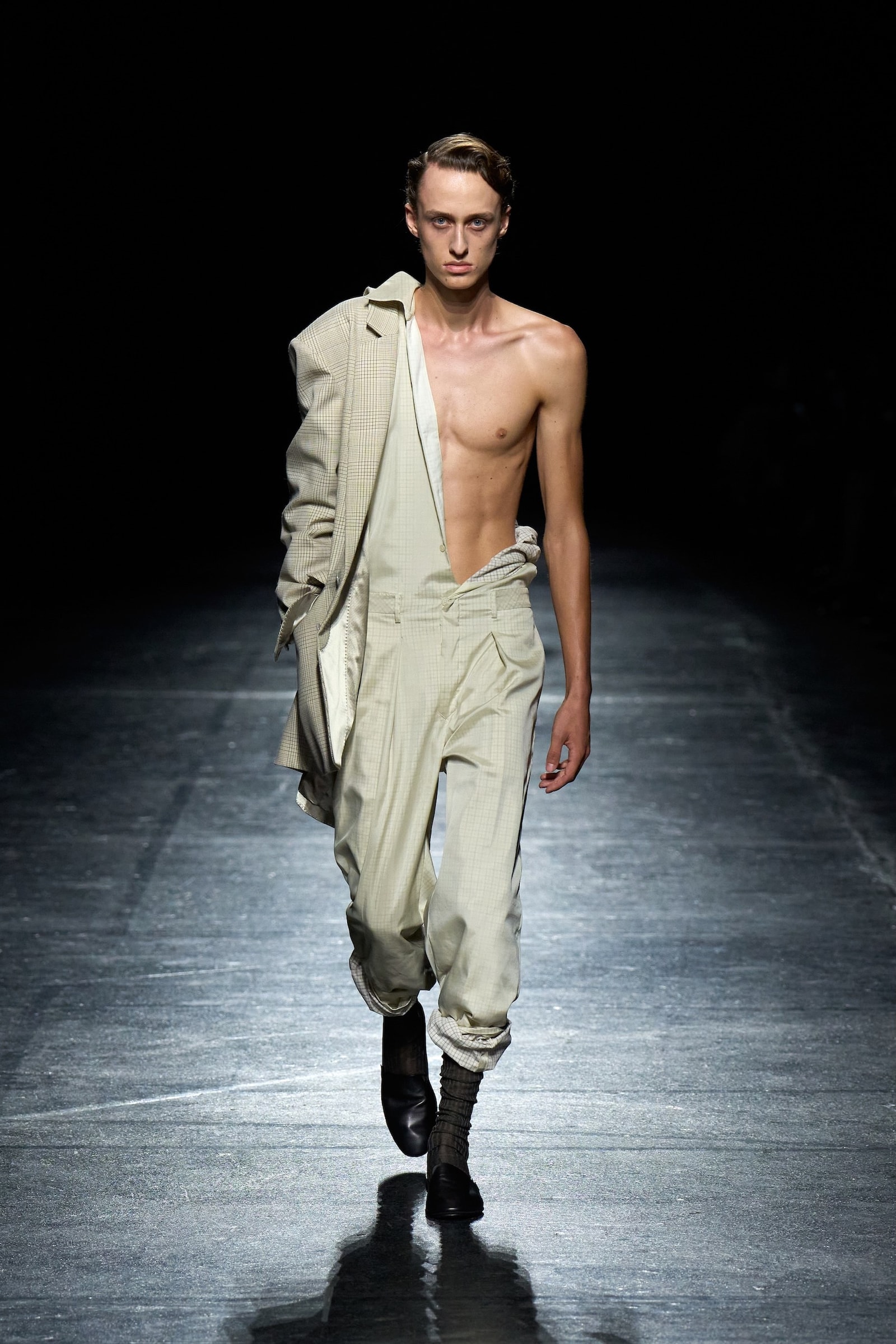
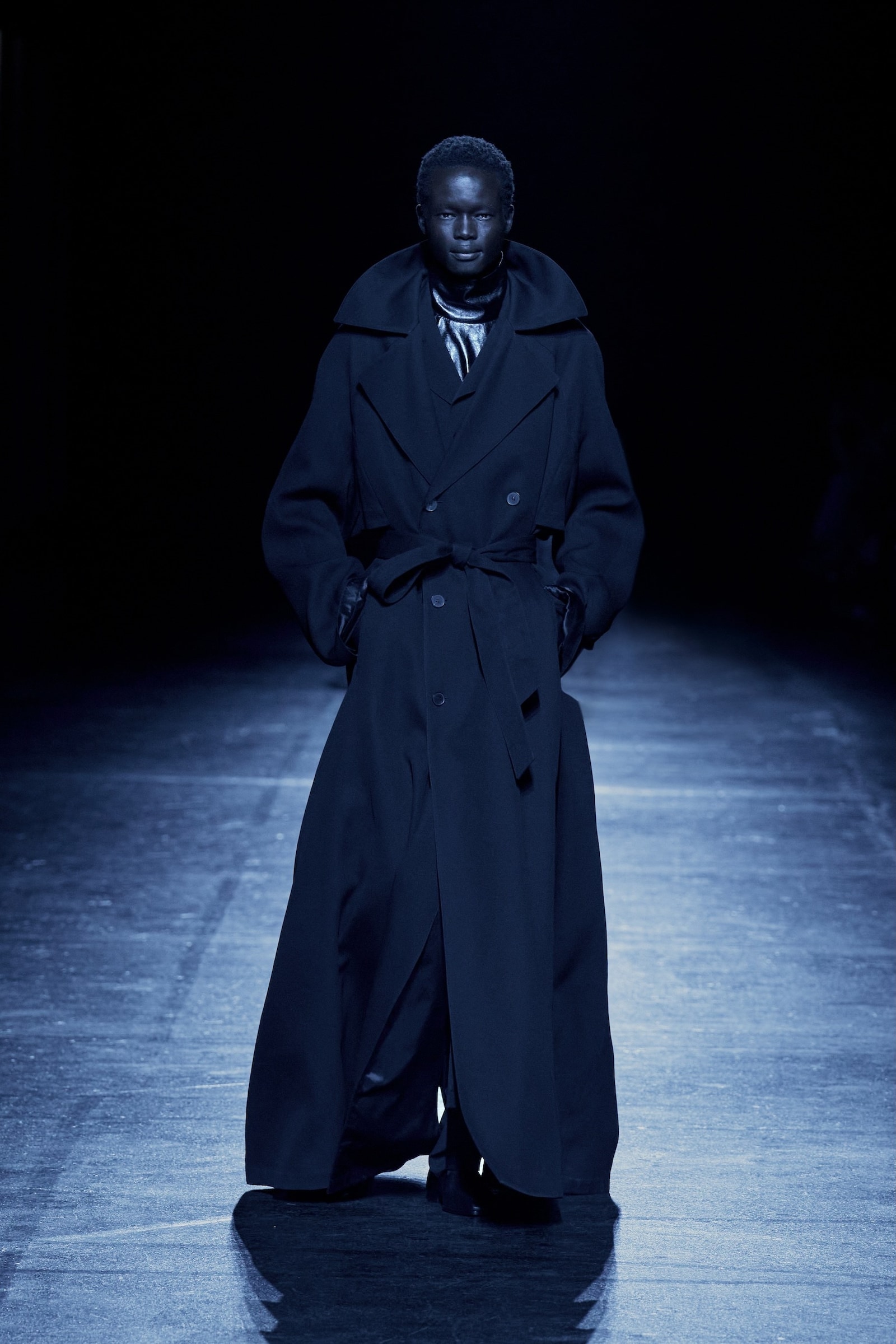
Boloria was only founded last year, but backstage Theyskens said he liked the idea of inventing an imagined history for the brand, giving it a sense of permanence, its own pretend traditions. There were little details to that effect, like thick hems and revers of satin inside tailoring, a ribbon running inside the welt of pockets. Antwerp, where Boloria is based is a port city, so there was a maritime nod to waxed jackets and trench coats in thick cottons (they also threw back to a great Theyskens show from 2000, which he called “an ode to the Belgian seaside” and cobbled together an old spinnaker into one of his signature expansive skirts). Neat little tweed suits with patched pockets and bias-cut skirts looked like something Maison Boloria could’ve made in the 1930s; ditto the drop dead bias-cut dresses, either sinuously cowl necked in bone ivory or columns of dead black. Bias, indeed, was a signature, worked into womenswear but also, unexpectedly, the men’s, which showed Theyskens’ winning way with colour – pale blues, greys, a bare plaster pink – and ever-unexpected material choices. A fine checked wool coat was veiled with silk lace – Bruxelles, naturally, albeit now only made in Italy. Ribbed knit sweaters had the delicacy of hosiery. Silk resembled pyjamas, more of that dream.

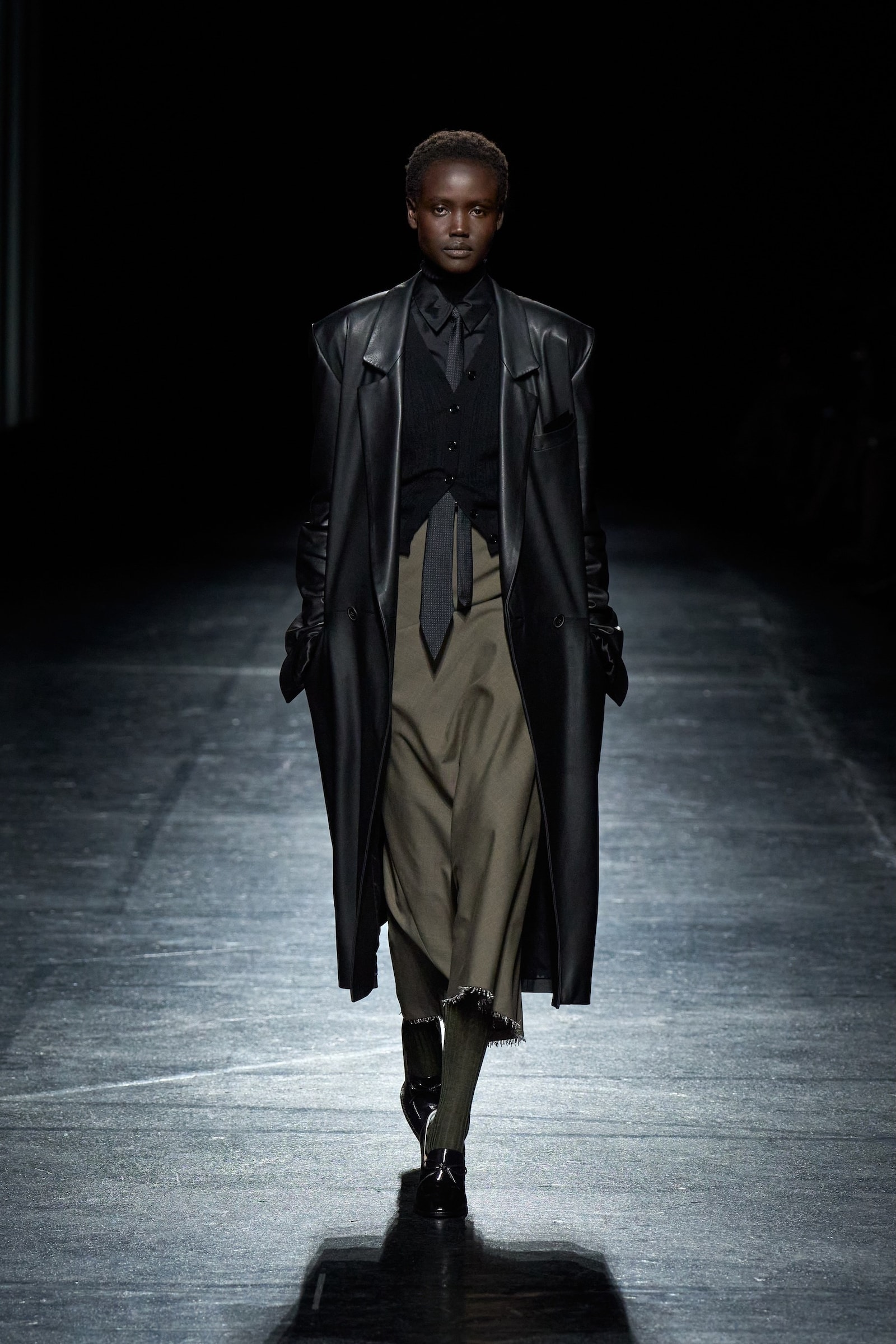

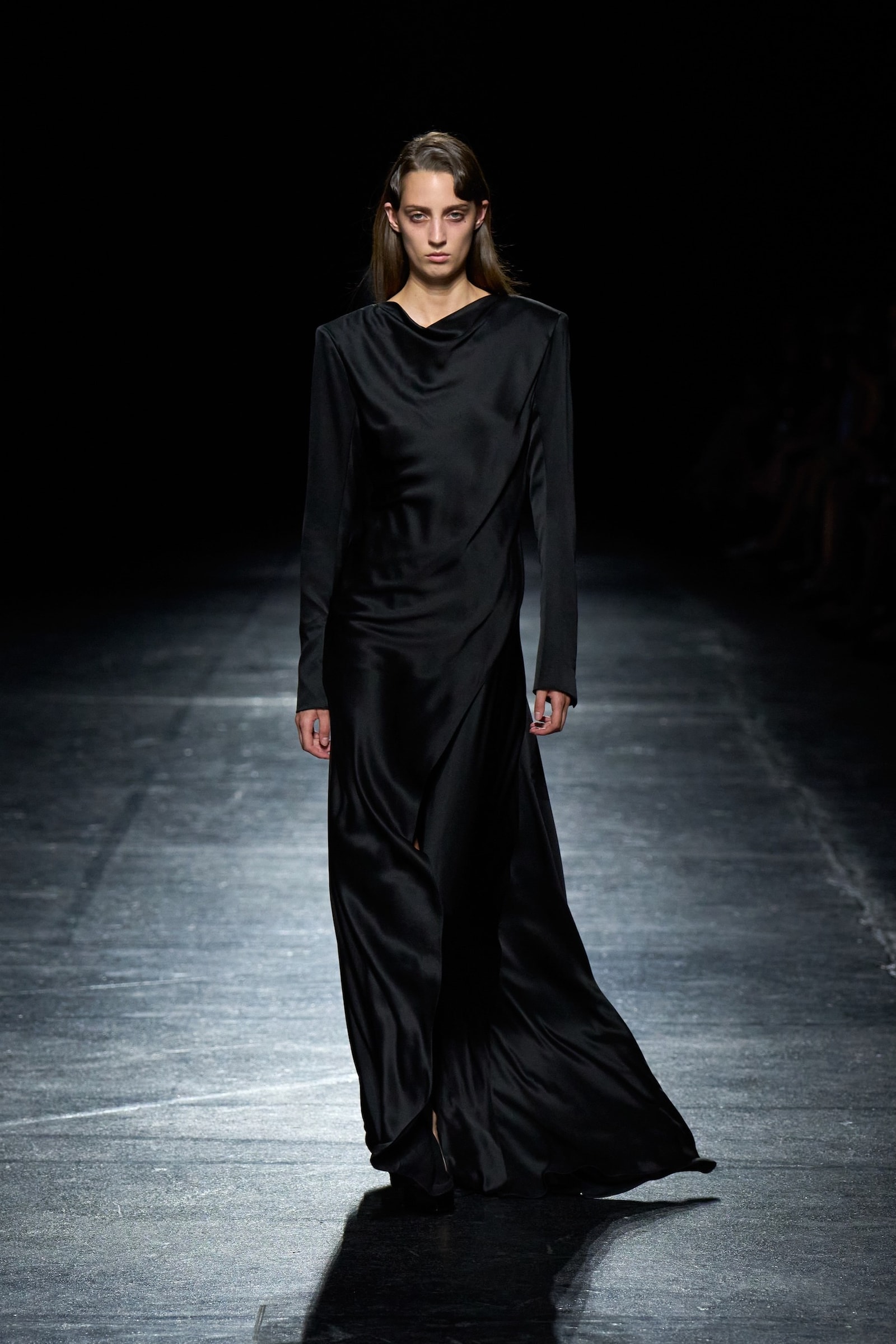
And yet, they held up in the daytime. That was the interesting thing about this Boloria outing – for the childlike wonder of those fantastical gowns, the wide-awake reality that came right after was, possibly, more compelling and certainly just as seductive. Up close, these clothes are extraordinary – lined in silk, with details and features that seem pulled from another time. Yet, as in the show, they are also, resolutely, out of the box – away from a museum, in everyday life, where Theyskens’ talent belongs. Here, for the first time in a while, Theyskens’ achingly gorgeous met the eminently real. FYI, Madonna would look great in this stuff, too.
