
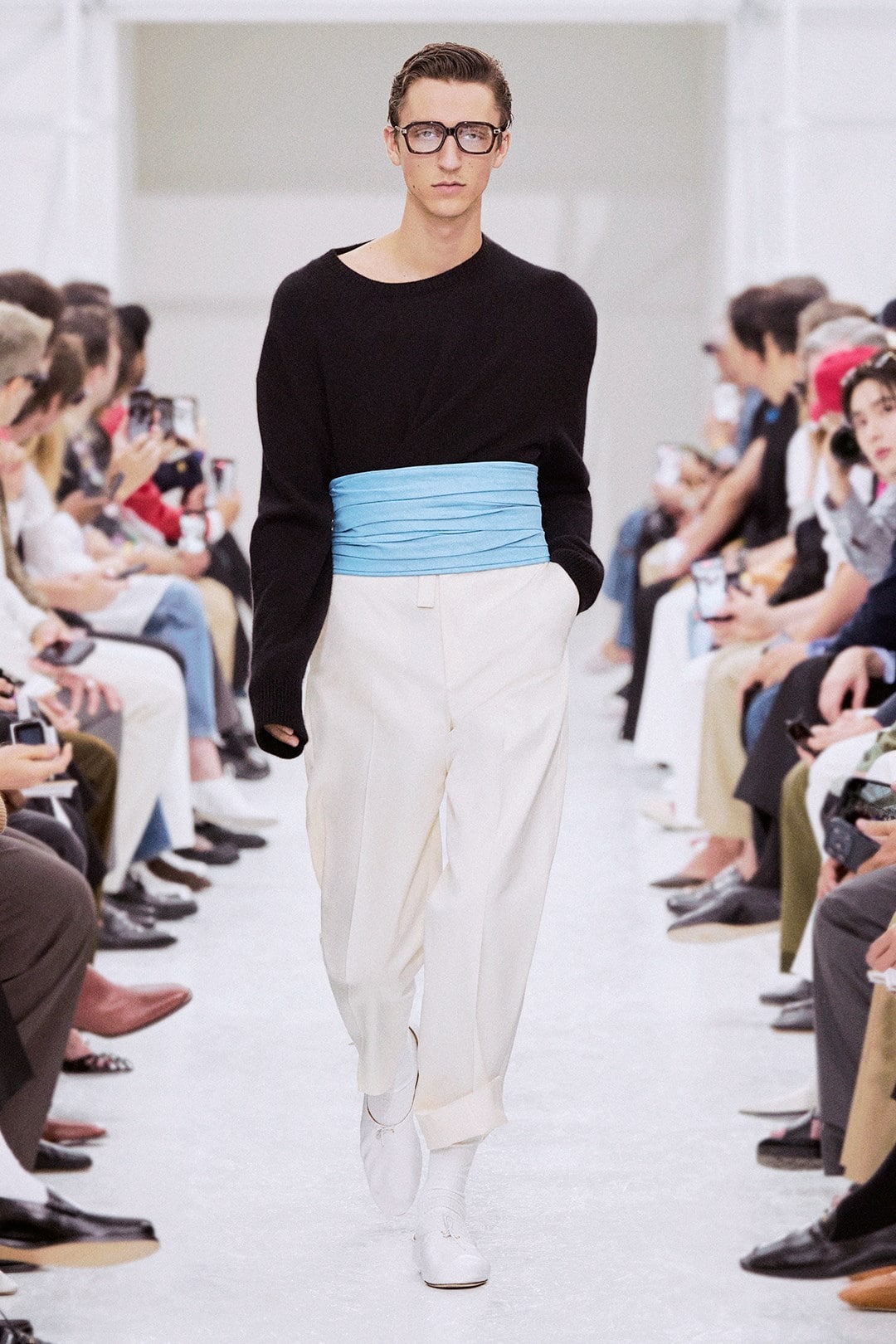
What Michael Rider is doing at Celine is kind of unlike anything else in fashion right now. That’s not to say it’s unlike anything we’ve ever seen before – far from it. In fact, that’s the point, that we remember and recognise what we’re seeing. There’s nothing new here – although that, in its openness and unpretentious clarity, certainly feels new. Rider avoids pontificating explanations or heavy thematics. “Clothes are clothes,” he said backstage, simply, after his first standalone Celine menswear show for Spring/Summer 2027. He was also talking about multitudes and layers, “like the world around us”. But his words didn’t seem like necessary dissection of otherwise inexplicable outfits, life-rafts of meaning without which you’d be adrift. They were just vague reflections, again of feeling. And you get the feeling Rider would probably rather have simply asked the clustered press: “What do you think?”
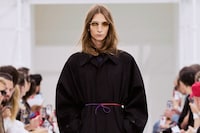
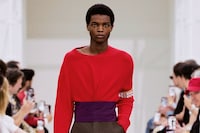
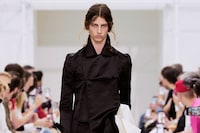
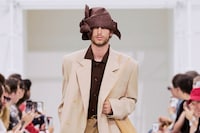
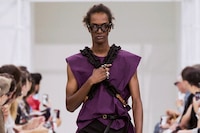
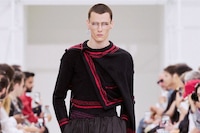
That’s because Rider’s work feels like it’s for other people – which is what fashion should be. These are clothes to go off and make their own way in the world. After this Celine show, Rider installed them in a grand but slightly decrepit house on the rue Cambon, opposite Chanel, and included lots of stuff that didn’t make it onto the catwalk, like stacks of sloganed sweatshirts and rafts of jeans that betrayed Rider’s previous role as creative director of womenswear at Polo Ralph Lauren. There’s a Lauren-istic totality to that vision, how Ralph Lauren stores often feel like you’re wandering around someone’s well-appointed stately home, albeit with way more clothes than those WASPs would ever have.
If Ralph is selling Americana, Rider’s Celine is selling Frenchness. There’s an appealing blank slate ideology at Celine – literally echoed in the white set of the Tennis Club de Paris, where the models bombed out at breakneck speed. But that wider idea chez Celine was something that was expounded by both Rider’s former boss Phoebe Philo and his forebear Hedi Slimane during their tenures. Each nodded to ideas and motifs from Celine’s past, like logos and typefaces and a horse-and-buggy logo they used in the 1970s, but really they just did what they wanted, and what felt right. Rider is doing the same, using Celine as a jumping-off point for a generous proposition of how people could look today, tied up with all types of talismans of Celine-ty to give it a distinct, grounded identity. But, really, Celine doesn’t have the advantage – or, indeed, burden – of a heavy heritage, like Dior, or Balenciaga, or Chanel on the opposite side of the rue. Celine can be anything.

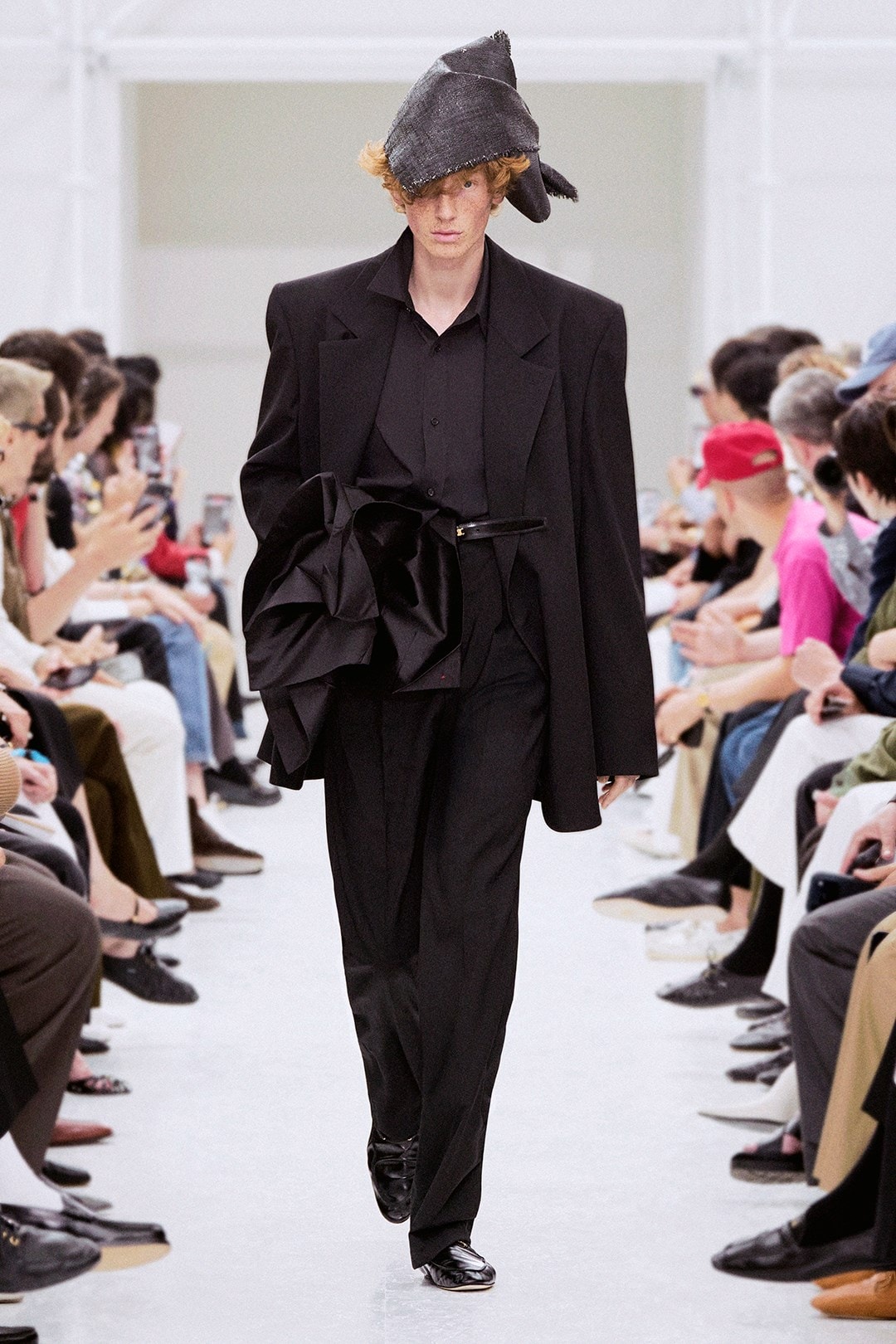

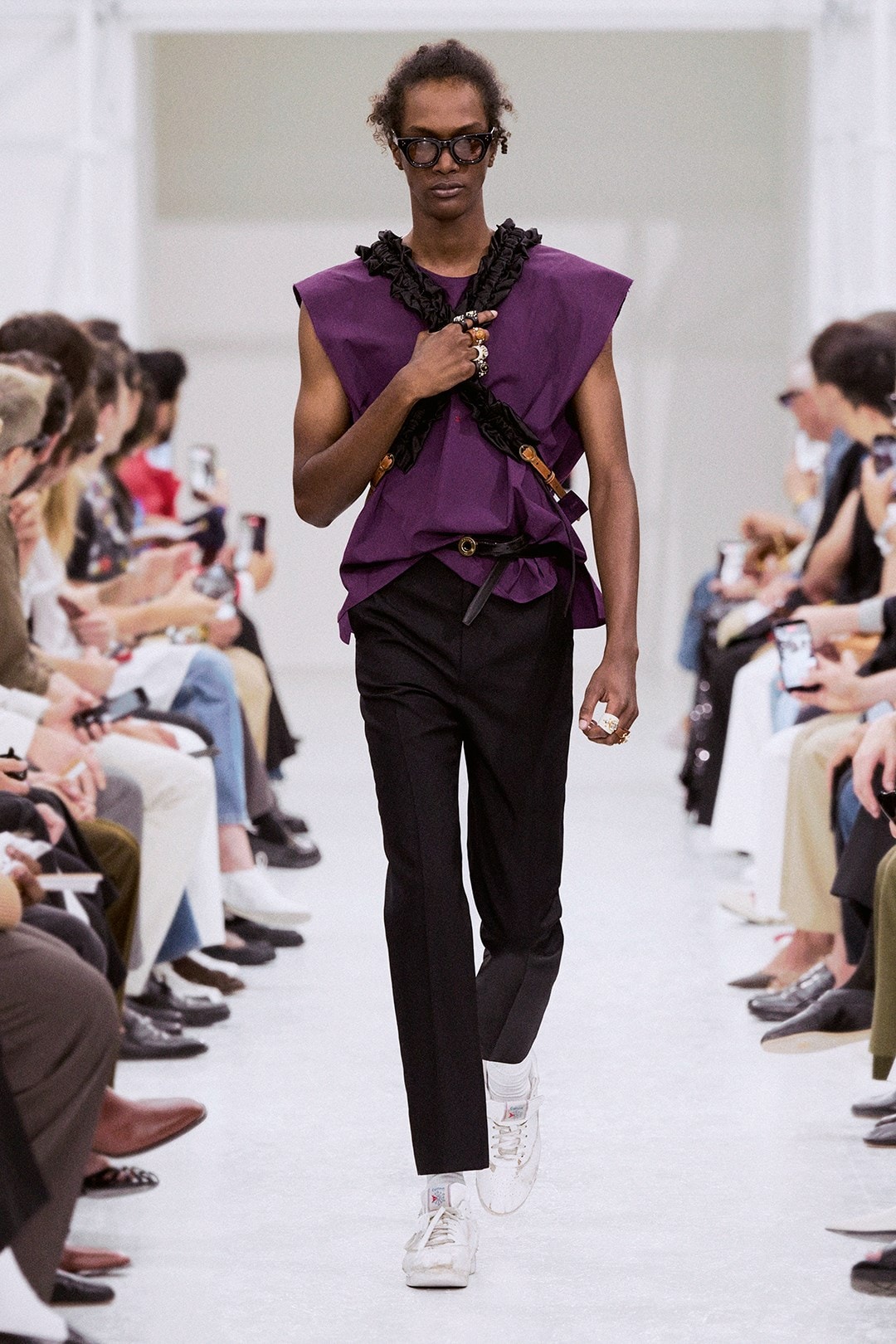
And for this men’s show, it was anything, and everything, trousers skinny and billowing, tailoring oversized and shrunken. The latter proportion possibly had the edge, both in terms of numbers but also provocative impact – much like Rider’s much-imitated paper-thin jazz soles and brightly coloured prep ties, you anticipate that silhouette ending up everywhere. Some blazers were crunched tightly against the body, sleeves climbing up to bracelet-length like a man crammed into a child’s garment, a neat nod to Celine’s origin story as a provider of childrenswear for rich Parisians. One had adult-length shirt sleeves hanging out, to emphasise the proportion play. Other silhouettes were pulled in at a narrow shoulder, not stick-thin but given a degree of propriety and properness – buttoned up, as the British would say. Gloves hands held jackets closed, seeming to clutch at imaginary pearls.
The whole thing was intentionally unintentional – an infuriating turn of phrase, but one that describes how everything had a carefully studied offhandedness, a calculated spontaneity. The pieces were beautifully designed, expertly executed – and the real takeaway was that narrowness of silhouette, taut on the shoulder and sloping diagonally away at the body, that Rider has been tweaking and playing with for a few seasons, for men and women. Yet what stuck in your craw were the gestures of clothes, ties tucked into waistbands, trousers unfastened beneath too-tightly-tugged belts, a bouncing bunch of pétanque balls on a string like a necklace or keyring, a giant bag snuggled up against a model like a plush stool. Keying into the Celine-ness, there was a sense of aristocratic eccentricity, a wealth of ideas and an ingenious, confident arrogance about the way you look. That can be sold, of course – Rider is selling it here. But it can also be achieved by any kid with a measure of chutzpah and an eye for vintage, and that’s exciting. Ultimately, this show was about style, not clothes, with all the vastness that implies.
