
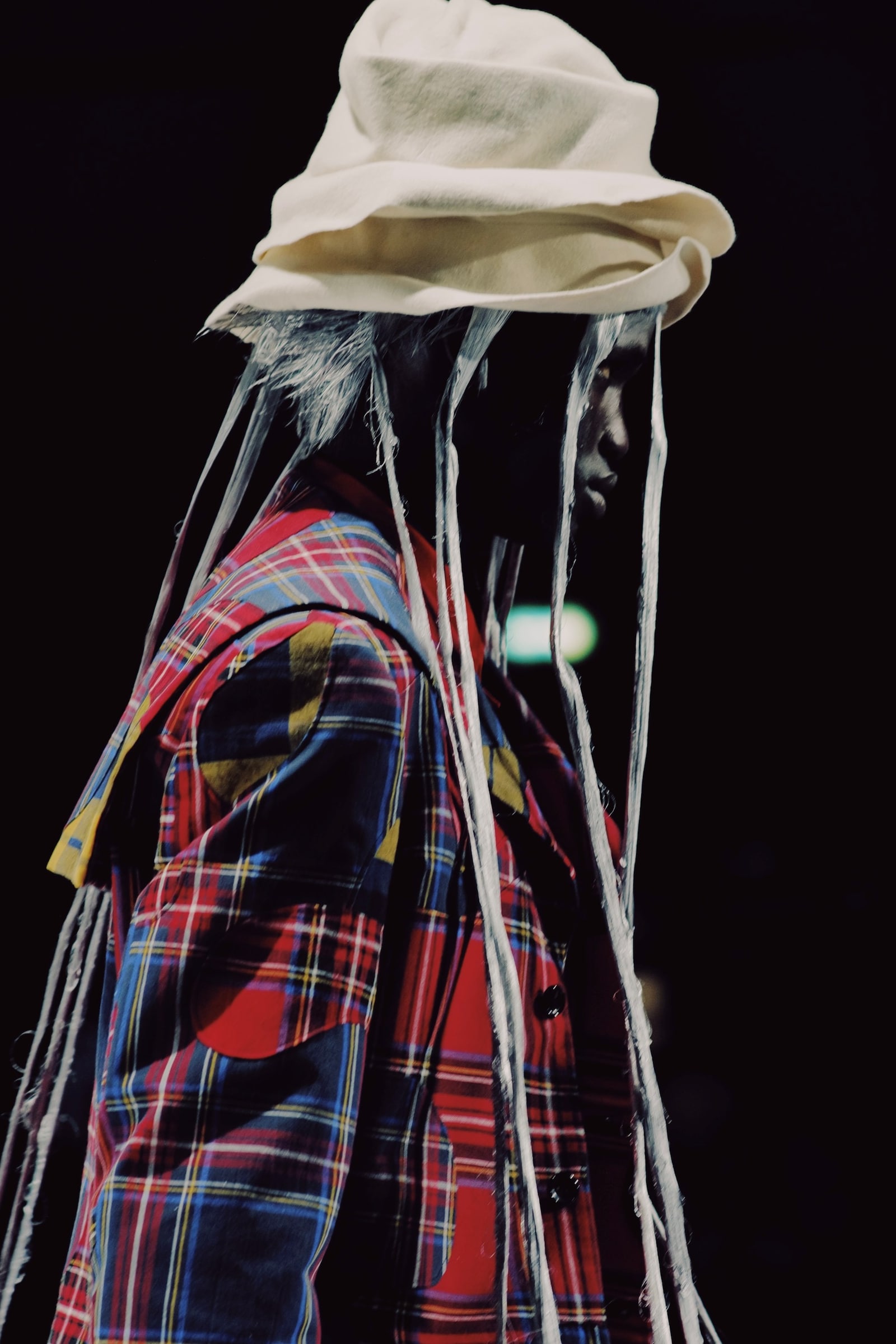
Recently, Rei Kawakubo’s Comme des Garçons Homme Plus menswear has been, if not obsessed with war, certainly preoccupied by it. It makes a change for someone to remember the global conflicts reshaping the world as we know it, rather than complaining about the weather – although, granted, both feel somewhat apocalyptic. Kawakubo titled her Spring/Summer 2027 show If the War Were To End.. and conceived of it as an expression in two parts, both the show at the Élysée Montmarte and an installation in the courtyard of Dover Street Market’s Paris outpost. The latter was a United Nations of Comme des Garçons flags of many colours, some of which wound up patched into the clothes.






But, in actual fact, this seemed a counterpart of sorts to her Autumn/Winter 2025 show, titled To Hell With War, with models dressed in twisted military garb, further subverted by floral-festooned combat helmets. At the time, I asked Kawakubo what made her angry. “Complacency, contradiction and unfairness” was her concise response. There’s something to be said about fashion’s short-term memory loss – back in February 2022, collections grappled with reflecting the Russian invasion of Ukraine in its immediate aftermath, yet seemed to largely forget after. Likewise the ongoing conflicts in the Middle East, cited in sales figures but not as an influence on garments.

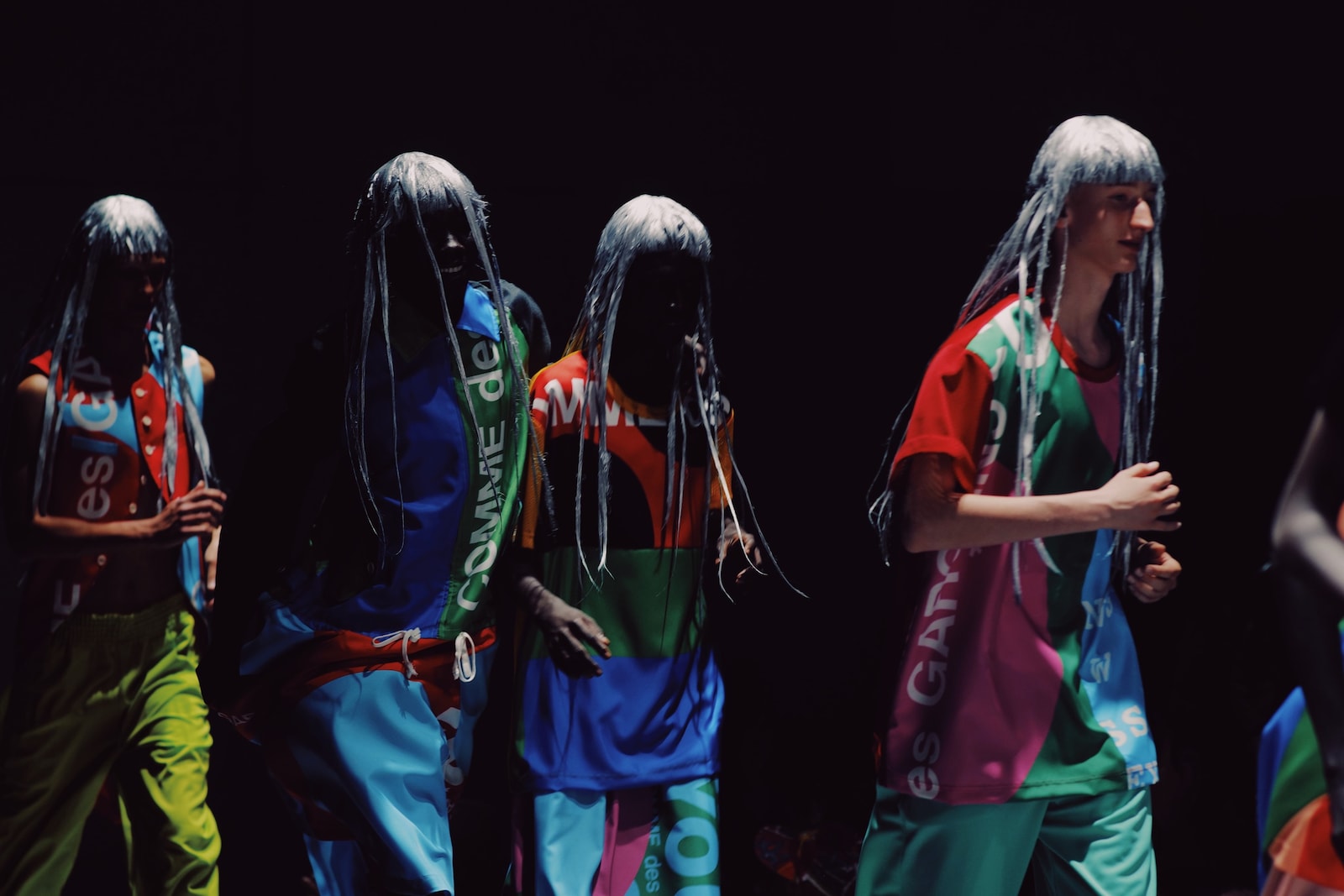
Kawakubo wasn’t commenting specifically on either – that is never her style. She also didn’t seem angry here, rather reflective, even hopeful. Her critique here was on the concept of war as a whole – without war, for instance, camouflage could be reconsidered, proposed here entirely rinsed of colour in pacifists whites, in clashing punkish tartans, or in bright, cheery pastels, sweetened and neutered of any foreboding. If her 2025 collection still carried a sense of menace, brass officer buttons dissecting clothes into component parts as if forming uniforms for some unnamed, unknown resistance, this was a softer vision: fragile-feeling narrow-shouldered blazers and coats above culotte shorts bordered with soft ruffles. The brightly coloured flags formed patches and panels of colours within garments like striking heraldry, banners of war here intentionally stripped of meaning. And as a finale, a corps of Comme des Garçons’ young male models stormed out joyously, resembling schoolchildren rather than stormtroopers – and a timely reminder that, sometimes, boys can wind up being both. It was joyful yet undeniably poignant.
