
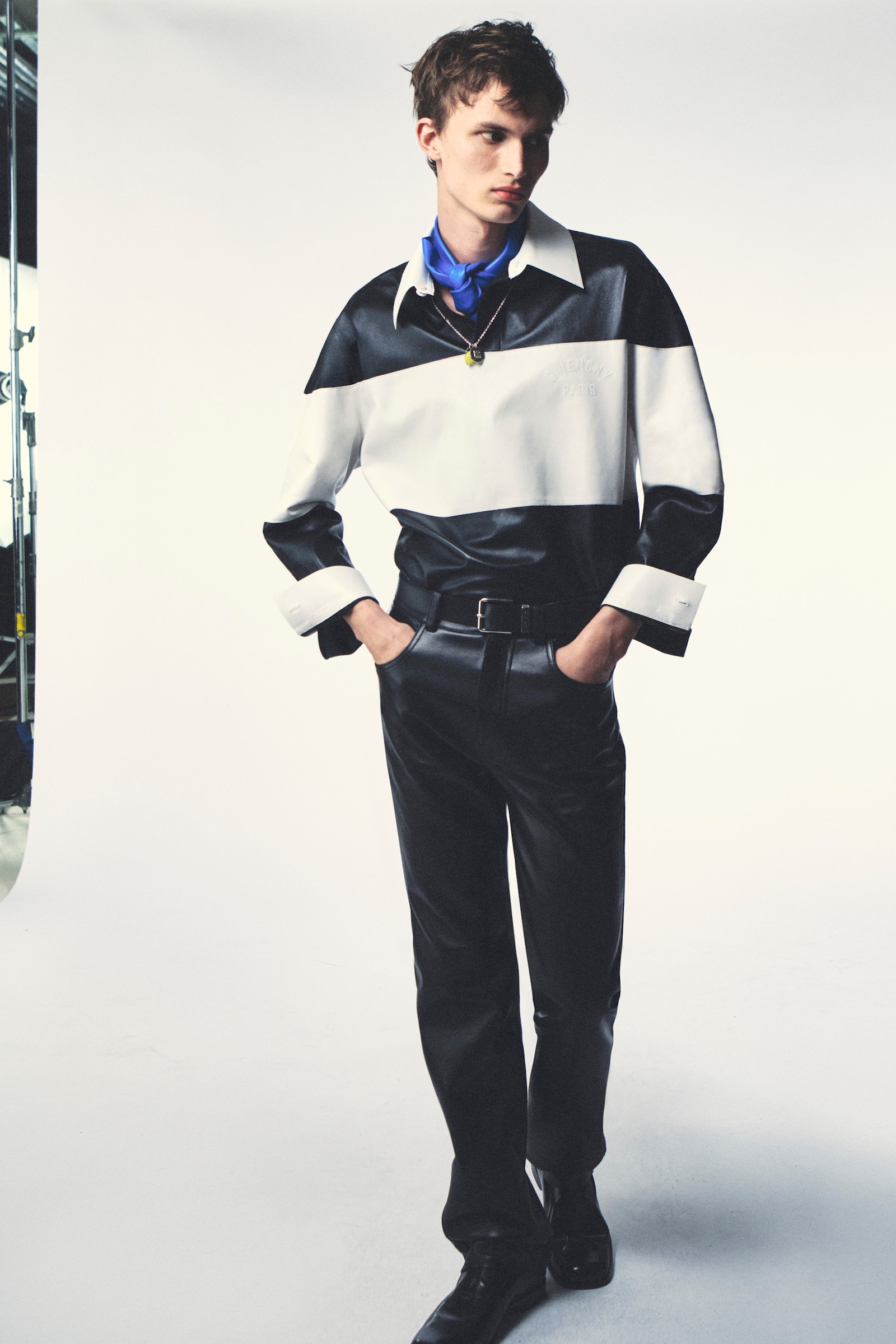
There’s something very appropriate about Sarah Burton teaming up with Rachel Whiteread for the debut presentation of her menswear at the house of Givenchy. To begin with, it’s not about Whiteread decorating the clothes – far from it, although some of her pieces were juxtaposed with them and, coincidentally, reflected their colour palettes, such as a cast of corrugated iron in papier-mâché, painstakingly covered with silver leaf in a mint tone, or detritus trawled from a beach in Essex cast in neon brights, used to colour a sequence of leather tracksuits that picked up where Timothée Chalamet’s left off. But you were thinking of Whiteread’s monumental 1993 sculpture House, where she cast the internal impressions of a Victorian terrace in concrete, transforming your impression of an existing house. Which is precisely what Burton is doing at Givenchy, rebuilding it from the inside out.




She’s also torn down some walls like Whiteread did – the house around House was demolished, leaving just space made in concrete. Burton, by contrast, has torn down walls within Givenchy, also to help solidify her vision. “I knocked the walls down, so we have men’s and women’s right next to each other,” she said in a preview, meaning the traditionally separated ateliers within the maison. Knocking down those walls had ideological as well as physical results – a bunch of this menswear actually debuted on women back in March, made in the menswear ateliers but shown on women in hard-edged, butched-up tailoring who swaggered in double-breasted butter-soft cashmere pinstripes and Prince of Wales checked suits. Those two styles were lifted and repurposed here as lynchpins of Burton’s men’s wardrobe – suits next to tracksuits. They looked just like something the late Hubert de Givenchy himself would have worn. Appropriate enough as they were situated in a trio of his original salons, like ghostly incarnations of his continuing presence.


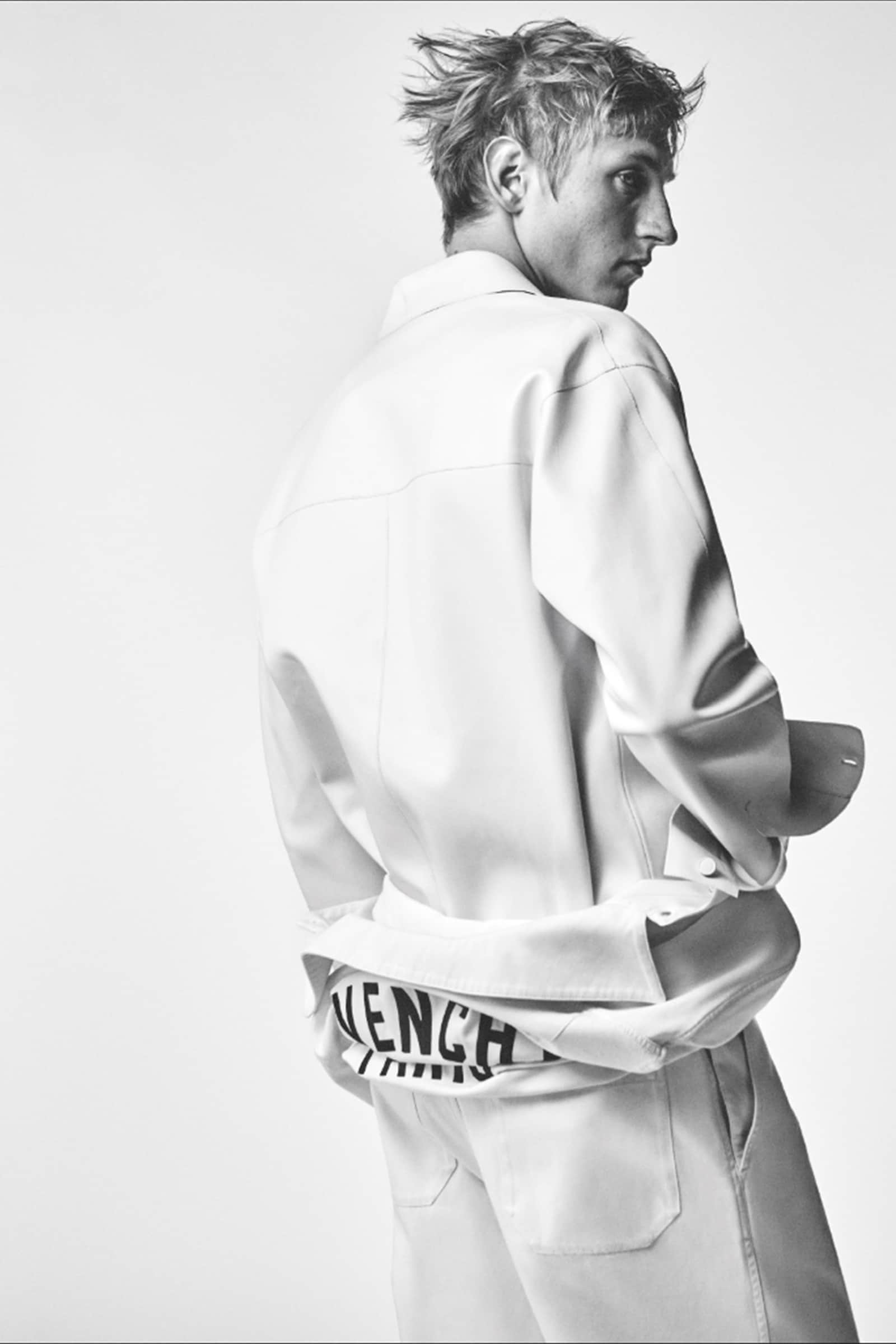
That wasn’t the only slipstreaming. Hubert de Givenchy’s big idea back in the 1950s was introducing the idea of separates to haute couture – like a blouse and skirt, rather than a pinched-in little suit, clothes conceived with the same kind of mix-and-match pragmatism as a man’s wardrobe. It still isn’t really how couture is designed or worn today, that’s how quietly rebellious it was. Givenchy’s blouse was named Bettina, after his house model Bettina Graziani, and although it had a neat little collar, the sleeves were frou-frou and loaded with broderie anglaise frills. Burton has stripped all that off in her womenswear, keeping the sleeve’s curvilinear form without all the fuss, translated to a mannish shirt. It bounced back to her menswear here, which is something Burton likes – she recounted that women are buying her men’s clothes (which were quietly introduced when she began, but are only now being formally presented to press). There’s one men’s tailored coat they can’t keep in stock.

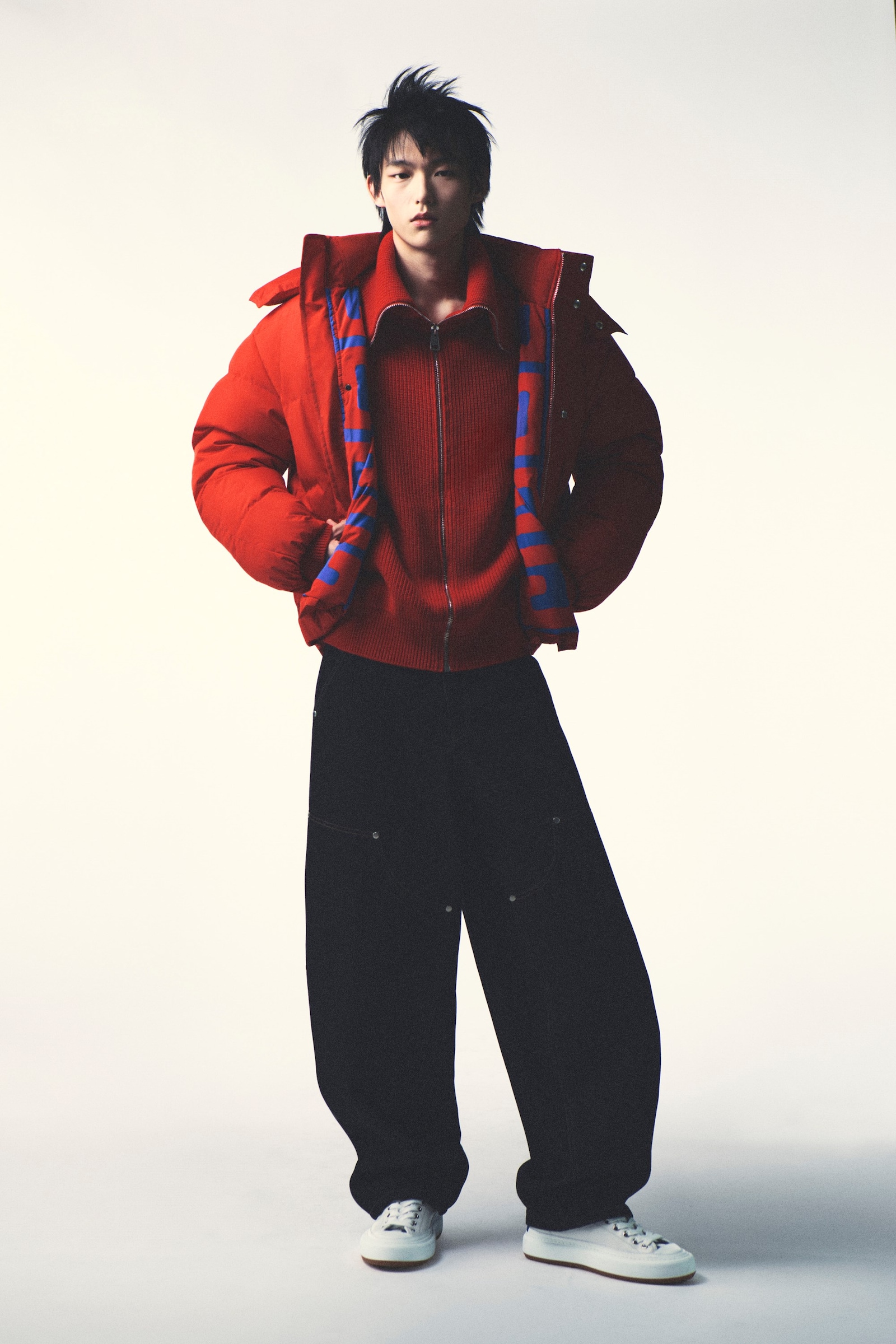

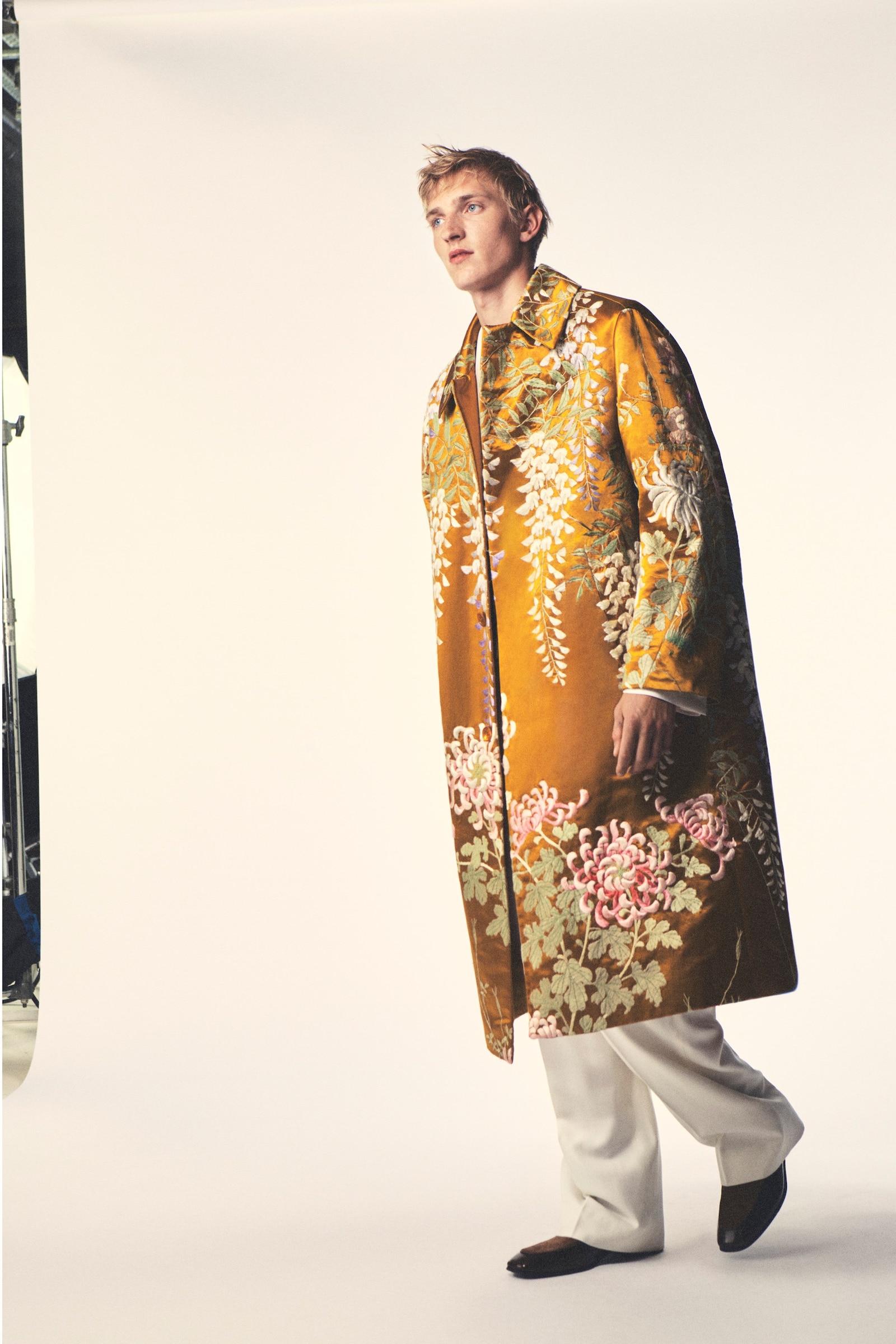
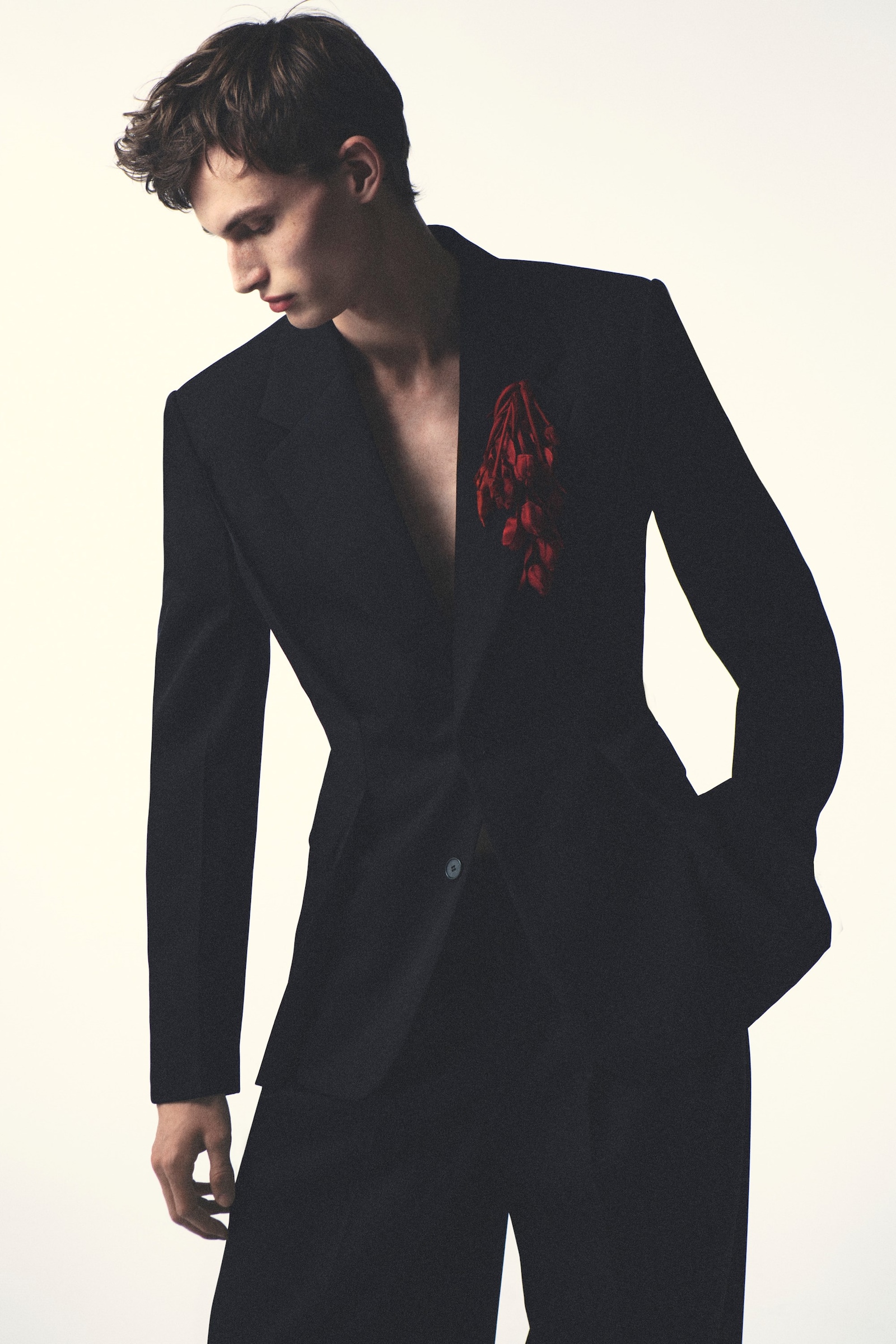
There were also direct quotations here from Burton’s women, like her Vermeer-inspired embroidered flowers plainly filched from an evening gown and moved to a flamboyant coat, or the curved hip pockets of a jacket compressed into a decidedly masculine silhouette, an echo of the original. Tailoring throughout was the lynchpin – reiterated in those day suits but also evening tuxedos and overcoats sliced apart and shifted around the body, their lapels abstracted like half-completed jigsaw puzzles – which really is what it’s like when you’re figuring out the lay of the land at a new fashion house. Burton, however, has this stuff down pat – across the board, hers was some of the best of the season, supple and soft, a firm shoulder rippling at the waist to hug rather than grip the body. It gave the traditionally firm universe of men’s suiting a decidedly female hand.
This wasn’t a big, bombastic debut, quietly unveiled with a static installation of clothes and Whiteread artworks – including two works based on wardrobes, to hammer home the point. For Burton, that’s what she’s interested in forging and filling at Givenchy. “How do men dress over generations, how they dress in their lives?” was the question she asked herself. Her answer was compelling.
