
More than any other fashion house, that of Christian Dior is built on nostalgia. It started with the founder himself, whose corseted and petticoated fashions threw back to his mother’s belle époque glory days as well as further histories of the richness of the 18th- and 19th-century French courts. His aim? Not costume play, but a counter to reality, an antidote to the deprivations and rations of post-war Paris. And, of course, those who have shrugged on his mantle have gone off the deep end via the added nostalgia of Dior’s era-defining mid-century designs, not least the great fashion binge of the New Look, to look back on with rose-tinted glasses.




Jonathan Anderson has never struck anyone as a nostalgist, but he’s embraced this element of the Dior treatise wholeheartedly. His latest menswear show upped the ante in its staging, within and without the romantic confines of the Nissim de Camondo, a grand turn-of-the-century house built to mimic the architecture of the 18th century and filled with furniture and painting that used to belong to Marie Antoinette, and the like. Ring any bells with another French house?
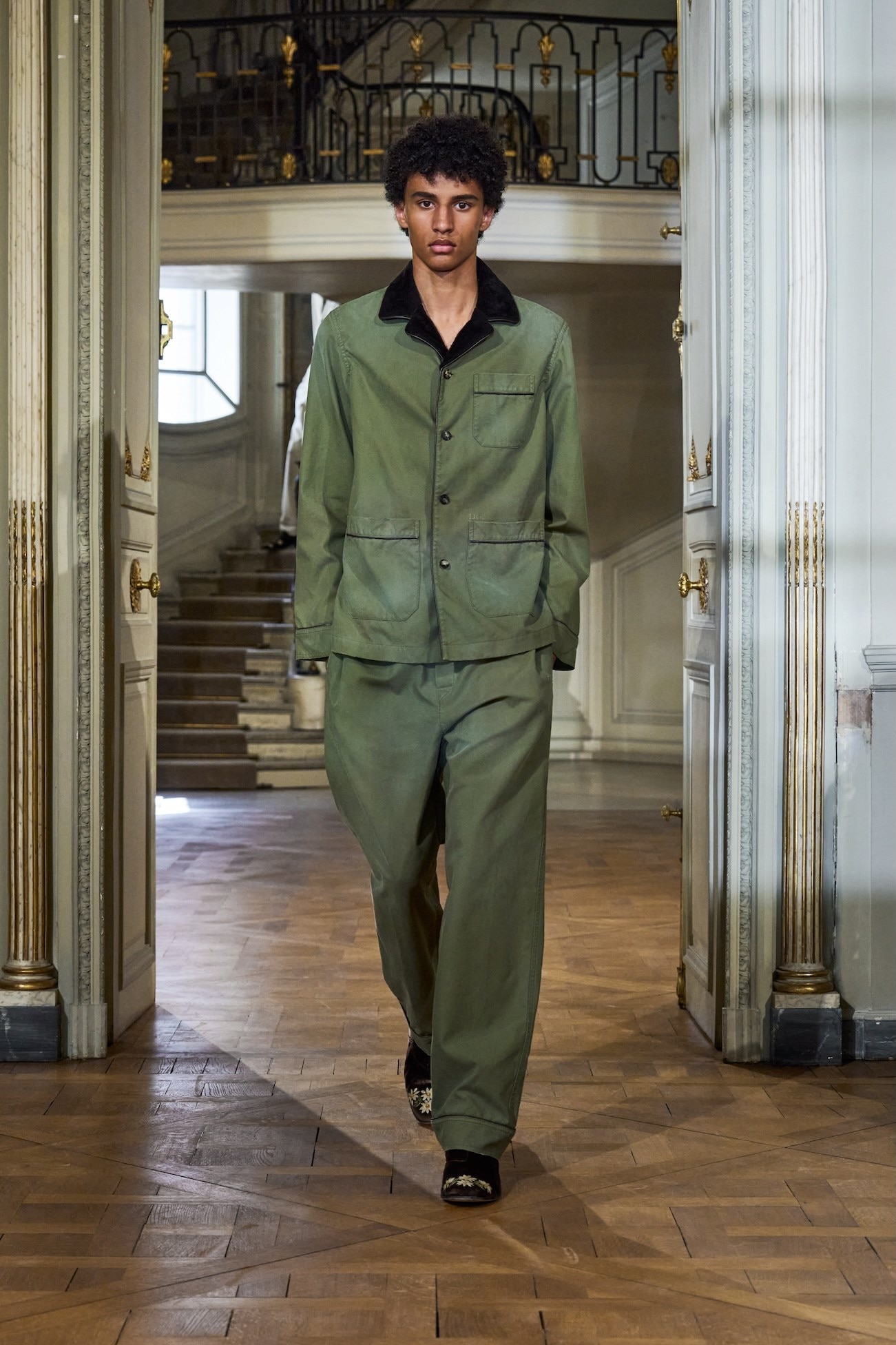
Formality, Eton, partying. Those were some of the words he threw out backstage afterwards, evoking a long-extinguished aristocratic netherworld of knotted cravats and liveried servants and embroidered house-slippers. All present and, somehow, incorrect, twisted and reshaped – remixed, in a sense, which was an allegory Anderson made between the collection and its thumping techno soundtrack by producer Fred Again. How do you remix Dior? By printing the house’s houndstooth on soft chiffon and georgette and cutting them into untailored tailoring that droops around the body, or reimagining a high-buttoned dandy highwayman 18th-century coat in shirting poplin, and maybe bunging it together with python jeans in gilt or silver. Lightening the load of legacy, so to speak.

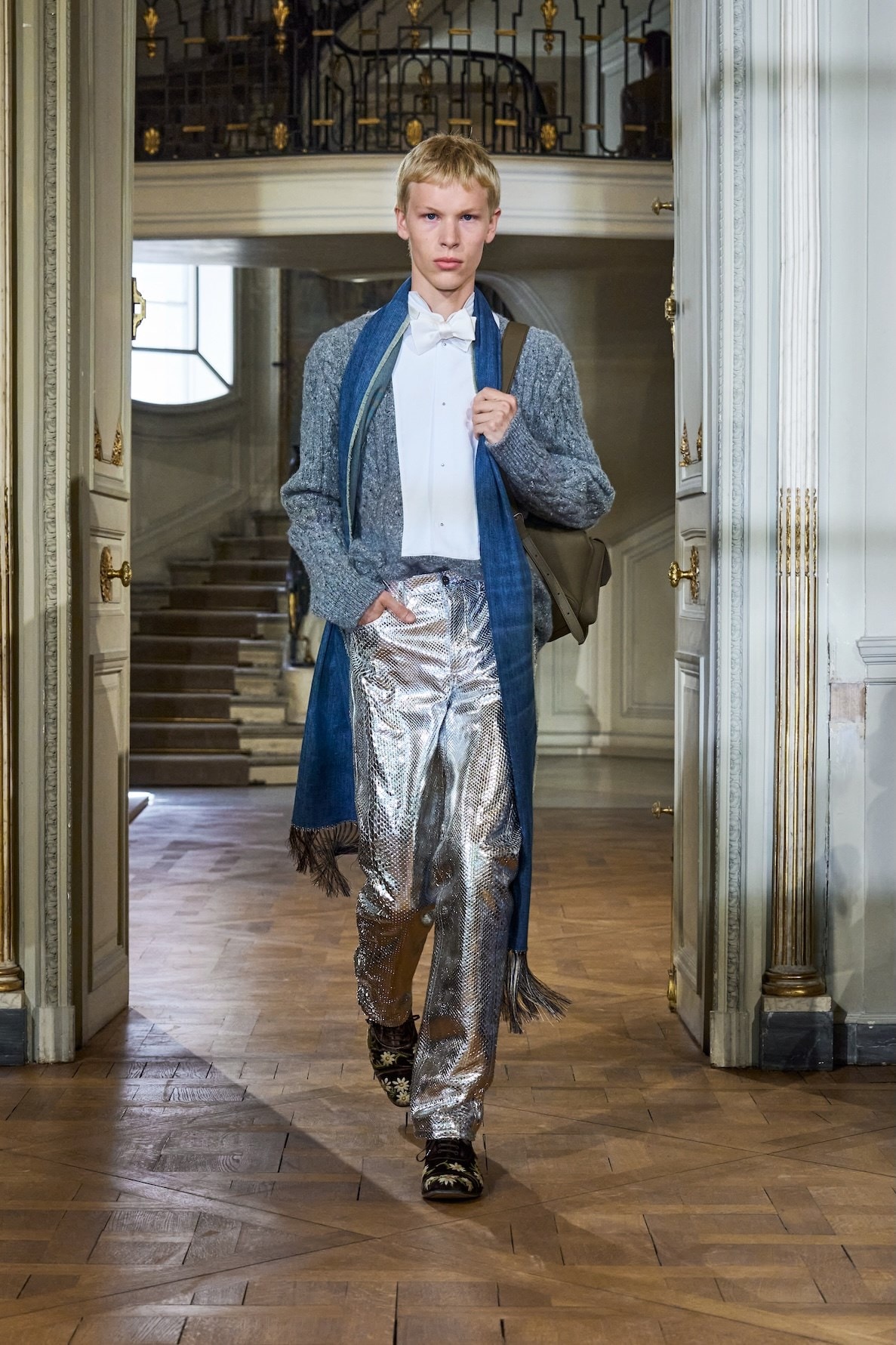

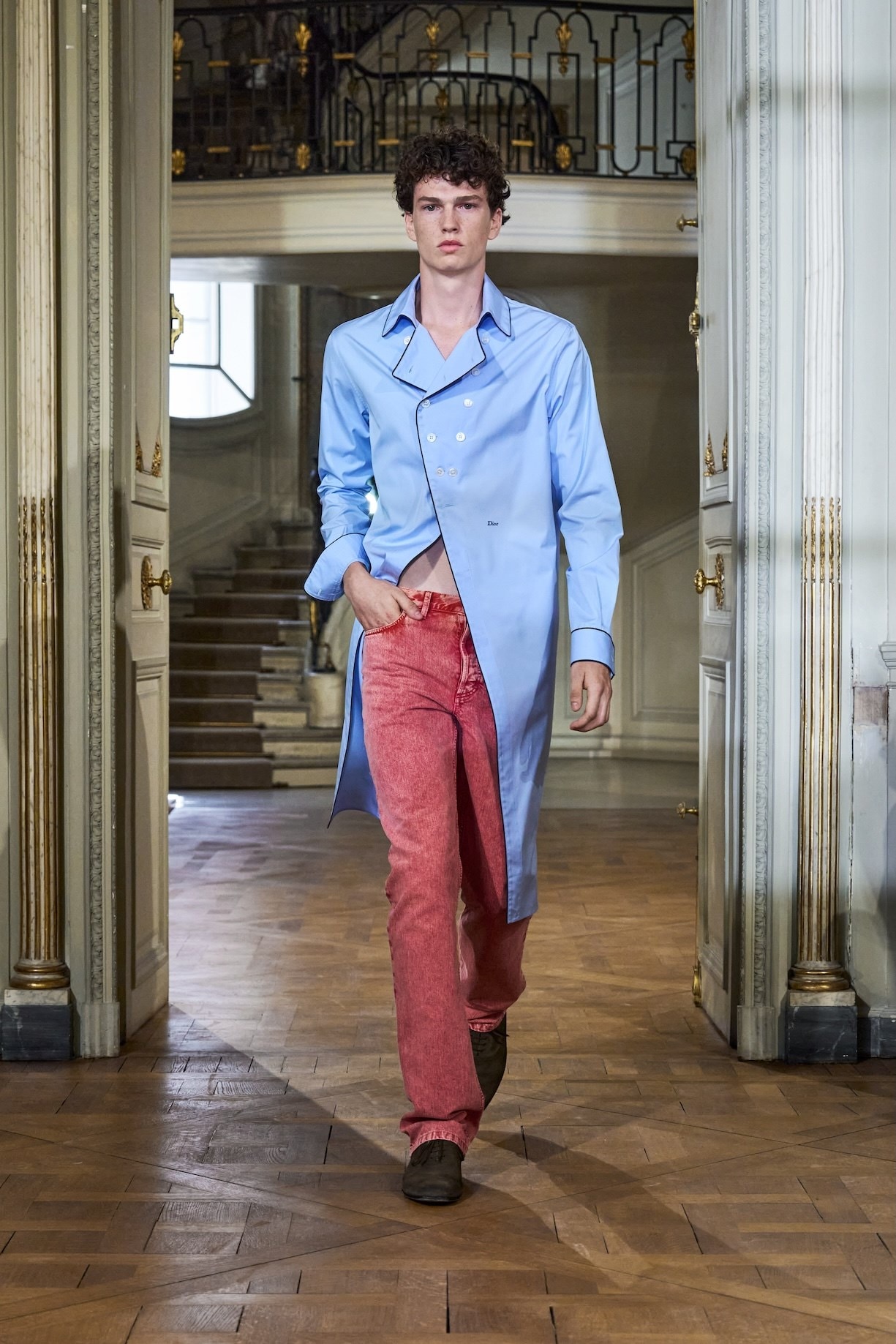
“Ripping out all the innards, and rebuilding” was how Anderson described it – and, incidentally, he snagged the Camondo digs, which are now in a museum, because they were in the process of extensive renovation. That’s also a metaphor for what Anderson is doing at Dior. It doesn’t need to be gutted, nor razed to the ground, but under its first across-the-board creative head since its founding father, it needs to be somewhat recalibrated, to link up mens and womens in a cohesive whole. Hence the fact that Anderson retrenched into ideas proposed in his first two shows – the house party notion was an inspiration behind last season’s costume-box clothes and strange wigs, and this time the remnants of party-goers past knocked about the salons. A sequinned harlequin mask, say, hanging from a gilded doorknob, as if intruders had passed through.
Anderson is something of an intruder, too, as were many of his predecessors. They all have a healthy and necessary disrespect for history. So while Anderson’s vision was undoubtedly shaped by the past, it wasn’t mired in it. A 1979 haute couture dress with a cache-cœur scarf embedded in the neckline became a sleeveless top, but you wouldn’t know it from a glance. Likewise, you couldn’t guess the couture-grade work in a blasted-out pair of jeans, their frays interwoven with fine gilt chains – a trick Anderson first played at Cruise, and so good he’s already done it twice.

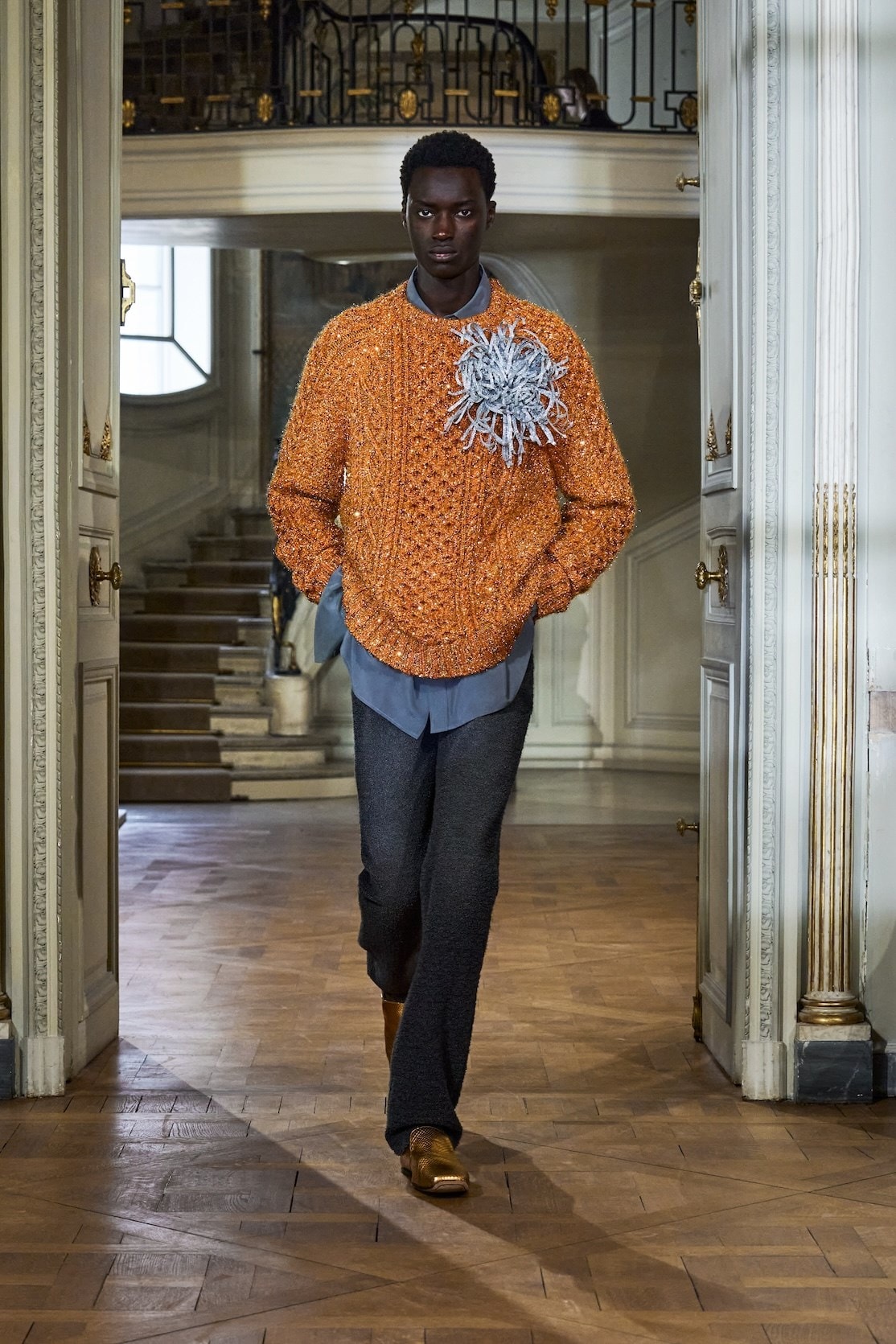

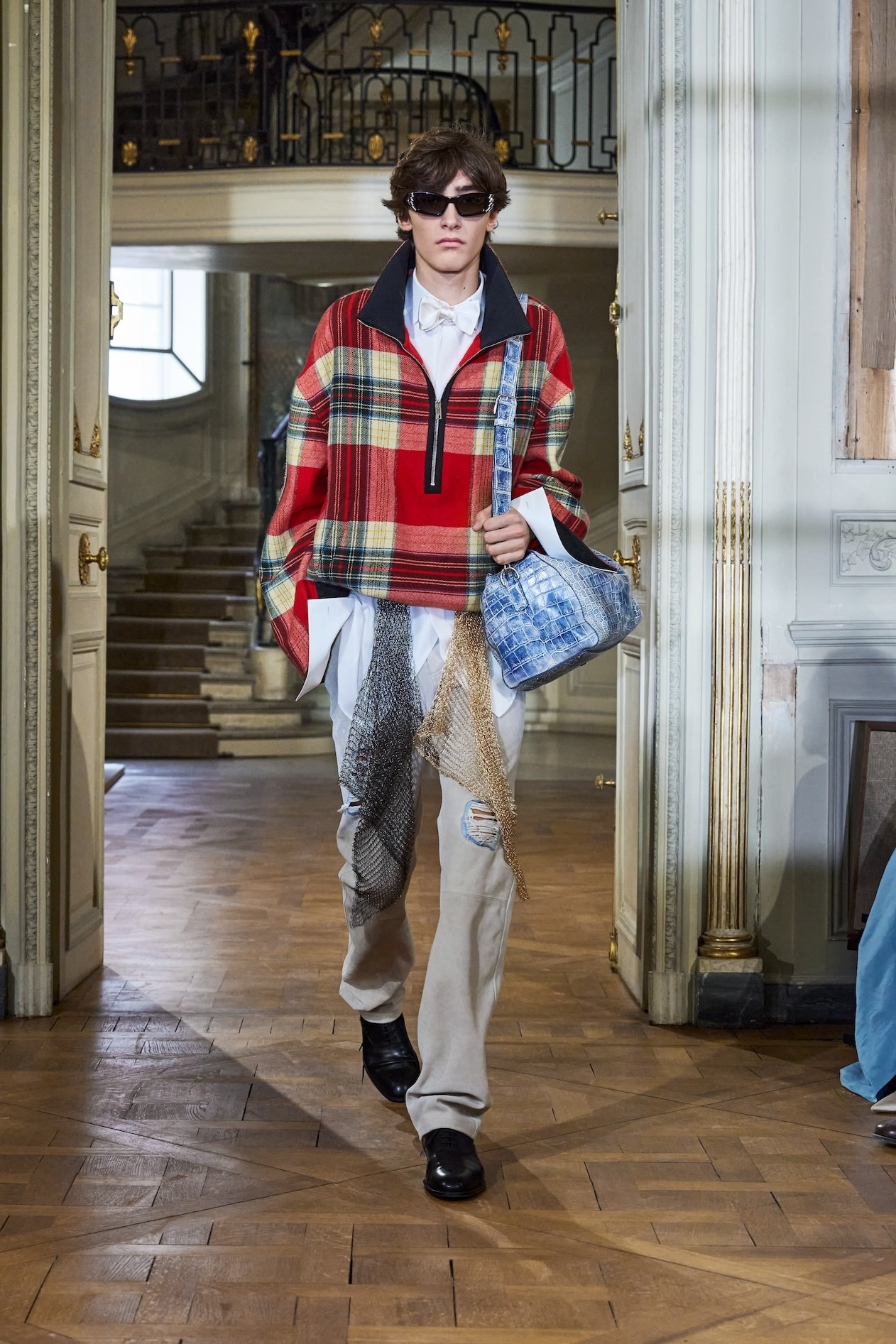
For Anderson, this show was about “refining” and “compounding”, returning to ideas he’d introduced over the past year and developing them further. To that end, those frock coats have become a fast signature, and there were the high-knotted vaguely regency necklines that have found an odd reflection in other designers’ collections these past two seasons. Compounding seemed to mean doubling-down on the pieces that have resonated, and ironing out some of the kinks – there were no bustle-backed shorts or Poiret-influenced opera-coats in this outing. Rather it was a streamlined foundation of what Anderson intuits his Dior men’s wardrobe to be. Refined, indeed, was the word.
