
“Azzedine told me, ‘You’re very good at patchwork.’” Nicolas Ghesquière told me that once – and, if Azzedine Alaïa told you something, you listened. Because he was always right. That wasn’t specifically connected with Ghesquière’s latest Cruise collection for Louis Vuitton. But, weirdly, it makes sense – not because this collection was some scrappy, Hobby Lobby ode to American folk craft, but because it stitched together the seemingly opposite, opposing and jarring. And that, really, is what Ghesquière is very good at: a patchwork of ideals and outlooks, not just cloth.
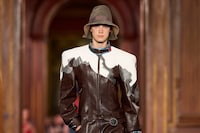
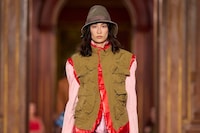
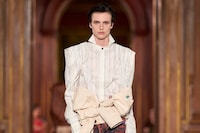
Thus was the case in New York, where Vuitton took over the Vermeer and Fragonard-filled former gilded age mansion of robber baron Henry Clay Frick – which, since 1935, has been a jzuzhy museum in his name – and let a bunch of miscreants maraud through it. “There’s two cities in one city,” said Ghesquière backstage before the show, speaking specifically of New York. “A confrontation. I thought it was very interesting to bring downtown uptown.” In a sense, that was literally there in the opening look – not just the denim overalls folded down around the model’s midriff (never mind the gilded age, even today that’s a look rarely seen on the Upper East Side), but the suitcase she was toting. It’s a Vuitton case from the 1930s, but tagged with devices by Keith Haring, the daring 80s New York contemporary artist born out of the city’s graffiti scene. How did Ghesquière persuade the house’s archivists to let a model tote a literal work of art around? “It was an operation of seduction,” he laughed.
So this collection cruised between downtown and uptown, with pop art next to the Gainsboroughs, and clashes of different fashions that altogether represented the duality of New York that Ghesquière found fascinating. And it seemed like no outfit belonged to one or the other. A model in a Devo-shouldered leather jumpsuit, for instance, was toting a moulded leather bag modelled after the columns of the Frick’s wintergarden, while slick, sportswear-inspired knits were the basis for frou-frou ruffles and Lesage embroideries, like something Jacques Doucet may have cooked up for Consuelo Vanderbilt way back when. There was never really a sense of comfort, nothing sticking in its lane or where it seems to rightfully belong – which is another characteristic of Ghesquière’s style. “Liberation” was another word he used, and these clothes looked especially so, in the land of the free.

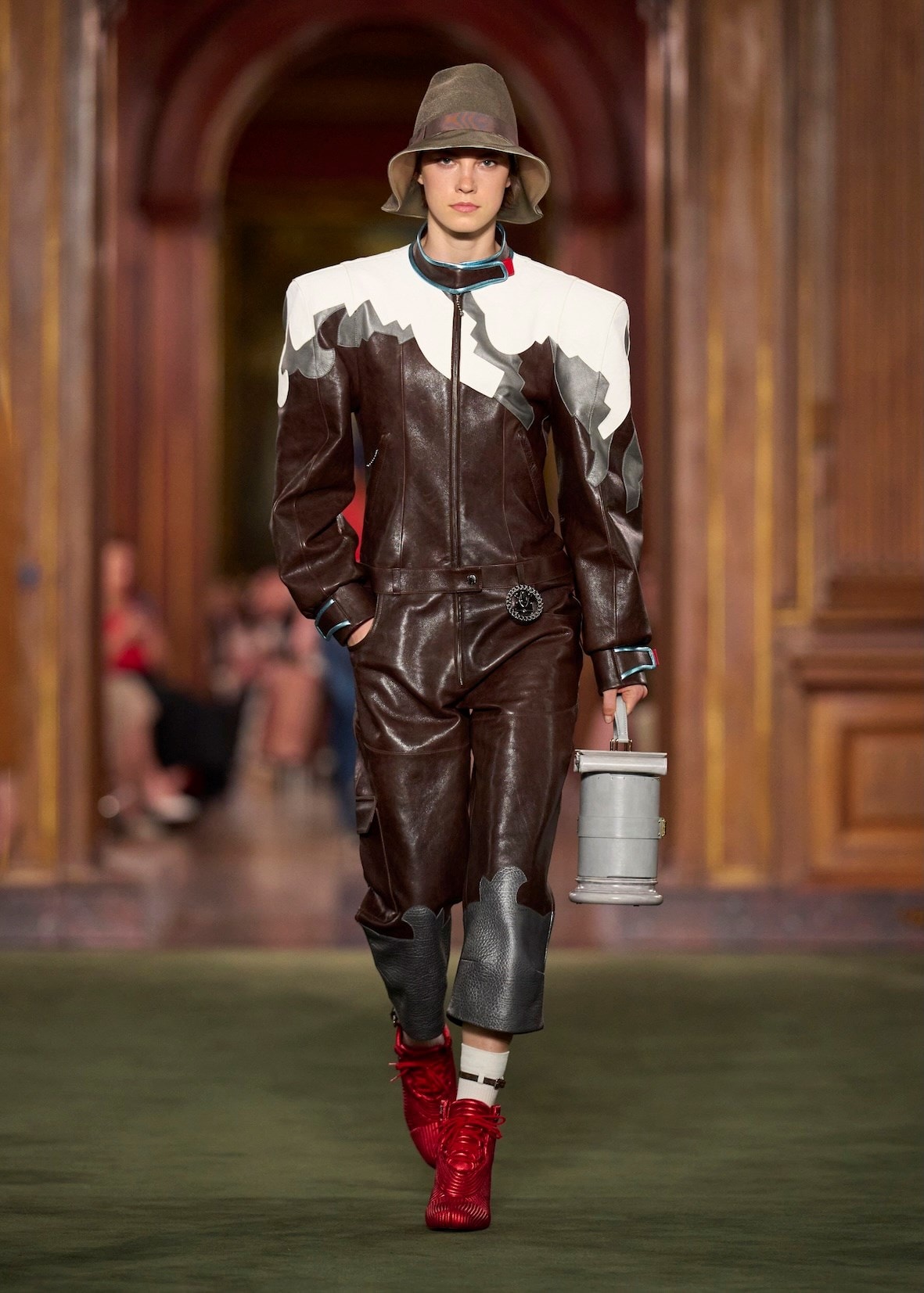

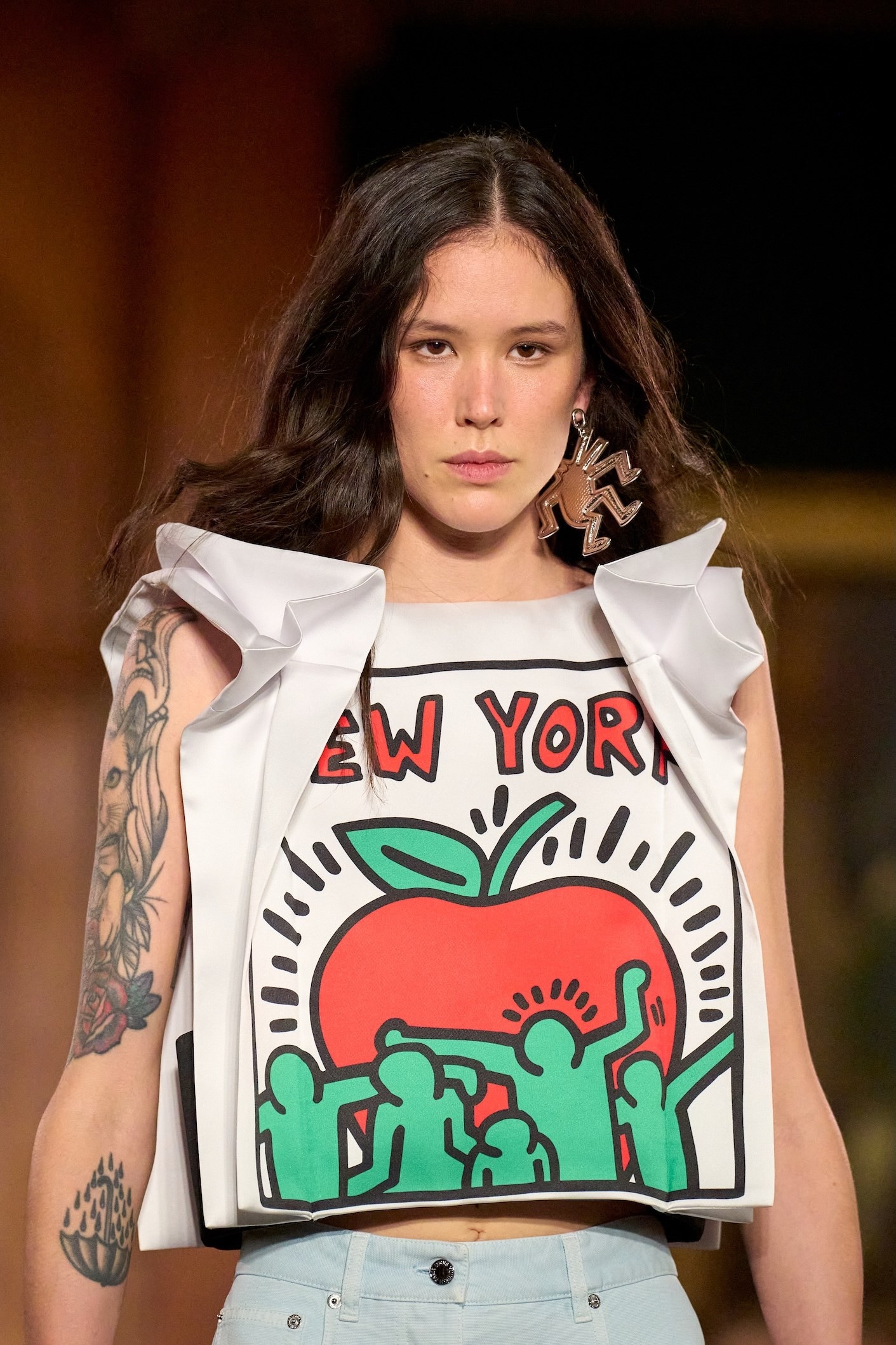
That said, there was an anchor – the idea of American style. “Casualness is the foundation,” Ghesquière said. Hence the fact the collection opened humbly, with denims, mixes of jersey and leather, as quintessential components of the American look – your basic, deconstructed Marlon Brando or James Dean pin-up, recalibrated into womenswear. Pop art inspired sharp, acidic contrasts of colour like neon lights, and Haring’s art roamed free, scribbled across jackets in intricate marquetries of leather (they looked like postmodern pietra dura tables, and will probably cost as much). And fragments of Americana were crafted into accessories: a taxicab’s bumper lights, a take-out container in strass, a metallic Coke can with a Vuitton clasp. Universality is an idea he’s interested in, Ghesquière said – and Haring, Coca-Cola and Vuitton alike are all composed of emblems and symbols known the world over, high and low. That friction between those poles of culture was also a goal to explore.
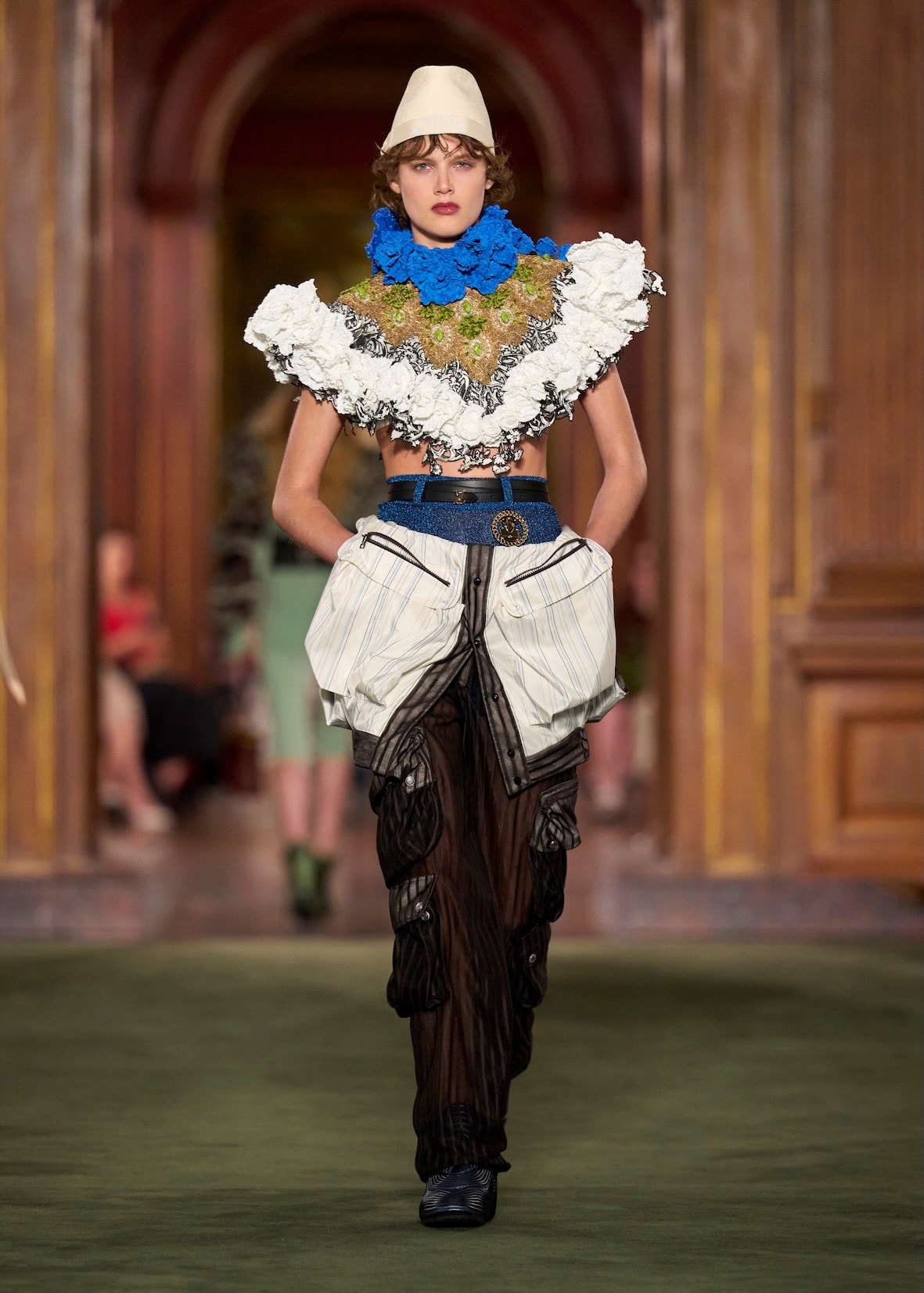
These clothes didn’t belong to the Frick, to these grand salons, to Edith Wharton’s The Age of Innocence – although all have a pervasive Frenchness to their styles that connect to Vuitton, for sure. Its monogram canvas is older even than the Frick. The Frick isn’t the home for dresses composed of passementerie braid or sequins like graffiti scribbles, for western-wear tooled leather bomber jackets, biker boots and boxing gloves and dripping, half-finished Haring sprayed figures and deluxe New York tourist tees, folded square like literal walking canvases, trudging to a Peaches Nisker soundtrack. In a way, there was a sense here of multiple golden ages of New York – the 1890s and the 1920s, the 1960s and the 1980s, and that Peaches moment, as nightlife was booming and right before the Twin Towers fell. Patching together outlooks meant the cumbersome ruffles of Victoriana were given dynamic movement, that 20s flapper dresses were scribbled in 80s neons, that pop art colours and jacked-out shoulders and delicate embroideries all mixed and intermingled. It was like nothing you’d ever seen before – especially not in the sedate enclaves of the Frick.
That said, as Ghesquière's Vuitton women moved in these alien, outsider clothes through the hallowed halls, they gradually assimilated – became less foreign, in no pun on Frenchness. Indeed, weirdly, they became less foreign as they became more foreign to New York, as embroideries crept up, floral prints bloomed and volumes inflated. They were awarded their own grandeur – and these figures suddenly belonged, in clothes caught between the back-then and the next. Which is exactly what fashion’s supposed to do.
