
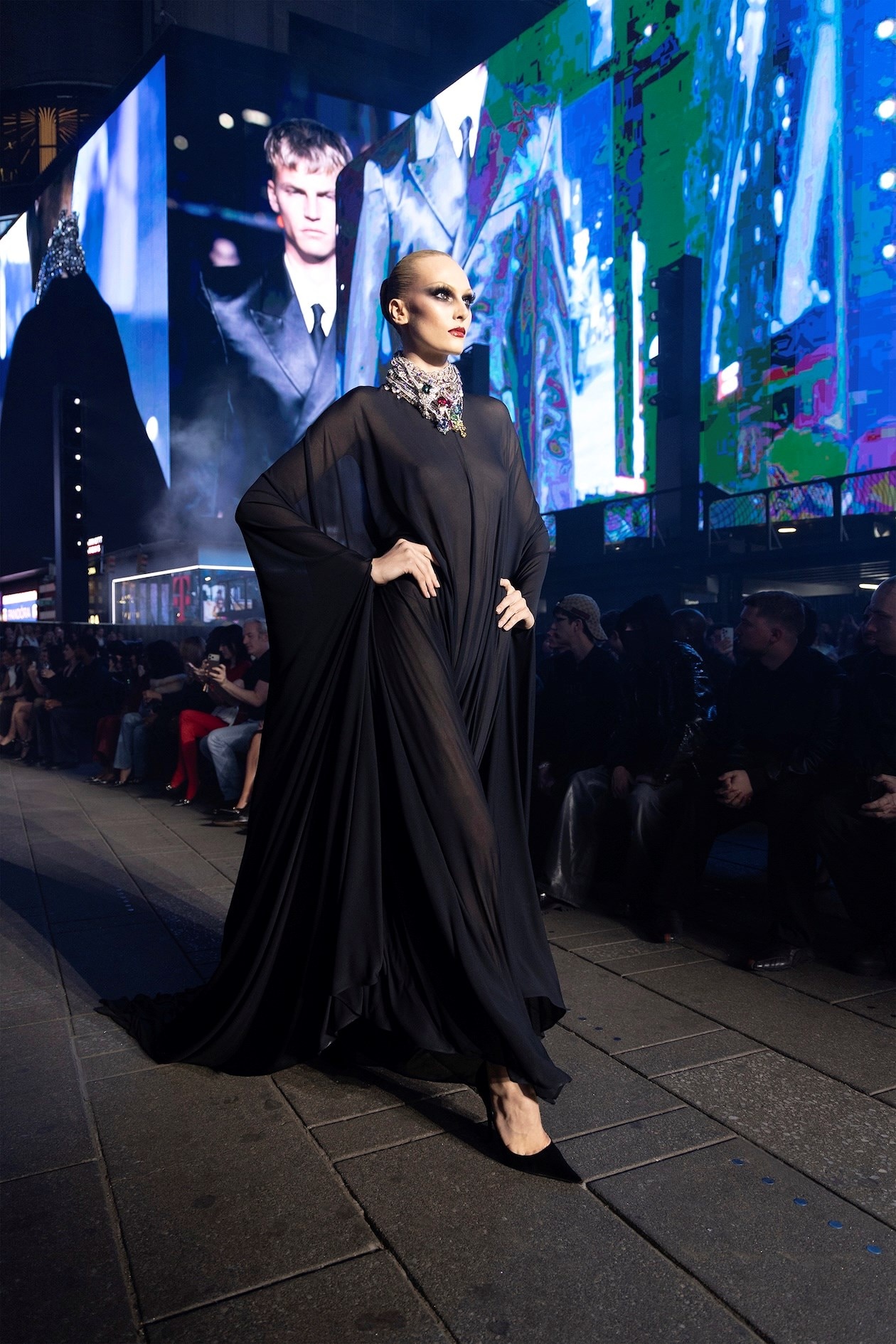
For his second Gucci show – second show, fourth collection, first stab at the touring big-top circus of Cruise, which has evolved from simply showing a selling collection into a multi-sensory, immersive brand exercise for the labels that indulge in such power play – Demna went big. Bigger. Maybe biggest. He shut down Times Square, one of the busiest thoroughfares on the planet, trudged by a quarter of a million people on a quiet day. Instead, he had just 63 models walk across its blackened concrete slabs, wearing his new Cruise 2027 collection. Demna called it GucciCore.
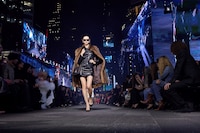
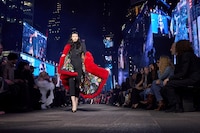
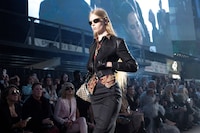
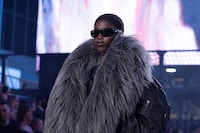
What does that mean? In popular subcultural parlance – Gorpcore, Cottagecore and the like – it defines the most central, the most fundamental attribute of a particular thing. “Unmistakably Gucci” was Demna’s own description of his aim in designing this show. But he has also sought to recalibrate Gucci as a word that’s more than just a noun – it’s about a brand as adjective, Gucci as a sensibility. Not so much unmistakable in Gucci look, as unmistakable in Gucci feeling. Which, in Demna’s mind, seems to be synonymous with an Italian breed of dressed-up glamour, a wry sense of humour, a general mood not of the dystopian but of the euphoric. That was also the justification for an array of advertising for a universe of Gucci product – most fake, some real – that blasted across the Times Square screens before the show as distracting entertainment, selling everything from high jewellery (very real), to pet accessories (real stuff, on AI mutts), to luxurious water (faux, but believable). It was also a deep plunge into brand equity, not only for a few hundred showgoers but the thousands gathered around to watch the modern fashion spectacle. As a demonstration of power – and a marketing exercise – it was hardcore.
In fashion, “core” is also the name given to a rooted collection that sticks around for a long time – core classics. Which was the aim in this collection, peopled as it was with slick suiting, tailored coats, silk dresses, denim separates, GG-logo belts, lots of bags, and a big old Gucci red-and-green webbing strap slapped like a censor bar across a bared chest as a bandeau top. And Demna’s first GucciCore model came out clutching – what else – a big red apple, pierced with a gold Gucci-branded sticker. That’s got a core, too.

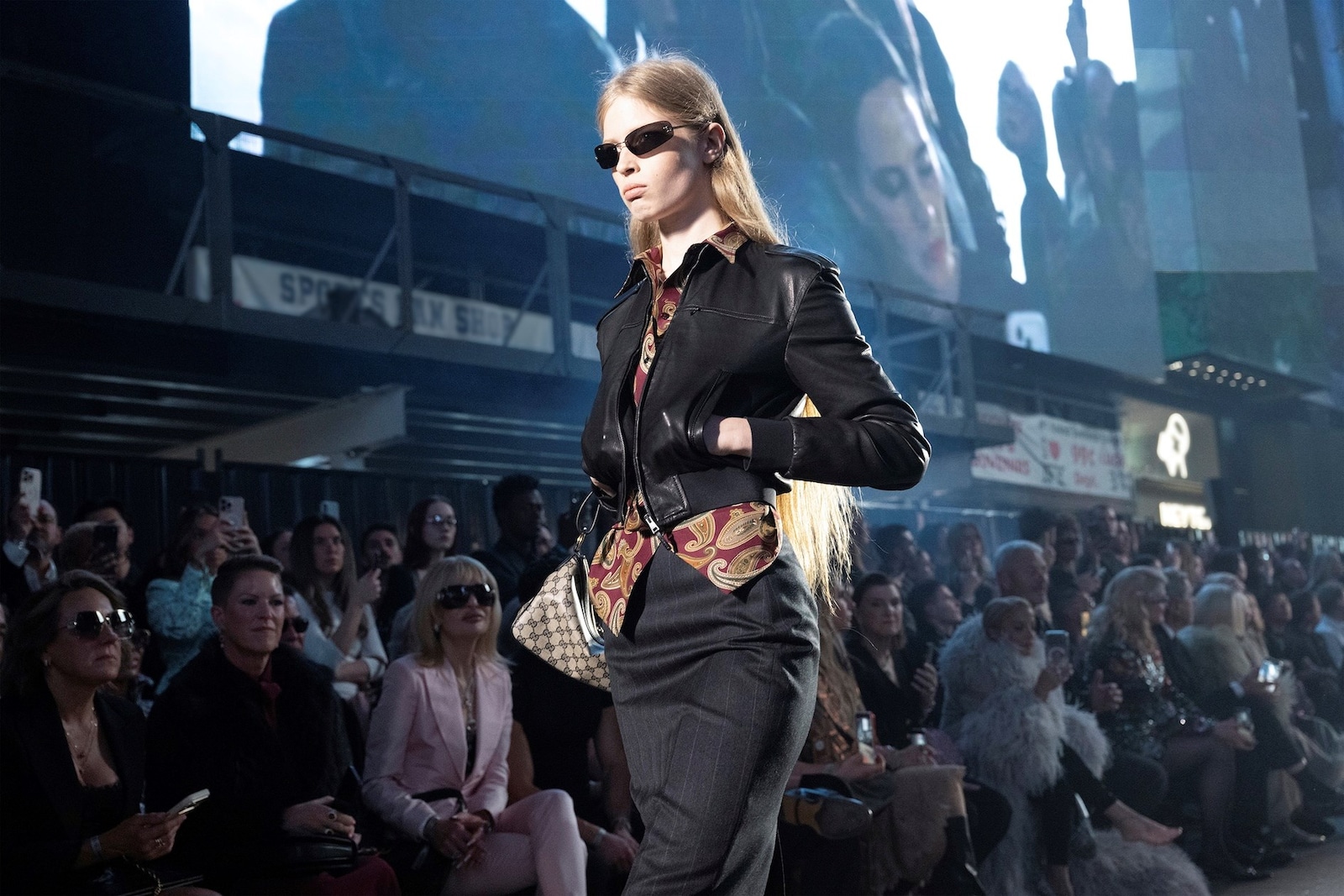
There was also, undoubtedly, a lot of Demna in this show – even with heritage Floral prints and logos a go-go, it was unmistakably him. Streetwear is a phrase that’s been thrown around a lot when it comes to Demna’s contribution to fashion across the past decade or so – a contribution that has shifted what people wear, and maybe more fundamentally how they wear it. But streetwear doesn’t just mean jeans and hoodies: if any streets demonstrate that, it’s those of New York, where ballgowns criss-cross with mashed-up jeans and tailoring worn with sneakers.
So that was the scene, in the 24-hour artificial incandescence of Times Square. It was about all walks of life: age, race, wealth disparity. Well, okay, there wasn’t so much disparity here – these clothes were all expensive – but the people wearing them ran the gamut, from chisel-jawed pinstriped bankers, through brittle Upper East Side socialites, to kids toting bodega flowers.
Many faces were familiar, either playing themselves or assuming roles. Vacuum-packed into leather, former NFL quarterback Tom Brady played into his beefcake type. Dree Hemingway was a double-take of her Nineties New York turn as Daryl Hannah in HBO’s Love Story. Cindy Crawford was archly glamorous in a feathered evening gown. Paris Hilton, even brunette, was Paris Hilton, carrying a crocodile Gucci-branded takeout container.
Demna sent out a few hundred symbolic golden keys as invites for this show – which have multiple levels of meaning. On the one hand, it was a deep cut into Gucci history – in the 1970s and 1980s, the house inaugurated luxurious gallery spaces above its Beverly Hills boutique and, later, on the fourth floor of Gucci’s former Fifth Avenue store, devised as “perhaps the most luxurious place to shop in the entire world”. You could only access it with a gilded key. And, when you win big in life, you get awarded the key to a city – a display of civic pride and gratitude, to golden children and esteemed visitors. And, of course, there’s the idea of a key as an emblem of unlocking comprehension. This collection was, perhaps, the key to understanding what Demna is doing at Gucci, tying together character studies and clothes as an expression of life. Or, rather, lives. After a debut show that focused on the notion of the body, this felt deeper – personalities, identities. And the idea of Gucci dressing lots and lots of people, in all kinds of different ways. That’s big.
