
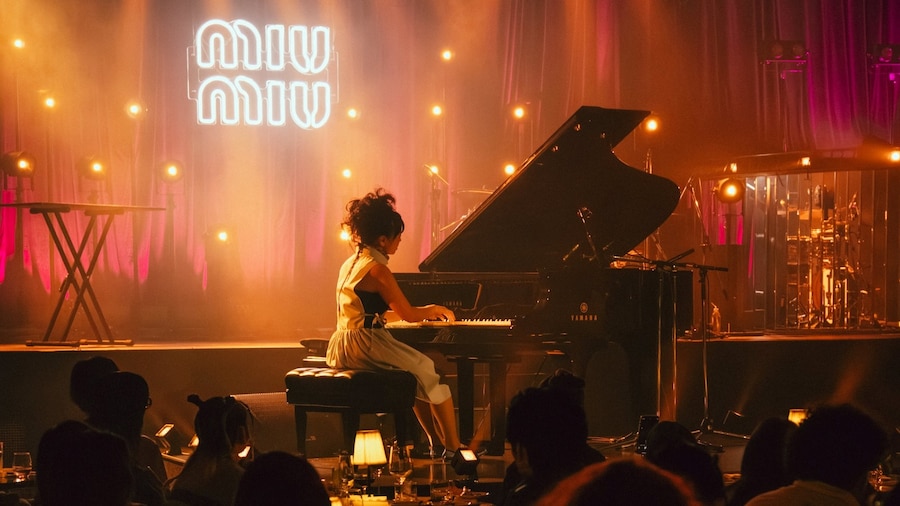
With performances by Hiromi, Reiya Terakubo, Lily, and Arlo Parks, Miu Miu Jazz Club merged fashion, music and Tokyo nightlife with the ease of a brand long practised in world-building
The cult and culture of Miu Miu is unambiguous to anyone with any discernible interest in fashion – it’s pressed into the pleats of its skirts, teased into the unruly hair of its runway models, washed in pastel across the walls of its boutiques. Increasingly, though, the brand’s universe extends beyond its distinct uniform alone. There’s Women’s Tales, its long-running short film series commissioning female directors to make films around Miu Miu garments; there’s the Literary Club, where panel discussions and live readings evolve into conversations about feminism, sexuality and consent; Encounters saw immersive New Year activations across Shanghai, Beijing and Guangzhou.

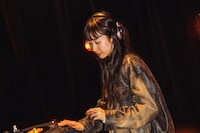

The latest addition to this expanding cultural ecosystem is Miu Miu Jazz Club, which landed in Tokyo on 13 May. The evening in question began with cocktails at the newly conceived Ginza store. A slate grey-blue VIC suite, which recently opened on the top floor, played host to a number of fabulously dressed guests – crystal embellished and aproned – before all invitees were ushered towards the wonderfully time-warped Dance Hall Shinseiki in a fleet of taxis. You shall go to the ball.
Drawing on Japan’s deep-rooted jazz culture, Miu Miu Jazz Club explores the role women have played in shaping a genre that, since the Fifties, has developed its own distinctly Japanese sensibility. Jazz in Japan became entwined with the rhythms of urban life: overheard in basement bars, kissaten and late-night clubs, as much about listening as performance itself. Miu Miu’s interpretation borrowed from that lineage while remaining unmistakably contemporary, intimate and faintly stylised. That is to say that this occasion was especially chic – at low-lit tables, velvet seats, conversations and cocktails flowed.
Inside Dance Hall Shinseiki, with its preserved Showa-era ballroom, performances leaned into the immediacy and physicality of jazz. Tokyo-based multi-instrumentalist Lily opened the night with a set folding jazz into experimental sounds, before multidisciplinary performer Reiya Terakubo moved between vocals and his trumpet for a fusion of jazz and rap. In a closing set later on, Grammy Award-winning pianist Hiromi took to the stage, performing tracks from her solo album Spectrum as well as a tender rendition of The Beatles’ Blackbird before a rapt audience.

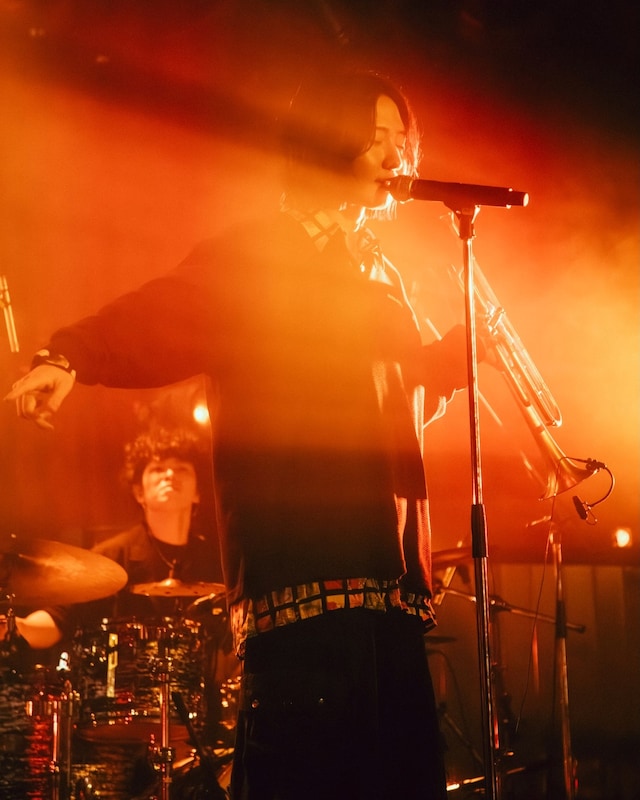
At Tokyo Kinema Club, conveniently just next door, references to cabaret and early film culture shaped a more immersive setting, eventually giving way to an afterparty and a headline performance by Arlo Parks. What lingered most throughout the evening was that unmistakable sense of Miu Miu-ness in the curation itself. Few fashion brands are able to construct an atmosphere so total without tipping into parody. Perhaps that instinct comes from Miuccia Prada herself, who continues to inform the intellectual undercurrent running through the brand. For all its playful surface pleasures, Miu Miu has long understood that clothes alone are rarely enough. What it offers is a fully realised world view, one attuned to culture, femininity and the subtle art of making people feel as though they are part of something worth dressing up for.
