
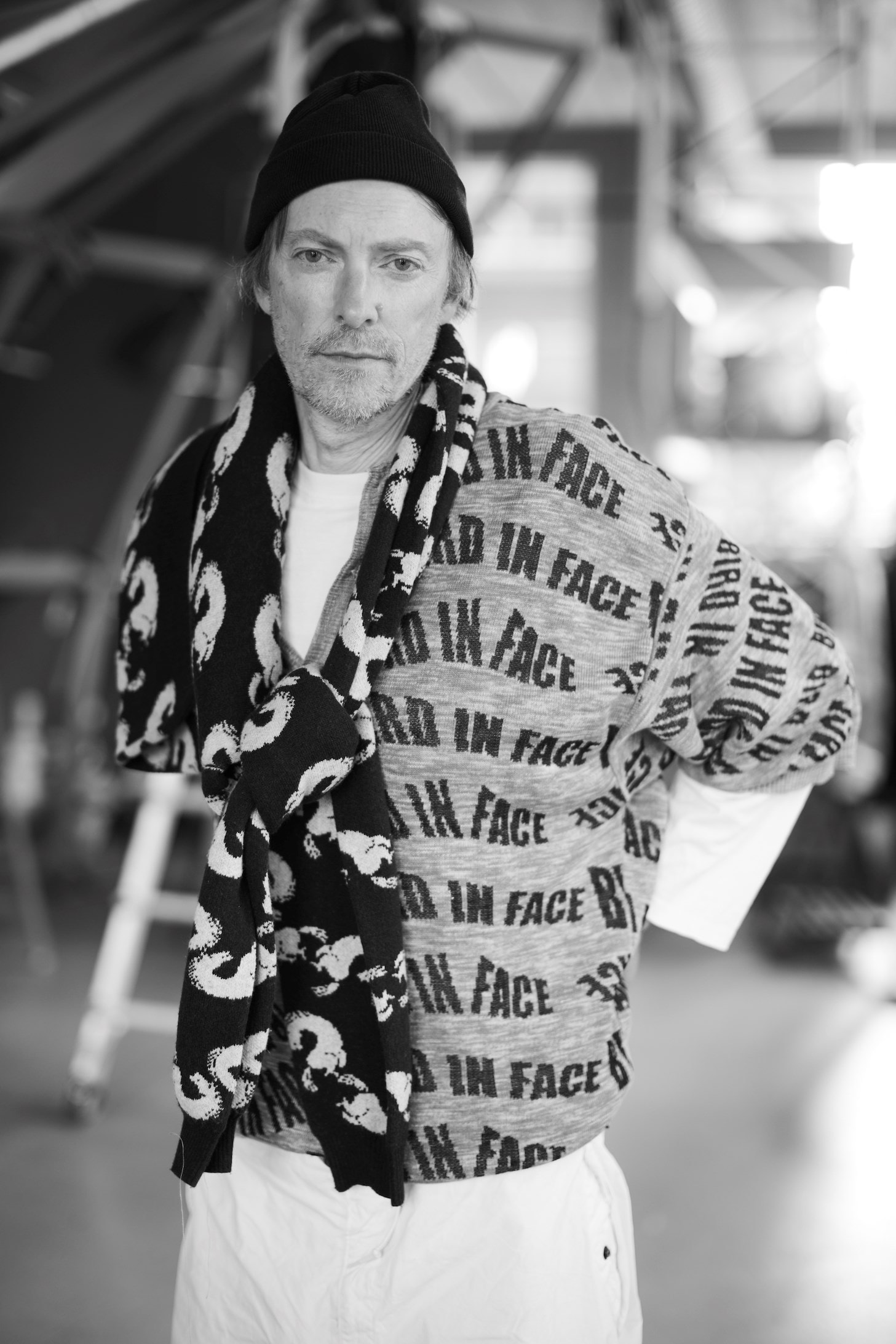
Henrik Vibskov has long operated slightly to the side of fashion’s centre, building a practice that moves easily between clothing, installation, music and performance. Since graduating from Central Saint Martins in 2001, the Danish designer has become known for his expansive, often theatrical universes – collections that spider into environments, where garments live inside wonderfully odd scenography, immersive soundscapes, and a distinct sense of humour.
Over the past two decades, he has presented more than 40 collections (though he now primarily shows in Copenhagen, he will still occasionally take presentations to Paris) and exhibited work everywhere from MoMA to the Palais de Tokyo. There’s also his multi-brand namesake boutique – or rather, universe – in his hometown, which he runs and does all the buying for. If Vibskov’s immense creative practice transcends any tidy classification, it’s simply human nature to him – how he squeezes coherence and vitality out of the world.
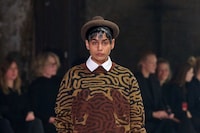
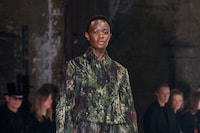
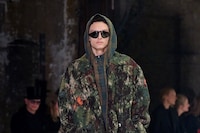
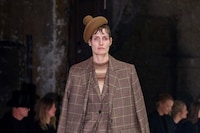
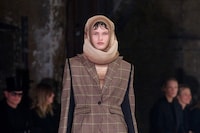
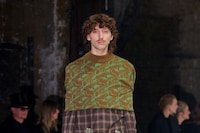
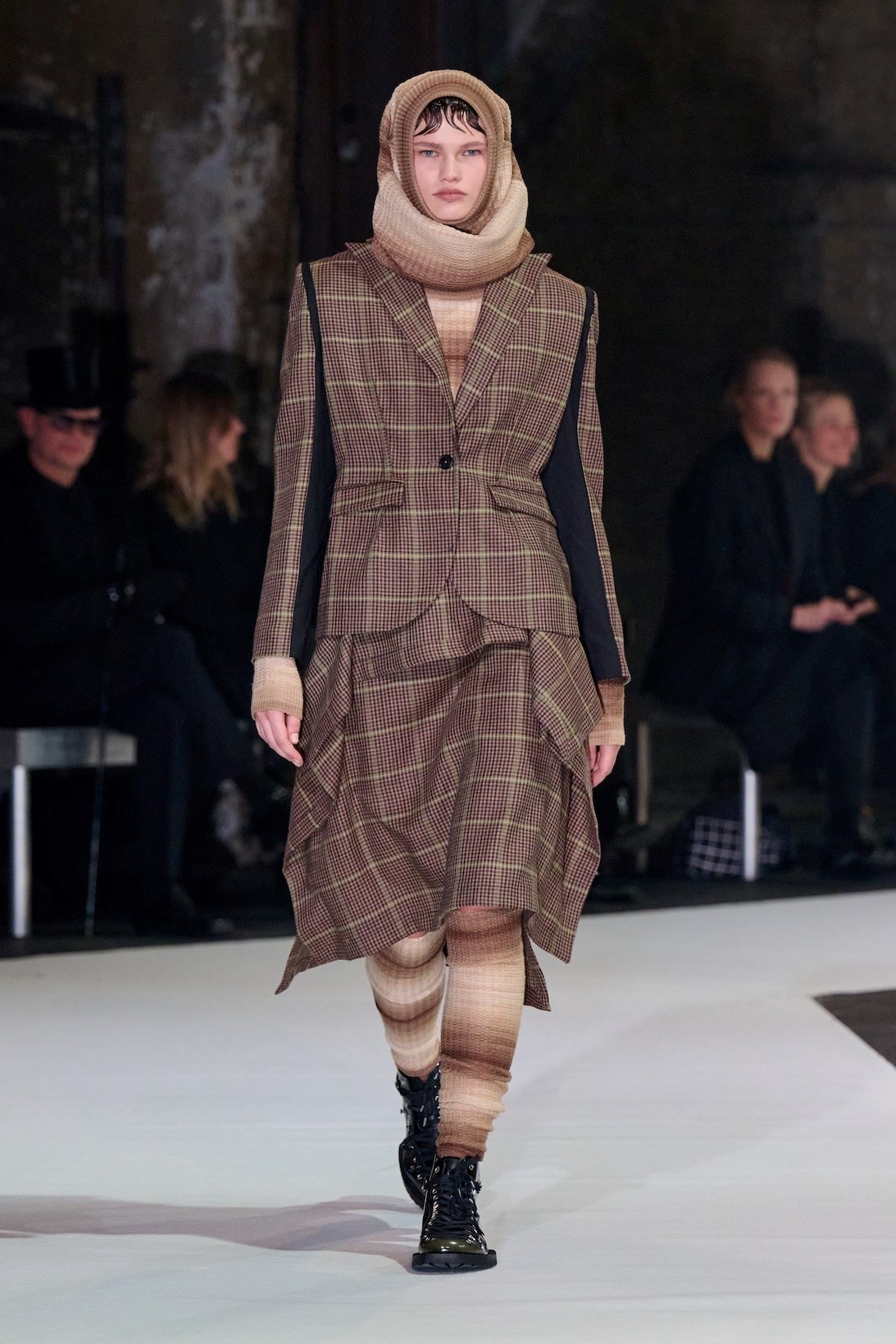
In Paris for a panel on craftsmanship at the Maison du Danemark, Vibskov is – as ever – sliding between disciplines and ideas. His latest collection at Copenhagen Fashion Week, Frog Carry Frog, began with the sighting of a fire-belly frog and expanded into a meditation on shared weight, collective labour, and the unseen systems that sustain life. A typically Vibskovian starting point: unexpected, textured and bubbling with surreal possibility.
We sit down with the designer on a terrace in Paris for 20 questions: on frogs, fabrics, foot massages – and the importance of keeping things just a little bit complicated.
1. What are you up to in Paris?
I’m part of a panel talk about craftsmanship tonight at the Maison du Danemark. They’ve collected some different people towards an exhibition and to talk about craftsmanship.
2. How would you describe the Henrik Vibskov universe in three words?
Complicated, multiplied, connected.
3. What first drew you to fashion as a medium?
I came from music – I started playing when I was young. I realised in my late teenage years that identity around music is so strong. Everybody was dressed in a certain way, reading the same books, seeing the same movies, listening to specific music.
Together with music, appearance is super important. It would be boring to go to a concert if the lights were off. Music kind of started it, and then I applied to Saint Martins – also because of a girl I fancied. I got in, and I got her. That’s how it started.
4. Your shows often unfold as elaborate worlds with props, performers and sculptural sets. What excites you about staging fashion as an environment rather than just a runway?
It was super important to create a bigger view on the concept than just the runway and products. Putting more things together, working with a set or a performative part, made it more fun and gave it something else. I’ve been doing it for 20 years now. The playfulness and humour are super important to keep me going, otherwise it becomes a bit boring.
5. Your latest collection, Frog Carry Frog, began with a fire-belly frog sighting. What fascinated you about that moment?
I went to a small island with a group of friends and kids, and suddenly there was a sign saying a fire-belly frog was there. I’d never heard about it – it was very site-specific and pretty beautiful. Then I started looking into frogs – movies like Magnolia, where it rains frogs, all kinds of perspectives. And then we saw the frogs carrying each other, helping each other.
6. What can humans learn from frogs?
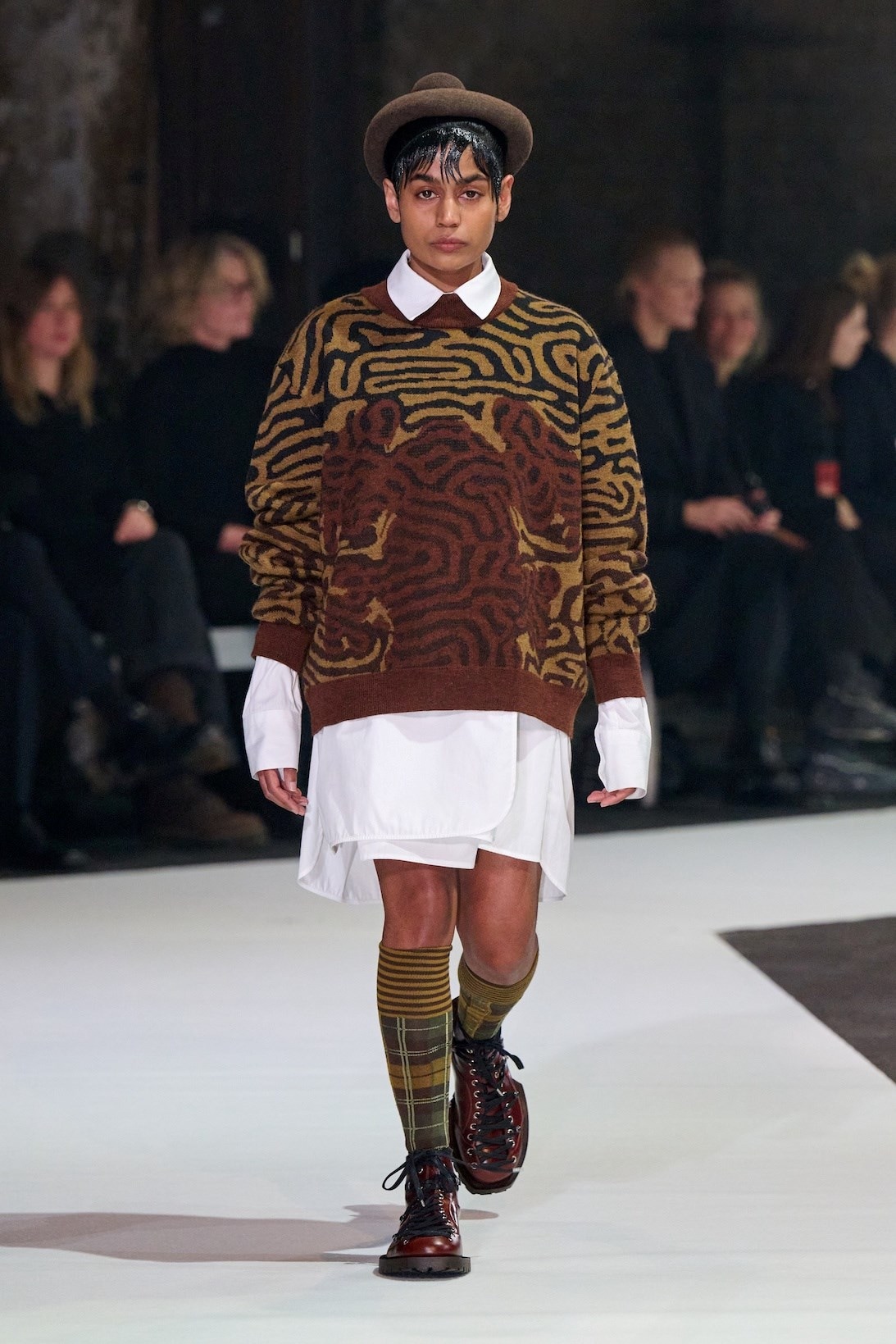
This idea of carrying, helping each other, shared weight, taking care of things. We translated that into the show – ladders, carrying systems, like a weird fitness club. Also colours, shapes, faces, structures in knitwear and wovens. Just zooming in and going a bit nuts on that theme.
7. What usually comes first when you start a new project: a material, an image, or a story?
We have to come up with some concept quite fast, because we need to create all the textiles – prints, wovens, structures – which are produced in France and Italy. They need some kind of identity or artwork. So we need something to drag everything from. Sometimes it flows easily, other times it’s more difficult. The recent ‘cream’ idea was more difficult.
8. What about cream?
Skin cream. Since I was five, after going to public swimming pools, there was a thick cream they’d put on me for itching and burning. It’s a very personal thing. So, we started with cream, and then we added feet. You can also get a foot massage with cream – when I go to New York, I love to go to Chinatown for a foot massage, it helps with the jet lag. So now it’s this whole world of cream and feet.
9. You work across fashion, installations, music and performance. What connects all these worlds for you?
Craftsmanship somehow connects them – being able to move across different areas and try to unite them, like fibres in weaving.
10. If you could have any other profession, what would it be?
Maybe something that stays longer. Fashion is so quick, so fast. Something like architecture – something that stays for 100 years. That could be nice.
What’s your personal mantra? “To always question things” – Henrik Vibskov


11. Copenhagen fashion has changed enormously since you graduated from Central Saint Martins in 2001. What makes the city special today?
It’s become much more international. You hear English everywhere now, which wasn’t the case before. There are more people coming in – students, people working, tourism. And fashion week has grown, with more people coming.
12. What is the most unusual object you’ve ever put on a runway?
We did these big mouth objects – like nutcrackers – with strings so you could open and close them. That became about communication. And then there was the salami show in Paris. We used real salamis, with a chef slicing them for the audience. The whole room was smoky. It was very weird – but very fun.
13. What music do you listen to when you’re working?
Indie music, dreamy, noisy stuff – shoegaze, electronic. A lot of British music.
14. What have your students taught you recently?
Teaching has become quite tricky. You have to be careful what you say – everything becomes very personal. Students bring a lot of individual issues into projects, so you end up talking about life as much as design. It’s changed a lot.
15. What’s your most cherished item of clothing?
There’s an old Raf Simons piece I’ve had for many years – a scarf in red, white and blue. I’ve worn it a lot. But not today, because I need to be serious.
16. What’s your biggest vice?
I used to smoke – I’m trying to step away from nicotine. That’s been tricky.
17. What is the most important quality for a designer today?
Material awareness. When I studied, it was all about expressing yourself as much as possible. But now the world is changing – our resources and environments are collapsing.So materials have become the main focus: what you use, how long it lasts, what impact it has.
18. What keeps you creatively curious after more than 40 collections?
Working on different kinds of projects. I like having diversity – things that can inspire each other. Theatre, installations, textiles, clothing – these different things keep the passion and curiosity alive. My brain needs to be challenged.
19. What’s your personal mantra?
To always question things. Like, okay – it’s pink, but what if it was another colour? To always look at things from another angle. It’s also a bit annoying sometimes, but it keeps things open.
20. What question should I have asked you?
Maybe just: how are you?
