
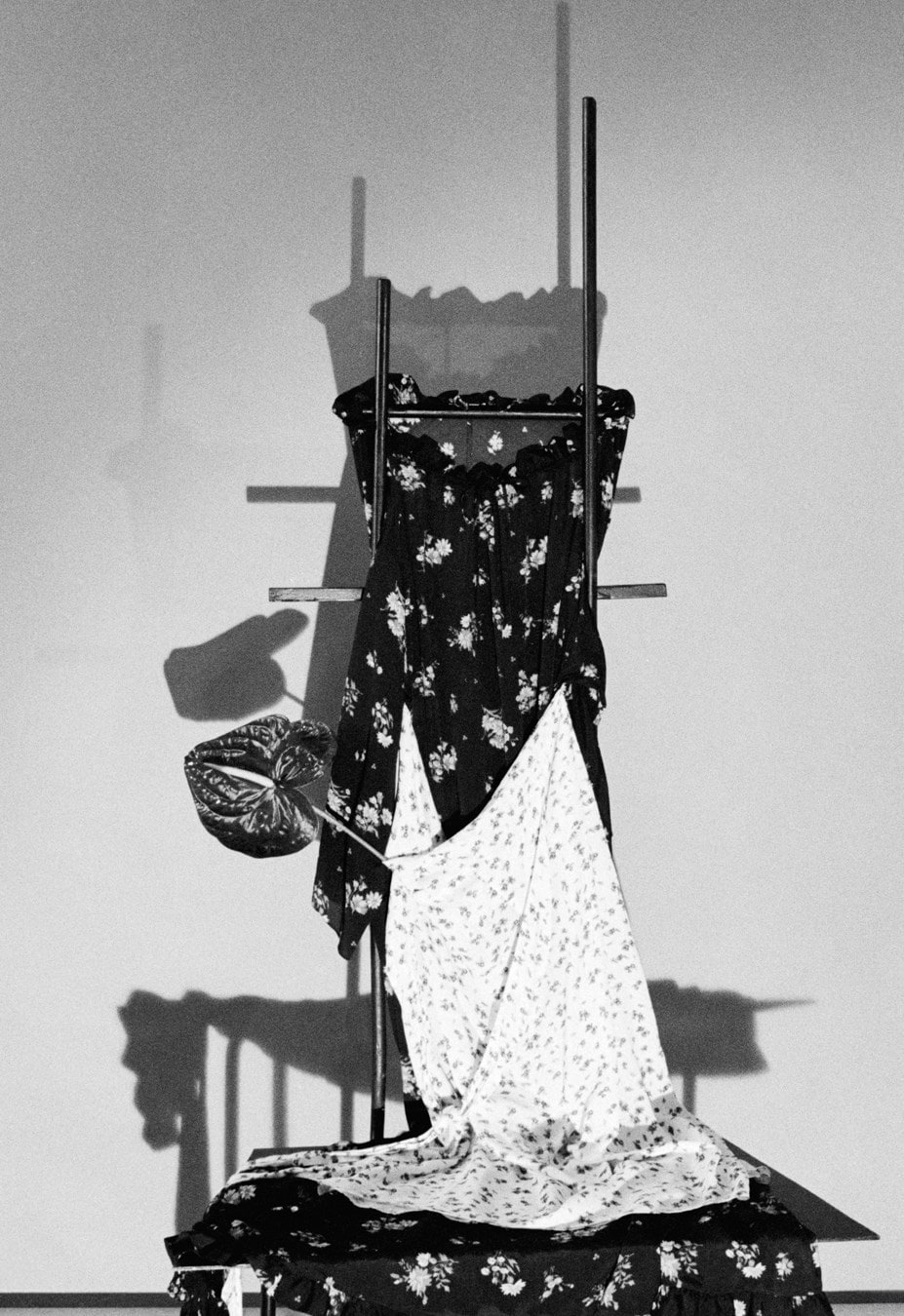
This story is taken from the Spring/Summer 2026 issue of AnOther Magazine:
Despite the grey reality of it all, there’s something inherently cinematic about an airport. It’s a place defined by transition, where people exist in a suspended state between departure and arrival.
Fashion has always been drawn to these buildings and their transient nature. Designers have transformed their catwalks into their own glossy take on the humble departures terminal, from Karl Lagerfeld at Chanel to Nicolas Ghesquière at Louis Vuitton and others in between.
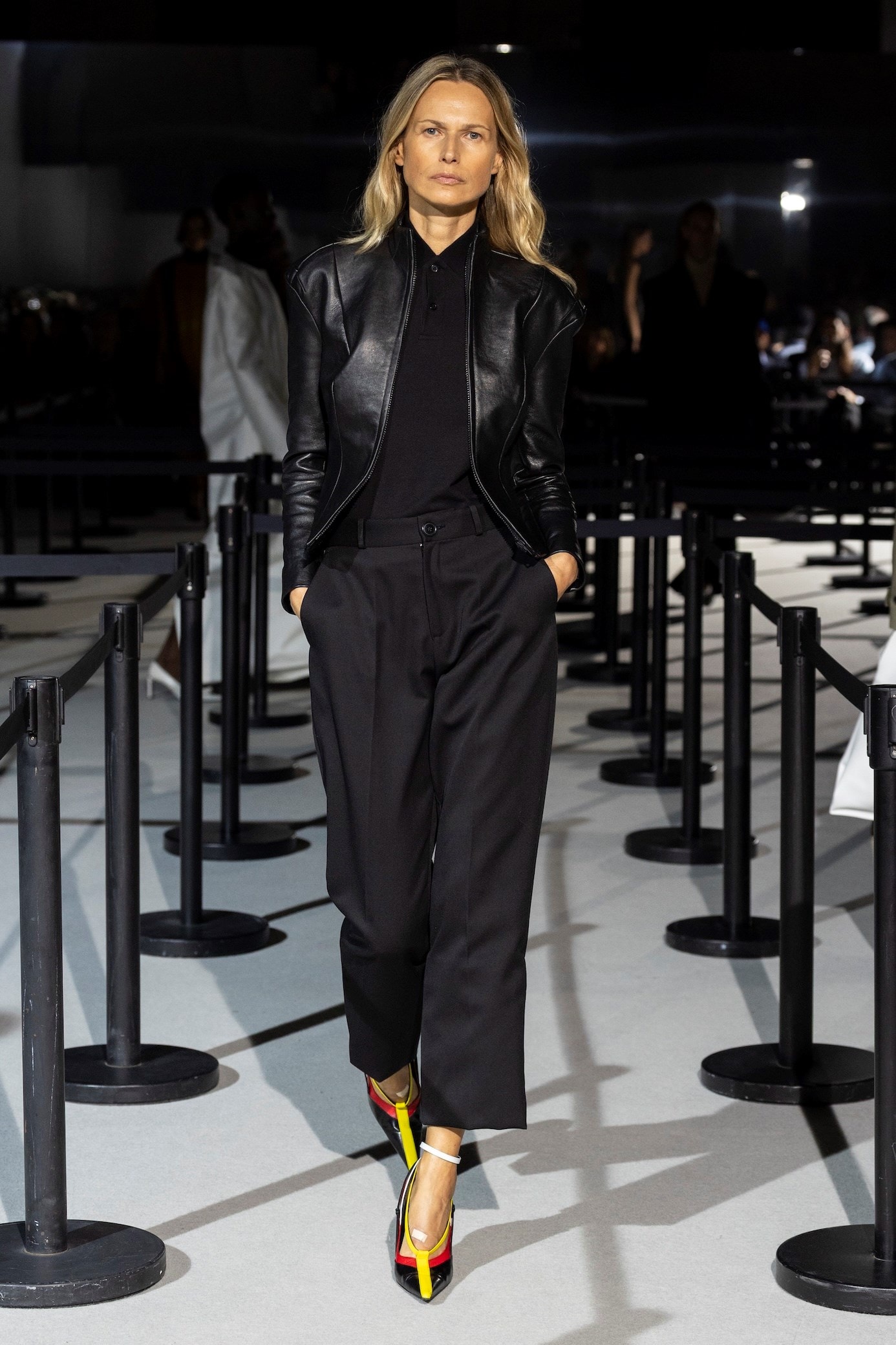
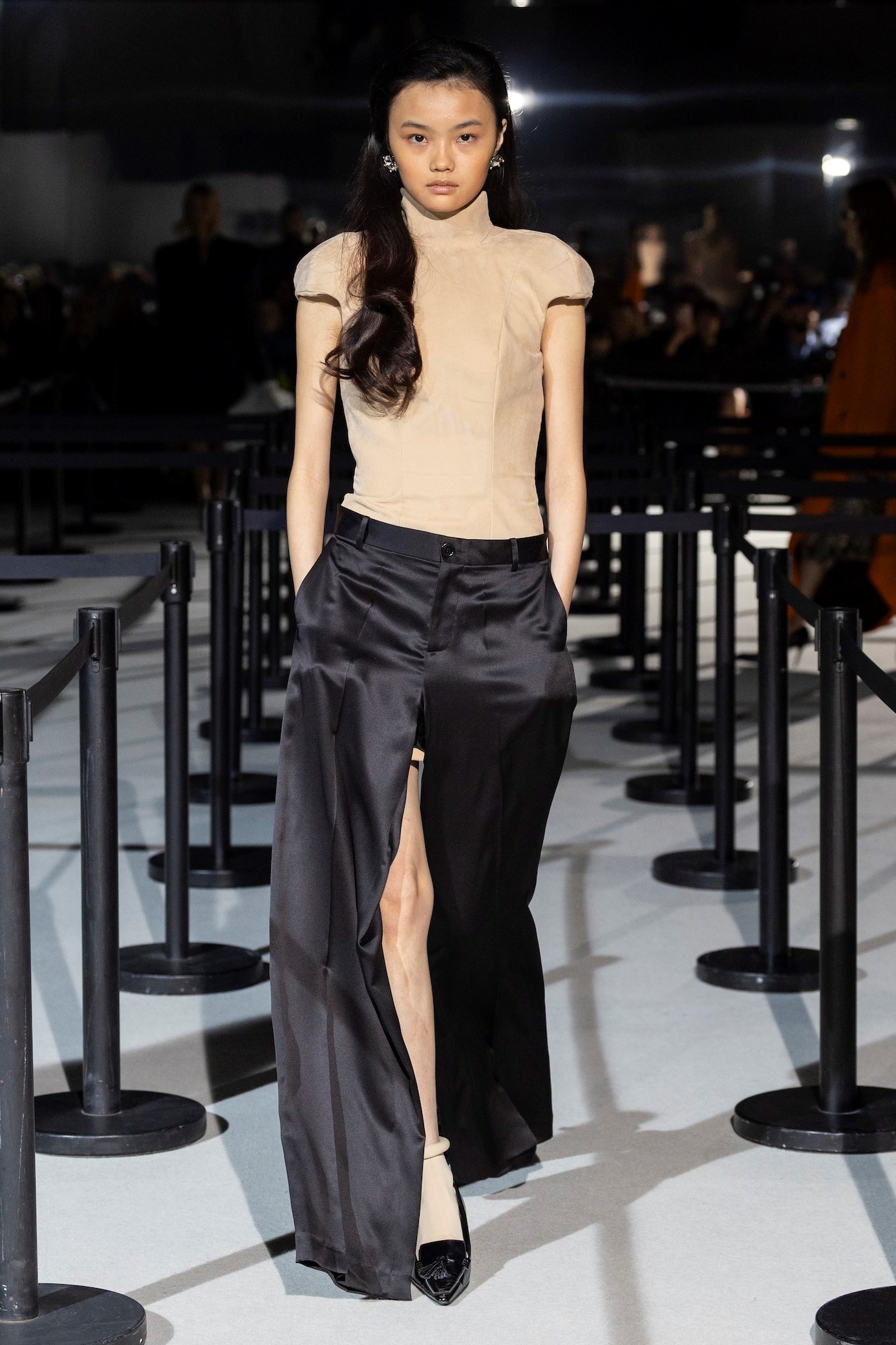
It’s exactly this super-charged, liminal space that became the backdrop for the Spring/Summer 2026 show of the rising Belgian designer Marie Adam-Leenaerdt. For most of us, air travel means oversized hoodies, comfortable trainers and tracksuit bottoms with ever-forgiving elasticated waistbands. The Marie Adam-Leenaerdt woman, however, has something far more considered up her neatly buttoned sleeve. She glides through security, passport in hand, in sharply cut black tailoring softened by intelligent, imaginative construction – a draped coat that can be unbuttoned and reconfigured to a suit, or a fluid pair of trousers cut to hang perfectly.

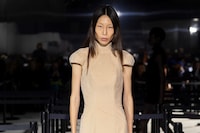
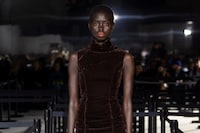

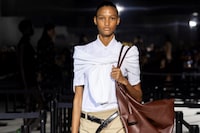
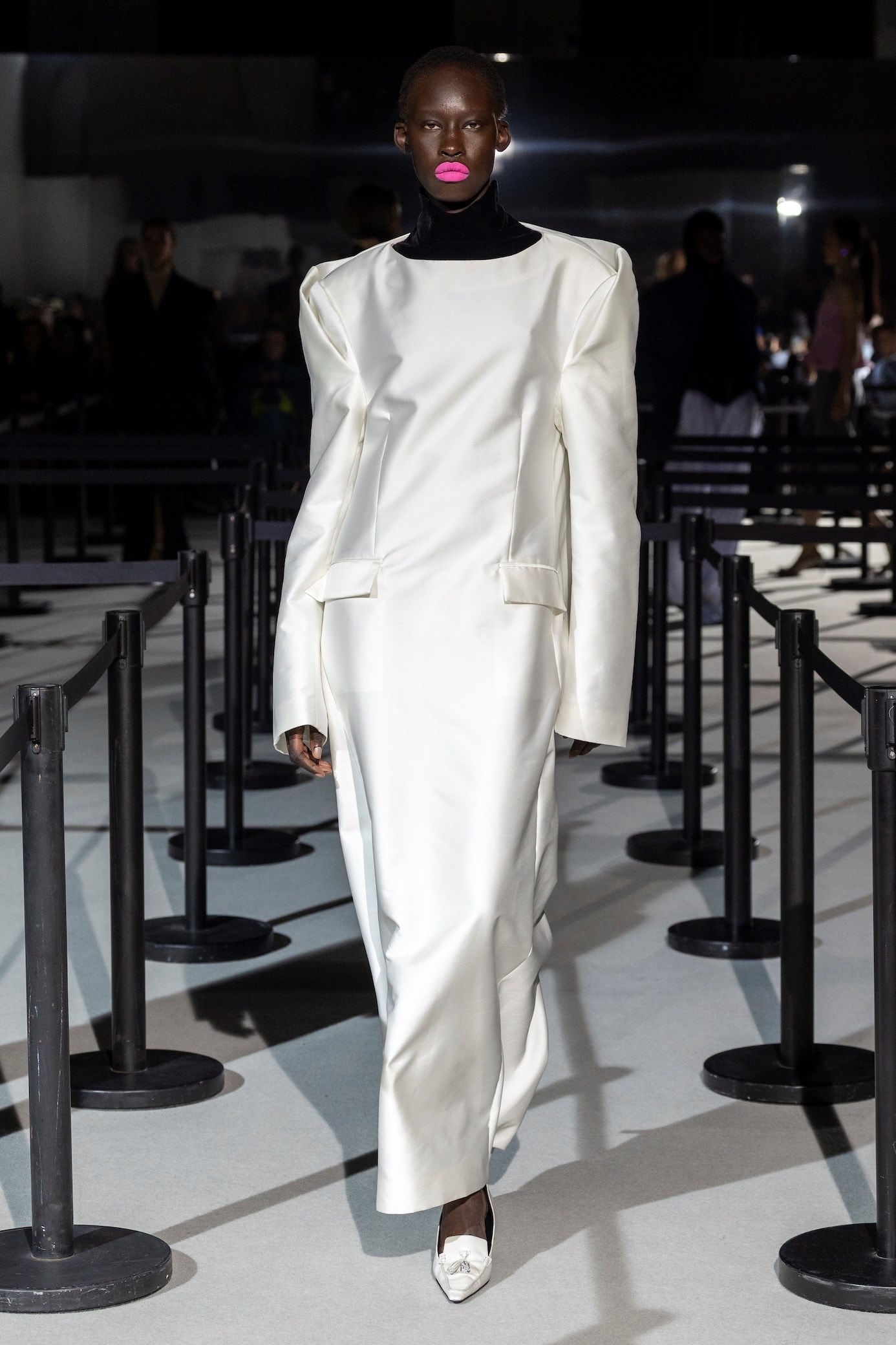
There’s a thrill in imagining Adam-Leenaerdt’s pieces passing through the X-ray machine – the chunky metal buckles of a blown-up trench and sculptural curve of a kitten heel flashing up as items of interest on the screen. Her clothes are designed not purely to be looked at but really lived in. “The Marie Adam-Leenaerdt woman is curious and practical, in the most elegant way,” the designer says. “She doesn’t dress to perform or show off her status. She really believes in the pieces that she wears and their place in her wardrobe – pieces that are intelligent, multifunctional and built to last.”
This sense of real life clashing with fashion fantasy is the red thread that runs throughout Adam-Leenaerdt’s work. She may have swiftly risen up the ranks of the industry to become a buzzy name to know, but there’s none of the assumed glamour that goes along with that – the Brussels-based designer laughs when I ask her what last took her to the airport herself. “It was a trip I took to Bologna, to the factory I work with on my shoes,” she says.
“I suddenly saw fashion as a concept, a philosophy – a way of thinking” – Marie Adam-Leenaerdt
Having cut her teeth at Balenciaga, under Demna’s watchful eye, Adam-Leenaerdt founded her namesake label just over three years ago, in 2022. The business has snowballed in the time since, earning a place on the official Paris Fashion Week schedule, with Adam-Leenaerdt being named a finalist for 2024’s LVMH Prize soon after. Unsurprisingly, there has not been a lot of time for holidays of late. “But it’s really important to me to create a full wardrobe and have a lot of diversity in my work. I love to create shoes and bags and jewellery as much as coats and dresses. I like to challenge myself,” she adds.
Her LVMH Prize nod marked a turning point for her nascent brand. It was an affirmation that her intelligent, playful approach to design resonated far beyond Belgium, but also strengthened her resolve not to get caught up in the potential chaos from a sudden explosion of attention. Instead of relocating to Paris, she doubled down on a feeling that told her to stay in Brussels and do it all from there. “It felt too competitive, too ‘fashiony’,” she says of the French capital. The decision speaks volumes about her values: to stay close to family and maintain the space, both literally and mentally, to allow for consistent, thoughtful creativity.


Indeed, family looms large in Adam-Leenaerdt’s creative universe. Her maternal grandmother, Hannelore Klees, who lived to be 100 and didn’t stop wearing heels until a couple of years before that, was an early influence and introduction to the power and magic of clothing. “I’d spend hours as a child in her dressing room, surrounded by shoes and dresses and jewellery,” Adam-Leenaerdt remembers.
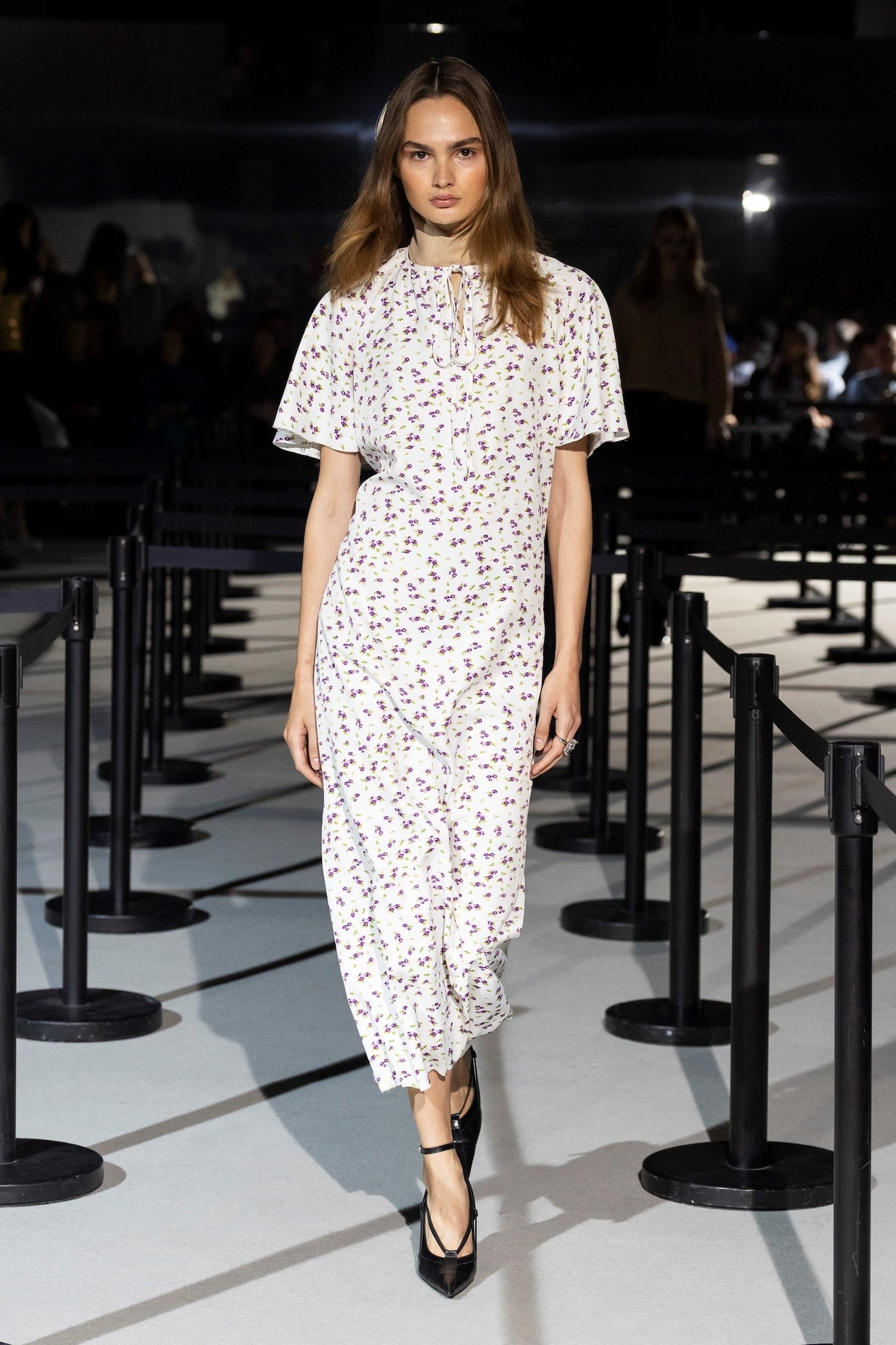
One dress of hers remains vivid in the designer’s memory: a black mesh piece with glinting silver and gold stripes, which she wore with a pair of low-heeled, elegant court shoes. It’s easy to trace a line from that particular look to Adam-Leenaerdt’s own work, in which metallics, animal prints and faded florals that look like they could have been stripped from your own granny’s bed rub up against one another, deployed with restraint rather than excess.
“I love to see how my customers interpret my work. That’s what is exciting to me” – Marie Adam-Leenaerdt
In theory, staying close to home could narrow one’s worldview. But in Adam-Leenaerdt’s case, the opposite is true. Her collections so far have demonstrated an innate talent for making even the simplest of garments feel sharp, modern and quietly radical. She’s into wild prints, sure, but her love of uniform dressing – initially taking root when she was enrolled in one of the few schools in Belgium that called on its pupils to wear identical shirts and ties – shines bright, and she is intent on supplying everything needed for what she calls “a necessary wardrobe”. Importantly, her pieces transcend trend and age categorisation in an industry enraptured by youth and tethered to the churn of the trend cycle.
In this, she joins a long line of Belgian designers who have approached fashion from an intellectual standpoint, taking it beyond just aesthetic expression, with Martin Margiela her point of entry into this world. When she had just left secondary school, she visited The Belgians: An Unexpected Fashion Story, a 2015 exhibition in Brussels that traced the impact of designers including the Antwerp Six, Raf Simons and Olivier Theyskens. She took the accompanying book home and read it obsessively during the holidays, something clicking inside her the more she flicked through its pages. “I suddenly saw fashion as a concept, a philosophy – a way of thinking,” she says.


She found her feet at La Cambre, the revered Brussels art school where the likes of Matthieu Blazy, Anthony Vaccarello and Theyskens also passed through the halls. “For me, La Cambre is the best school in the world,” she says. “It’s not about aesthetics at first – you’re taught to create things that make sense. Undoing and remaking garments, to understand them from every angle.”
Adam-Leenaerdt is attracted to the banal and mundane: cocktail tables, plastic garden chairs, airport arrivals halls. Everyday objects and situations reimagined anew are a cornerstone of what she does. Fashion is heavily codified, and Adam-Leenaerdt loves to play with those codes, challenging them by deconstructing and putting them back together in a different, unique way. A recent fixation has her hooked on DIY sewing patterns, which speaks further of her interest in creating clothes that become their wearer’s own.
“I love to see how my customers interpret my work. That’s what is exciting to me,” she says. In an industry obsessed with novelty, where designers seem to be more revered for creating viral social-media moments than actually excellent clothes, Adam-Leenaerdt offers something rare: a vision of the ordinary that manages to feel compelling.
This story features in the Spring/Summer 2026 issue, marking 25 years of AnOther Magazine, on sale now.
