
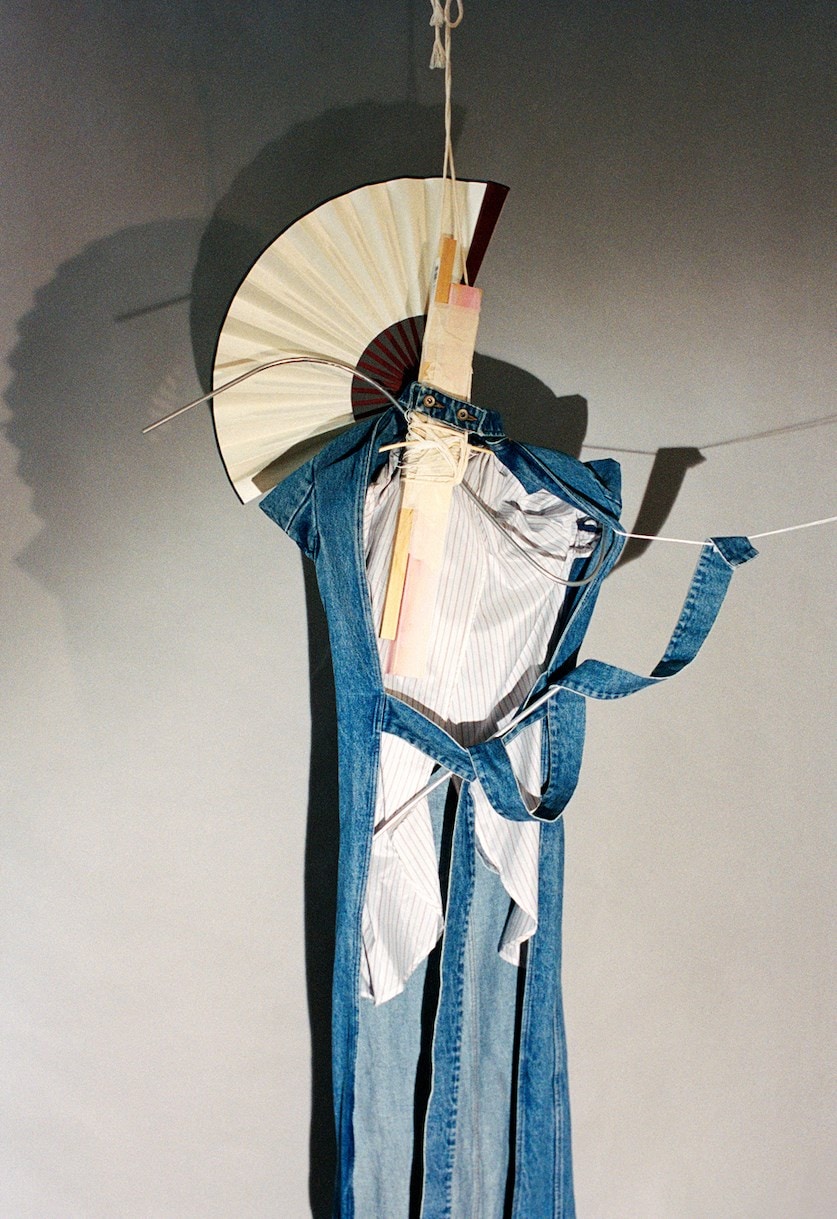
This story is taken from the Spring/Summer 2026 issue of AnOther Magazine:
While speaking with the designer Torishéju Dumi, the conversation often returns to a sense of the in between – whether strength alongside vulnerability, exposure paired with protection, or softness beside discipline. “I think tension just comes from lived experience,” she says. “It’s always there, whether you name it or not.” Dumi is Nigerian Brazilian, born in northwest London and raised in Buckinghamshire and Hertfordshire: it’s a layered background that has informed not only how she designs but how she understands the world. There’s an ease and hybridity in both her work and her language – different cultural references, emotional registers and ways of being coexist without being flattened into a single narrative.
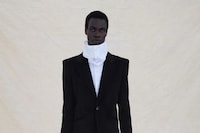
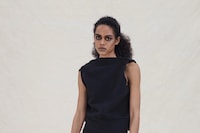
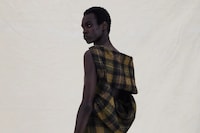
Dumi studied at the London College of Fashion, then completed her master’s at Central Saint Martins in 2021 – during that time she also interned at Phoebe Philo’s Celine and Ann Demeulemeester in Antwerp. Her first collection, a capsule titled Mami Wata, was released in early 2023. Its name was taken from that of a water spirit of Nigerian and South American folklore and it featured sculptural pieces made from deadstock material designed to mimic the motion of fabric submerged underwater. Naomi Campbell and Paloma Elsesser walked in her Paris Fashion Week debut, held later that year, opening and closing the show, respectively. “I made those pieces after work and on weekends,” Dumi says. “At the time I had a job on the costume course at the London College of Fashion and I loved it – but I also wanted to find something to do during my own time, because I wanted to keep on making. So I made those pieces at home, in my kitchen. It wasn’t meant to become a brand.” Yet that second collection, titled Fire on the Mountain, caught the eyes of industry heavyweights. Those included both the Victoria and Albert Museum and Andrew Bolton of New York’s Metropolitan Museum of Art, who acquired several pieces from the collection for its spring 2024 exhibition, Sleeping Beauties: Reawakening Fashion, which brought together garments spanning four centuries that were connected by themes of nature.
“I received messages from young Black girls saying how meaningful it was for them to see someone who looked like them involved at that level” – Torishéju Dumi
So much has shifted for Dumi when we meet at the end of 2025 that she says she’s still processing much of it. As recognition arrived quickly, many things fell into place that she never imagined – milestones she describes as experiences that carried weight. Working on Kendall Jenner’s 2025 Met Gala look was one such moment, particularly because parts of the fitting process were shared publicly. The outfit, styled by Gabriella Karefa-Johnson, who also works on Dumi’s catwalk shows, was an elevated grey skirt suit comprising a plunging blazer with ruched padded shoulders and a floor-length skirt. It was designed in homage to the African American blues singer and Harlem Renaissance icon Gladys Bentley. “I received messages from young Black girls saying how meaningful it was for them to see someone who looked like them involved at that level,” Dumi says. “That stayed with me more than anything else.”
Other moments, too, were genuinely surprising, like being awarded an honorary doctorate by the University of the Arts London, which she describes as “collective”, to be shared with her mother and grandfather. Another was receiving the LVMH Savoir-Faire Prize. During the interview process for that, she became flustered, overwhelmed by the intensity of it all, when the Louis Vuitton Men’s creative director Pharrell Williams offered a simple piece of advice that has stayed with her: “When you get flustered, you rob yourself of what’s meant for you.” It resonated because it articulated something Dumi already understood. What matters most to her, she says, is that recognition remains rooted in the work itself. Identity is not something she wants to perform or fulfil on demand. For Dumi, being seen must exist alongside autonomy.

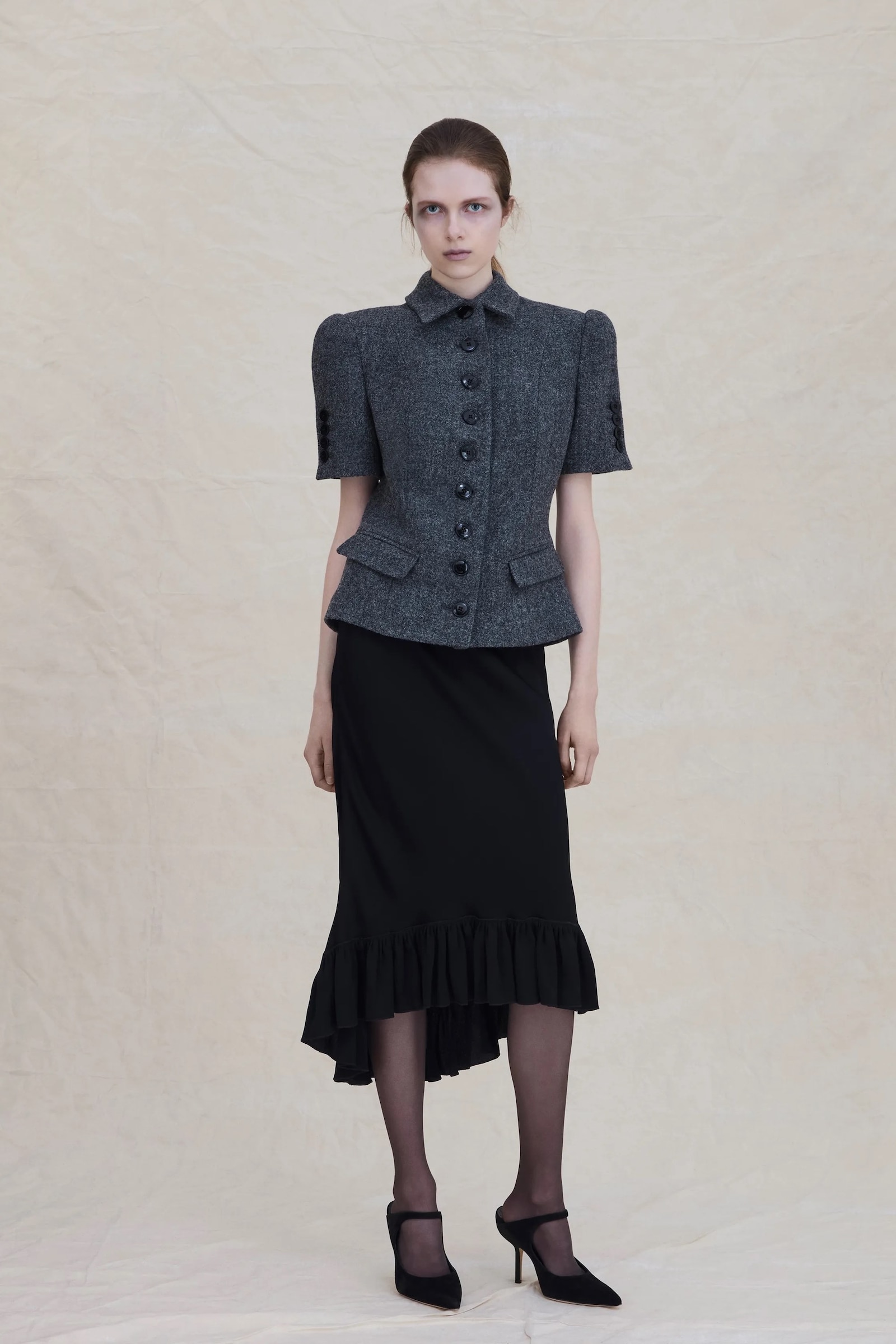

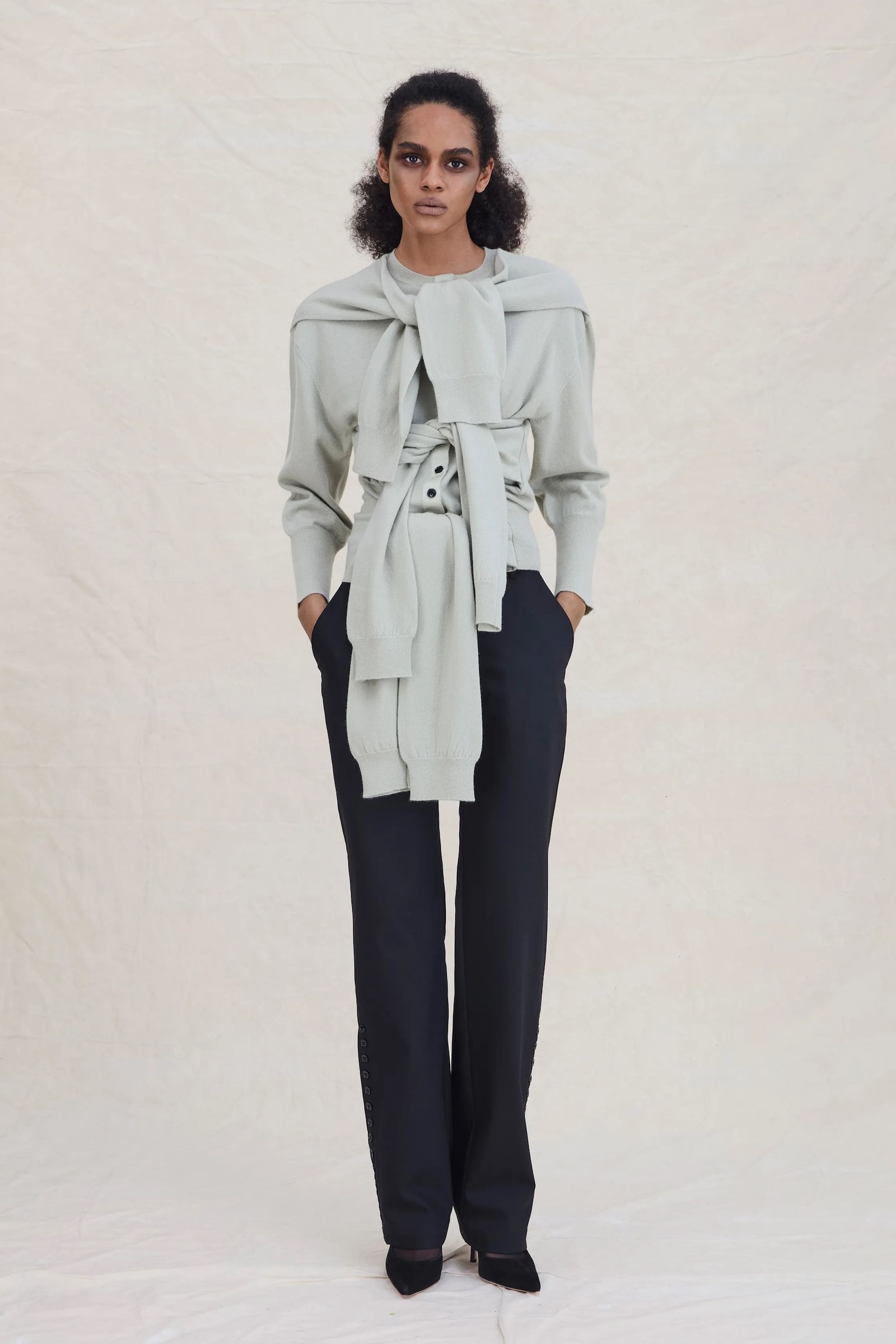
Today Dumi lives in London, but home for her is her mother’s house, tucked away in the small town of Newport Pagnell, Buckinghamshire, a place where she can return to a more childlike openness. That sense of safety feeds into her work, even when it isn’t consciously referenced. “There’s often a tension present in my collections,” she reflects, “and I think it comes from experiences like my family, school and early life. I think these are things that stay with you whether you revisit them or not. Growing up, whenever we had Nigerian parties, I’d always see men wearing these big white shirts with a wrap underneath and sometimes trousers, and I remember asking my mother why I couldn’t wear the clothes my uncles and grandfathers wore. Questioning that has stayed with me.”
“Once the world is defined, the garments emerge naturally” – Torishéju Dumi
Dumi studied menswear for her BA at London College of Fashion and still finds herself asking whether she would wear a piece if she were a man. There’s an enduring affection for the practicality of menswear, for pockets and functionality, alongside a deep attraction to softness and sensuality – masculine and feminine-adjacent forces in constant conversation. Nigeria’s history of British colonisation, meanwhile, and the resulting fusion of traditional dress with European tailoring, also create a visual language that informs her.
The quiet dialogue Dumi creates between memory and projection, interior life and the outside world, is especially clear when we talk about decay and beauty, themes that recur across her collections. “We live in a world that feels contradictory,” she says. “It’s painful and decaying, but it’s often masked by distraction, excess and forced optimism.” Fashion, she says, is a way of responding to that contradiction, not by smoothing it over but by holding it in place. “Before I think about garments, I want to understand the world they exist in – the atmosphere, the psychology,” she says. Clothes are never just objects; they carry atmosphere.

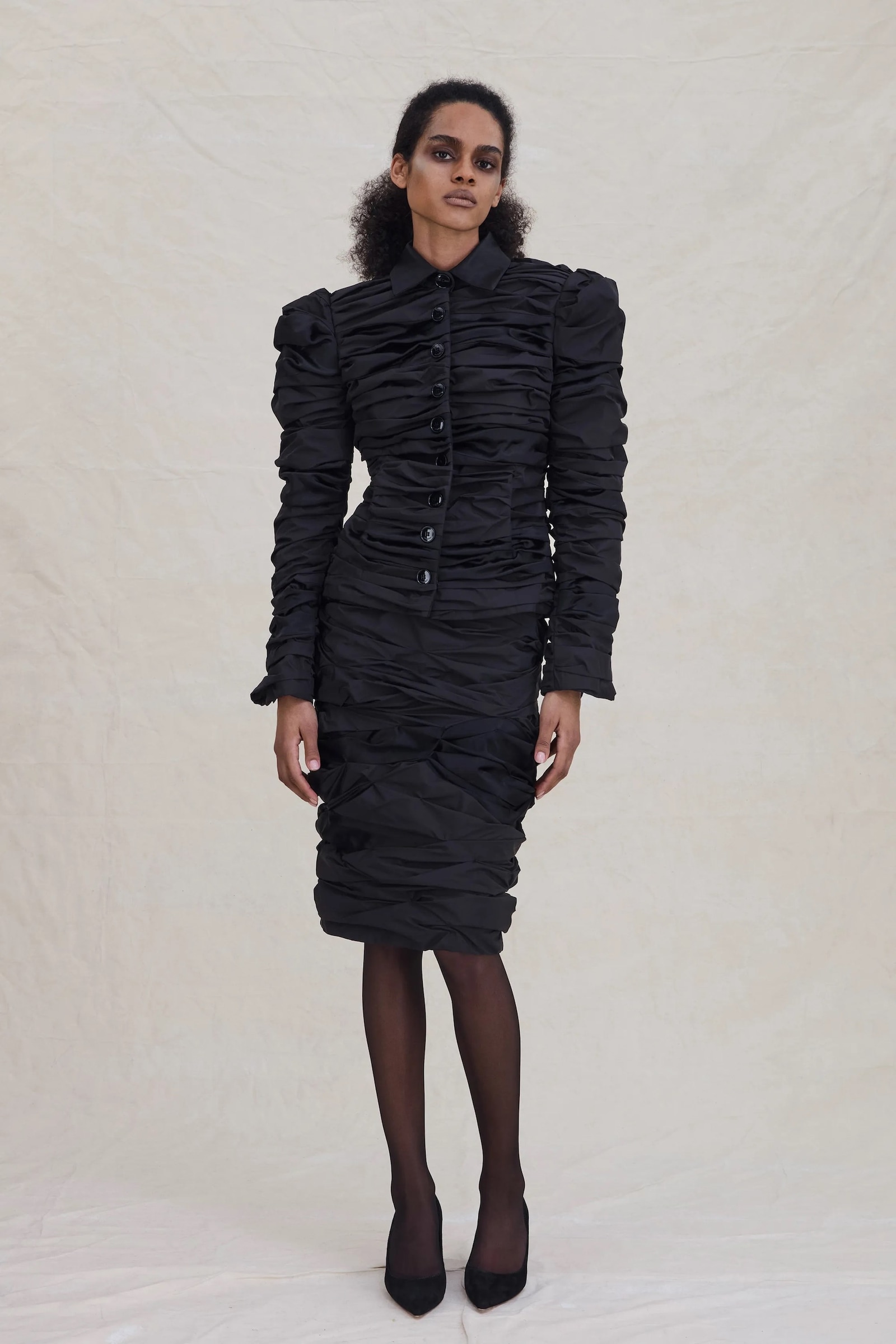

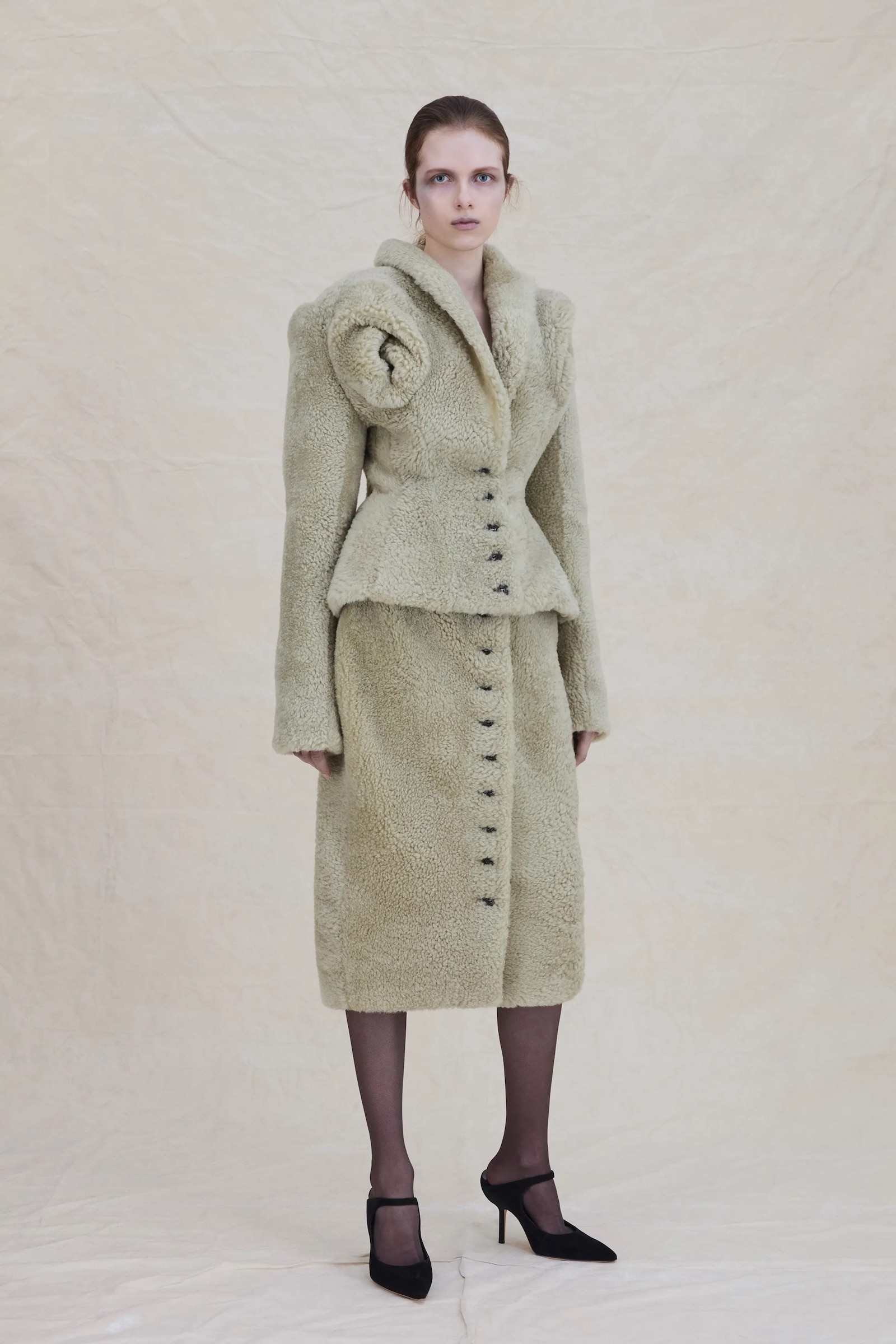
Cinema plays a central role in her approach to this kind of world building. She grew up among her father’s huge collection of videotapes and had early ambitions to become an actor, taking acting classes until she was 18. Fashion, she believes, is close to cinema in its ability to create entire universes, through a show, a collection or even a single piece. “Once the world is defined, the garments emerge naturally,” she says. “I want pieces to feel wearable and familiar, but with something slightly unsettling.” She chooses not to sketch before working with her hands on her creations. “Hands are powerful tools,” she says, “and making is how I think.”
For all her recent acclaim, Dumi insists that failure also plays an important role in her story; it took the designer longer than the usual three years to finish her BA. “Failing it was one of the most formative experiences of my life,” she says, describing how she watched peers move forward while she remained behind. “A mix of shame and stubbornness kept me going. It made me realise that failure is uncomfortable but it’s essential.”
This story features in the Spring/Summer 2026 issue, marking 25 years of AnOther Magazine, on sale now.
