
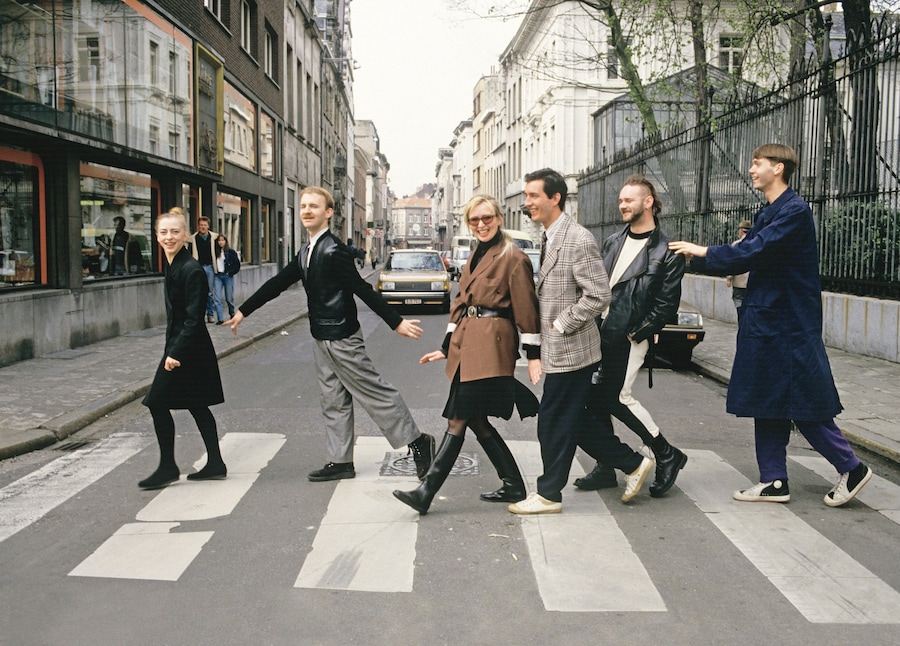
MoMu’s landmark new exhibition highlights the unique trajectory that connects the designers in The Antwerp Six
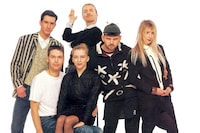
What is a name worth when it was never meant to be one? In 1986, six Belgian designers arrived at the British Designer Show in London with 64 square metres, a shared van, and no collective intention whatsoever. They had not founded a movement; they simply could not afford to go alone. The name – the Antwerp Six – was coined by the British press, a tidy shorthand for six entirely distinct sensibilities crammed onto a second floor between copies of Lady Diana’s wedding dress. Within three years, they had separated and gone to Paris individually. The myth, however, was only just beginning.
It is the question at the heart of The Antwerp Six – MoMu’s landmark new exhibition, the first to have the full cooperation of all six designers – and one its curator Geert Bruloot, who was there for all of it and helped put them on the map, puts bluntly: “They never wanted to be a group. It was the entourage who gave them the name – the retail business and the press needed a new story.”
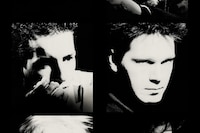
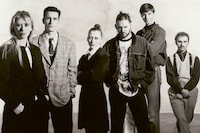
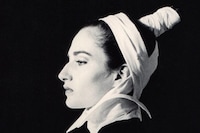
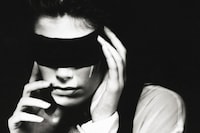
The exhibition opens with six black-and-white portraits of the young designers, shot in 1983 by Patrick Robyn, Ann Demeulemeester’s partner – so eerily still and charged that they feel less like documentation than prophecy. These are not yet the Antwerp Six: they are recent graduates of the Royal Academy of Fine Arts, making fake show invitations from yoghurt lids to sneak into Gaultier presentations in Paris and working nights to pay for their studies.
A double timeline runs the length of the introductory walls – global cultural context above and Antwerp’s sartorial history below – mapping the landscape the Six were born into: punk arriving from London, Yamamoto and Kawakubo detonating Paris in 1981, a Belgian textile industry in such steep decline that the government commissioned McKinsey to diagnose it. The resulting five-year Textile Plan, and its Golden Spindle competition for young designers, became an unlikely launchpad. The timing, against all odds, was exactly right.

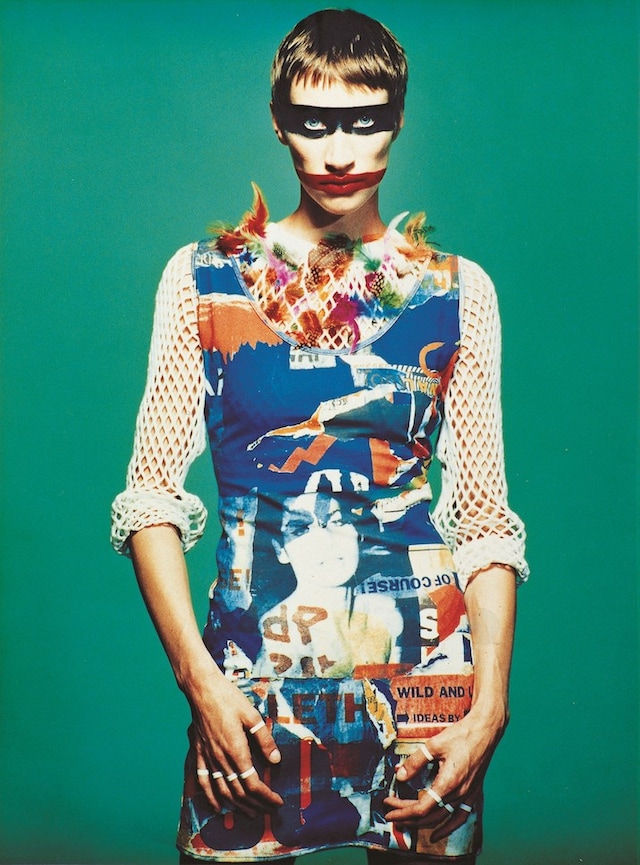
The show moves through each designer in turn. Dirk Bikkembergs in rich, saturated colour; Walter Van Beirendonck, blazing through four decades without losing frequency, in dialogue with Pukpuk – the cartoon robot he invented in the 1990s to carry messages about HIV and queer identity that he felt too exposed to deliver as himself. Dirk Van Saene’s reconstructed rotating mannequin runway, watched over by a fake celebrity front row topped with his own paintings (a rather on-the-nose comment on what fashion weeks have since become). Dries Van Noten’s legendary show closings. And at the centre of it all, a 30-minute film in which Tim Blanks, Raf Simons, Etienne Russo and the founders of i-D reflect on what the Six unleashed. “There had never before been a group so fully formed,” says Blanks. “And from Antwerp!”
The Marina Yee installation is the exhibition’s emotional core – and each designer has dedicated the show to her. MoMu has rebuilt her Antwerp apartment – the studio where she lived, worked and drew for decades – image and reality converging like a question and its echo. Even the little motivational Post-it notes she left herself, to keep going despite her immense insecurities, are included. Although she passed away last autumn, the mise-en-scene had already been planned and confirmed with the curators.

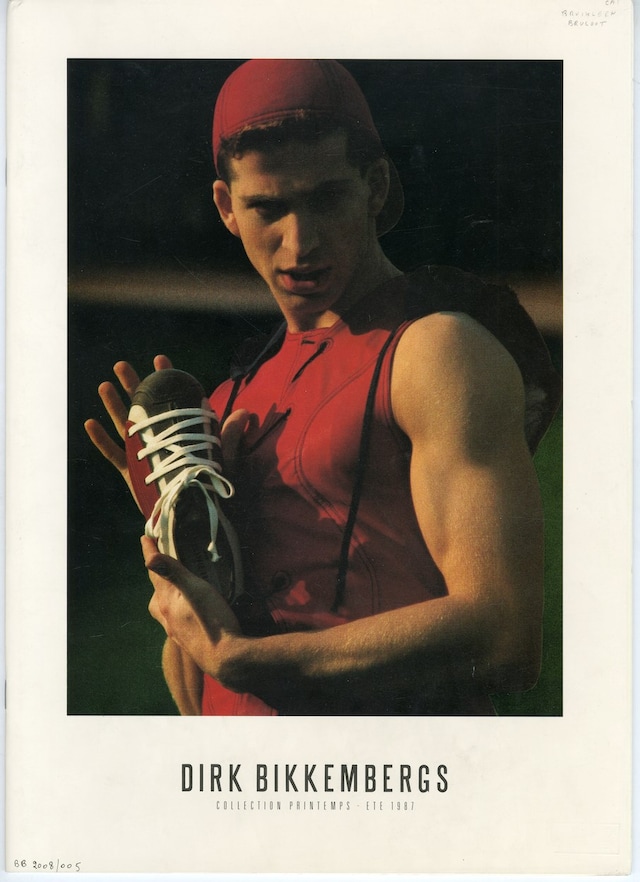
The exhibition closes with archived show invitations – lookbooks, objects, records – each bearing a signature so distinct that it seems impossible it once shared a label with the others. “Dries said to me, in 80 percent of the interviews, people still call me one of the Antwerp Six – without any one of us feeding it. Some, like Ann Demeulemeester, never wanted it,” Bruloot says. But myths don’t require consent.
What this exhibition makes clear is that the name was always the least interesting thing about them (although they were some of the first to operate proudly under their Flemish birth names rather than Italianise them, as was the trend of the time). What mattered was the emotion: the conviction and refusal to make fashion that didn’t mean something. “It represents an era where there was a lot of emotion in fashion,” says Bruloot. “Now it’s all about product.” For the young designers who will walk through these rooms, he has a single directive, borrowed from Sergei Diaghilev of the Ballets Russes: “Amaze me. Show me your personality.” At a moment when fashion feels increasingly managed and increasingly product-focused, it is not a bad place to start.
The Antwerp Six is on show at MoMu in Antwerp until 17 January 2027.
