
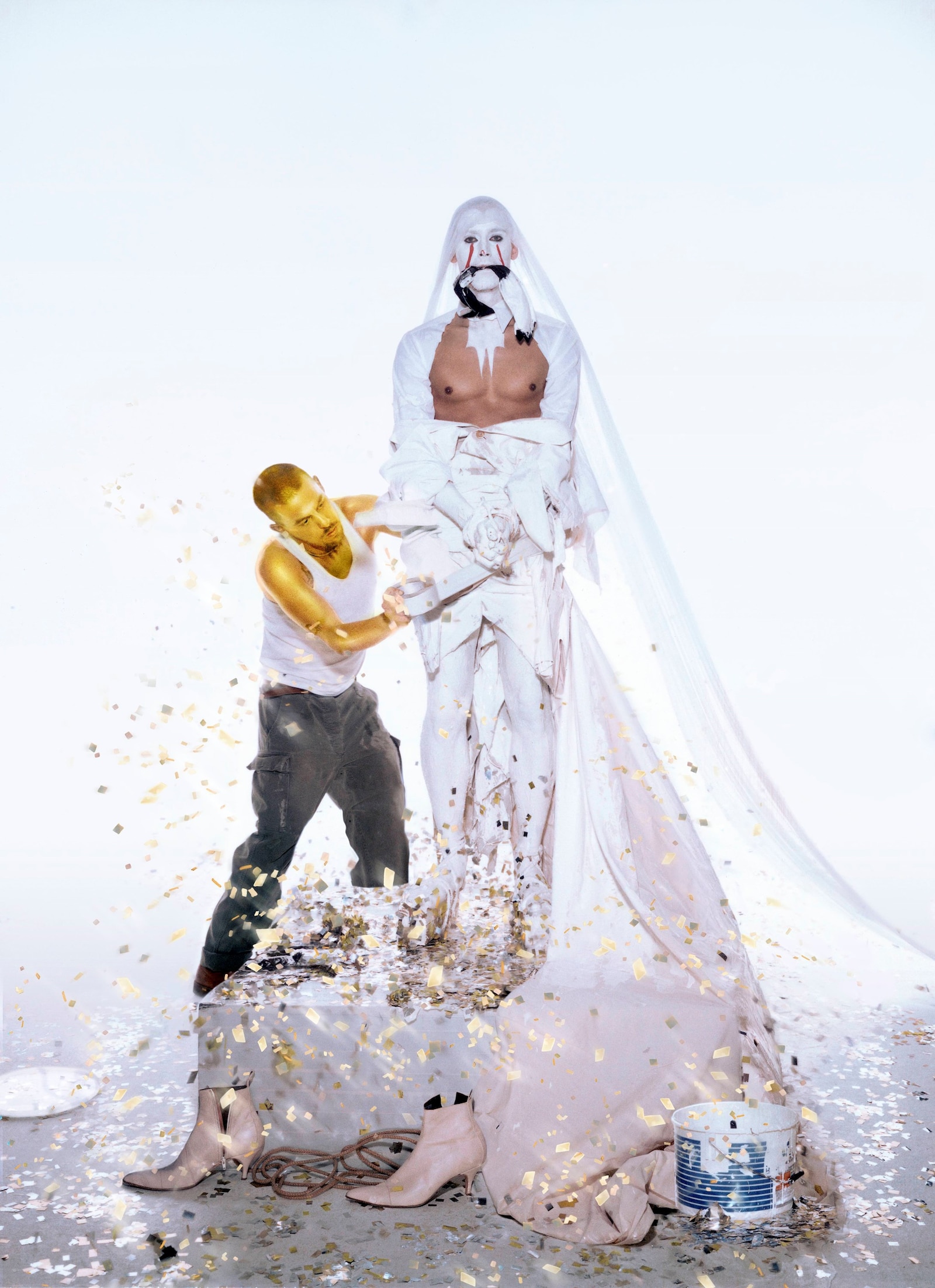
Longer ago than I’d like to admit, I started my fashion career at SHOWstudio, as did many others, who were all afforded the distinct privilege of working on unexpected and unique projects, many in thrilling proximity with genre-redefining and boundary-pushing figures like Lee Alexander McQueen, Rei Kawakubo, John Galliano and Yohji Yamamoto. Not to mention the site’s founder, the revolutionary image-maker Nick Knight, whose five decades of creation have been marked by a resolute refusal to kowtow to convention. SHOWstudio is slightly older than AnOther Magazine, whose first cover, incidentally, Knight photographed. The site turned 25 last November, celebrating a quarter-century of defining and then redefining the representation of fashion on the internet. They released a collectible Box Set of creations by different fashion figures to mark the occasion, like a pop-up SHOWstudio mini-museum.



Working at SHOWstudio changed my life. Journalism was how I first discovered fashion – I found it through words, rather than images, because, back in the day before the internet – before SHOWstudio – you’d be lucky if you got a single catwalk image from the shows in a newspaper each day, a minute, pixellated, often black-and-white window into this magical otherness that, then, was fashion. SHOWstudio was my first step behind the looking-glass, to experience that first-hand, and I am forever grateful for the experience. As are millions of others, for whom SHOWstudio was the first portal that allowed them into that world.
For many fashion designers, photographers, stylists and models too, SHOWstudio was their first interaction with the internet – Knight coaxed key collaborators to create work online when they didn’t even have email addresses in the early 2000s, pushing the limits of creativity (and, honestly, bandwidth) in showing fashion films, streaming fashion shoots live, launching interactive projects and offering downloadable designer patterns that are still manna for generations of true fashion freaks. It remains an online space like no other.
In celebration of that milestone – and of his long-standing and ongoing relationship with AnOther – Nick Knight sat down to talk through the past, present and brave new future of his pioneering and ever-moving fashion platform.

Alexander Fury: It’s obvious to ask about the inception of SHOWstudio, and of your ideas about representing fashion on the internet. Where did that excitement initially come from?
Nick Knight: It came before the internet was invented. I already wanted, in the beginning of the 90s, to start creating fashion films. Seeing exciting things from Martine Sitbon and Yohji [Yamamoto] and everything else. But of course, there was nowhere to put a fashion film at the time. I actually thought, “I’ll do ten fashion films. I’ll send them out on a VHS cassette and maybe include a couple of things from directors.” Like Harmony Korine, Gus Van Sant. A moving image proposal.
That’s why the biggest part of SHOWstudio has always been fashion and film, because that was the original idea – to show fashion in movement, rather than as a still image. But then the internet provided a range of different possibilities, from interactivity with your audience to live broadcasting.
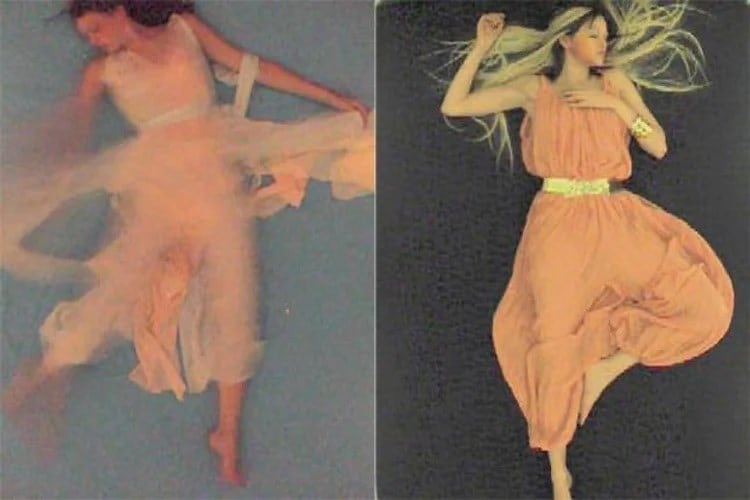
AF: When you look back, it is kind of amazing that there are so many things that are so incredibly early: I always think of Sleep (2001) being the first live broadcast. It is at least a decade before anyone else started to think about live broadcasting fashion.
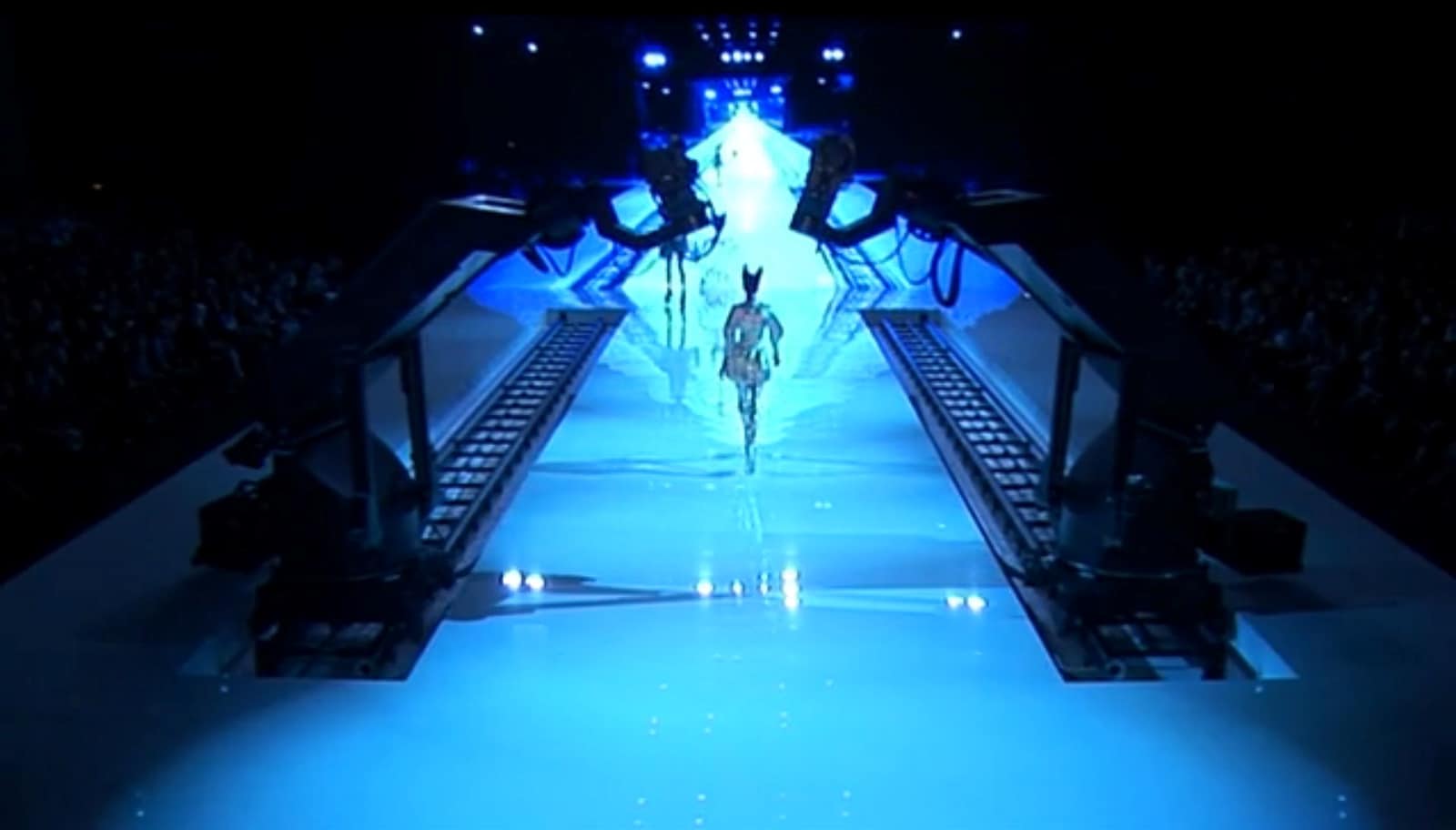
NK: Sleep was one of those funny ideas – we say live broadcast, it was pretty rudimentary. The internet couldn’t handle film live broadcast: it was a still webcam image [updated] every three minutes, low res. It wasn’t until ten years later that you could even envisage something like Plato’s Atlantis (2009), where we were live-streaming a whole fashion show very much similar to the experience of making a film.

AF: Even then, the idea of cutting between multiple camera angles wasn’t something people had experimented with in fashion broadcasts. At that point, people just pointed a camera.
NK: Because a lot of people just didn’t see fashion as the commodity we now understand it to be. Everything was pretty lo-fi in terms of the budget and commitment. So it wasn’t really until you get to play with it, as an artist, when everything changes.
AF: From the very start, SHOWstudio was fashion as entertainment. There is this idea that fashion is an interesting thing, a thing of fascination.
NK: I think it’s sort of a spectacle. Obviously that came from going to [Alexander] McQueen’s shows when he first started, they were such a spectacle. Shows like Voss were really a piece of fashion theatre, but played out in front of 300 journalists. I always thought that other people would like to see it.
AF: The same with photographic shoots, which are even smaller – they’re these performances and they're played out for 30 people.
NK: Well, back in the day, it was more like six people. They were really small affairs. The things one was seeing were so clearly exciting – the idea of letting other people come and look at them seemed a bit of an obvious thing to do. That’s why I’ve always liked the name SHOWstudio – it has a nice, slightly generous connotation. It is an invitation to people to come and see.
I think that’s the same way I take photographs. I don’t do them to appear in galleries. I do them to appear on billboards.
“A lot of people just didn’t see fashion as the commodity we now understand it to be” – Nick Knight

AF: The idea that someone might stumble across SHOWstudio … Especially now, the depth of the work there.
NK: It’s huge. I think SHOWstudio is becoming a very valuable cultural asset, because it spans the time where the fashion industry moved from offline to online, and the whole of the visual element goes from analogue to digital. It’s a very important time.
AF: Considering the evolution of technology over the past 25 years, how much it has changed and has changed our lives, how has that reshaped what SHOWstudio is?
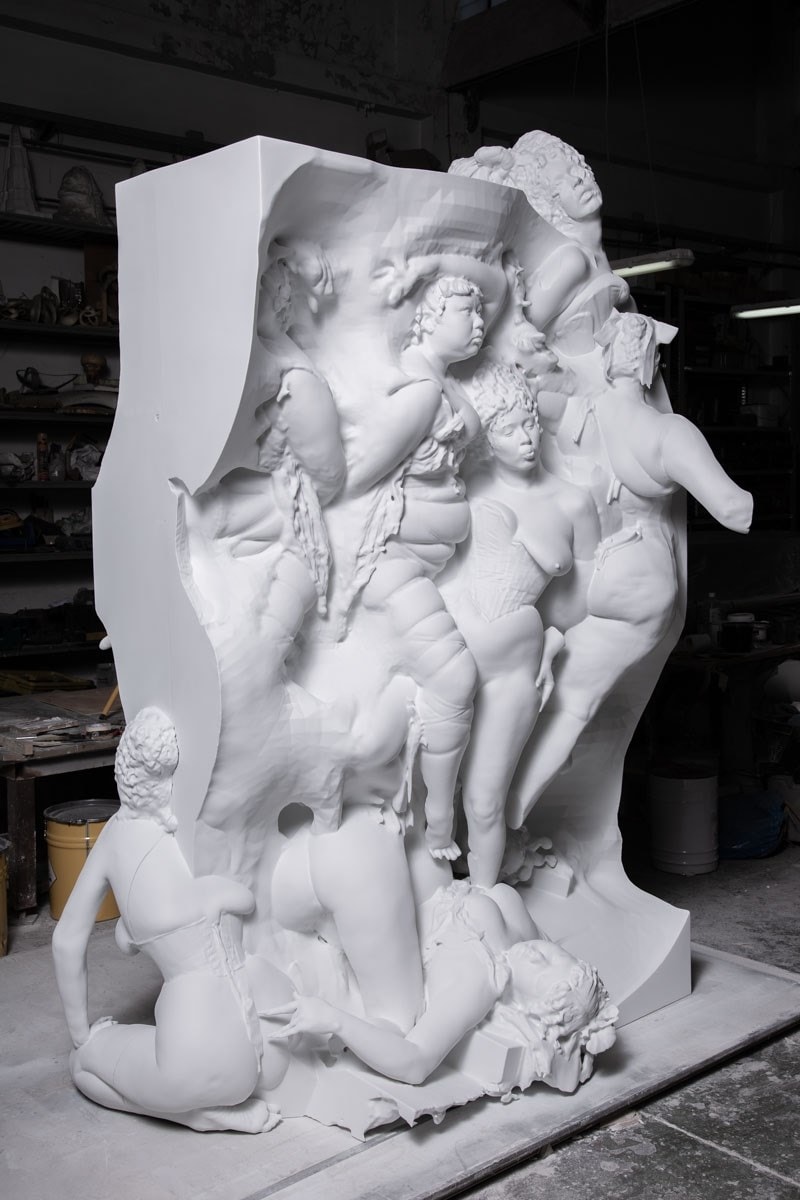
NK: Well, there are things you can do now, especially in the last couple of years, which you could never, ever do before. I can put a statue into an AI and be given a recipe for a fragrance from that statue. And of course it is really reshaping what we do and how we look at things and our ability to present and to communicate.
That’s all still developing. It’s very early days, and it feels like we’re in the beginning of an Industrial Revolution. It’s clearly going to go a lot of other places, and at a huge accelerated pace.
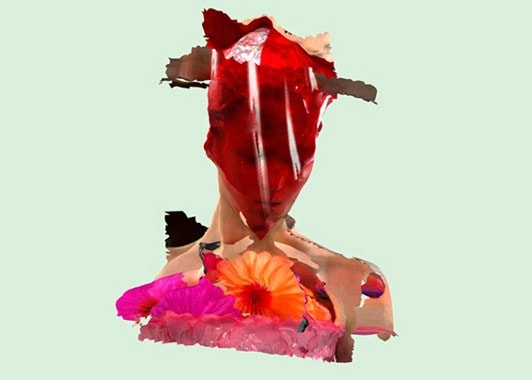
AF: It is interesting when you look at how early you adopted a lot of things. I was thinking of Sweet (2000), one of the first projects which explored 3D scanning when it was very much an imperfect science. Whereas now you can get 3D scanning apps on your phone.
NK: We also didn’t want to use that technology in the way that it had been designed to be used. I was thrilled by the imperfections and the mistakes, the fact that actually it doesn’t look like tech, it looks like painting.
That’s really important. Some of the major things that distinguish humanity is the ability to have imperfection. It always shows you worlds you didn’t expect to see. I’ve always liked mistakes and errors and glitches, because they leave a bit of work for your brain. Go and look at a Monet – most of the figures in the background are just a couple of brushstrokes. They don’t have their features defined. I love that. So why does photography and digital image making go on this kind of quest to show everything as sharp as you possibly can?

AF: As if that’s some kind of a measure of quality as well. High definition is good and low definition is bad.
NK: Which is a weird reverse of what I actually think. If you show everything, there’s nothing else to come back for. Life is not clarity. It’s a set of confusing, conflicting, ever-changing values. It’s weird that photography is nothing like that – the more detail we show, the more clarity we show, the less it feels like anything that we experience.
AF: Do you feel that the mission statement of SHOWstudio has changed over a quarter-century, or is it still about why you first clicked the button and put it online 25 years ago?
NK: I think it did really achieve a lot of the things I hoped it would achieve. We started in 1999. Before SHOWstudio was even up and running, we created the first digital catwalk with Sleep. But my thinking is, “Yes, we’ve made it possible. Now where can I take it?” It’d be like giving up on fashion photography in 1930. There are lots of things I want to continue.
There’s a hell of a long way to go. It’s like climbing a mountain, seeing the view across the valley – and so arises another mountain.
