
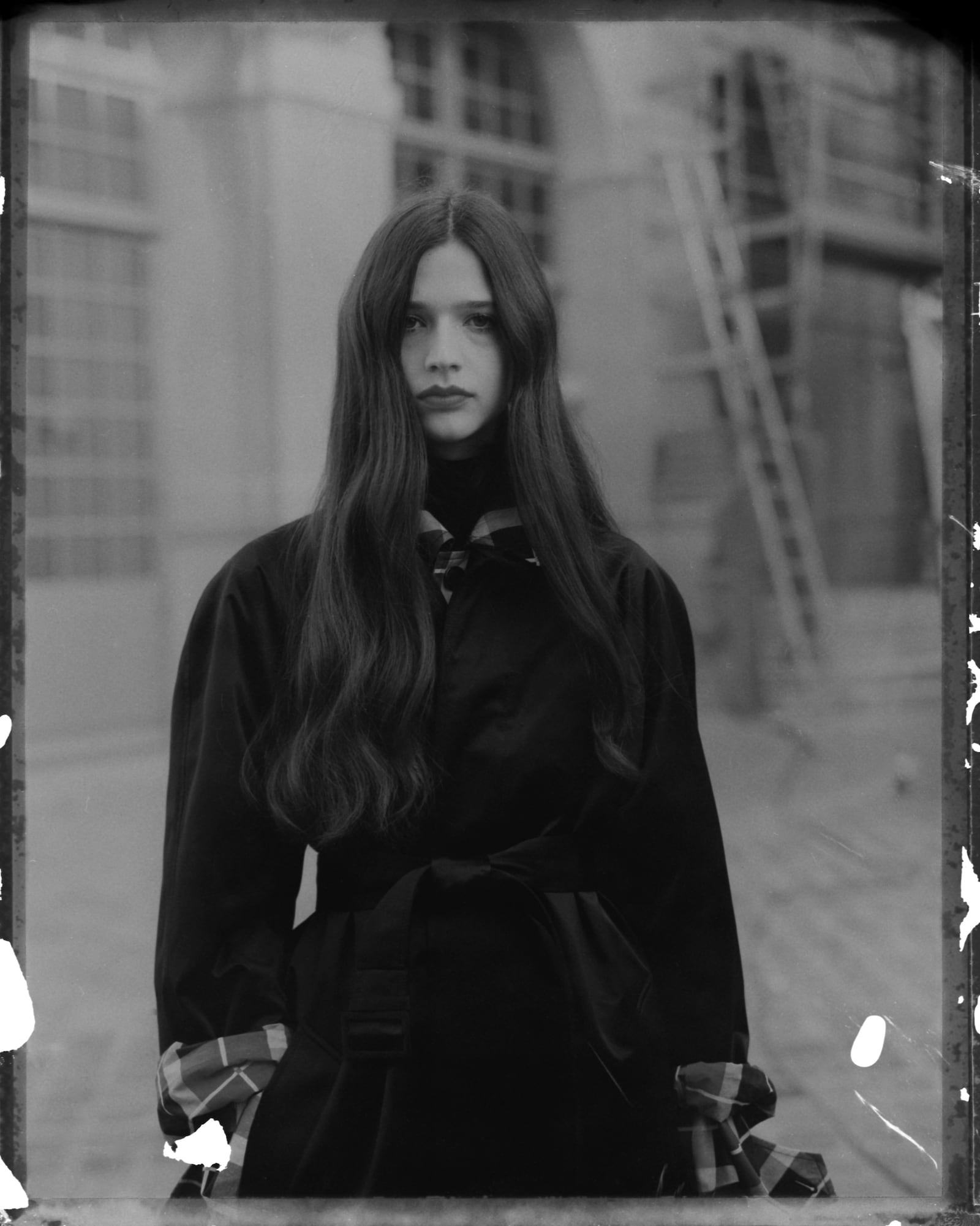
What Michael Rider is doing at Celine is singular – and singularly difficult to pin down, especially in words. That’s because, consciously or not, he’s eschewing all the usual markers of fashion conversations and explanations. There’s no big story behind any one of his collections, and he’s not into concepts – indeed, for Autumn/Winter 2026, “Rejecting the idea of a ‘concept’” was, itself, his concept. That said, there is something to get your teeth into. There’s a vague sense of Frenchness, bits of soi-disant aristocratic equestrianism from Celine’s back catalogue – his own surname jibes quite satisfyingly with that – and emblems and blazons and logos stating the brand’s name. But there isn’t a deep and meaningful thematic, or trends shaping it. Rider simply does what he does.
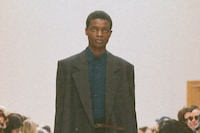
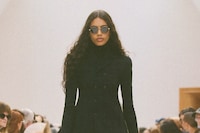
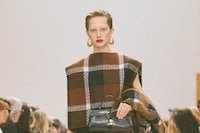
“I love when messy, complex, layered inner lives come through underneath great clothes,” wrote Rider in the show notes that, like the collection itself, seemed snatched and collected from a stream of consciousness rather than a didactic narrative. One was “thinking about people with style who wear beautiful clothes in a personal way.” Which you wish more designers would do, honestly. Another? “Intuition over strategy. Feeling it rather than planning it.” His Celine shifts back and forth between ideas and ideals, between a playful scrappiness and rigour, rejecting the idea of a single silhouette in favour of a plurality, of less in favour of more.
That’s not to say that Rider doesn’t do simplicity – his first look, a stripped-back black coat to the knee, with a squared-off black hat and black cuissarde boots, was startlingly stark. The collection seemed to shift back and forth between lots and little, between those refined, grown-up tailored silhouettes and messy kids in leopard prints, feathers in their hair, amulets around their necks, a clutch of embroidered flowers clambering over a shoulder.

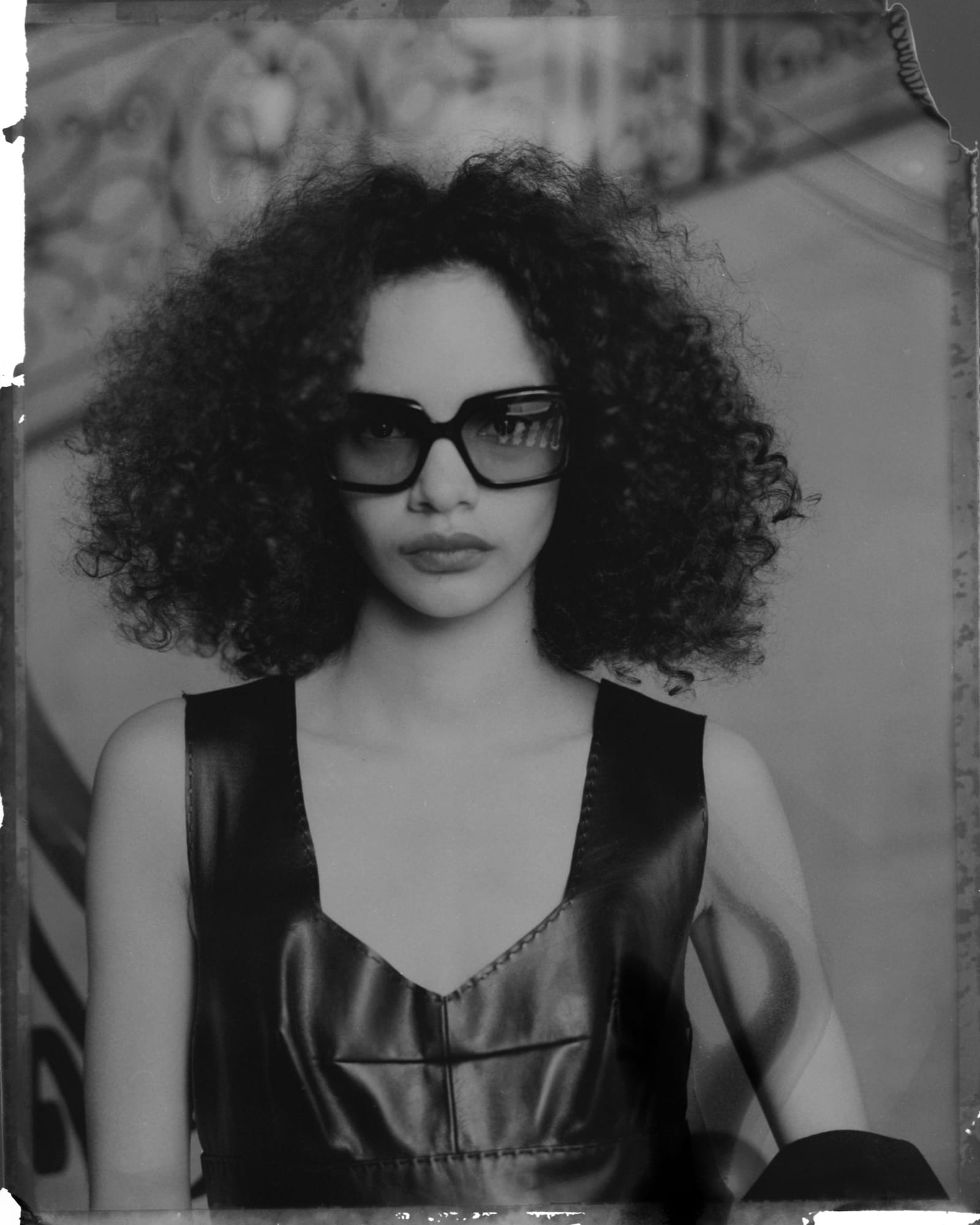

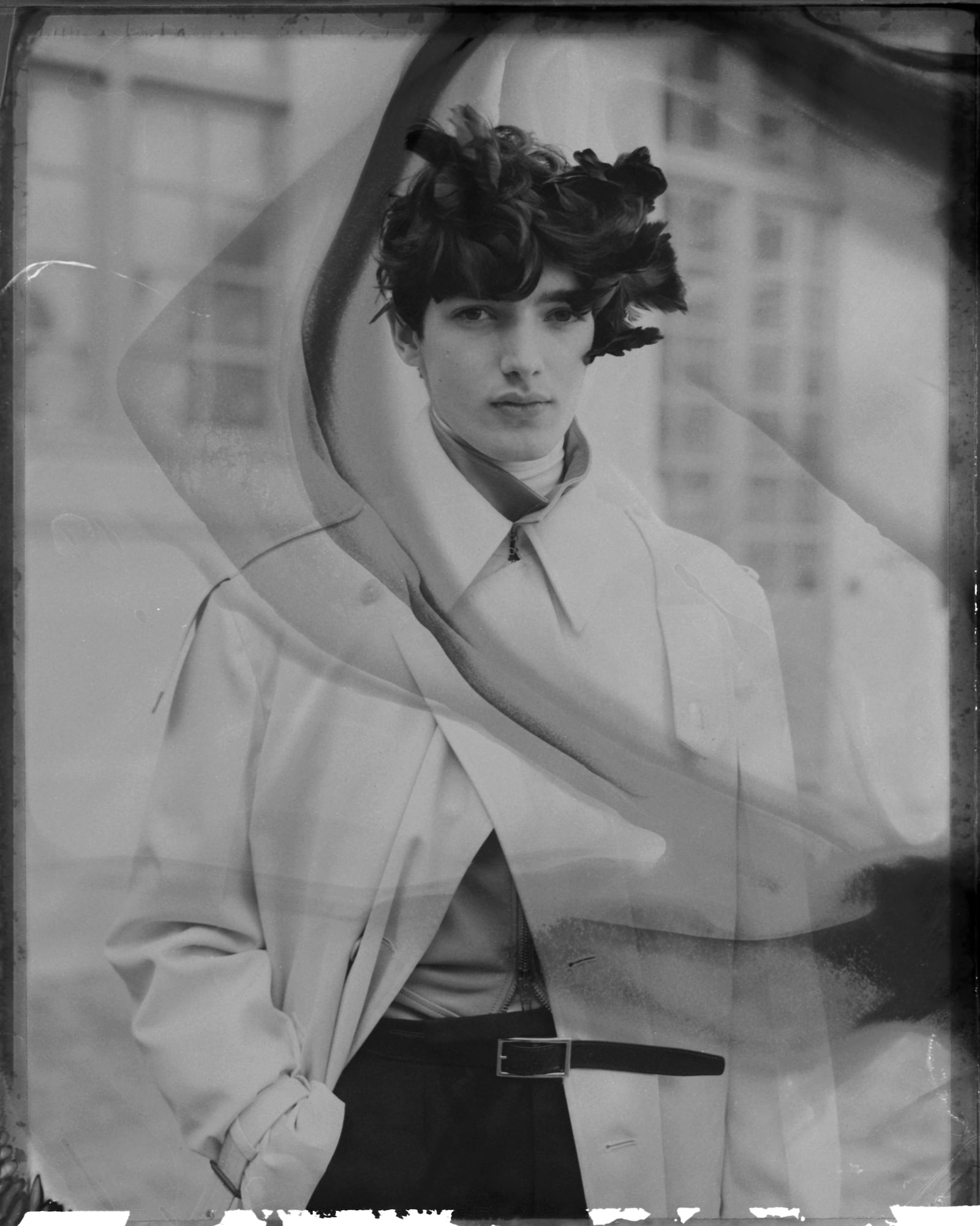
If his last outing reimagined a fashion show as a stroll through la campagne, and his first was a bunch of kids whizzing around the Celine HQ, this ditched all narrative, showing against a literal blank canvas, a big white box out back behind the Institut de France. That could’ve been anything anywhere – Celine has an innate sense of Parisianness, so the hats were a little Gabrielle Chanel, a blocked-out cyclamen-pink shirt with lipstick-scarlet trousers reminded me of the blocked original logo of Yves Saint Laurent’s Rive Gauche. But the show emulated the advertising campaigns plastering bus stops around the city, where slightly snobby but terribly attractive gilded youths were dressed in idealised visions of what cool Parisians may be wearing tomorrow.
It’s a new way, perhaps, to conceive of a fashion collection – insomuch as there isn’t really anything collective about it. But, on the flip side, it’s about how people dress, about real clothes, and fantastic propositions within that. Rider has a long pedigree – most notably, to me, seven years as artistic director of Polo Ralph Lauren Women. What Lauren has always been about is lifestyle – not really about the clothes, although obviously they have to be good, but the existence you can imagine wearing them. Lauren’s take was – is – WASP-y, old money, Eurocentric, transatlantically translated, of which there is a sense here too. An emulation, an essence, a feeling, as he said.
The ultimate takeaway from Rider’s Celine shows are snatches – of looks, of garments, of gestures – that you … well, want to take away. Sometimes, it’s the way of wearing something like a knotted belt, or a red cardigan with crocodile elbow-patches skewed over the shoulders, or the big old knotted glob of satin that appeared three or four times, concealing most of the models’ faces as if elegantly battening down their hatches. Those kinds of things are also proving highly influential, with Celine’s blunted, old school ties and prepped-up details and little flat Capezio-esque glove leather shoes riffed on and imitated at multiple levels. Maybe that’s because Rider’s most tangible evocation is a powerful longing, a sense that you want to inhabit those clothes, these images. Those lives, and styles. “People you want to look at, get close to, spend holidays with,” is how Rider termed it. He’s wrong. They’re people you want to be.
