
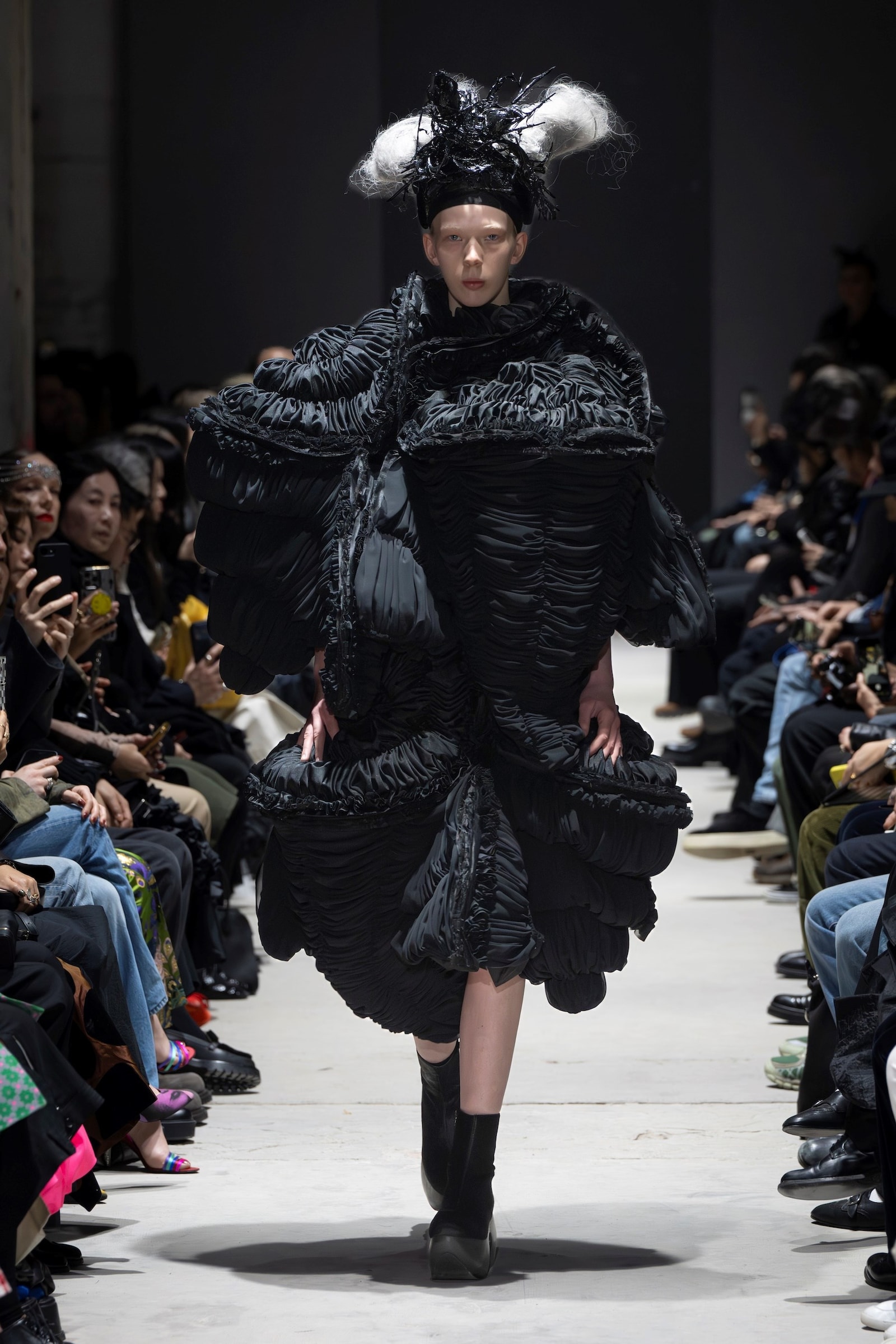
Black, as a colour, is powerful. Well, to begin with, it isn’t a colour at all, really – it’s a shadow, an absence, the result of the eye perceiving nothingness. Which sounds a little Jean-Paul Sartre, who incidentally wore a lot of black. Yet, for nothing, black is everything – a colour of seriousness and sobriety, of religious piety, of Catholic orders, nun’s habits, ultra-orthodoxy. Yet also of rebellion, punks as well as priests, of militant extremists, paid bills, Queen Victoria in perpetual mourning for her lost love Albert. Black-balled, black-listed, black sheep. It is also, undoubtedly, the colour of Comme des Garçons, and its designer Rei Kawakubo.
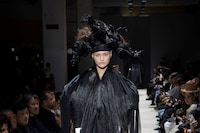
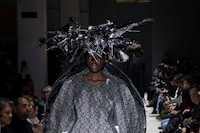
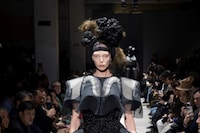
“Black is the strongest colour for me,” Kawakubo said in a rare recorded interview (voice, no video) back in 1997. “It can easily express the strongest feelings.” When she was awarded for excellence in design by Harvard University, the institution stated she had “invented” black. The only figure who could challenge her as the author of black in fashion’s contemporary landscape is Gabrielle Chanel, and their twin impacts on fashion have, arguably, been equally as radical.
Black was the colour, theme, identity, essence of Kawakubo’s Autumn/Winter 2026 Comme des Garçons collection. The normally-gnomic designer proposed a veritable treatise on black by way of explanation. “It’s just the strongest, the best for creation, and the colour that embodies the rebellious spirit,” she wrote. “And has the biggest meaning: The Universe and the Black Hole.” She was thinking expansively. Black Hole was the title she gave to her menswear show in January, which was comprised entirely of black and white garments – first nothing, then all. Her womenswear contrasted black with an interruptive flurry of hot contrasting pink – Ann Summers or Schiaparelli, depending on your viewpoint, yet either way truly shocking – before sinking back to darkness. “In the end, there is black,” Kawakubo said. “Ultimately black.” The music included a Chopin nocturne because … what else?

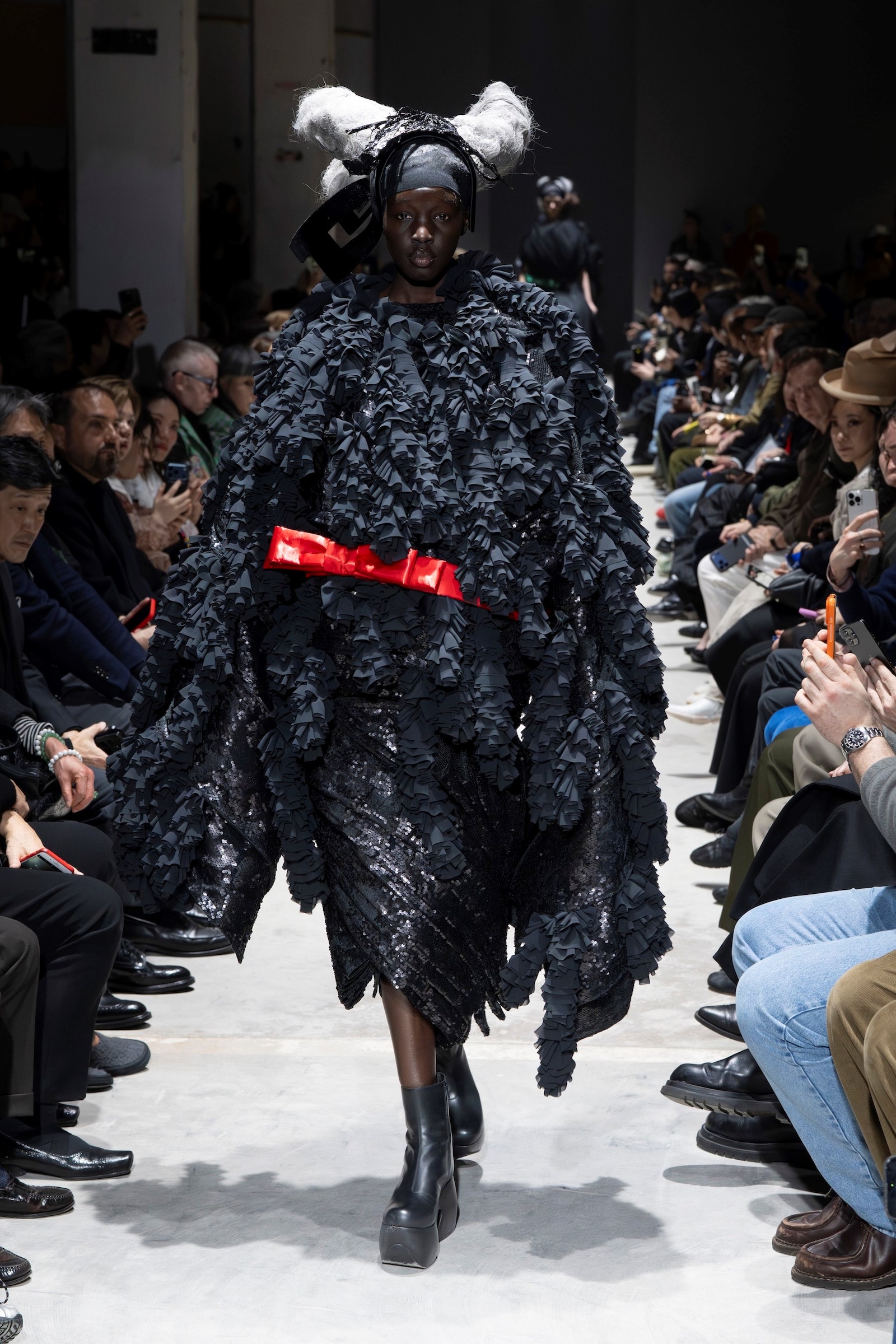

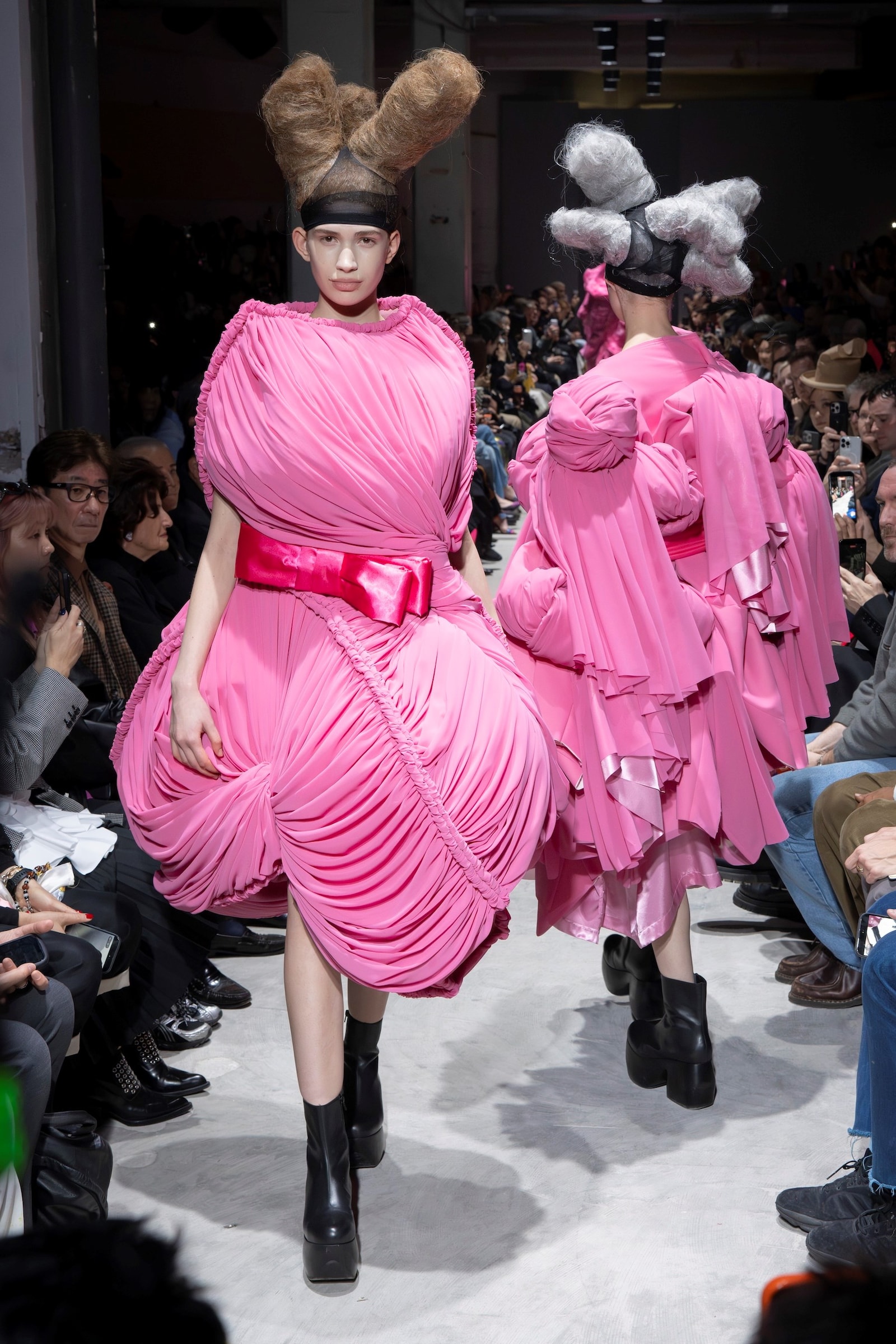
But, honestly, no one needs to hear how many black and pink garments Kawakubo showed, or what they were composed of, or even really what they looked like. What we need to talk about is how they made us feel, and what they made us think. “It’s like fucked-up Balenciaga,” an audience member whispered to me as a swaying monolith of black ruffles passed by, sashed with a red satin bow. And it was – a monstrous Christo-meets-Cristóbal Balenciaga mutant on clodhopper platforms. Others seemed to compress Madame Grès pleats not into body-skimming goddess gowns, but beyond-life extrapolations of the Venus of Willendorf, while yet more were composed of swollen bubbles of cloqué or lace, Lurex and sequins, swaying fringe. Chiffon veiling darkened white wadding innards. Kawakubo only looks forward, rather than back, using these scraps of historical reference as fodder for something radically different. Here, it made me think of a twisted history of fashion. Yet, perhaps, it was just about how complex you could make black, how much technique and detail you could compress into a garment that would ultimately vanish, eaten by its own shadow, collapsing into a hole of black under its own weight.

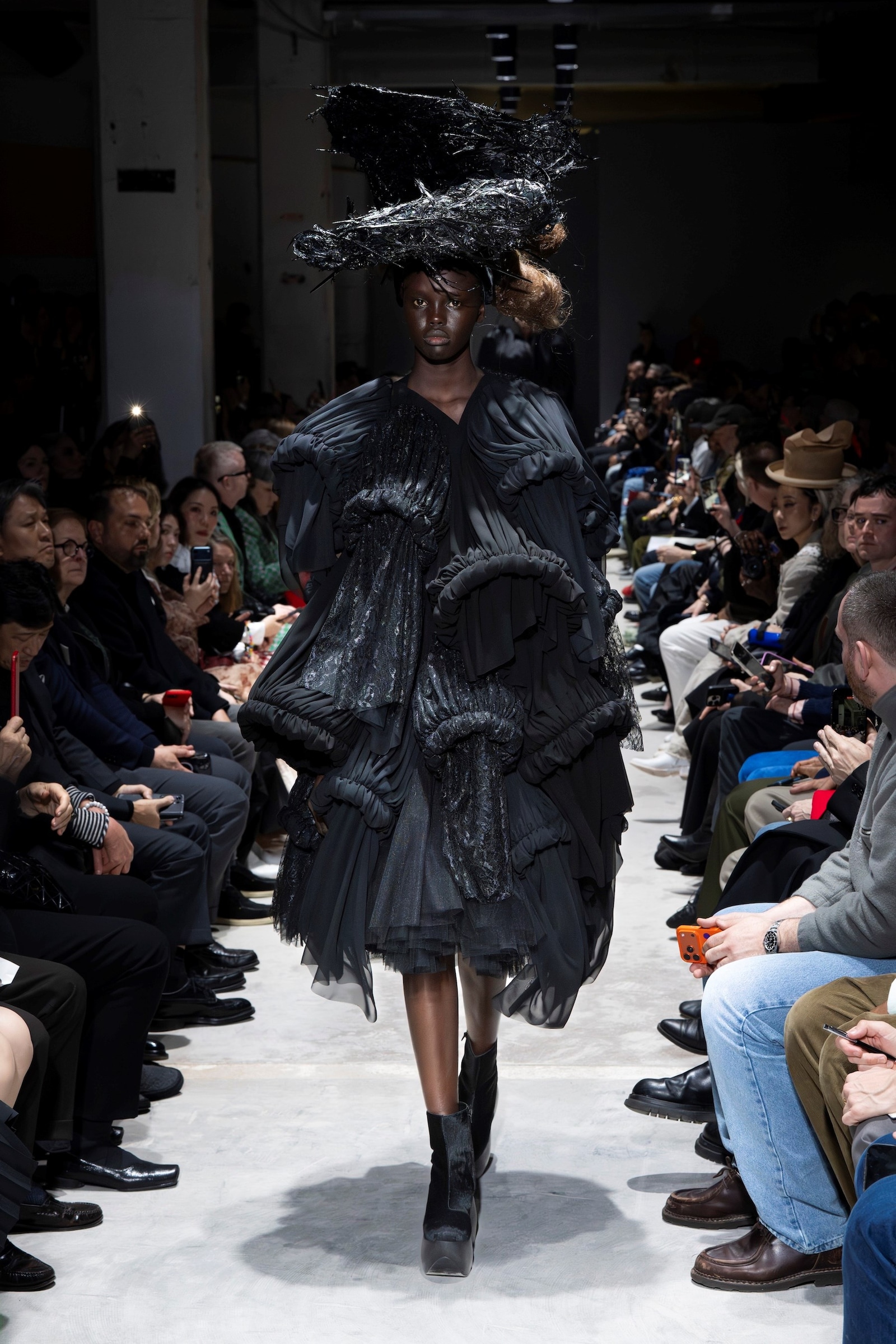

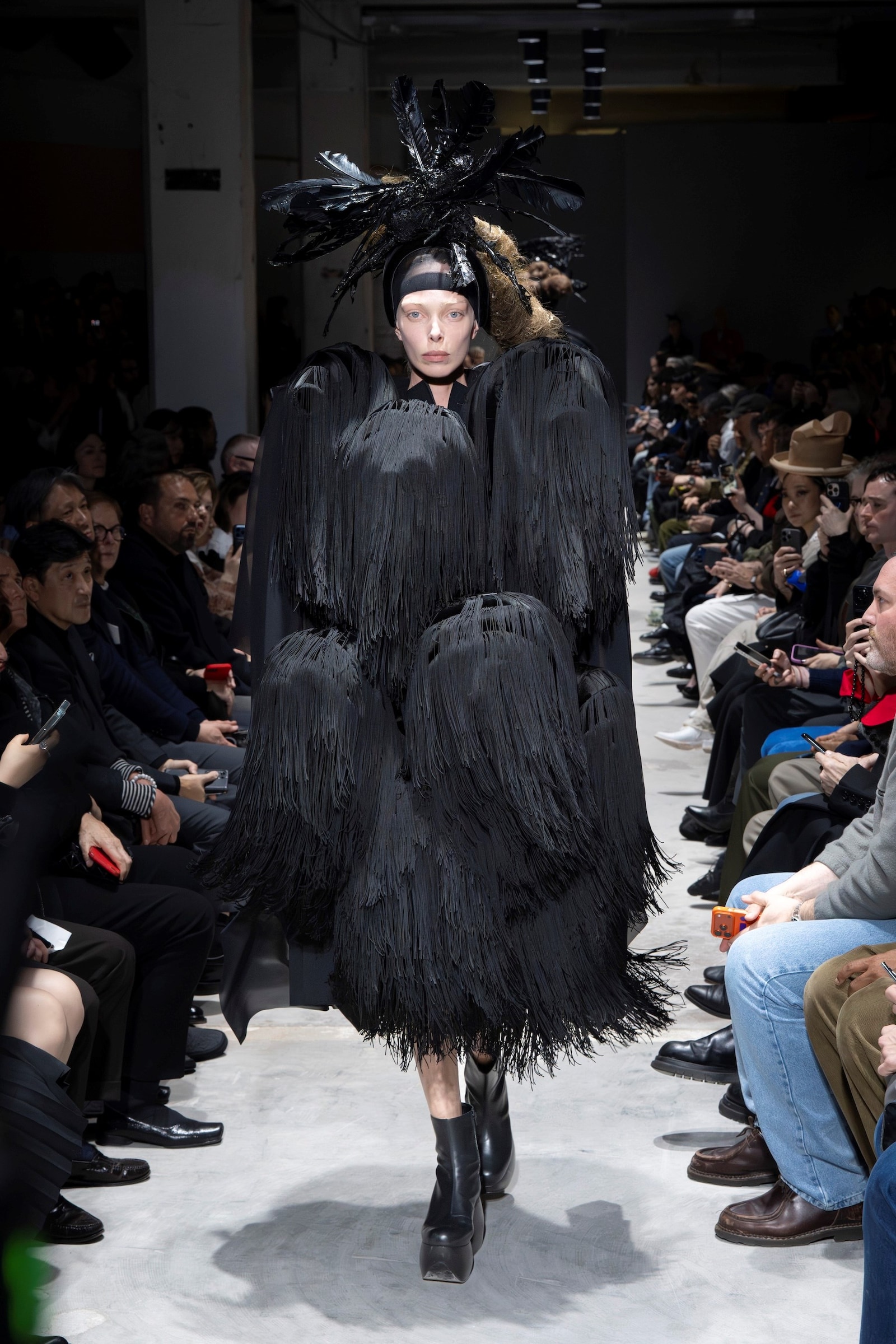
That could sound negative, but what this collection made you feel was uplifted, enlivened, emboldened. Excited. Expanded, even. It was about the inexorable power of black, its depth and richness, its elaboration, and Kawakubo’s ceaseless, boundless creativity within it. Ultimately black, and the ultimate black.
